Featured EMI/RFI Shielding & Membrane Interface Solutions
Configured with continuous silver grids, copper foil laminates, capacitive ITO sensing, and high-cohesion 3M conductive adhesives for seamless integration into North American instrumentation enclosures.
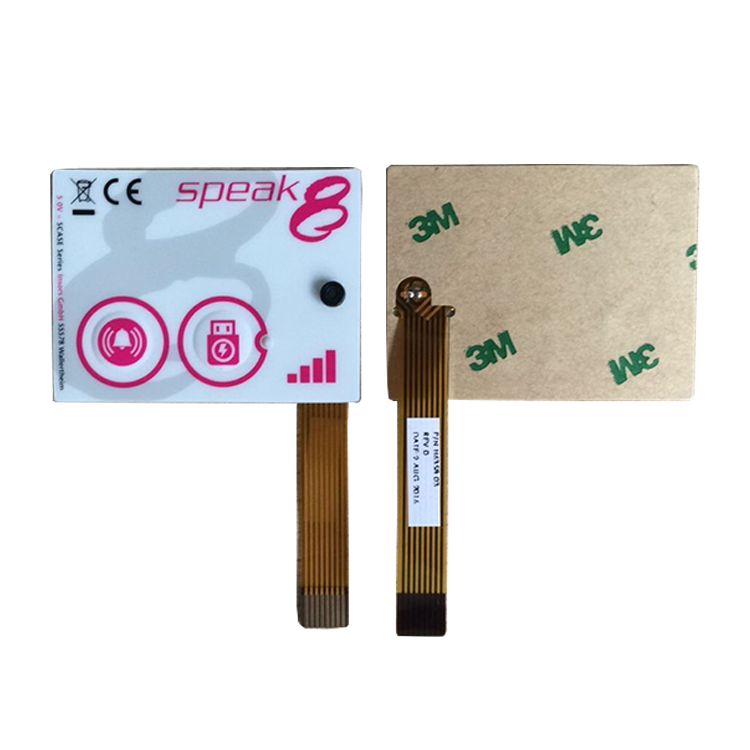
Custom Silk Screen Printing Membrane Switch Flexible Thin Film Keypad Push Button Switch for Household and Medical Equipment
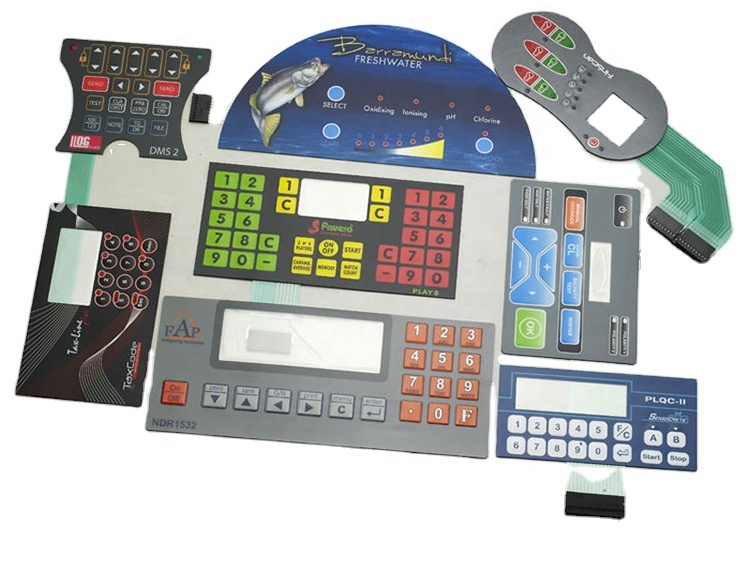
Custom Membrane Keyboards LED Backlit Membrane Switch for Electronics Quick Sampling
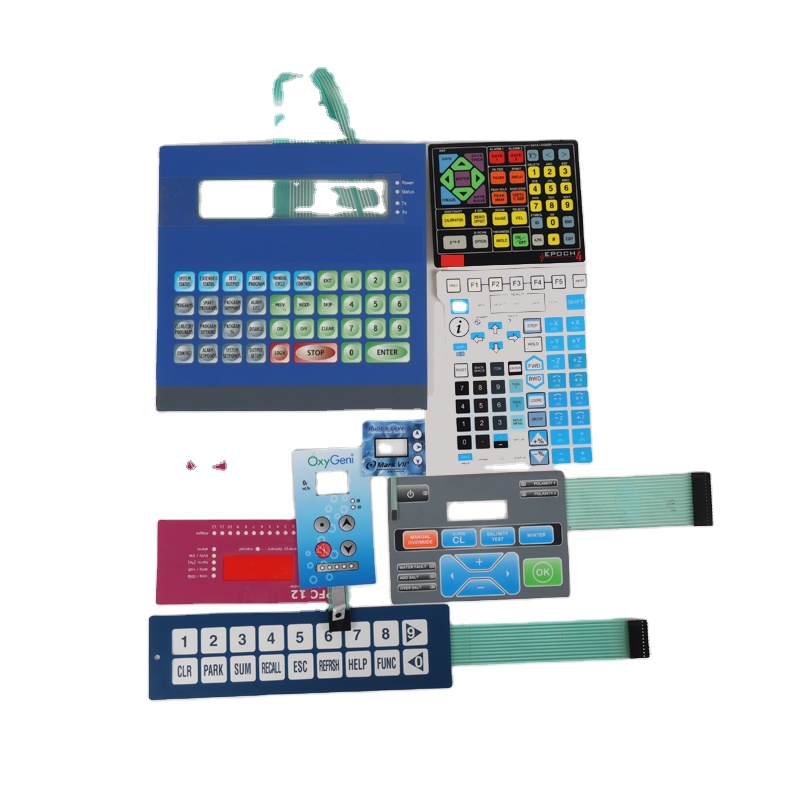
Factory Custom Waterproof Membrane Keypad Switch, Metal Dome Tactile Membrane Push Button Switch With 3M Adhesive Backing
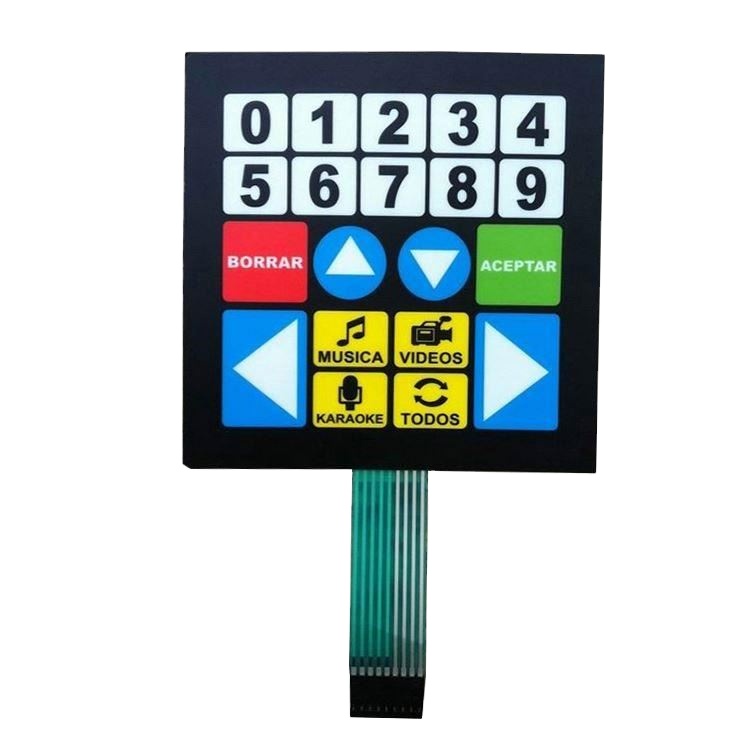
OEM ODM Custom Membrane Switch Keypad, PET PC Graphic Overlay Tactile Push Button Membrane Switch for Industrial Control Panel
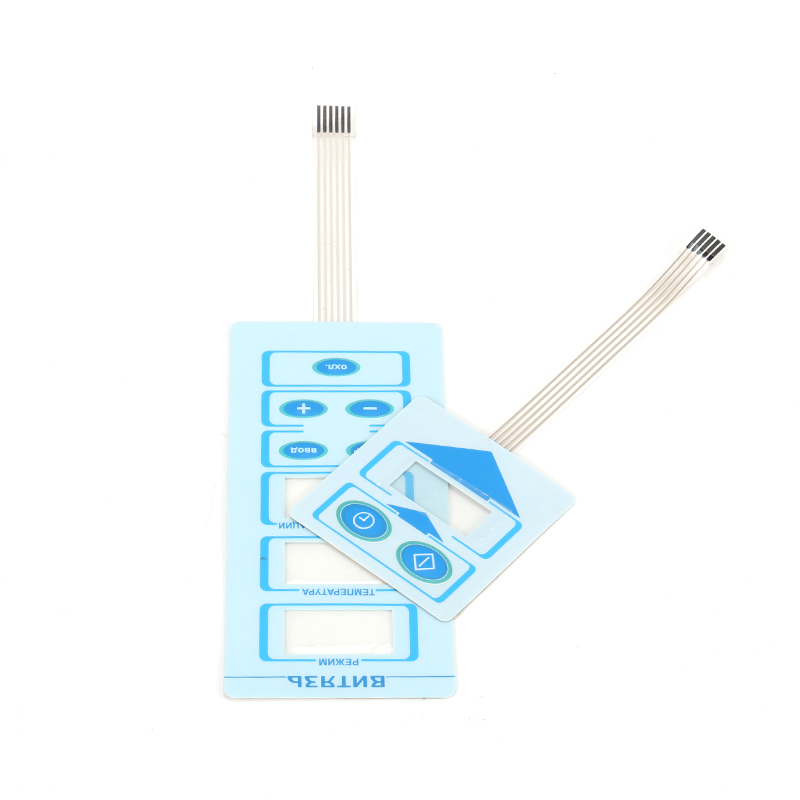
OEM ODM Custom Membrane Switch Keypad Waterproof Metal Dome Tactile Switch with 3M Adhesive for Industrial Control Equipment
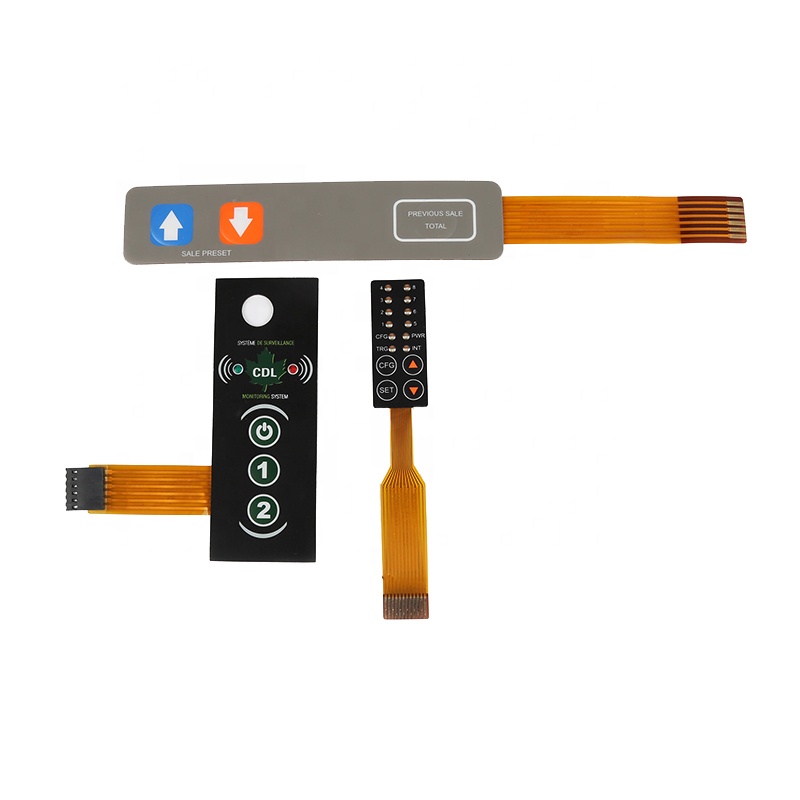
Waterproof Capacitive Touch Membrane Switch with Customizable Color and Texture
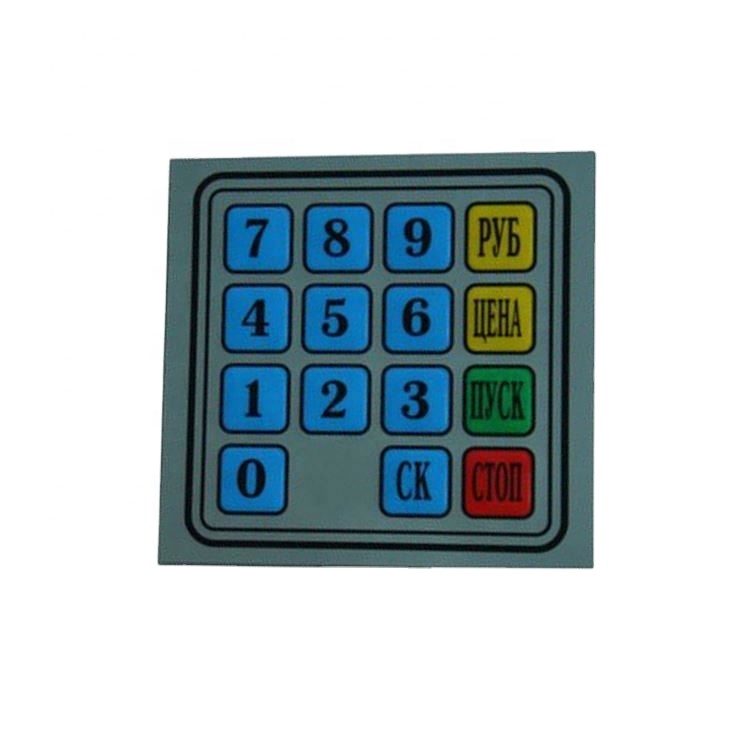
Hoee Factory Membrane Switch Keypad with Rubber Buttons 4*4/1*4/3*4/4*5 Layout MCU Expansion DIY Electronic Keyboard
Multi Zone Backlight Design Independent Circuit Routing Uniform Illumination Custom Backlit Silicone Rubber Membrane Switch
Physics & Architecture of High-Attenuation EMI/RFI Shielding Overlays
In modern industrial automation, clinical instrumentation, and high-density computing assemblies, Electromagnetic Interference (EMI) and Radio Frequency Interference (RFI) represent severe threats to signal integrity and functional safety. Human-Machine Interfaces (HMIs) and membrane switch overlays act as the frontmost mechanical aperture of an electronic chassis. Without dedicated shielding, radiated RF energy from variable frequency drives (VFDs), wireless communications, power switching supplies, and electrostatic discharge (ESD) penetrates through cutouts, display windows, and graphic keypads, inducing latch-up, transient signal errors, or catastrophic component destruction on the internal logic board.
Zhejiang ZIRA Membrane Switch Co., Ltd. manufactures custom EMI shielding overlays engineered to mitigate both near-field magnetic/electric couplings and far-field electromagnetic waves. By deploying high-cohesion conductive coatings, etched metal foils, and optical-grade transparent conductive films, our engineering team tailors the surface resistivity, skin depth attenuation, and perimeter grounding methodology to satisfy North American industrial and medical compliance standards, including FCC Part 15 Subpart B, MIL-STD-461G, and IEC 60601-1-2.
Conductive Silver Grid Screen Printing
Utilizing high-purity micro-flake silver polymer thick-film inks deposited via high-tension stainless steel mesh. Patterned in fine square or hexagonal lattices (0.5mm to 1.5mm pitch) to maintain optical window visibility while providing a low-impedance Faraday cage effect that eliminates capacitive hand-coupling interference.
Laminated Copper & Aluminum Foils
For mission-critical defense and automated robotics demanding >75 dB broadband attenuation, we precision laminate rolled-annealed electrolytic copper foil (18µm to 35µm) or aluminum barrier layers bonded with conductive acrylic adhesive, offering complete planar reflection and superior skin-effect absorption.
Optically Clear Sputtered ITO Coatings
Engineered specifically for LCD, OLED, and vacuum fluorescent display (VFD) windows. Indium Tin Oxide (ITO) is vacuum magnetron sputtered onto optical PET substrates, offering 15 to 100 Ω/sq sheet resistance with light transmission exceeding 86%, suppressing EMI leakage directly across active display bezels.
Comprehensive Material Selection & Attenuation Matrix
Selecting the optimal shielding topology requires balancing electrical conductivity, mechanical flexural fatigue, optical transparency across display apertures, and landed project budgets. The table below outlines technical metrics certified under ASTM D4935 and MIL-STD-285 test protocols.
| Shielding Medium | Typical Thickness | Surface Resistivity (Ω/sq) | Shielding Effectiveness (30MHz–1GHz) | Optical Transparency | Primary Application Profile |
|---|---|---|---|---|---|
| Screen Printed Silver Ink (Solid) | 12 – 25 µm | 0.015 – 0.040 | 55 – 70 dB | Opaque (0%) | Industrial controller front panels, heavy machinery HMIs |
| Selective Silver Mesh Grid | 8 – 15 µm | 0.08 – 0.25 | 40 – 55 dB | 65% – 82% | Enclosed display readouts, LED windows, membrane keypads |
| Laminated Copper Foil (1 oz) | 35 µm | < 0.005 | 75 – 90 dB | Opaque (0%) | Aerospace instrumentation, military defense controllers |
| Magnetron Sputtered ITO Film | 125 – 175 µm (PET) | 30 – 100 | 25 – 40 dB | 85% – 91% | Medical touchscreens, analytical laboratory monitors |
| Conductive Nickel/Copper Fabric | 80 – 110 µm | 0.03 – 0.07 | 60 – 75 dB | Opaque (0%) | Extreme flex-life dynamic keypads, robotic teach pendants |
Engineering Shielding Overlays for Columbus & Central Ohio's Industrial Ecosystem
Serving Original Equipment Manufacturers, precision contract electronics manufacturers (CEMs), and design firms throughout Franklin County, Delaware County, and the broader Silicon Heartland corridor.
New Albany Tech Corridor & Fab Facilities
With massive semiconductor fab investments reshaping Central Ohio, equipment manufacturers need zero-outgassing, particle-free, and ESD-safe front panels. Our conductive overlays drain static charges up to 25kV safely to chassis ground, mitigating transient charge buildup that could compromise sub-micron lithography and silicon wafer automated test jigs.
Medical Instrumentation & Diagnostic Tech
Anchored by world-class healthcare research and biopharma hubs around Columbus and OSU Wexner Medical Center, clinical diagnostics demand stringent IEC 60601-1-2 collateral compliance. ZIRA provides hermetically sealed, anti-microbial PET overlays backed by continuous perimeter shielding that withstands hospital hospital-grade wipe-downs while blocking hospital telemetry interference.
Marysville-Columbus EV & Battery Assembly
Central Ohio's powerhouse automotive corridor thrives on electric vehicle mobility, power inverters, and high-voltage battery modules. High-frequency switching transients from silicon-carbide (SiC) and IGBT converters generate intense RF fields. Our heavy-duty copper and silver foil overlays insulate cockpit controls and factory floor assembly cells from erroneous triggering.
Rickenbacker Logistics & Robotics Hub
The Rickenbacker International Airport logistics complex houses high-throughput distribution centers relying on automated guided vehicles (AGVs), sorting scanners, and ruggedized vehicle-mounted terminals. We manufacture extreme-durability overlays rated for -40°C to +85°C operation with UV-resistant coatings and shock-resistant conductive ground tails.
Utility Monitoring & Smart Substation HMIs
Modern electrical distribution substations in Ohio are exposed to rapid electrical transients (EFT) and lightning surges. ZIRA overlays integrate dual-layer conductive isolation with transient voltage suppressor (TVS) breakout tabs, safeguarding sensitive microcontroller digital inputs in substation distribution switchgear.
High-Pressure Washdown HMI Panels
Ohio's agricultural and food processing facilities depend on high-pressure steam cleanings and chemical caustic washes. We combine IP68 perimeter adhesive rings (3M 300LSE / 200MP) with integrated conductive backplanes that prevent water vapor ingress and maintain RF shielding integrity under 1500 PSI washdown conditions.
Emerging Compliance Trends Shaping Central Ohio Hardware Procurement
Purchasing agents and senior hardware systems engineers in Columbus face tightening international and domestic regulatory frameworks. As Internet of Things (IoT) sensors, 5G industrial private networks, and Bluetooth Low Energy (BLE) microcontrollers saturate enclosure cavities, radiated cross-talk becomes the top cause of failed lab certification at independent testing laboratories like Intertek, UL, and MET Laboratories.
Harmonized FCC Part 15 Class B Mandates
Hardware intended for commercial and residential deployments requires radiated emissions below 30 µV/m at 3 meters across the 30–88 MHz band. Deploying a front-panel graphic overlay with integrated 360-degree flange grounding ensures an unbroken conductive seal without requiring heavy secondary cast enclosures.
ISO 13485:2016 Traceability Protocols
Columbus biomedical innovators must present comprehensive Device Master Records (DMR) for FDA 510(k) submissions. ZIRA offers batch-level raw material verification, optical spectrophotometer color checking, and 100% continuous resistivity testing logs per production carton.
Supply Chain De-Risking & Dual-Sourced Prototyping
With lead times fluctuating across North American domestic converters, Columbus engineering teams deploy ZIRA's direct China OEM fast-track sampling (7–10 days). Our direct tooling eliminates domestic broker markups while maintaining full engineering DFM alignment.
Design for Manufacturability (DFM): Grounding, Tail Terminations & Layer Stack-Up
A shielding layer is completely ineffective if the absorbed electromagnetic currents cannot bleed rapidly to chassis earth ground. Our R&D engineering department works directly with Columbus mechanical designers to establish optimal grounding paths, preventing common-mode antenna radiation at panel seam cutouts.
1. Extended Perimeter Ground Tabs
The conductive silver or copper shield layer is extended past the overlay perimeter or fold-around flange. When installed into a milled aluminum or sheet metal chassis, the conductive adhesive edge forms a continuous 360-degree low-impedance bond directly against bare metal surfaces.
2. Dedicated Flex Tail Ground Pins
The shield ground traces are routed directly into the flexible flat cable (FFC) tail and connected to an independent pin header (Nicomatic, Amphenol FCI, or Molex standard 2.54mm or 1.0mm pitch). This routes high-frequency noise directly into motherboard ground planes or chassis grounding lugs.
3. Conductive Gasket & Spacer Isolation
To eliminate switch shorting risks across tactile metal dome cavities, ZIRA inserts laser-cut dielectric spacers (Mylar / Nomex) between the conductive shielding plane and switch contacts, preventing key actuation pressure from pinching or rupturing the primary Faraday shield.
Zhejiang ZIRA Membrane Switch Co., Ltd. — Your Global Manufacturing Engine
Established in 1996 in Changhe Industrial Park, Ningbo, ZIRA is an Intertek onsite-assessed precision manufacturer with nearly three decades of dedicated HMI and shielding fabrication experience.
Operating a modernized facility with an annual export output between US$10M and US$50M, we serve high-tech clients across North America, Western Europe, South America, and Oceania. Every single custom overlay and membrane keypad undergoes 100% automated electrical continuity testing, insulation resistance checking, and tactile force actuation verification before packaging and air dispatch to Columbus (CMH) and Midwest facilities.
Frequently Asked Questions for Columbus Hardware Procurement Teams
Clear answers regarding shipping logistics, lead times, CAD file submissions, and technical qualification for Midwest industrial operations.
What typical transit times and logistics terms apply for shipments to Columbus, Ohio?
For engineering prototypes and pilot production runs, we utilize expedited air express (DHL, FedEx, UPS) directly to the Columbus metropolitan area (including Columbus CMH, New Albany, Dublin, and Marysville) with standard door-to-door transit times of 3 to 5 business days. For high-volume production orders, we support air cargo and ocean consolidation shipping through Chicago or direct Midwest rail intermodals, supporting FOB, CIF, EXW, and DDP (Delivered Duty Paid) Incoterms where all US customs duties and taxes are fully handled prior to arrival.
How does ZIRA ensure the shielding overlay won't short-circuit inner membrane traces or metal domes?
Our engineering stack-up utilizes precision-calibrated dielectric insulation layers (typically 0.05mm to 0.125mm high-performance PET or Kapton film) laminated between the conductive shield backplane and active circuit traces. Furthermore, all button switch openings and metal dome cavities feature precision laser-cut clearance windows in the conductive layer, preventing any mechanical pinch-points from causing false actuations or resistive electrical shorts.
What CAD files and engineering specifications are required to receive a formal quotation?
To prepare an accurate DFM review and quotation within 24 hours, our engineering department requests: (1) Dimensioned mechanical mechanical drawings in DXF, DWG, PDF, or STEP format; (2) Graphic artwork in Adobe Illustrator (.AI) or vector PDF indicating Pantone (PMS) or RAL color references; (3) Circuit schematic or pinout definition with tail pitch and connector type; (4) Shielding attenuation requirements or target standards (e.g., FCC Part 15, ESD 15kV); and (5) Mounting surface specifications (bare aluminum, powder-coated steel, ABS plastic) to match the appropriate 3M adhesive backer.
Can you accommodate low Minimum Order Quantities (MOQs) for R&D trials in Ohio?
Yes. We understand that medical, military, and specialized industrial equipment manufactured across Central Ohio require rigorous prototyping and field-testing stages. We provide rapid prototype sampling runs starting from just 1 to 5 pieces. Standard production batch sizes typically scale from 100 to 1,000 units, while high-volume mass production reaches tens of thousands of units with volume-discounted tiered pricing.
How does a printed silver grid overlay compare with transparent ITO sputtering for display windows?
Printed silver grid lattices offer significantly higher electrical conductivity (lower sheet resistance down to <0.1 Ω/sq) and deliver superior RF attenuation (45–60 dB) across lower frequency bands (30–500 MHz). However, the grid lines are visible upon close inspection. Sputtered ITO coatings provide completely invisible optical clarity (>88% light transmission) ideal for high-resolution color LCD and touch screens, but exhibit higher surface resistivity (30–80 Ω/sq) and moderate attenuation (25–40 dB). Our engineers can integrate both technologies into a hybrid construction.
What payment options and foreign currency terms are accepted for US corporate accounts?
We accept wire transfers via T/T, Letter of Credit (L/C), D/P, D/A, and Western Union. Transactions can be settled conveniently in USD (US Dollars), EUR, or HKD. For established corporate buyers and repeat institutional orders in North America, tailored commercial credit terms are available following standard assessment.
