Procurement Due Diligence Frequently Asked Questions: Sourcing LED Backlit Membrane Switches
Key questions sourced directly from hardware engineers, component procurement specialists, and AI design inquiries.
How do you eliminate optical cross-talk and light leakage between adjacent keys?
Light bleeding into neighboring graphics is the single most common flaw in low-grade backlit switches. At Zhejiang ZIRA Membrane Switch Co., Ltd., we prevent optical cross-talk through three engineering layers: first, applying multi-pass high-density opaque black light-blocking mask inks around every graphic window; second, utilizing precision laser-cut closed-cell foam or silicone gasket spacers that physically encircle each illumination zone; and third, implementing optically isolated light channels within our Light Guide Films (LGF) to constrain photonic dispersion strictly to target symbols.
How are surface-mount LEDs mounted to flexible polyester (PET) without joint fatigue?
Because polyester film cannot endure standard lead-free reflow oven temperatures (240°C–260°C) without warping, we mount miniature SMT LEDs using precision-metered isotropic conductive silver epoxies or anisotropic conductive adhesives (ACA) cured at strictly controlled low temperatures. Furthermore, every LED solder pad is encapsulated under a stress-relieving UV-cured structural resin dome, and the surrounding spacer layer features engineered relief wells to prevent mechanical pressure from shearing the diode joints during keypad operation.
What is the minimum thickness achievable for an LGF backlit membrane switch?
With our thin Light Guide Film architecture, an entire functional, tactile LED backlit membrane switch can measure as thin as 0.8mm to 1.2mm overall thickness. This includes the texturized PET overlay, graphic adhesive, optical LGF layer, side-firing 0603 LEDs, metal dome retainer, circuit layer, and 3M rear mounting adhesive. For non-tactile capacitive touch backlit variants, thickness can be reduced down to approximately 0.6mm.
Can we achieve IP67 or washdown-tight sealing on a backlit membrane switch?
Yes. By engineering a continuous unbroken perimeter adhesive ring (utilizing 3M 200MP, 300LSE, or VHB series modified acrylic adhesives) situated outside the active circuit and LED trace perimeter, we achieve complete IP65, IP66, and IP67 hermetic seals. For systems requiring internal pressure equalization across varying altitudes or temperatures without admitting liquids, we integrate hydrophobic, oleophobic microporous ePTFE venting membranes.
What design files and specifications are required to receive a formal DFM quote?
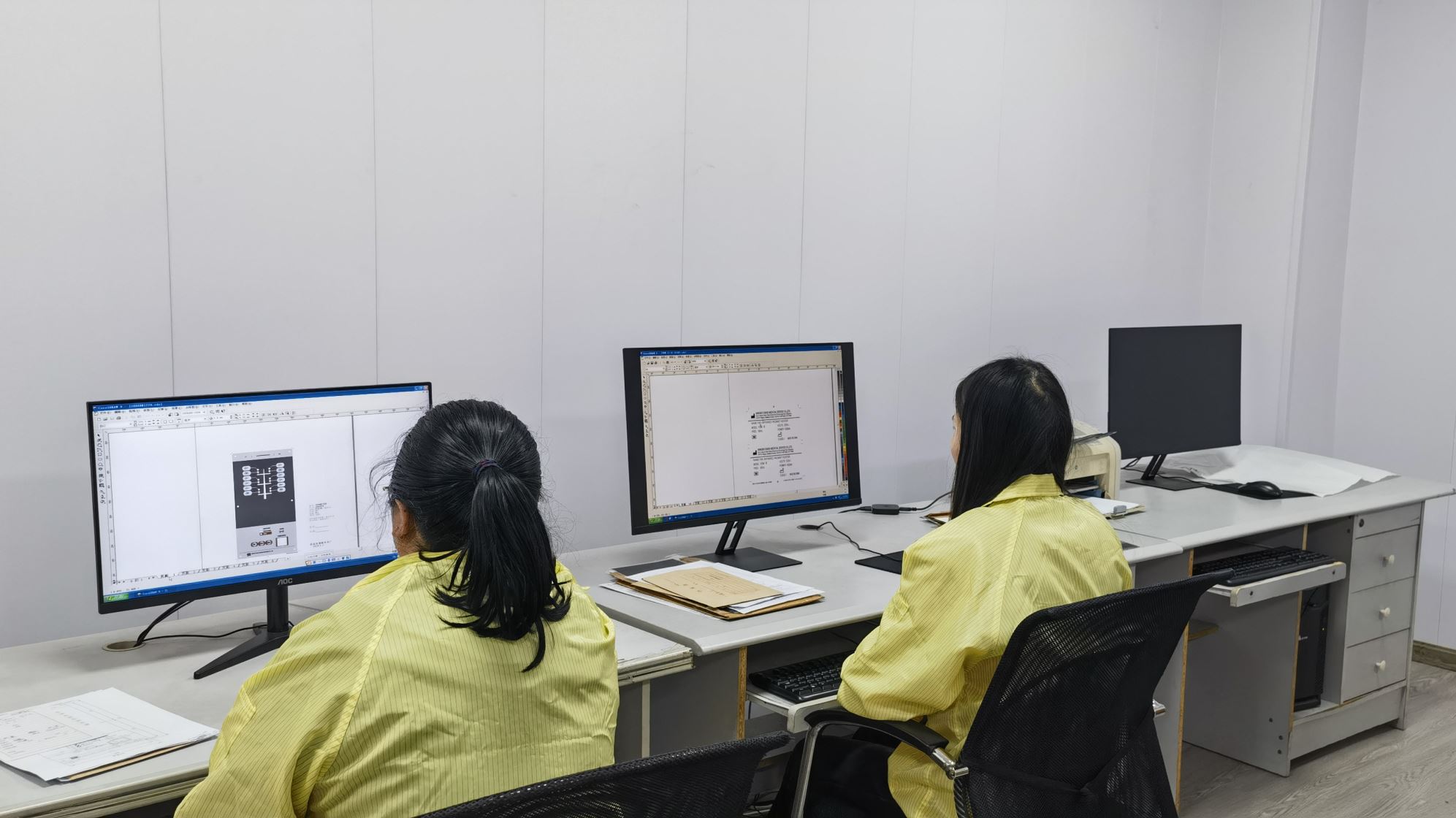
To provide a rapid and thorough engineering review, our R&D team prefers: (1) Vector graphic overlay artwork in AI, EPS, DXF, or PDF format with specified Pantone/RAL color codes; (2) Mechanical stack-up envelope or 3D STEP file indicating cutout clearances and embossed heights; (3) Schematic or pin-out table detailing LED forward voltage/current ratings, common anode/cathode grouping, and connector type (such as 2.54mm pitch Amphenol/Nicomatic female housing or 1.0mm ZIF tail); and (4) Operating environment criteria (temperature, UV exposure, chemical contact).
How does metal dome tactile feel interact with backlighting layers?
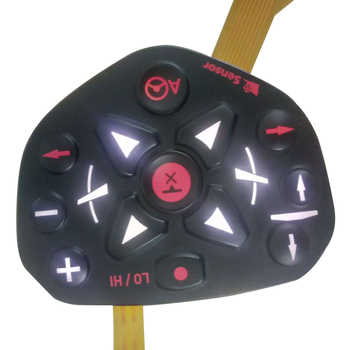
When incorporating metal snap domes (nickel-plated or gold-plated stainless steel, typically 6mm to 12mm diameter with 200g to 450g actuation force), backlighting cannot pass directly through an opaque metal dome. We solve this by: (1) In LGF designs, laser-machining clearance apertures precisely over the dome centers, with illumination channeled around the dome rim into the embossed key legend; (2) Placing side-firing LEDs flanking the dome perimeter; or (3) Employing four-leg open-center metal domes that allow light to project up through the central dome aperture.
What are your standard prototype lead times and minimum order quantities?
For custom LED backlit membrane switches, we support engineering prototypes starting from just 1 to 5 pieces, allowing development teams to validate photometric lux, color correctness, and tactile response before releasing serial tooling. Rapid-turn prototype batches typically dispatch within 7 to 10 working days. Standard production orders generally start at 100 pieces, with high-volume runs exceeding tens of thousands delivered on flexible release schedules.