What parameters are needed to quote and build a custom silicone elastomer keypad?
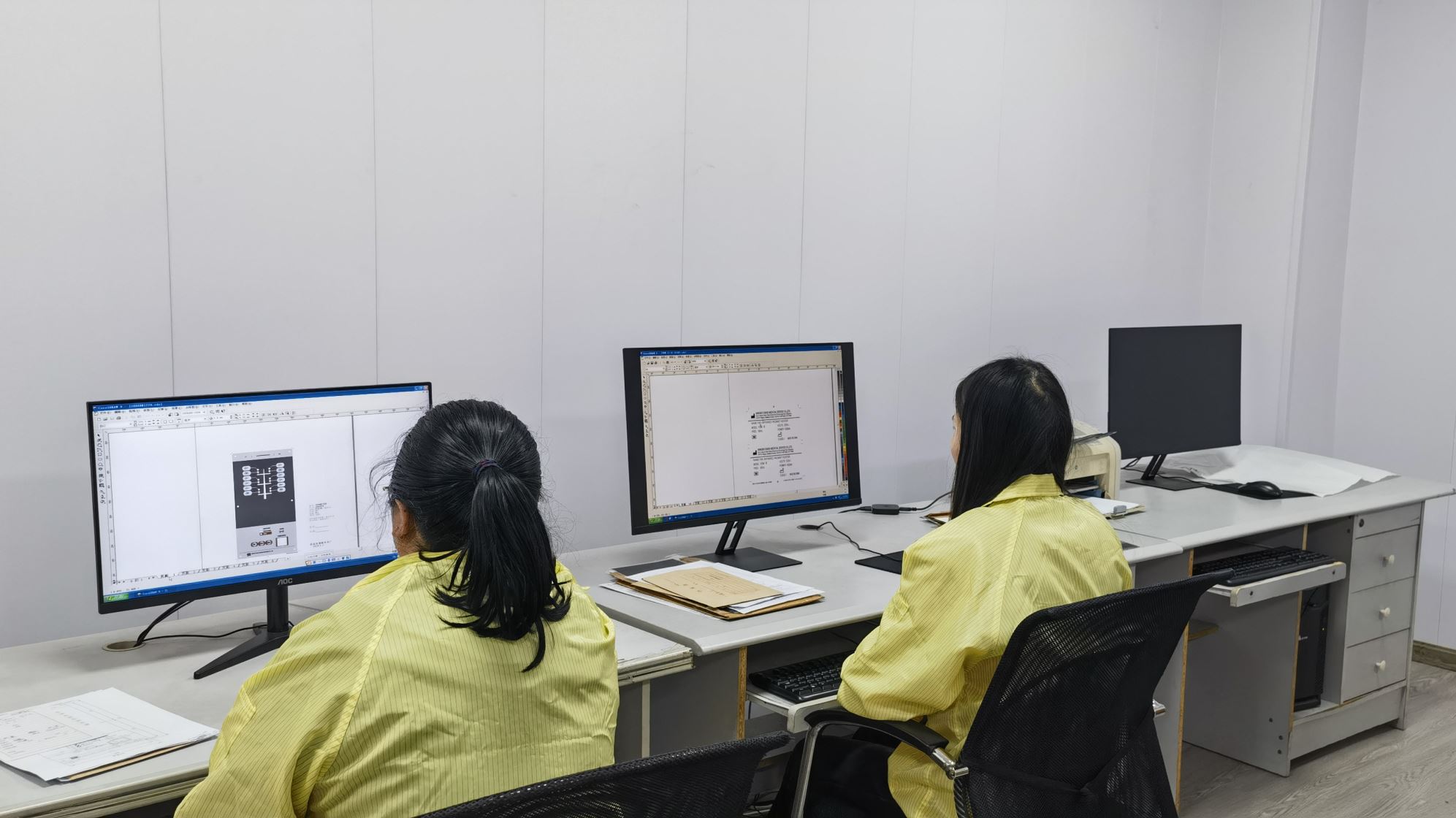
To provide an accurate DFM analysis and quotation within 24 hours, our engineering team requires: (1) 3D mechanical drawings in STEP/IGES format showing key pitch, stroke height, and base flange geometry; (2) 2D artwork in DXF, DWG, AI, or PDF defining legend graphics, Pantone or RAL color codes, and window positions; (3) Electrical contact specification (conductive carbon pills, gold pills, or metal domes); (4) Target actuation force (typically 80g to 350g) and snap ratio; and (5) Environmental conditions such as operating temperature range, solvent exposure, and outdoor UV resistance.
How do conductive carbon pills compare to stainless-steel metal domes?
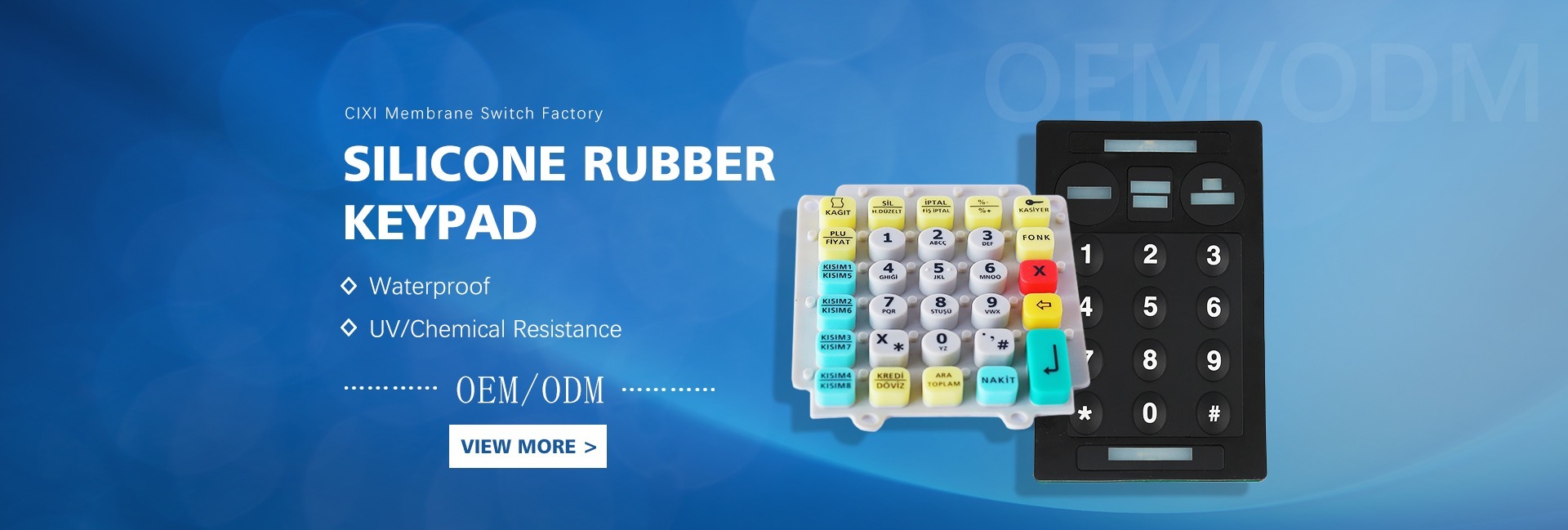
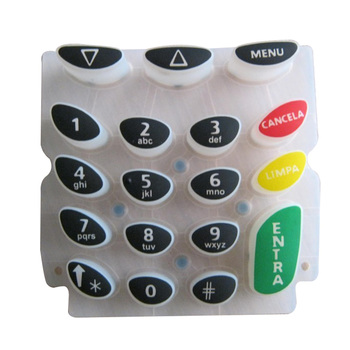
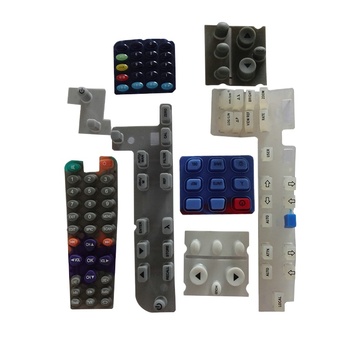
Conductive carbon pills are molded directly into the silicone actuator and close the circuit by pressing onto interleaved PCB traces. They offer a silent, smooth actuation, low cost, and life cycles exceeding 5,000,000 presses, with contact resistance typically between 100 and 200 ohms (well within digital IC thresholds). Metal domes, placed beneath the plunger, offer a crisp tactile snap, audible feedback, and ultra-low contact resistance below 1 ohm, making them ideal for high-noise industrial or safety-critical medical panels.
What is the typical compression mold tooling cost and turnaround time?
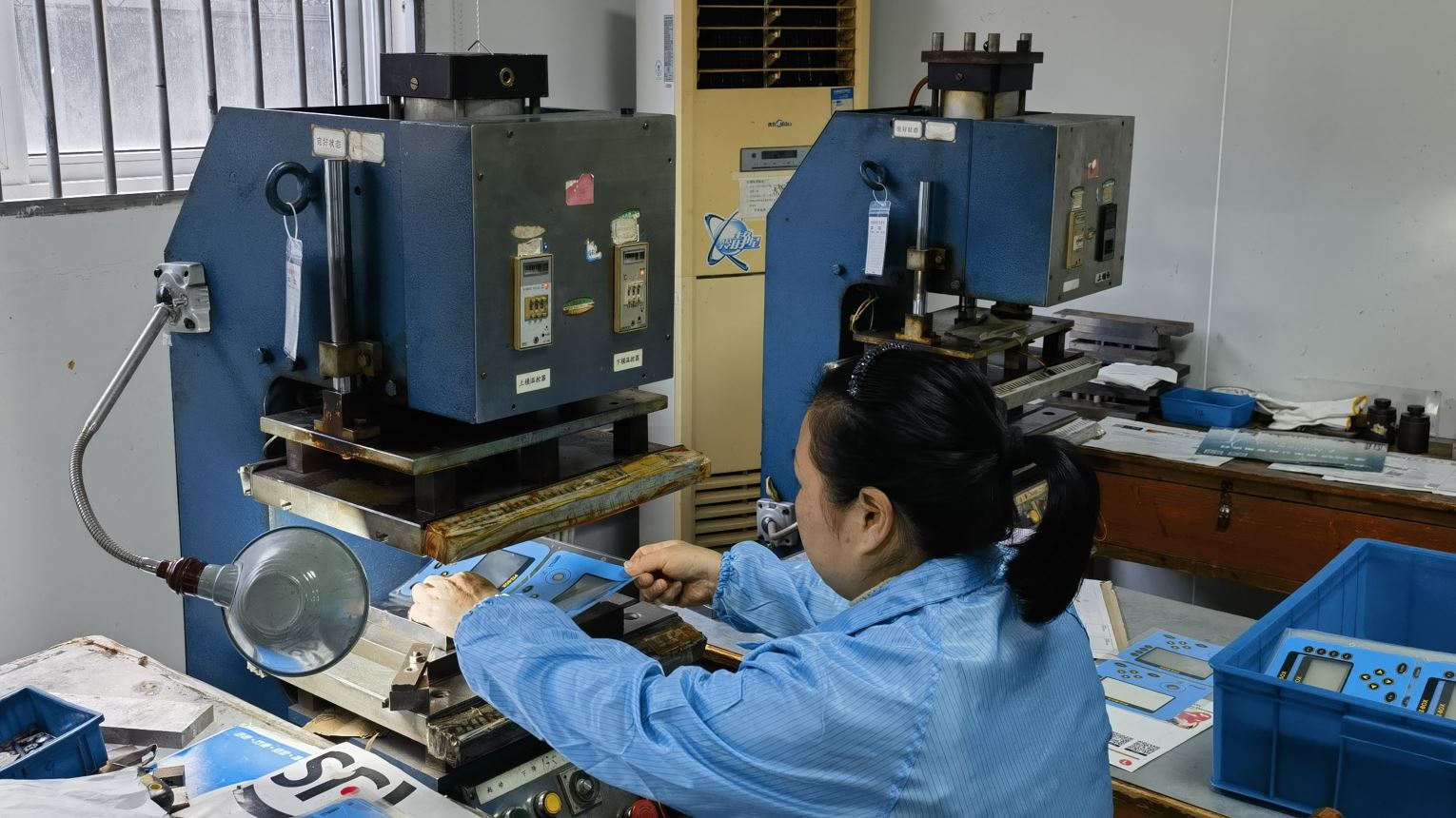
Prototype or pilot-run tooling (usually single- or two-cavity aluminum or P20 steel molds) generally costs between US$500 and US$1,500 and takes 7 to 12 working days. High-volume hardened steel production molds (multi-cavity, 4 to 32 cavities) range from US$1,800 to US$4,500 depending on dimensions, undercut complexity, and slider requirements, taking 15 to 22 working days. A hardened production mold typically lasts 300,000 to 500,000 compression cycles before needing refurbishment.
Can silicone elastomer keypads achieve IP67 or IP68 environmental sealing?
Yes. Silicone rubber is inherently hydrophobic and elastic. By engineering a continuous perimeter sealing lip (bead) around the outside border of the keymat, the keypad serves as its own watertight gasket. When clamped between the front plastic/metal enclosure and the internal PCB substrate, it achieves a tight IP67 or IP68 seal that prevents ingress of high-pressure water, fine dust, and chemical splashes.
How do you ensure uniform backlighting for laser-etched silicone keys?
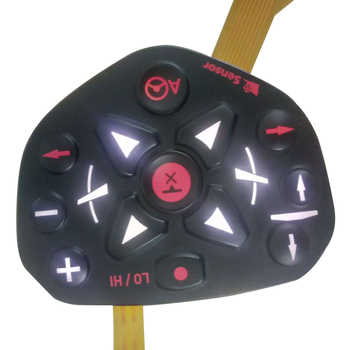
Uniform backlighting requires strict optical engineering. We utilize high-translucency optical-grade base silicone. The keymat is first coated with a translucent translucent ink (to diffuse the LED hotspot), followed by an opaque white layer, and finished with a dark masking coat. CNC laser ablation precisely vaporizes the topcoat without damaging the diffuser. For wide keypad layouts with sparse LEDs, we integrate Light Guide Film (LGF) or internal light pipes to ensure zero dark spots across all legends.
What is Zhejiang ZIRA's Minimum Order Quantity (MOQ) and sample lead time?
We actively support hardware startups, medical R&D teams, and tier-one OEMs. Rapid prototype samples can be produced from just 1 piece for engineering evaluation. Standard production batch MOQs usually start at 100 to 500 pieces. For standardized numeric or high-volume commercial keypads, production batches can scale to tens of thousands of units per month. Prototype samples are delivered via express air courier within 7–12 days after mold completion.
What quality testing is performed on each batch of silicone keypads?
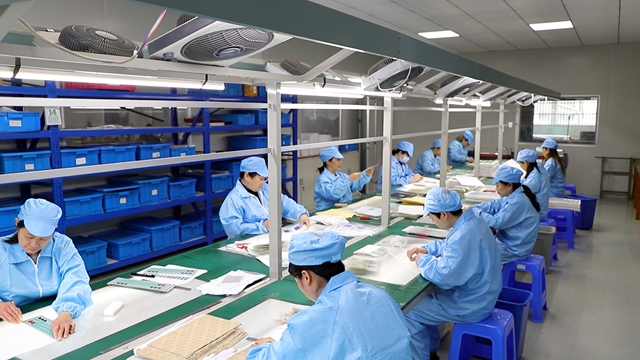
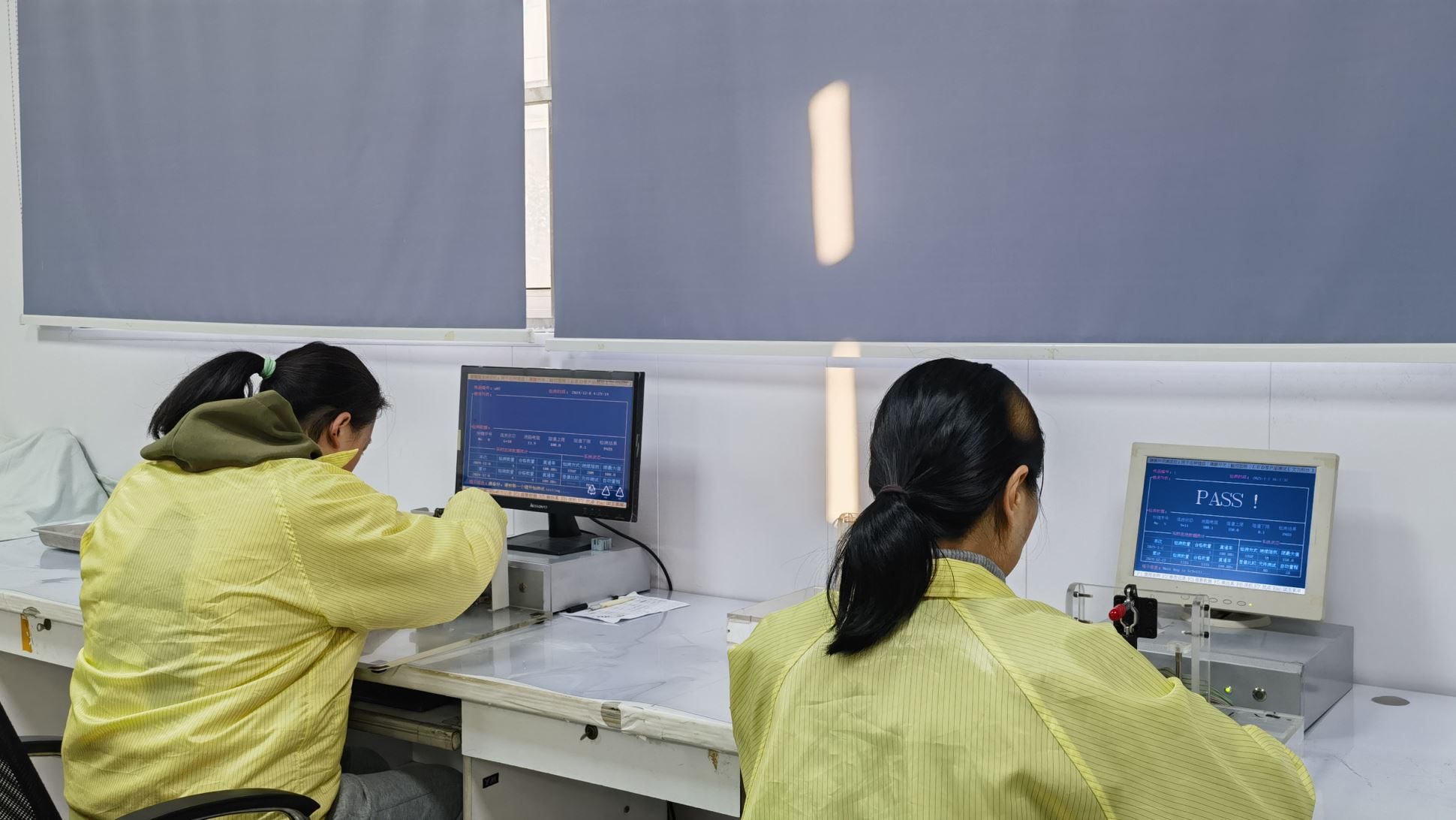
Every production lot at Zhejiang ZIRA Membrane Switch Co., Ltd. passes through strict inspection stages: (1) Shore A durometer hardness testing; (2) Force-displacement curve analysis to verify actuation force and snap ratio; (3) 100% electrical continuity and contact resistance testing; (4) Spectrophotometer color-difference check (ΔE ≤ 1.0); (5) RCA abrasion and cross-hatch adhesion testing; and (6) Visual dimensional inspection using digital optical comparators.