[email protected] Engineering reply within 24 hours (Mon–Sat, GMT+8) English

Top China Conductive Rubber Keypad Factory & Exporters serving Pärnu

Precision Silicone Elastomer Keypads, Low-Resistance Carbon-Pill HMI Assemblies & Industrial Membrane Interfaces Built for Pärnu's Maritime, Forestry, and Electronics Manufacturing Hubs

29+
Years Engineering HMI Interfaces (Est. 1996)
5,000m²
Cleanroom Production Plant in Ningbo
100%
Automated Electrical & Actuation Testing
5M+
Life Cycles Under Severe Baltic Thermal Cycles
Export Catalog 2025/2026

High-Reliability Conductive Keypads & HMI Interfaces Engineered for Pärnu

Engineered to withstand coastal humidity, chemical washdowns, and thermal oscillations between -35°C and +85°C. Fully customized to customer CAD specifications with OEM/ODM production tooling.

Engineering Whitepaper

Precision Conductive Rubber Keypads: Structural Mechanics & Electrical Integrity

A rigorous examination of conductive carbon-pill compression molding, contact resistance physics, and elastomeric tactile dynamics for European OEM systems.

Conductive Carbon Pill Chemistry

The electrical heart of a conductive rubber keypad relies on high-density carbon-impregnated silicone pills, co-vulcanized directly to the elastomeric webbing. Our compounds deliver contact resistance reliably under <100 Ω (with ultra-low-resistance nickel/gold pills reaching <5 Ω) and sustain over 5,000,000 continuous actuations without contact carbon shedding or circuit oxidation.

  • Standard Carbon Pill: <100 Ohms Resistance
  • Gold-Flashed Carbon Matrix: <5 Ohms Resistance
  • Zero Contact Oxidation in Baltic Salt Air

Webbing Geometry & Snap Ratio Dynamics

Tactile sensation is determined by the elastic collapse angle of the silicone key webbing. By carefully controlling the wall thickness (0.35mm–0.60mm) and deflection angles (40° to 55°), we maintain a crisp snap ratio of 40% to 60%. This provides definitive tactile feedback even when machine operators are wearing thick winter gloves in unheated Pärnu forestry and port environments.

  • Actuation Force Window: 60g to 450g Customizable
  • Key Travel Stroke: 0.8mm to 2.5mm Range
  • Fatigue Resistance: ASTM D2176 Compliant

Surface Protection & Translucent Legends

To resist heavy abrasion from hydraulic oils, degreasers, and continuous human contact, keytops receive dual-layer UV-curable polyurethane (PU) or matte silicone protective coatings. Backlit variations utilize precision laser etching over translucent silicone matrices, allowing bright SMT LED lighting to delineate symbols while maintaining optical isolation between adjacent zones.

  • Abrasion Resistance: >1,000,000 Cycles (RCA Tester)
  • Shore A Durometer: 40° to 70° Hardness Control
  • Polyurethane Spray or Epoxy Capped Domes
Estonian Engineering Context

Localized Applications Across Pärnu & South-Western Estonia

Serving the specific operational demands of Pärnu County's primary economic clusters: maritime logistics, advanced timber processing, subcontract electronics manufacturing, and clean-tech food systems.

Baltic Marine & Port Navigation Systems

Pärnu Harbor and local yacht builders demand maritime-grade bridge consoles, sonar controls, and deck winch panels. Our conductive rubber keypads feature molded perimeter water seals (IP67/IP68), saltwater-tolerant silicone polymers, and high-illumination laser-etched legends for night navigation across the icy waters of Pärnu Bay.

Forestry Harvesters & Timber Processing Mills

As the timber and plywood capital of Estonia, Pärnu hosts massive wood processing automation. Harvester joystick head units, timber sorting computers, and saw line HMIs experience extreme continuous vibration and mechanical shocks. Our resilient silicone webbing absorbs vibration, protecting internal circuits while functioning at -30°C.

Subcontract Electronics Manufacturing (EMS)

Pärnu's industrial parks (such as Loode Pärnu) host modern electronics subcontractors assembling IoT devices, smart meters, and telemetry systems for Scandinavian Nordic brands. We provide custom-packed rubber keymats on tape-and-reel or tray systems, calibrated for high-speed automated SMD/PCB assembly lines.

Food Processing & Sanitary Instrumentation

Regional dairy, brewing, and seafood processors require human-machine interfaces that withstand hot alkaline washdowns, caustic cleaners, and thermal shocks. Our seamless silicone rubber keypads create a completely hermetic front panel when clamped against enclosure bezels, preventing moisture ingress and bacterial harboring.

Macro Economic Forecast

Pärnu's Industrial Trajectory: Rail Baltica & High-Value Manufacturing

Analyzing key technology roadmaps driving HMI specification changes across Estonian industrial hardware developers from 2025 to 2030.

The Rail Baltica Transformation

Pärnu is actively transforming into Estonia's primary southern transport hub as the Rail Baltica high-speed rail corridor connects Tallinn, Pärnu, Riga, and Warsaw. This infrastructure project is spurring heavy investment into intelligent logistics hubs, autonomous freight handling, and material sorting equipment along the Via Baltica (E67). These rugged facilities demand highly robust, dirt-proof conductive elastomer keypads that function reliably amidst airborne particulate matter, zero temperature conditioning, and non-stop operational duty cycles.

The Nordic Nearshoring Shift

Scandinavian industrial OEMs (Finland, Sweden, Norway) increasingly migrate hardware sub-assemblies and contract prototyping to Pärnu and Tallinn to shorten supply lines. This migration demands Chinese tier-1 component suppliers who can uphold European IPC-A-610 standards, provide full RoHS/REACH compliance documentation, and offer seamless DFM engineering advice within 24 hours. Our direct Ningbo manufacturing facility matches these rigorous procurement expectations perfectly.

Hybrid Tactile HMI Architecture

Pure touchscreens are failing in rugged Nordic field tests where operators wear insulated work gloves or operate in heavy rainfall. The market is shifting decisively toward hybrid HMI systems: combining a brilliant capacitive TFT display with an adjacent conductive rubber keypad for critical execution commands (Power, Emergency Stop, Directional Jog, Pump Throttle). This hybrid architecture guarantees absolute fail-safe operation under all Baltic weather conditions.

Engineering Comparison Matrix

Conductive Carbon Pill Keypads vs. Alternative Switching Technologies

Objective benchmark for design engineers selecting input technologies for harsh Nordic industrial deployment.

Evaluation Parameter Conductive Rubber Keypad Metal Dome Membrane Switch Capacitive ITO Touch Panel
Operating Travel Stroke 0.8 mm – 2.5 mm (Deep 3D Travel) 0.3 mm – 0.6 mm (Shallow Snap) 0.0 mm (Zero Mechanical Motion)
Tactile Feedback Quality Smooth, cushioned elastomeric snap Sharp, crisp metallic click None (requires buzzer / haptic motor)
Gloved Hand Usability (Winter) Superior (Ergonomic key tops) Moderate (Finger alignment required) Poor (Fails with heavy insulated gloves)
Hermetic Ingress Protection IP67 / IP68 with molded gasket rim IP65 – IP67 with perimeter adhesive IP68 (Solid glass lamination)
Sub-Zero Flexibility (-30°C) Exceptional (Stable silicone polymer) Good (PET film subject to cold embrittlement) Good (Display glass requires pre-heating)
Switching Life Cycle >5,000,000 Cycles 1,000,000 – 3,000,000 Cycles Solid-state (Virtually unlimited)
Initial Tooling Investment Moderate (Steel Compression Mold) Low (Screen Stencils & Steel Rule Dies) High (Optical Bonding & Controller NRE)
Impact Resistance (IK Code) IK08 – IK10 (Impact Absorbing Elastomer) IK06 – IK07 (Film Puncture Risk) IK05 – IK08 (Requires Tempered Glass)
Factory Direct Authority

29+ Years of Industrial HMI Precision: Zhejiang ZIRA Membrane Switch Co., Ltd.

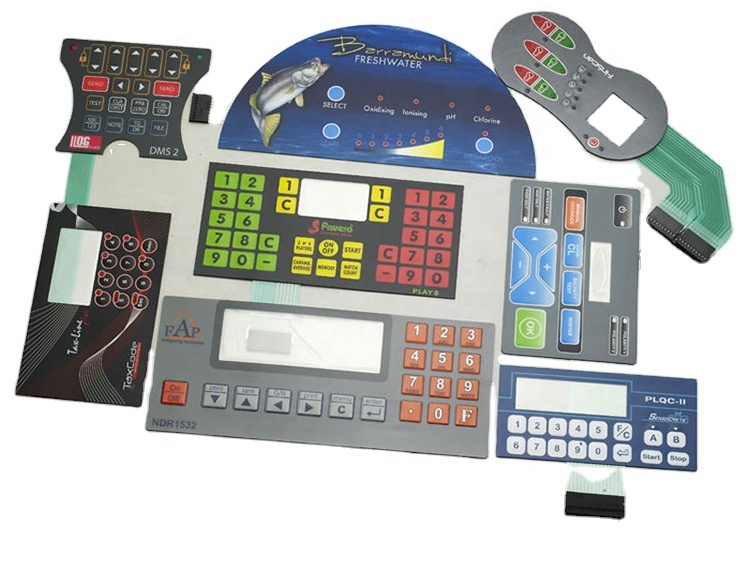
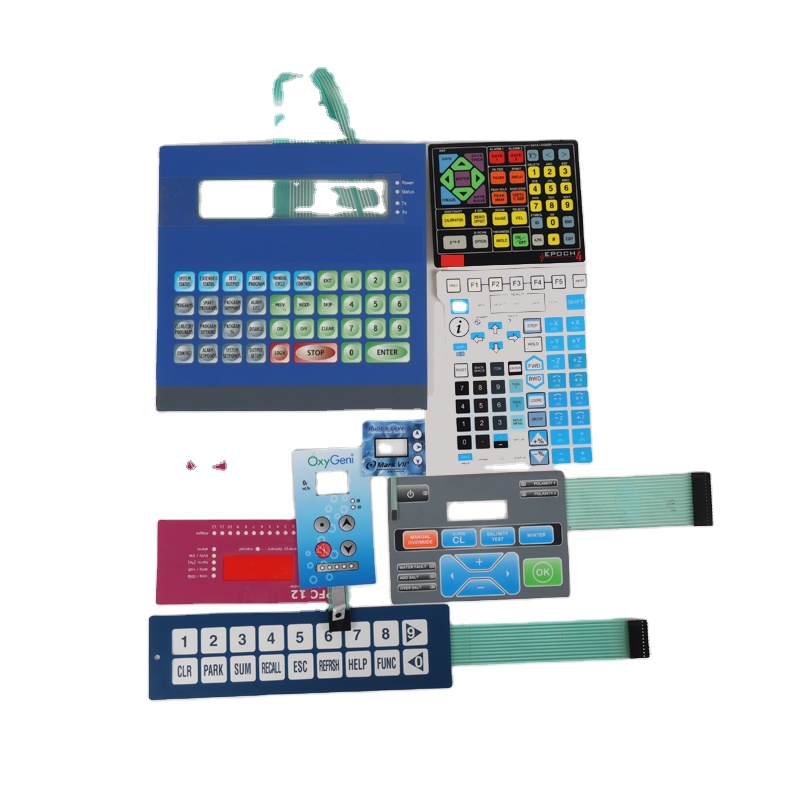
Founded in 1996 in Changhe Industrial Park, Ningbo, Zhejiang ZIRA Membrane Switch Co., Ltd. has established itself as an engineering-driven manufacturer of membrane switches, graphic overlays, conductive silicone rubber keypads, and PCB/FPC integrated assemblies.

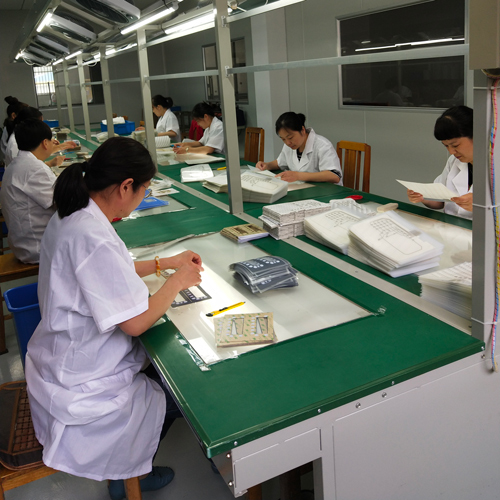
Operating a modernized 3,000–5,000 m² cleanroom manufacturing facility equipped with five dedicated automated production lines, we support global automation leaders including long-term cooperation with ABB and Emerson. Every keypad batch exported to the European Union undergoes 100% electrical continuity inspection, insulation resistance screening, and rigorous tactile force displacement curve analysis.

ZIRA Modernized Cleanroom Production Workshop in Ningbo
Intertek Onsite-Verified Facility International Supplier Assessment Certificate Confirmed
Procurement Knowledgebase

Frequently Asked Questions: Sourcing Keypads to Pärnu, Estonia

Direct answers for Estonian hardware purchasing directors, NPI engineers, and contract manufacturing buyers.

What are the typical logistics transit times and Incoterms for shipments to Pärnu?
We offer multiple shipping avenues to suit your production lead time. For rapid prototyping and urgent production batches, air express (DHL, FedEx, UPS) directly to Tallinn Airport (TLL) or Riga International Airport (RIX—only 180 km south of Pärnu) takes 4 to 6 business days. For volume sea freight, containers depart Ningbo Port directly to Muuga Harbor (Tallinn) with a water transit of 30 to 35 days, followed by direct bonded truck delivery to your facility in Pärnu. We fully support DDP (Delivered Duty Paid), DAP, CIF, and FOB terms, managing export clearance so your incoming goods arrive smoothly with all Estonian EU customs tariffs and VAT accounted for.
How do you ensure silicone rubber keypads will not become brittle in Estonian winters?
We exclusively formulate our keypads using premium virgin vinyl-methyl-silicone (VMQ) polymer chains with wide operating temperature ratings from -40°C to +150°C. Unlike inferior rubber blends containing excessive plasticizers that leach and stiffen under freezing conditions, our co-molded silicone maintains elastic stability and tactile snap ratios down to -40°C. Upon request, we subject batch samples to thermal shock tests (100 cycles between -40°C and +85°C) to verify no webbing cracking or contact pill detachment occurs.
What design files do you need for a full DFM review and quotation?
To generate a comprehensive Design For Manufacturability (DFM) review and tooling quote, please provide:
1. 3D CAD files (STEP, IGES, or SolidWorks) showing key geometry, keycap travel, and webbing draft angles.
2. 2D dimensioned engineering drawings (DWG, DXF, or PDF) noting critical tolerances, Shore A hardness (e.g., 50±5 Shore A), and carbon pill placement.
3. Color specifications referencing Pantone (PMS) or RAL palettes.
4. PCB contact trace layout indicating pad pitch and gold/carbon contact finishes.
Our engineering team will return a formal DFM analysis and stack-up recommendation within 24 hours.
What is your Minimum Order Quantity (MOQ) for custom compression-molded silicone keypads?
For prototype and pilot production runs, our MOQ starts at just 1 to 100 pieces using low-cavity prototype steel tooling. For full-scale production runs, standard batch quantities usually begin at 500 to 1,000 units, scaling smoothly to hundreds of thousands of parts. We understand the high-mix, low-to-medium-volume nature of European specialized industrial electronics and actively support small batch iterations without exorbitant tooling surcharges.
Do your components comply with European Union RoHS, REACH, and CE regulations?
Yes, 100%. All silicone elastomers, conductive carbon pills, silk-screened printing inks, adhesives (such as genuine 3M 467MP, 468MP, 300LSE), and metallic domes utilized in our plant are strictly certified in compliance with EU Directive 2011/65/EU (RoHS 3) and EC 1907/2006 (REACH). We supply certified third-party testing reports from laboratories like SGS or Intertek alongside your Certificate of Conformance (CoC) with every single delivery batch.
Can you combine a conductive rubber keymat with a backlit membrane switch or rigid PCB?
Absolutely. Over 40% of our production consists of hybrid assemblies. We can supply the entire integrated human-machine interface assembly: a molded silicone rubber keymat with translucent laser-etched legends, assembled over an FR4 PCB or flexible FPC circuit, populated with surface-mount LEDs, connectors, and backer plates. This single-source sub-assembly drastically simplifies your Pärnu assembly line supply chain, reduces inventory holding costs, and guarantees 100% plug-and-play functional reliability.
Ready to Engineer Your Custom Keypad for European Industrial Standards?

Consult directly with our HMI senior design engineers. Upload your 2D/3D mechanical files or discuss electrical requirements for your Pärnu-based production schedule.