Featured Industrial & Medical Switch Assemblies
Every interface is custom-fabricated to electrical schematics and CAD drawings. Screen printed circuits, precision compression-molded silicone elastomer, tactile metal domes, and laser-etched legends engineered for 5M+ duty cycles.
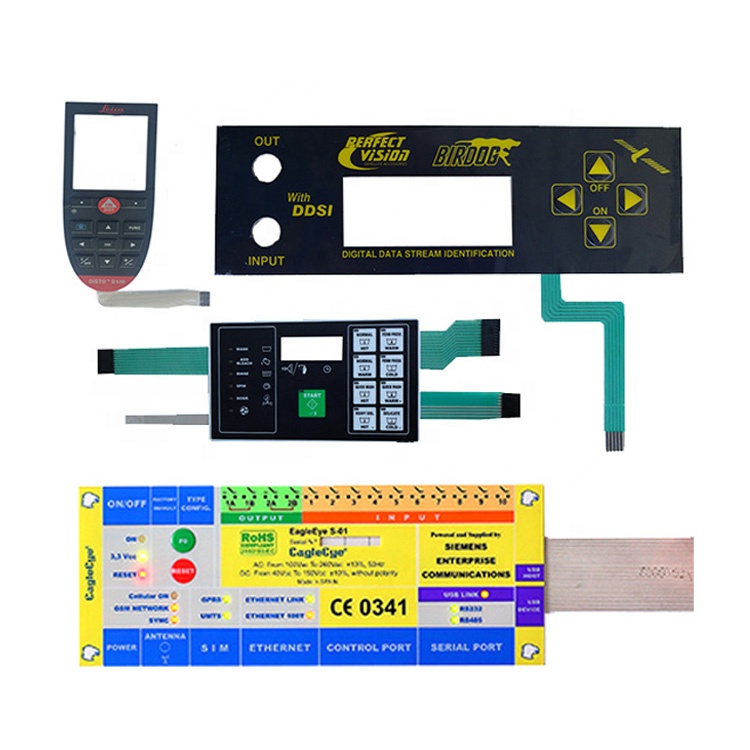
- Autotype XE UV-resistant polyester overlay
- Seismic & mechanical shock mitigation
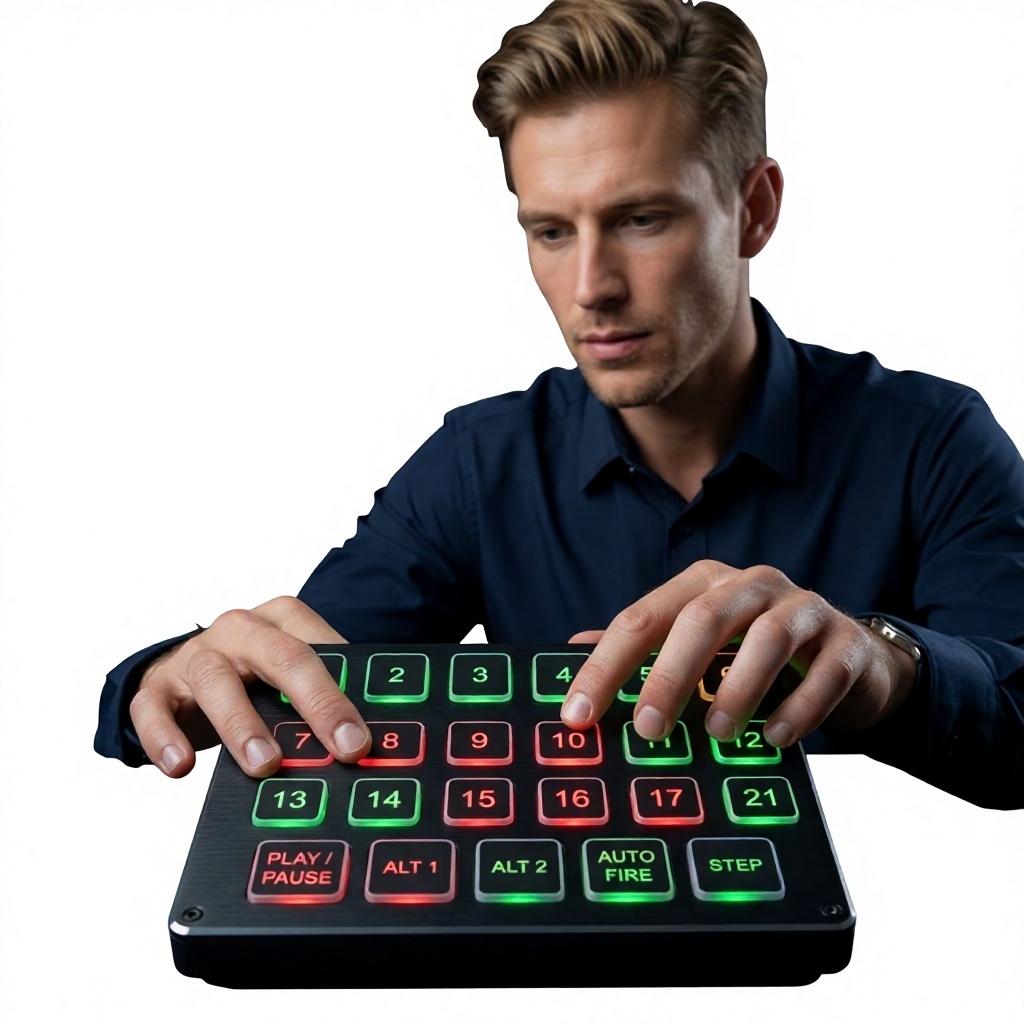
- Light Guide Film (LGF) or LED diffusion
- AS/NZS & CE RoHS compliant
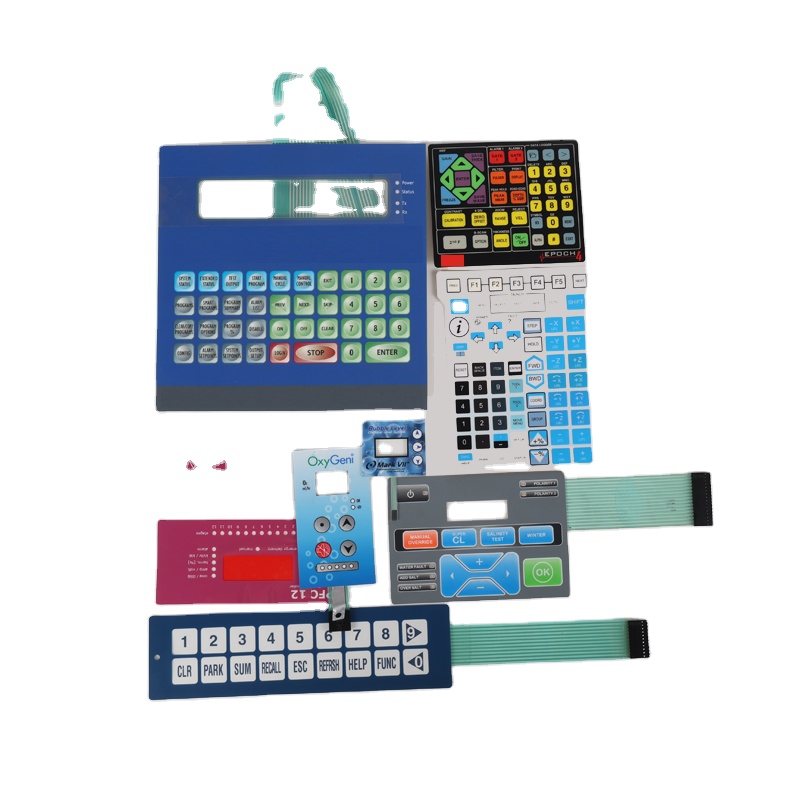
- Polyimide FPC copper trace substrate
- Antimicrobial, alcohol wipe resistant
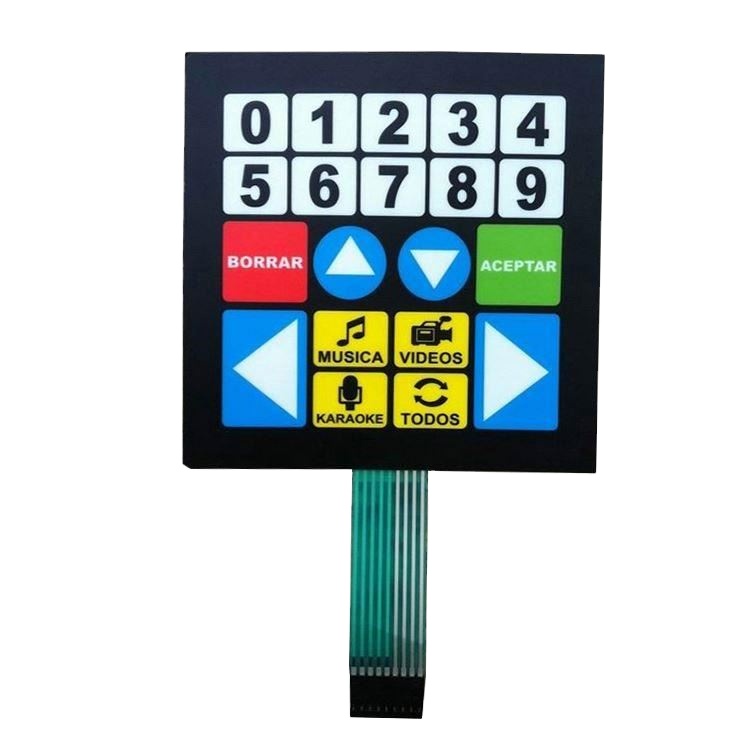
- Stainless steel 4-leg tactile dome array
- 350g actuation snap ratio > 50%
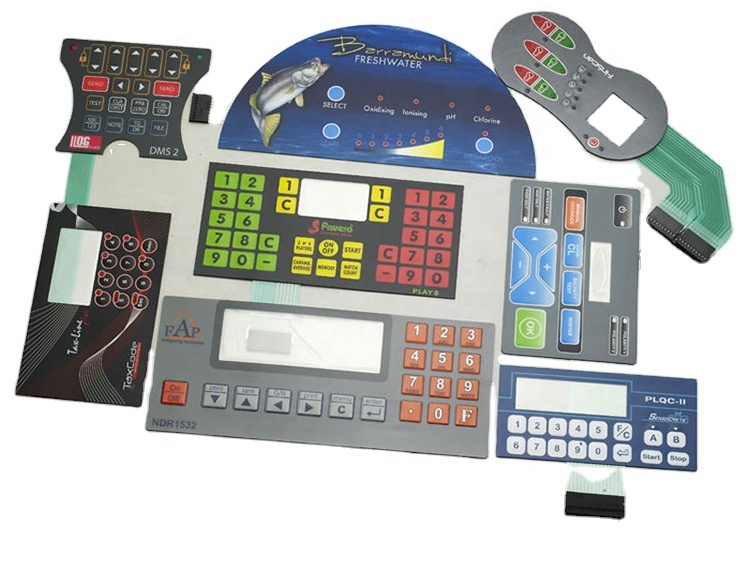
- SMD LED embedded (0603 / 0805 / 1206)
- Engineering samples from 1 piece
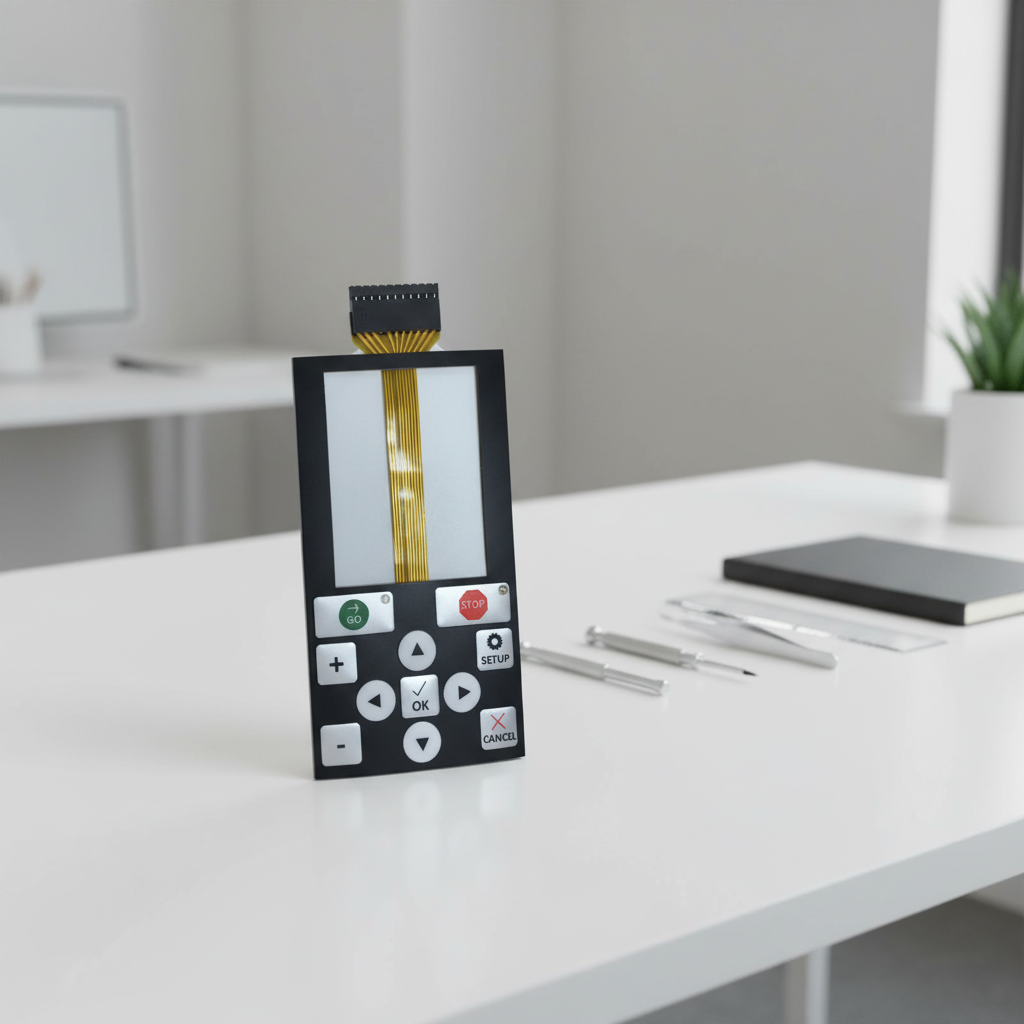
- Flat flush-mount aesthetic with IP65 seal
- Direct sheet-metal & ABS bonding
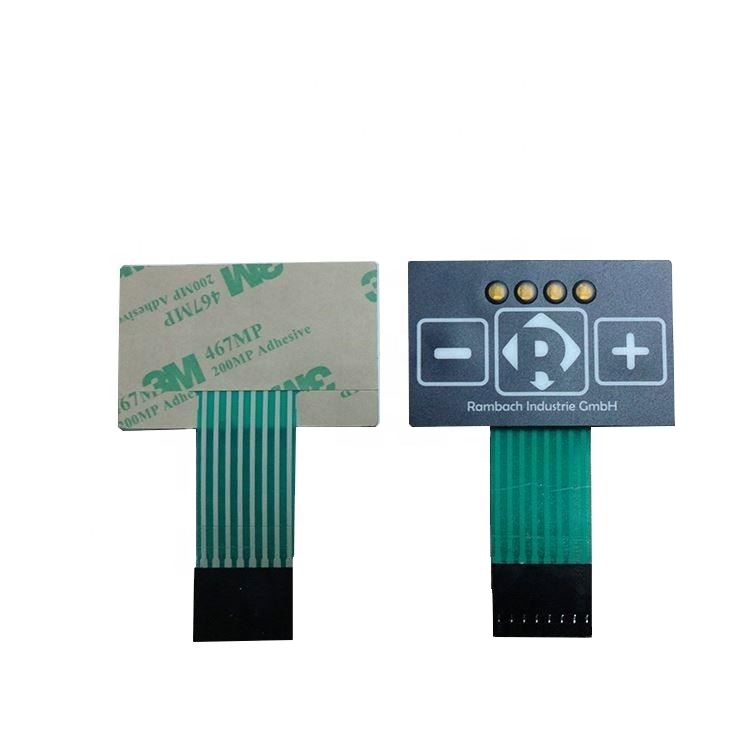
- Ultra-slim profile (<1.5mm overall stack)
- Uniform luminescence across all legends
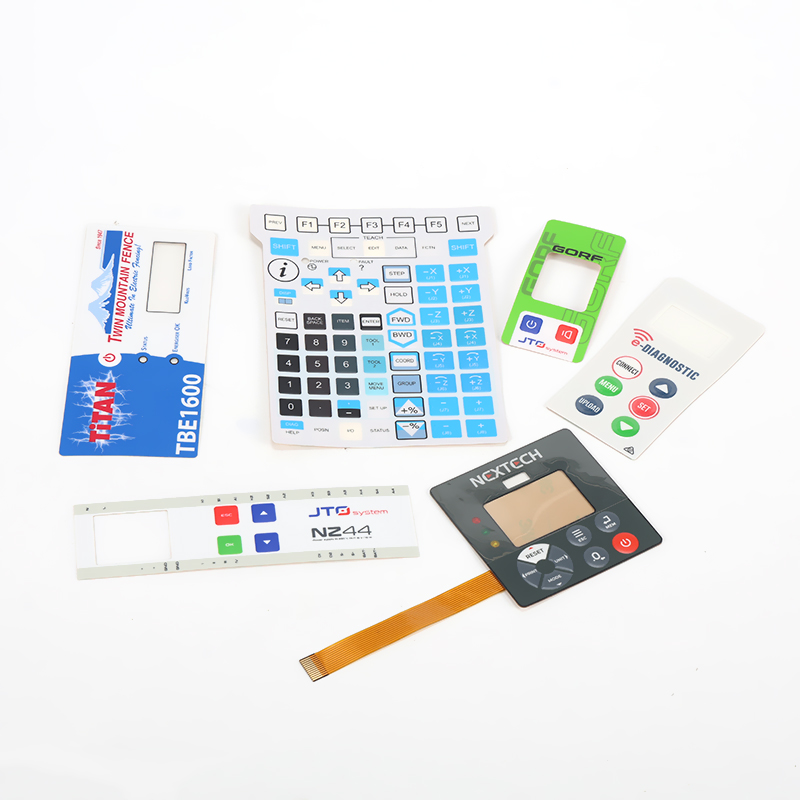
- Anti-glare textured PET, chemical inertness
- -40°C to +85°C continuous thermal rating
Technical Architecture of Elastomeric & Membrane Switching Systems
Precision Human-Machine Interfaces (HMIs) designed for Christchurch's specialized industrial ecosystem require a rigorous balance of chemical resilience, electromechanical snap dynamics, and environmental sealing.
Silicone rubber keypads—manufactured via high-pressure compression molding of premium polydimethylsiloxane polymers—provide an ergonomic tactile response unachievable through standard rigid mechanical switches. When paired with conductive carbon pills, gold-plated printed circuit board (PCB) contacts, or flexible printed circuits (FPCs), silicone keymats act simultaneously as the primary actuation mechanism, a decorative interface, and an impervious environmental gasket against dust, moisture, and chemical washdowns.
For hardware engineers and original equipment manufacturers (OEMs) across the Canterbury Plains and Christchurch's advanced technology sector, selecting between pure membrane switches, molded silicone keypads, or hybrid assemblies is a decisive factor in product longevity. In agricultural telematics, cold-storage logging, and outdoor marine consoles, thermal fluctuations cause condensation cycles that degrade substandard interfaces. By integrating continuous perimeter adhesive gaskets (utilizing 3M 467MP, 468MP, or VHB closed-cell acrylic foams) and precision air-venting channels fitted with hydrophobic, semi-permeable ePTFE membranes, our HMI architectures equalize internal air pressure while maintaining verified IP67 or IP68 ingress protection.
Substrate & Contact Technology Selection Matrix
| Performance Parameter | Conductive Carbon Silicone Keypad | Tactile Metal Dome Membrane Switch | Hybrid Silicone-over-FPC/PCB Assembly |
|---|---|---|---|
| Actuation Force Range | 80g – 450g (Configurable via web angle) | 180g – 500g (Fixed dome geometry) | 120g – 350g (Combined tactile travel) |
| Key Travel Distance | 0.8mm – 2.5mm (True mechanical stroke) | 0.3mm – 0.6mm (Crisp tactile snap) | 1.0mm – 2.0mm (Ergonomic cushion + snap) |
| Rated Electrical Cycle Life | 5,000,000 to 10,000,000 Operations | 1,000,000 to 3,000,000 Operations | 5,000,000+ Operations |
| Contact Loop Resistance | < 100 Ω (Conductive carbon pill) | < 1 Ω (Silver / Gold plating) | < 0.5 Ω (ENIG Gold-plated copper pads) |
| Environmental Operating Temp | -40°C to +150°C (Silicone resilience) | -25°C to +85°C (PET limits) | -40°C to +125°C (High-temp adhesive) |
| Standard Chemical Ingress Rating | IP65 to IP68 (Integral perimeter gasket) | IP65 (Perimeter acrylic seal) | IP67 / IP68 / NEMA 4X hermetic seal |
| Backlighting Compatibility | Translucent silicone + Laser etching | LGF (Light Guide Film) or LEDs | Integrated surface-mount micro-LEDs + LGF |
Actuation Webbing Dynamics: The force-displacement curve of a silicone key is governed by its elastomer webbing design. By adjusting the draft angle (θ = 40° to 60°) and the thickness of the return wall (typically 0.3mm to 0.5mm), our tooling engineers tailor the tactile snap ratio. A snap ratio between 40% and 60% provides the distinct positive tactile confirmation preferred by operators wearing heavy work gloves on New Zealand pastoral properties, preventing missed entries or double-triggering in field operations.
Surface Protection & Legends: Silkscreen printed legends on raw silicone are susceptible to abrasion from industrial grease, grit, and repeated friction. We apply high-durability polyurethane (PU) hard-coat lacquers, UV-cured matte clear coatings, or crystal-clear epoxy drip caps to keytops. For backlit instruments, translucent LSR (Liquid Silicone Rubber) keymats are sprayed with an opaque basecoat followed by high-precision CNC laser etching to ablate legends, ensuring crisp illuminated symbology that does not wear away over decades of continuous night operation.
Localized Application Scenarios in Christchurch & Canterbury
Christchurch serves as the premier technology and heavy-equipment manufacturing engine of New Zealand's South Island. Our custom switches are engineered to withstand the rigorous demands of regional industries.
Center-pivot irrigators across the Canterbury Plains and automated milking sheds in Mid-Canterbury operate in severe environments filled with fine limestone dust, dairy effluent, agricultural chemicals, and intense ultraviolet radiation. Our IP67 silicone elastomer keypads utilize UV-stabilized Autotype XE films and vulcanized perimeter seals that eliminate moisture ingress and rubber hardening under continuous direct sun.
Surrounding the Canterbury District Health Board and health-tech incubators, medical equipment developers produce point-of-care diagnostics, surgical suction units, and patient monitoring consoles. We provide flat-surface graphic overlays with integrated antimicrobial coatings, resistant to repeated hospital-grade disinfectant wipe-downs including 70% isopropyl alcohol, quaternary ammonium solutions, and sodium hypochlorite bleaches.
As the international departure hub for the McMurdo, Scott Base, and Mario Zucchelli Antarctic research programs, Christchurch builds telemetry, weather stations, and scientific sampling equipment. While standard PVC and polycarbonates shatter at extreme temperatures, our specialized fluorosilicone and cryogenic-grade silicone elastomer keypads maintain full elasticity and switch snap action down to -50°C without mechanical brittleness.
Commercial fishing vessels operating from Pegasus Bay and maritime logistics equipment at Lyttelton Port encounter salt fog corrosion, constant wave splash, and nighttime deck operations. We supply backlit silicone rubber keymats using laser-etched translucent silicone coupled with diffuse LED backlighting, impervious to saline pitting and compliant with maritime vibration standards.
South Island electrical distribution networks, substations, and water management pump systems demand seismically certified, high-shock tolerance. Membrane switches bonded directly to rigid FR4 PCB backplanes prevent flexure-induced contact failures during seismic tremors, delivering uninterrupted status signaling and manual failover control when grid stability is compromised.
Logging operations across Canterbury's forestry plantations demand rugged in-cab control pendants. High-travel rubber pushbuttons with carbon-pill actuation absorb intense mechanical vibration, engine heat, and direct mud spatter. Thick-walled silicone keycaps allow confident, blind-touch operation by heavy machinery operators wearing winter safety gloves.
HMI Technology Trends Influencing South Island Manufacturing
New Zealand's industrial equipment design philosophy has historically prioritized mechanical durability and self-contained modularity. However, driven by export demands across Australasia, North America, and Europe, Christchurch OEMs are transforming their interface specifications.
1. Convergence Toward Hybrid "Silicone Keymat over FPC" Topology: Traditional separate electromechanical switches wired into internal chassis are being phased out. Local hardware teams are adopting unified assemblies: a compression-molded silicone keypad serving as the front aesthetic and primary ingress gasket, operating directly over a Flexible Printed Circuit (FPC) or a multi-layer rigid PCB. This architecture eliminates point-to-point harness wiring, halves enclosure depth, and allows automated SMT placement of indicator LEDs, buzzer circuits, and microcontroller I/O expanders.
2. Light Guide Film (LGF) Replacing Discrete Bulky Diffusers: As field devices become more compact and battery-powered (particularly in Canterbury IoT agritech applications such as soil nutrient sensors and solar-powered flow meters), power consumption must be minimized. Our micro-patterned optical LGF backlighting directs high-efficiency side-emitting LEDs evenly across dozens of individual key legends using a total thickness of only 0.25mm to 0.4mm, reducing LED current requirements by up to 70% compared to traditional direct LED arrays.
3. UV Stabilization for the Intense Southern Hemisphere Ozone Deficit: Due to atmospheric ozone thinning over the Southern Oceans, New Zealand experiences peak UV radiation levels up to 40% higher than equivalent latitudes in Europe or North America. Conventional polycarbonate (PC) overlays yellow, embrittle, and suffer micro-crazing within 18 to 24 months of outdoor exposure in Canterbury. As standard best practice, we engineer all outdoor New Zealand panels with specialized, biaxially-oriented, UV-cured textured polyester films (Autotype MacDermid Autotex XE) combined with aliphatic silicone elastomers that resist photo-oxidation over decade-long deployments.
Why Christchurch Procurement Teams Partner With ZIRA
Eliminate trading company markups and miscommunications. We provide direct access to factory tooling engineers, rigorous in-process quality control, and full regulatory traceability.
Our Ningbo manufacturing facility (spanning 3,000 to 5,000 square meters) is verified onsite by Intertek, the globally recognized third-party inspection agency. Our corporate credit, cleanroom standards, QA/QC testing protocols, and legal export licensing are fully documented and publicly verifiable.
Founded in 1996 in Changhe Industrial Park, Zhejiang, ZIRA has evolved from specialized silkscreen printing into a comprehensive HMI engineering leader. With 5 automated production lines and US$10M–$50M annual export volume, we maintain long-term component supply contracts with multinational industrial leaders including ABB and Emerson.
Every switch leaving our plant undergoes 100% automated electrical testing for continuity, insulation resistance (minimum 100MΩ at 100V DC), contact bounce time, dielectric withstand voltage, and key actuation snap ratio. Defect tracking ensures no faulty modules reach your final assembly line.
We bridge the gap between initial R&D prototyping and mass production. Send your CAD drawings (DXF, DWG, STEP) or graphic files (AI, PDF), and our engineering team returns a Design for Manufacturability (DFM) review, material stack-up proposal, and physical working prototypes with quick tooling turnarounds.
We strictly reject uncertified reprocessed resins. We exclusively formulate using pure silicone gums from Shin-Etsu and Dow Corning, graphic films from Autotype MacDermid and Sabic Lexan, high-snap stainless steel domes from Nicomatic, and industrial adhesives from genuine 3M converting distributors.
Direct maritime container consolidation from Ningbo Port to Lyttelton Port, or expedited air express directly to Christchurch International Airport (CHC) via Air New Zealand or Singapore Airlines cargo networks. We support complete Incoterms: FOB, CIF, EXW, CIP, CPT, and full DDP (Delivered Duty Paid).
Frequently Asked Questions: Sourcing from Christchurch
Real-world answers covering international trade, shipping routes, tooling economics, compliance, and material engineering for New Zealand buyers.
For fast-track engineering prototypes, urgent clinical runs, or small batches, air freight from Ningbo/Shanghai to Christchurch International Airport (CHC) typically clears customs in 4 to 7 business days via DHL, FedEx, or dedicated air cargo. For volume production orders, ocean freight from Ningbo Port direct to Lyttelton Port averages 18 to 26 days on the water. We coordinate all export documentation, including Certificate of Origin (NZ-China FTA preferential tariff paperwork), packing lists, and commercial invoices.
Silicone is naturally an inorganic elastomer backbone (Si-O-Si bonds) that exhibits complete immunity to ozone cracking and retains flexible elasticity from -40°C up to +150°C. To combat New Zealand's heightened UV index, we formulate with hindered amine light stabilizers (HALS) and select Autotype Autotex XE polyester films for front graphic overlays. This prevents yellowing, delamination, and embrittlement under intense South Island sun cycles.
To provide an accurate DFM review and quotation within 24 hours, we require: (1) Vector graphic artwork in Adobe Illustrator (.AI), PDF, or EPS with Pantone or RAL color references; (2) Mechanical enclosure housing interface drawing in 2D (.DXF or .DWG) or 3D (.STEP or .IGES) showing key dimensions and travel clearances; (3) Schematic or pin-out table detailing key matrix contacts, tail length, and chosen connector (e.g., FCI Clincher, Amphenol, or standard 2.54mm pitch female header).
Yes. We accommodate agile hardware development methodologies common among Christchurch tech startups and bespoke agritech integrators. We offer single-cavity prototype aluminum compression tooling for silicone keypads and digital UV flatbed printing for graphic overlays. Prototype batches can be sampled starting from just 1 to 5 pieces. Standard production MOQ starts at 100 units once the design is verified.
Conductive carbon pills (typically 2mm to 5mm diameter with contact resistance <100Ω) are compression-molded directly into the silicone underside. They offer whisper-quiet actuation, soft travel cushion, and extreme cycle life exceeding 10 million presses without mechanical fatigue. Metal domes (stainless steel domes placed over PCB or silver circuitry) deliver a definitive "click" snap feel with contact resistance <1Ω, which is ideal when operators require tactile feedback while wearing protective gloves. Hybrid designs integrate metal domes directly beneath the rubber key for the best of both worlds.
Every component, conductive paste, adhesive layer, and silicone polymer batch complies with EU RoHS Directive 2011/65/EU and REACH (EC No 1907/2006) regulations, ensuring seamless regulatory clearance under New Zealand AS/NZS EMC and consumer safety frameworks. Material Safety Data Sheets (MSDS) and comprehensive compliance certificates from SGS and Intertek are provided with pre-production approval documentation.
We accommodate global commercial payment instruments including Telegraphic Transfer (T/T), Letter of Credit (L/C at sight), D/P, D/A, and Western Union. We invoice in USD, EUR, or CNY. For repeat Christchurch corporate clients and established industrial accounts, extended credit terms are negotiable subject to standard trade history validation and credit evaluation.
We engineer custom molded silicone perimeter beads or integrate wide die-cut transfer adhesive gaskets (such as 3M 9472LE for low surface energy plastics, or 3M VHB foam for powdered metals). By incorporating an elastomer skirt with molded interlocking retention ribs, the keypad acts as its own hermetic O-ring when clamped between the front bezel and rear PCB, achieving verified IP67 or IP68 water submersion resistance.
