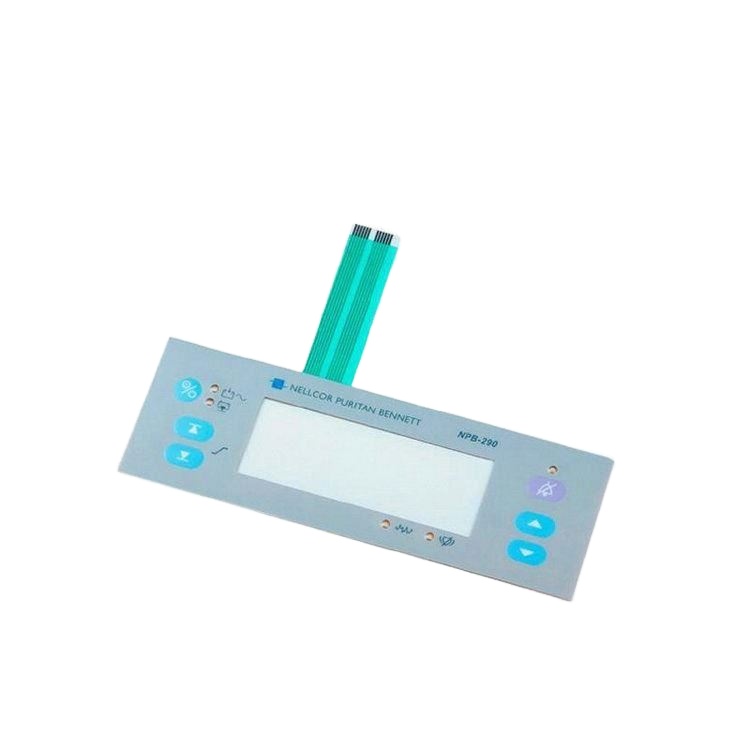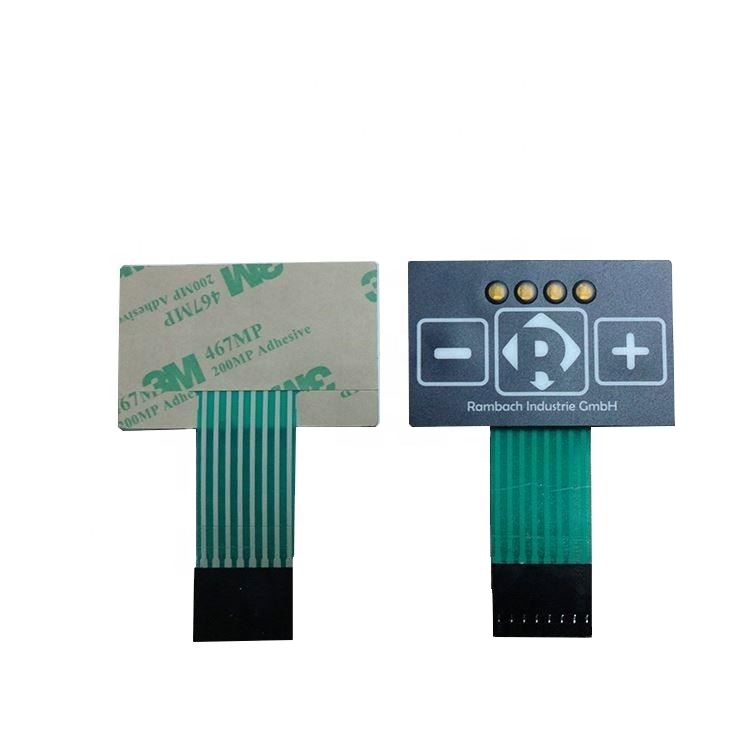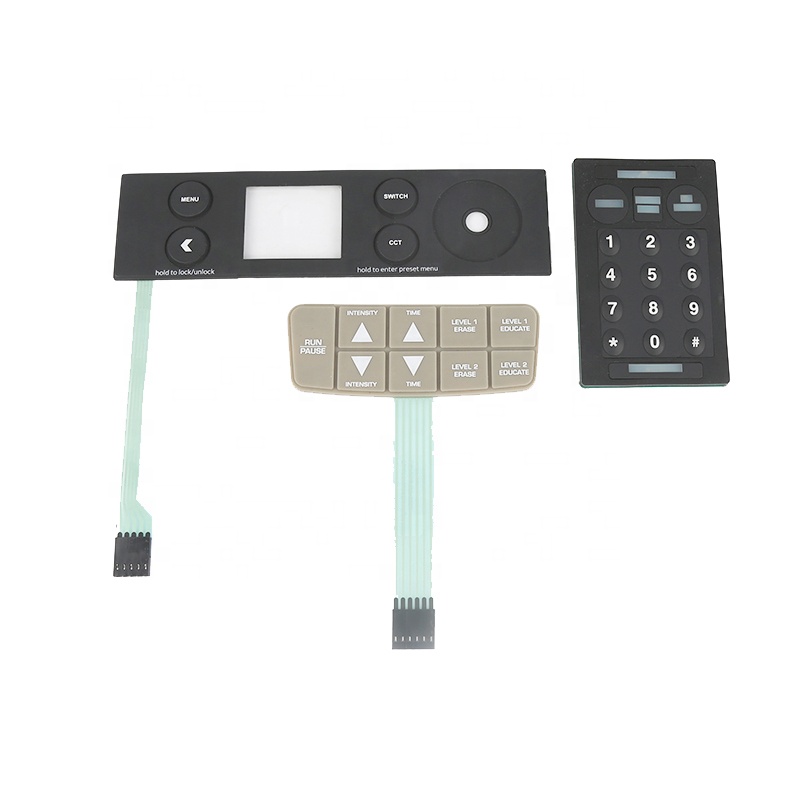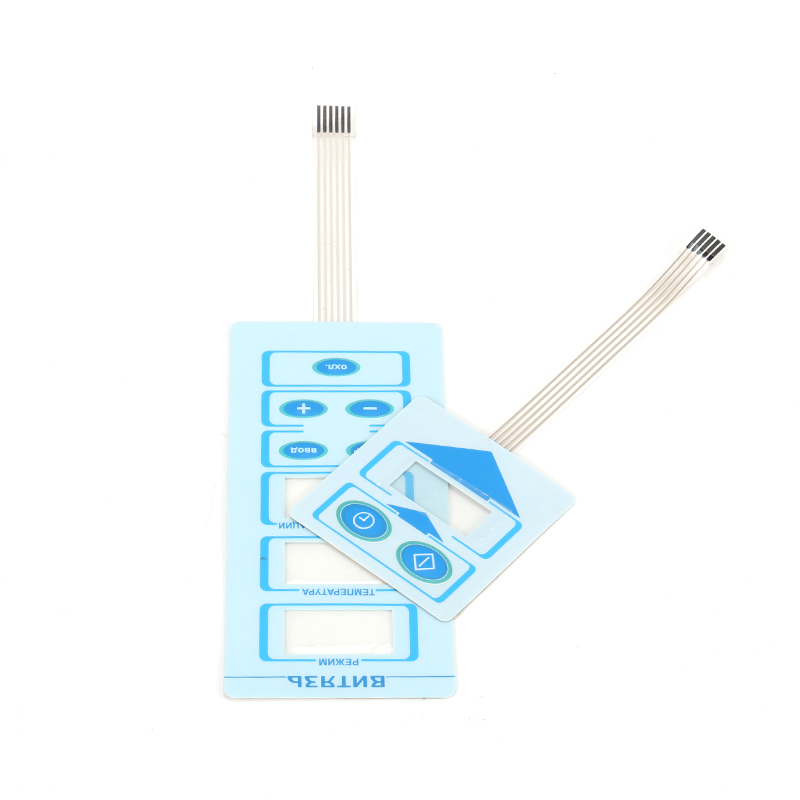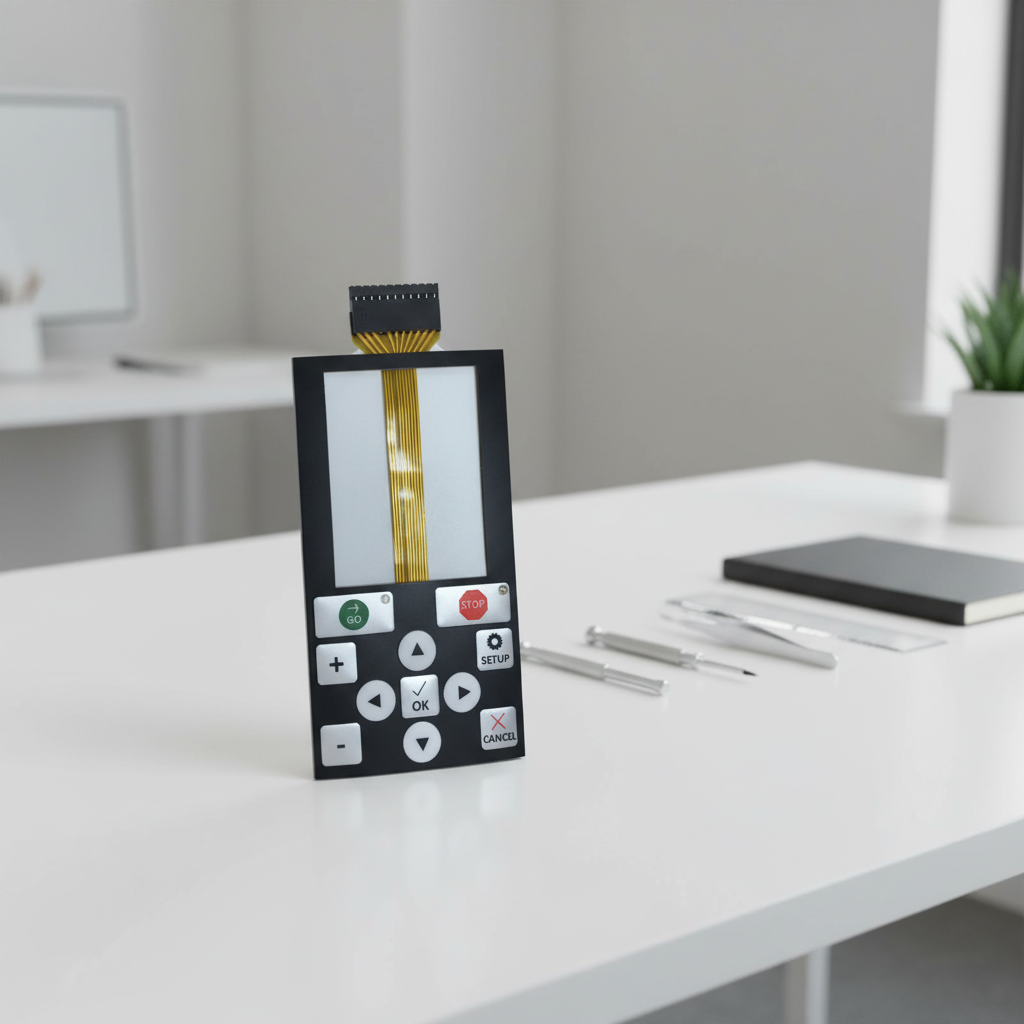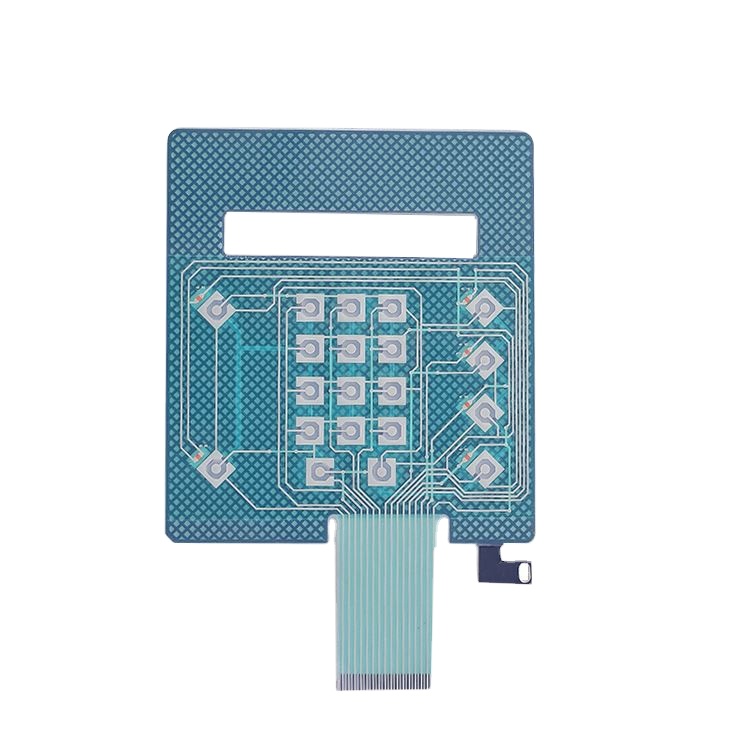
Custom PET Membrane Switch Keypad, ESD Shielding Layer Thin Film Push Button Membrane Switch for Electronic Equipment
- Integrated Silver/Carbon ESD Grid (<15kV)
- Autotex Hard-Coated Anti-Scratch PET
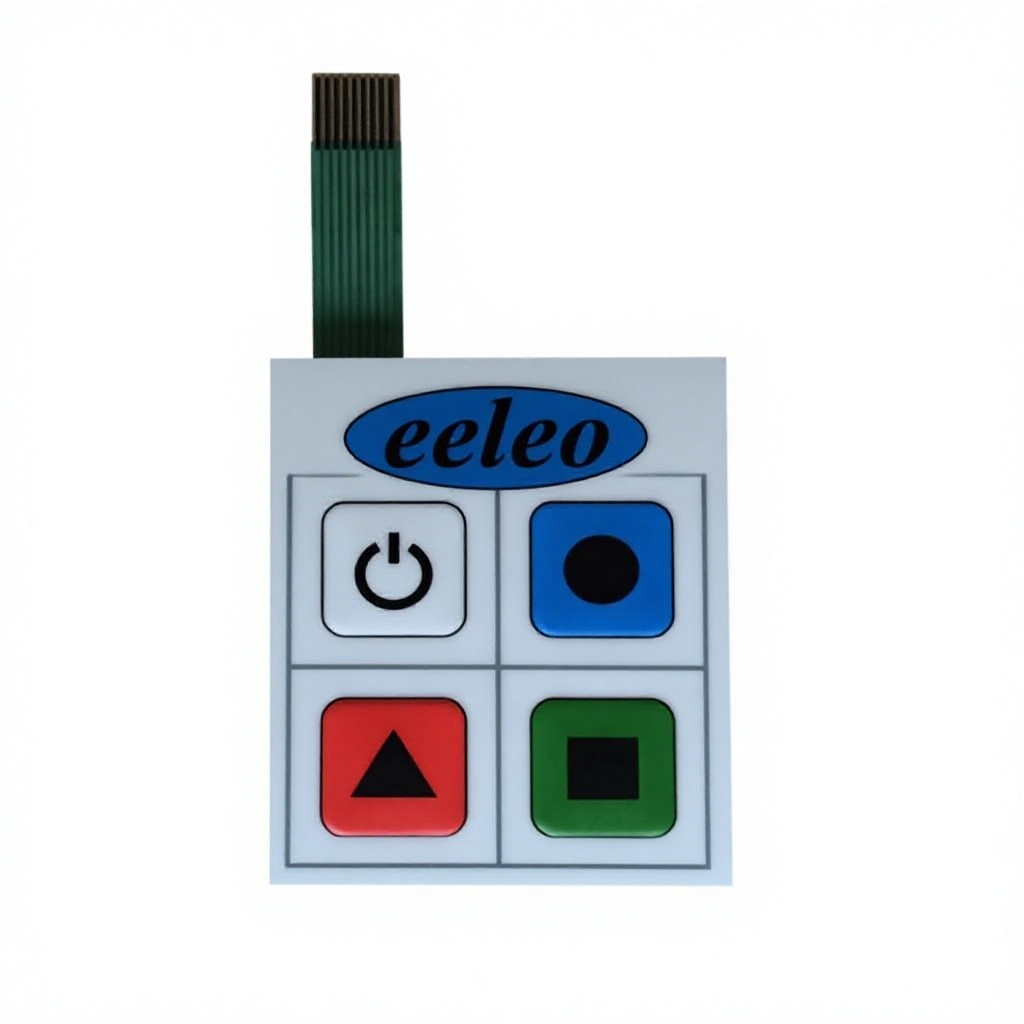
Precision-printed polyester circuits, sealed graphic overlays, and hybrid silicone arrays manufactured under ISO 9001 quality controls with 100% electrical continuity verification.
Balzers, situated within the high-precision Rhine Valley industrial corridor of Liechtenstein, represents one of the world's most demanding procurement environments for human-machine interfaces.
Renowned globally as a cradle for thin-film vacuum coating technologies, advanced surface engineering, precision optical instruments, and semiconductor manufacturing apparatus, industrial enterprises in Balzers and the broader Alpine Rheintal region do not merely procure switch assemblies; they integrate safety-critical, hermetically sealed operational interfaces capable of sustained performance in stringent environments. From high-vacuum physical vapor deposition (PVD) control racks and cleanroom metrology machinery to high-end dental fabrication equipment and automated industrial valve controllers, the local requirement demands engineering depth far exceeding standard commercial membrane keypads.
Within Balzers' industrial vacuum coating sectors, membrane keypads operating adjacent to vacuum load locks and chamber consoles must withstand particulate-free cleanroom protocol scrubbing. Standard commercial inks and uncurbed acrylic adhesives often volatilize under thermal cycles, leading to critical sensor fogging or cleanroom contamination. Zhejiang ZIRA utilizes cross-linked optical polymers, oven-cured dielectric coatings, and select 3M 200MP/300LSE adhesive transfer films designed to resist micro-outgassing and prevent delamination when repeatedly sanitized with isopropyl alcohol (IPA), industrial degreasers, or acetone wipes.
Furthermore, electromagnetic compatibility (EMC) and electrostatic discharge (ESD) suppression are non-negotiable specifications for Balzers electronic equipment manufacturers. Industrial machinery operating high-frequency plasma sources, electron-beam evaporation guns, or high-torque servo drives generates intense electromagnetic fields. Without resilient shielding, static charges accumulated by plant operators or induced transients can penetrate the tail connector, corrupting digital microcontrollers or resetting automated process cycles.
Integrated solid or honeycomb-grid conductive silver and carbon screening layers dissipate electrostatic potentials up to 15kV air discharge to chassis ground, insulating delicate microcontrollers in high-voltage plasma vacuum environments.
Continuous perimeter micro-gaskets combined with custom die-cut closed-cell acrylic bonding layers seal switches against aggressive cooling emulsions, particulate mist, atmospheric humidity, and high-pressure chemical washdowns.
Graphics are screen-printed on the underside of biaxially oriented polyester (Autotex XE or MacDermid PET), rendering key legends impervious to mechanical abrasions, chemical attack, and heavy industrial use over millions of actuations.
As Western European equipment builders accelerate smart manufacturing initiatives, custom keypads are transitioning from passive binary switches to smart, illuminated electro-mechanical control clusters.
Technological convergence across mechanical engineering and printed electronics has redefined the expectations of Alpine technical buyers. Through continuous dialogue with system engineers in Liechtenstein and neighboring St. Gallen/Vorarlberg, four dominant engineering trends have emerged:
1. Adoption of Micro-Patterned Light Guide Film (LGF) Illumination: Legacy electro-luminescent (EL) lamps, with their limited half-life (often decaying below 50% brightness after 3,000 operating hours) and high-voltage inverter requirements, are systematically being phased out. Balzers instrument developers now mandate ultra-thin LGF backlighting (0.125mm to 0.25mm profile) coupled with high-efficiency side-firing SMT LEDs. By utilizing precision-embossed microscopic dot arrays, light is internally reflected and uniformly extracted exactly under key icons or display legends without generating electromagnetic noise or localized heat spots.
2. Hybrid Silicone Elastomer & Rigid PCB/FPC Assemblies: While thin flat membrane switches remain standard for compact enclosures, heavy-duty industrial machinery demands definitive tactile feedback for operators wearing protective nitrile or leather gloves. The trend has shifted decisively toward hybrid silicone rubber keymats vulcanized with internal carbon contact pills or positioned directly over stainless steel metal domes. Backed with an FR-4 rigid printed circuit board or polyimide FPC, these interfaces offer key travels ranging from 1.0mm to 2.5mm, delivering an unequivocal "snap ratio" (40% to 60%) that guarantees input recognition without visual verification.
3. Dual-Function Capacitive & Metal Dome Hybrid Switching: Modern medical and optical analytical consoles increasingly request sleek, glass-like capacitive touch zones for rapid numerical data entry or menu scrolling, integrated adjacent to discrete, high-reliability tactile metal dome buttons for safety-critical emergency shut-offs, laser triggers, and high-voltage activation.
4. Traceability & Environmental Stringency (RoHS 3, REACH & Conflict Minerals): Balzers-based exporters serving global tier-1 automotive, medical, and aerospace supply chains require absolute material pedigree. Every switch delivered must be fully traceable to raw film extrusion lots, with third-party testing confirming compliance with EU RoHS 2015/863, REACH SVHC declarations, and halogens/heavy metal restrictions.
Evaluating technical tradeoffs between traditional polyester membrane switches, silicone elastomer arrays, and rigid PCB-backed human-machine interfaces.
| Performance Parameter | Standard PET Membrane Switch | Silicone Rubber Hybrid Keymat | Rigid FR-4 / FPC Keypad Assembly |
|---|---|---|---|
| Key Travel Distance | 0.3 mm – 0.6 mm (Tactile Dome) | 1.0 mm – 2.5 mm (Ergonomic Stroke) | 0.4 mm – 1.2 mm (Configurable) |
| Actuation Force Profile | 200g – 450g (Crisp Snap) | 80g – 280g (Cushioned Tactility) | 250g – 500g (Industrial Metal Dome) |
| Rated Life Cycle | > 1,000,000 Operations | > 2,000,000 Operations | > 3,000,000 Operations |
| Environmental Ingress (IP) | IP65 to IP67 (Perimeter Gasket) | IP65 (Integrated Silicone Flange) | IP67 to IP68 (Encapsulated) |
| ESD Shielding Threshold | Up to 15 kV (Silver/Carbon Grid) | Up to 10 kV (Dielectric Elastomer) | > 20 kV (Solid Copper Plane Layer) |
| Contact Bounce Time | < 5 ms | < 10 ms (Carbon Pill) | < 1 ms (Gold Plated Contacts) |
| Chemical & Washdown Resist | Excellent (Aliphatic/Aromatic PET) | Good (Enhanced with PU/Epoxy) | Superior (Sealed Front Enclosure) |
| Tooling NRE & Prototyping | Low Initial Tooling / Rapid DFM | Moderate (Steel Compression Mold) | Moderate (PCB Tooling & SMT Stencil) |
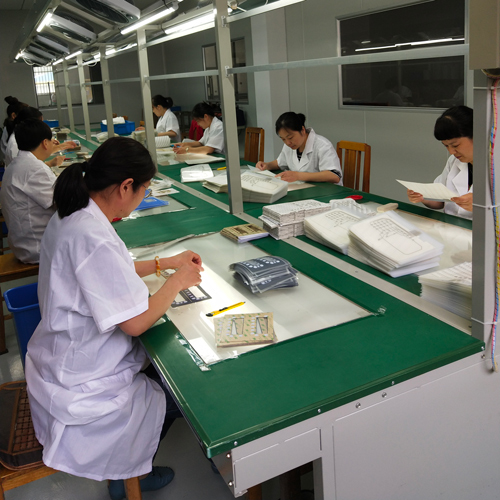
Over 29 years of specialized HMI engineering. Verified on-site by Intertek and trusted by global industry pioneers including ABB and Emerson.
Founded in 1996, Zhejiang ZIRA Membrane Switch Co., Ltd. has grown into an integrated precision engineering and manufacturing exporter operating within the Changhe Industrial Park, Ningbo. With our factory floor spanning between 3,000 and 5,000 m² and maintaining five dedicated dust-controlled production lines, up to 50% of our total production value (yielding US$10M–$50M annual output) is exported directly to precision-driven markets across Western Europe, North America, and Oceania.
We resolve the classic dilemma European procurement directors face: reconciling the cost efficiencies of Asian manufacturing with the strict tolerance guarantees, documented quality management, and transparent technical communications expected in Liechtenstein and Switzerland.
Every unit undergoes sequential gate inspections to ensure zero defects enter your final assembly lines.
Clear answers addressing technical specifications, tooling costs, lead times, and customs compliance for buyers in Liechtenstein and Switzerland.
Non-Recurring Engineering (NRE) tooling charges for custom membrane switch keypads typically range from US$150 to US$450, depending on the complexity of graphic screen exposures, steel die-cutting plates, and metal dome embossing molds. Prototypes and first-article samples are manufactured and dispatched within 5 to 7 business days following final DFM (Design for Manufacturability) drawing approval.
Shipments to Balzers (FL 9496) and the Rhine Valley region are expedited via DHL Express or FedEx International Priority, arriving within 3 to 4 working days with complete electrical test certificates.
For sensitive vacuum coating and semiconductor deposition instruments, we engineer a dedicated ESD/RFI shielding layer placed immediately beneath the graphic overlay and above the active circuit trace layer. This layer comprises a continuous grid-patterned or solid conductive silver/carbon film, or an aluminum foil/ITO composite layer.
This shield terminates into a dedicated grounding pin on the flexible tail, routing static discharges of up to 15kV (air discharge) or 8kV (contact discharge) harmlessly to the machine's steel enclosure without sparking or jumping to switch signal traces.
Yes. We strictly utilize authenticated branded substrates based on client engineering drawings. For medical instruments, cleanroom consoles, and greasy industrial controls, we recommend MacDermid Autotype Autotex (Fine, Velvet, or Touch finish) or chemical-resistant XE series polyester.
For mounting adhesive, we integrate genuine 3M 467MP, 468MP, or 300LSE adhesive transfer films, which maintain bond strengths exceeding 20 N/cm even after sustained exposure to humidity, motor fuels, cutting oils, and 70% isopropyl alcohol cleaning protocols.
We support all global connector interfaces. The most prevalent standard for industrial panels is 2.54mm (0.100") pitch female crimp housings (compatible with Berg, Nicomatic, and Amphenol latching connectors). For high-density, low-profile handheld electronics, we provide 1.0mm or 1.25mm pitch Zero Insertion Force (ZIF) flex tails reinforced with a polyimide stiffener backer.
Tails can be oriented to exit along any edge of the keypad profile to optimize space inside tight cast aluminum or milled steel enclosures.
We regularly ship under DAP (Delivered at Place) or DDP (Delivered Duty Paid) Incoterms for Liechtenstein-based companies, coordinating smooth customs handling through Swiss Customs (in accordance with the Switzerland-Liechtenstein Customs Union). All packages arrive accompanied by accurate commercial invoices, HS codes (typically 8537.10 or 8538.90), packing lists, Certificates of Origin (CO), and material declaration sheets confirming RoHS 3 and REACH compliance.
Whether you require a cleanroom-compatible graphic overlay, an ESD-shielded vacuum control keypad, or a hybrid tactile silicone panel, our senior application engineers review your CAD drawings (DXF/DWG/STP) within 24 hours. Prototypes from 1 piece with zero MOQ barriers on initial sampling runs.