Featured Membrane & Tactile Keypad Assemblies
Each interface is manufactured in our certified cleanrooms, tailored to withstand extreme wipe-down cycles, chemical exposure, and intense mechanical actuation.
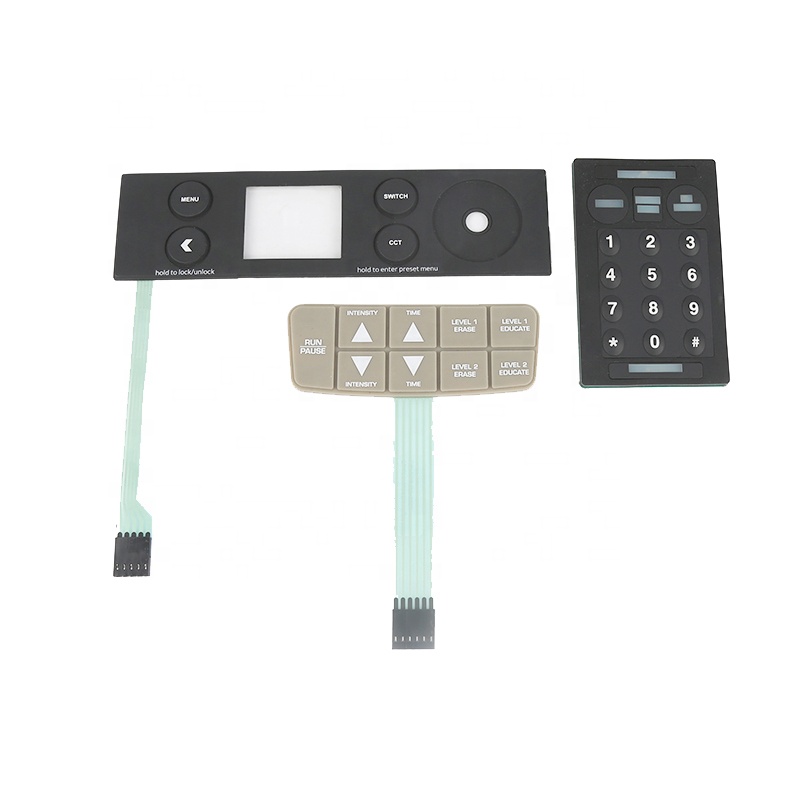
Customize High Sensivity Metal Dome 3M Adhesive Medical Membrane Switch
Tactile stainless-steel dome feedback with hospital-grade 3M lamination. Resists harsh hospital sanitizers and autoclave cleanings.
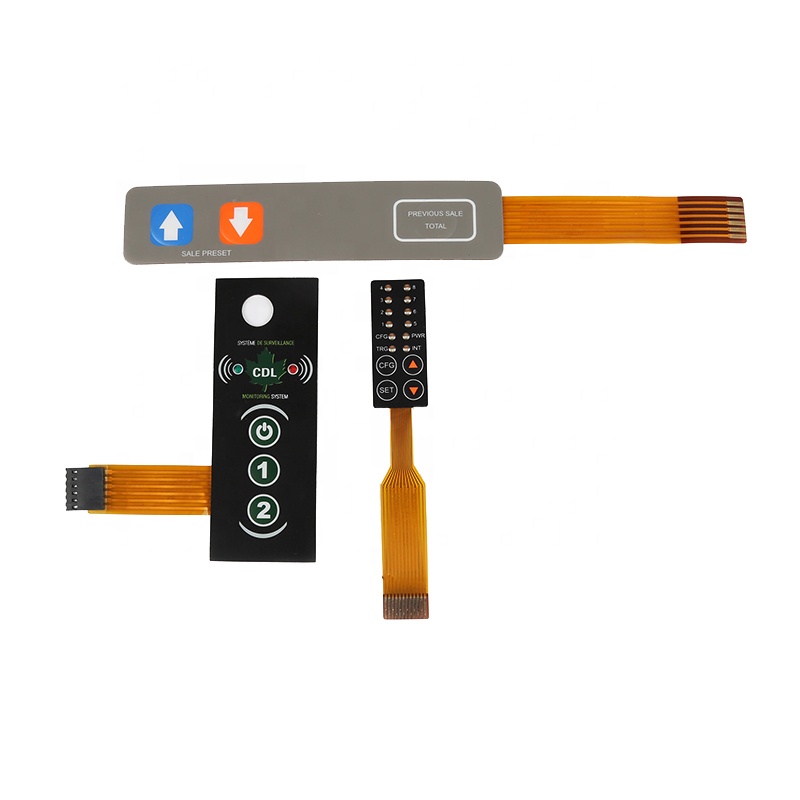
Waterproof Capacitive Touch Membrane Switch with Customizable Color
Zero-actuation solid-state sensing layer with perimeter sealing gaskets. Built to eliminate ingress in liquid-rich production lines.
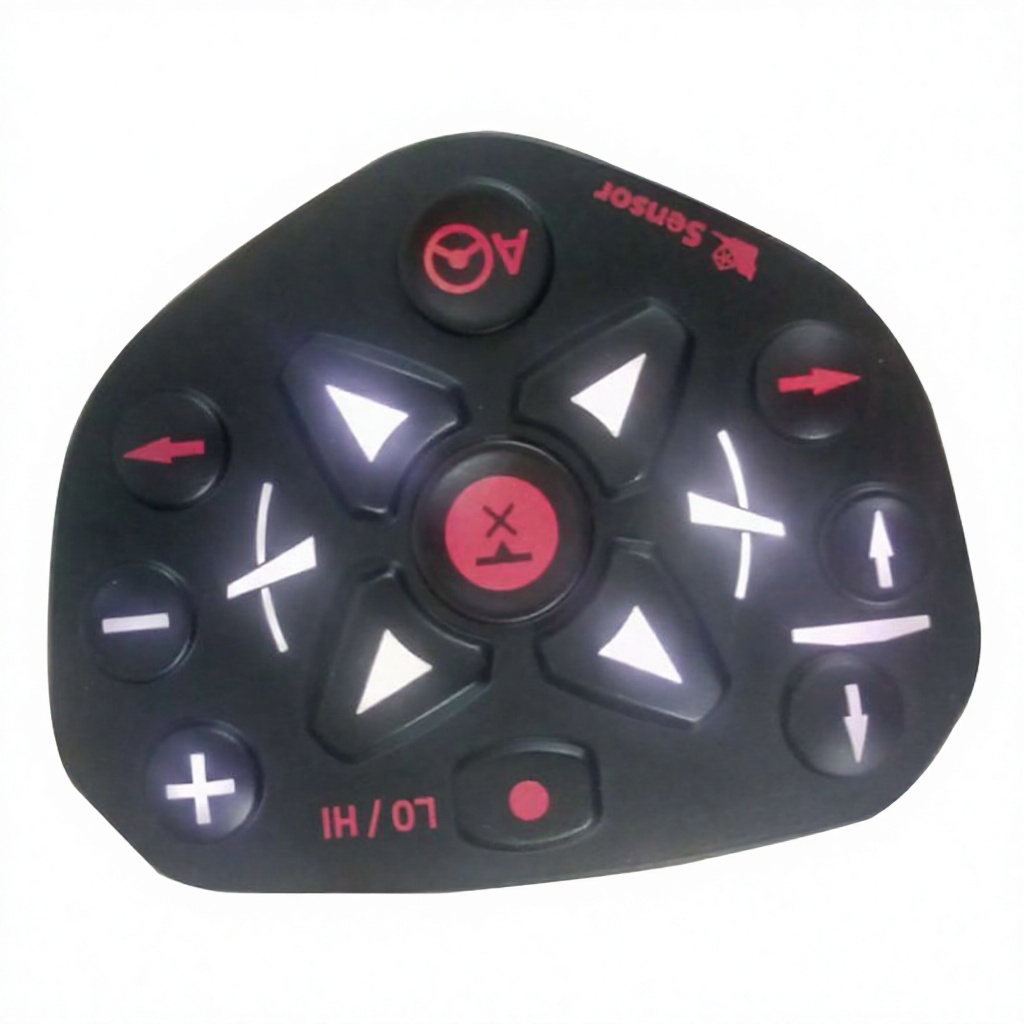
Translucent Polycarbonate PC Overlay with Light Guide Layer
Integrated light guide film (LGF) providing uniform backlighting with low LED power draw for low-ambient monitoring equipment.
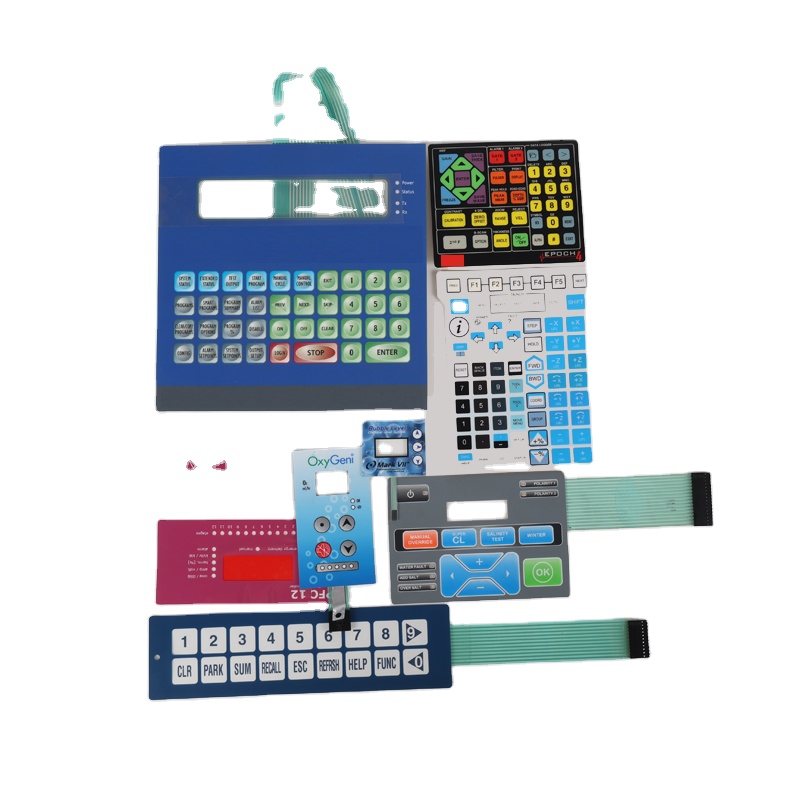
Waterproof Flexible Circuit Membrane Switch for Medical Equipment
Polyimide FPC circuit routing paired with environmental boundary seals. Provides multi-million cycle flex durability for clinical analyzers.
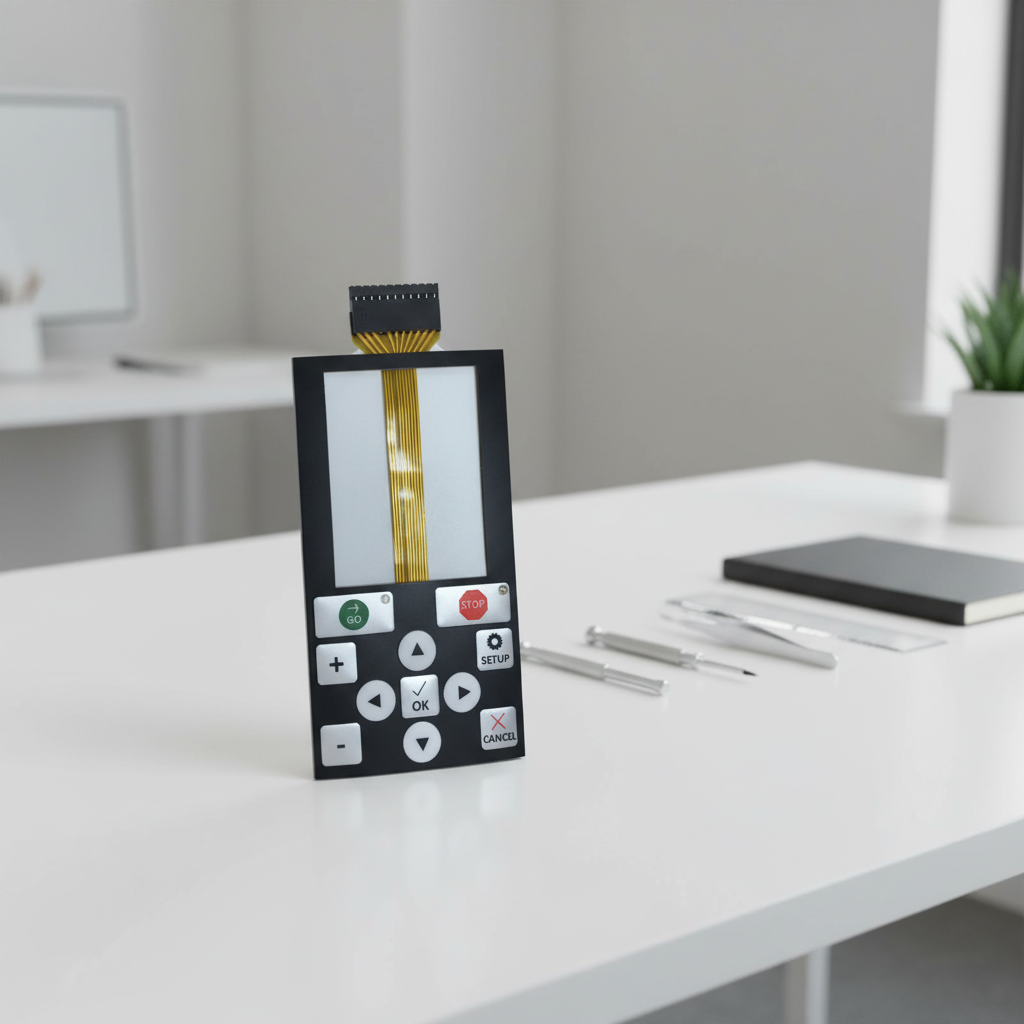
High Quality Waterproof Membrane Keyboard with LEDs & 3M Adhesive
Ultra-slim profile incorporating onboard micro-LED indicators and high shear resistance 3M acrylic adhesive layers.
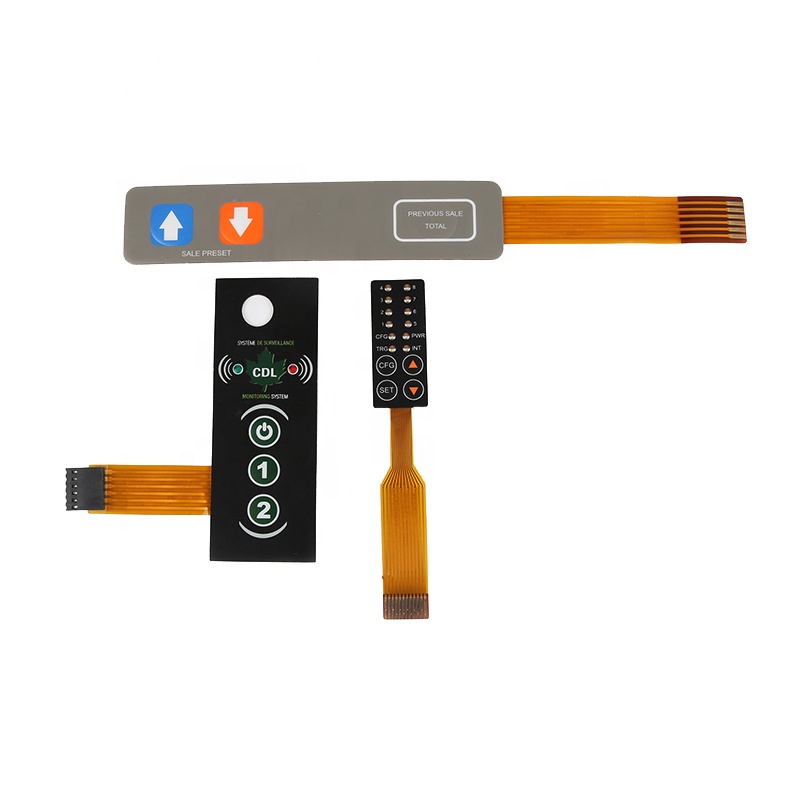
High-Performance OEM Membrane Key Switch with LED Backlight
Heavy-duty operator interface keypad designed specifically for PLC enclosures, SCADA consoles, and electrical drive modules.
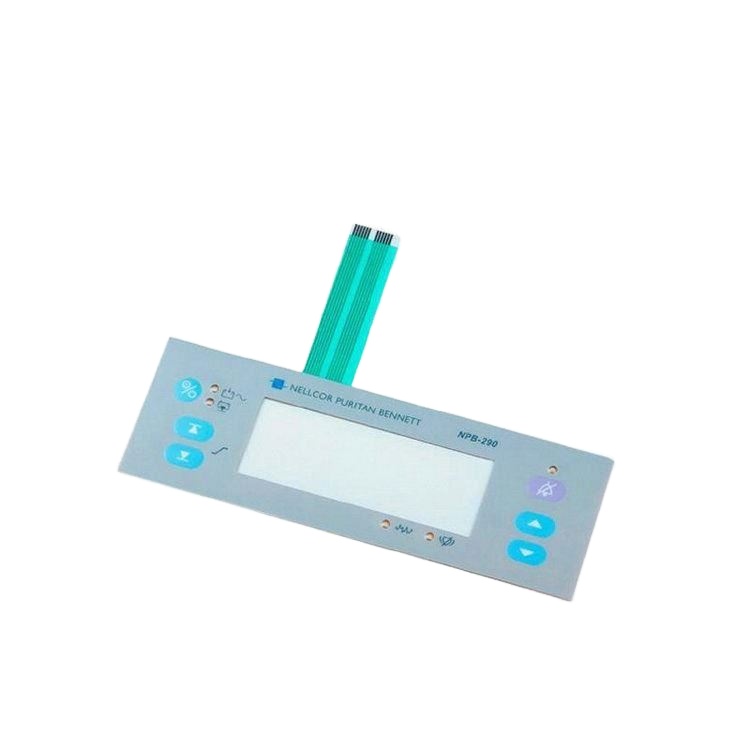
Custom Membrane Push Button Switch, Flexible Membrane Keypad
Precision silver-printed flexible circuitry with custom actuation curves (250g to 450g) and custom embossed dome configurations.
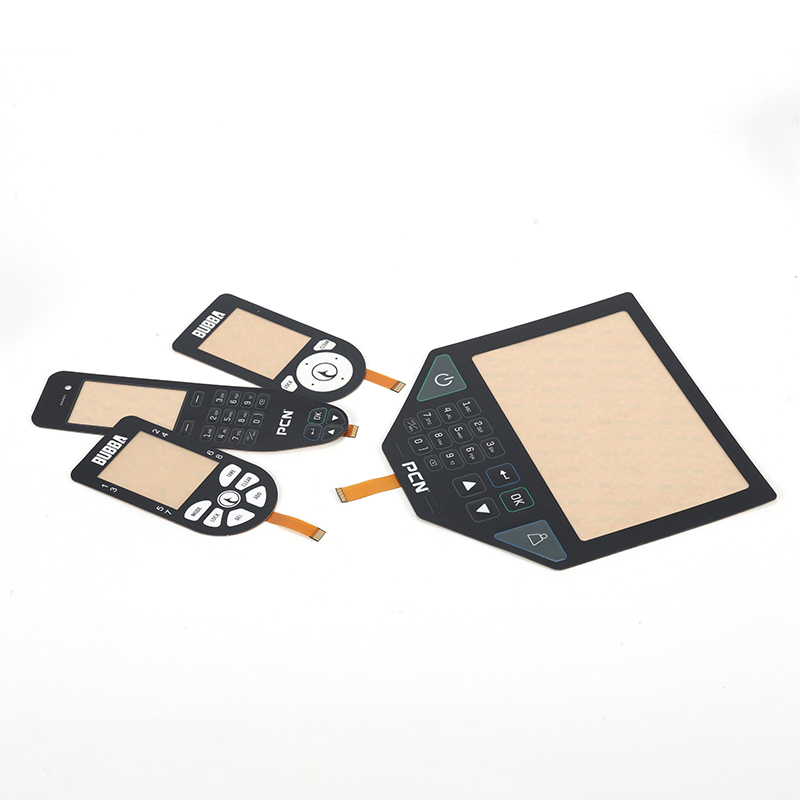
Customized FPC Circuit Membrane Keypad Switch With Shielding Layer
Built-in aluminum foil or printed carbon grid shielding to mitigate high electromagnetic interference in industrial transformer zones.
Intertek On-Site Verified Manufacturing · Export Partner to Tier-1 Brands
Operating continuously since 1996 in Ningbo, Zhejiang ZIRA Membrane Switch Co., Ltd. delivers custom HMI systems globally, maintaining long-term supplier alliances with multi-national industry leaders like ABB and Emerson.

The Material Science & Mechanics of Epoxy Coated Keypads
A rigorous examination of optical resin encapsulation, interfacial adhesion mechanics, and environmental sealing protocols for high-demand Mediterranean industrial settings.
In modern electronic hardware design, the user interface remains the most vulnerable mechanical boundary of any enclosure. While standard graphic overlays manufactured from standard polyester (PET) or polycarbonate (PC) offer satisfactory planar protection, they frequently degrade under rigorous environmental stress involving localized repetitive abrasion, chemical washing, and UV degradation. For original equipment manufacturers (OEMs) and design engineering firms targeting the industrial landscape of Granada and the wider Andalusia province, epoxy coated keypads represent a distinct technological leap.
Epoxy resin coating—often implemented alongside clear optical polyurethanes—involves dispensing a measured micro-volume of two-component liquid thermosetting resin directly onto the embossed key areas of a graphic overlay. Due to carefully engineered surface tension dynamics, the resin flows precisely to the perimeter borders of each keycap, forming a smooth, crystal-clear 3D convex dome (typically 1.2 mm to 2.0 mm in elevation) before UV or thermal curing. This process yields a permanent, high-gloss protective lens that provides substantial functional advantages:
1. Optical Clarity, Ergonomic Focus, and Tactile Enhancement
The cured epoxy bubble functions as a piano-gloss optical magnifier, dramatically sharpening the legibility of sub-surface printed legends, alphanumeric key labels, and backlit status icons. From an operational viewpoint, the dome alters the ergonomic engagement between operator and machinery. Unlike flat membrane buttons where gloved operators must visually confirm finger placement, the physical 3D contoured rim of an epoxy keycap self-centers the finger over the underlying tactile metal dome. Actuation forces can be tightly tuned between 250 grams and 450 grams, with a crisp tactile snap ratio exceeding 50%, providing unmistakable sensory feedback even in high-noise automated environments.
2. Unrivaled Chemical, Scratch, and Environmental Shielding
The cross-linked molecular lattice of cured epoxy resin creates an impenetrable barrier against chemical permeation. Keypads deployed in southern Spain regularly encounter volatile cleaning solvents, mineral oils, concentrated agricultural pesticides, and hydraulic fluids. Standard surface-printed inks succumb to abrasion within months; conversely, epoxy encapsulation permanently seals inks underneath a heavy Shore D 60 to D 85 protective dome. Furthermore, our specialized resin compounds are enriched with aliphatic UV inhibitors, preventing the yellowing, micro-fissuring, and embrittlement typical of lower-grade polymers exposed to the intense solar radiation of Andalusia.
| Evaluation Parameter | Standard PET Graphic Overlay | Silicone Rubber Keymat | 3D Epoxy Coated Keypad (ZIRA) |
|---|---|---|---|
| Actuation Lifetime | 1,000,000 Cycles | 500,000 to 1,000,000 Cycles | > 5,000,000 Cycles |
| Surface Hardness (Pencil) | 2H – 3H | Soft Elastomeric (< 1H) | 4H – 6H (Scratch Proof) |
| Chemical Wipe Resistance | Moderate (Edge peeling risks) | Moderate (Absorbs certain oils) | Immune to Alcohols, Oils & Solvents |
| Tactile Finger Registration | Poor (Unless embossed) | Good (3D molded keys) | Superior (Natural 3D self-locating) |
| Ingress Protection (IP) | IP65 Max | IP65 (Requires mechanical bezel) | IP67 to IP68 Fully Sealed |
| Tooling Initial Cost | Very Low (Steel rule dies) | High (Cast injection mold tooling) | Low to Moderate (Precision Dispensing) |
Localized Application Scenarios Across Granada & Andalusia
Analyzing key Granada-specific industrial clusters where epoxy-domed membrane keyboards provide distinct operational advantages over conventional touchscreens and flat panels.
PTS Granada Biomedical & Laboratory Tech
The Health Sciences Technological Park (Parque Tecnológico de la Salud - PTS) in Granada is a recognized European center for biopharmaceutical research and medical device commercialization. Clinical diagnostic analyzers, centrifugal separators, and infusion consoles mandate continuous chemical surface sanitization with ethanol, bleach, and quaternary ammonium compounds. Our epoxy-coated keypads provide continuous IP67 flat perimeter seals that prevent caustic fluid infiltration, while eliminating microbial harborage crevices common in mechanical desktop keyboards.
Olive Oil Extraction & Almazara Machinery
Granada and its surrounding Andalusian territory represent the epicentre of global olive oil production. Heavy extraction infrastructure—including continuous centrifugal decanters, paste malaxers, and high-speed bottling lines—operates in environments saturated with fatty acids, airborne olive oil mist, organic residues, and daily pressurized hot water washdowns. Standard polymer membranes quickly delaminate or yellow under olive oil exposure; our thermoset epoxy resins resist fatty acid dissolution entirely, providing uninterrupted harvest-season uptime.
Renewable Energy & Solar Inverter SCADA
Southern Spain benefits from Europe's highest solar irradiance levels, spurring massive utility-scale photovoltaic and solar thermal installations across the Granada basin. Outdoor solar tracking consoles, grid-tie central inverter cabinets, and meteorological stations endure blistering summer heat reaching upwards of 45°C ambient, paired with severe ultraviolet degradation. Our custom aliphatic polyurethane/epoxy formulations incorporate specialized UV absorbers, preventing sun-induced cracking and visual yellowing over 10-year operational horizons.
Agritech & Greenhouse Climate Controls
The specialized intensive subtropical and greenhouse agricultural belts along the Granada coastline (Motril, Salobreña) demand continuous microclimate automation. Climate control computers, computerized fertigation dosing stations, and greenhouse venting controllers are exposed to continuous high humidity, fertilizer salt sprays, and soil particulate matter. Epoxy sealed keypads provide an impenetrable barrier against moisture ingress and airborne chemical fertilizers, ensuring precise microclimate calibration.
Regional Technology Trends Shaping Andalusian HMI Procurement
How Granada's industrial engineers and procurement heads are adapting interface specifications to balance smart automation, ergonomics, and rigorous EU regulatory directives.
Hybrid Tactile-Capacitive Control Integration
Industrial machinery builders in Granada are steadily migrating away from pure consumer-style glass capacitive touchscreens for primary safety and critical parameter inputs. Glass screens fail when operators wear heavy protective gloves or when surface condensation, oil drops, or dust are present. The prevailing trend combines an epoxy-domed mechanical matrix for physical, fail-safe tactile functions (Emergency Stop, Reset, Motor Jog) alongside flat capacitive zones or LCD windows, guaranteeing uninterrupted control under dirty workshop conditions.
Stringent CE Directives & Material Compliance
Procuring electronic sub-assemblies for the European Union market requires strict adherence to RoHS 3 (Directive 2015/863), REACH (EC 1907/2006), and European Low Voltage Directives. Engineering teams across Spain now audit material provenance deeply. Our manufacturing lines exclusively use certified non-toxic resins, halogen-free polyimide flexible printed circuits (FPC), and genuine 3M adhesives (such as 467MP, 468MP, and 300LSE for low surface energy plastics), supported by verifiable third-party testing dossiers.
Ultra-Low Power LGF Backlighting for Remote Telemetry
With Andalusian smart-grid initiatives expanding across mountainous rural terrain in the Alpujarra and Sierra Nevada regions, remote telemetry units (RTUs) and environmental data loggers run on solar-buffered battery banks. Traditional LED arrays consume excessive milliamps. The adoption of custom Light Guide Film (LGF) layers beneath epoxy keypads enables uniform illumination across entire alphanumeric key arrays utilizing just 2 to 4 ultra-efficient side-firing SMD LEDs, optimizing power conservation.
10-Stage Precision Manufacturing & Testing Methodology
Every membrane switch and epoxy-encapsulated keypad manufactured at Zhejiang ZIRA follows an unbroken chain of in-process quality control gates prior to worldwide dispatch.
Raw Material Inspection
Optical spectrometry and surface tension verification of incoming Autotype PET, polycarbonate sheets, and conductive silver inks.
Precision Artwork CAD
DFM engineering review, pin-out mapping, and vector color matching under standard CIE D65 illumination booths.
Screen Mesh Exposure
High-tension polyester/stainless steel mesh screen prep with computerized direct-to-emulsion laser imaging for microscopic trace tolerance.
Multi-Color Screen Printing
Sub-surface printing of graphic layers and conductive silver/carbon traces inside ISO Class 7 dust-controlled cleanrooms.
Tunnel Drying & Curing
Controlled thermal profile drying to ensure complete solvent evaporation and maximum electrical conductivity of printed circuit paths.
Optical Positioning Punch
CCD camera-assisted registration hole punching achieving tighter than ±0.05 mm accuracy between multi-layered film laminate stacks.
Embossing & Epoxy Dosing
Pneumatic micro-dispensing of crystal-clear two-part epoxy resin onto pre-embossed keycaps with humidity-controlled bubble-free curing.
Terminal Crimping
Automated insertion of female/male housing connectors, Berg Clincher pins, or zero-insertion-force (ZIF) flex leads with pull-force validation.
Layer Clean Lamination
Multi-roller precision bonding of graphic overlays, spacer gaskets, nickel-plated metal domes, and 3M adhesive backings.
100% Electrical Audit
Automated circuit testing for trace resistance, insulation breakdown (>100MΩ at 100V DC), tactile curve snap ratio, and LED luminosity.
Frequently Asked Questions for Spanish & EU Engineering Buyers
Detailed technical, commercial, and logistics insights for engineering leads and procurement directors sourcing custom keypads for Granada operations.
What is the standard prototype and production lead time to Granada?
For custom epoxy coated keypads and membrane switches, rapid prototype sampling typically ships within 7 to 10 business days following technical drawing and artwork sign-off. Full volume production runs require approximately 15 to 20 business days. For shipments to Granada, we offer express air transit (DHL, FedEx, UPS) directly to Federico García Lorca Granada Airport (GRX) or Málaga-Costa del Sol Airport (AGP) with 3 to 5 business day transit times, alongside cost-effective sea freight via the Port of Algeciras or Valencia for container-scale deliveries.
Can you manufacture custom keypads starting from low prototype quantities?
Yes. We actively support research prototypes, clinical evaluation runs, and pilot engineering batches common in PTS Granada biomedical startups. Prototype quantities can start from as few as 1 to 5 pieces. Standard production batch orders typically start at 100 units. For mass production commercial projects, our automated reel-to-sheet printing and robotic epoxy dispensing lines support output scalability exceeding 500,000 units per month.
How does epoxy resin handle outdoor solar exposure in southern Spain?
Standard consumer epoxy formulations can yellow and undergo surface degradation when exposed to intense UV rays. To prevent this, ZIRA specifies specialized optical-grade aliphatic polyurethane and UV-stabilized epoxy hybrid resins. These polymers maintain crystal transparency (transmission >92%), flexibility, and surface gloss across sustained exposure to high UV index conditions, ensuring long-term color stability without clouding or surface cracking.
What engineering files are required to initiate a custom DFM review?
To deliver an exhaustive Design for Manufacturability (DFM) review and accurate quotation, we accept graphic vector files in Adobe Illustrator (.AI), CorelDraw (.CDR), or Vector .PDF formats for overlay aesthetics and Pantone/RAL color codes. For mechanical dimensions, key embossing boundaries, metal dome placements, and circuit track routing, please provide 2D CAD files in .DXF or .DWG format, or Gerber files for flexible printed circuits (FPC).
Which Incoterms and international payment terms are supported?
We routinely conduct trade under FOB Ningbo/Shanghai, CIF Algeciras/Valencia, and CPT/CIP by air. For established European corporate clients seeking frictionless turnkey fulfillment, we also accommodate Delivered Duty Paid (DDP Granada), managing customs entry, clearance declarations, and final inland transport directly to your assembly facility. Accepted payment currencies include EUR (€) and USD ($) via T/T, Irrevocable L/C at sight, or secured trade escrow.
How is ingress protection (IP67 / IP68) guaranteed around the keypad perimeter?
Liquid ingress most commonly occurs along the peripheral edge seams of an overlay or around flex tail exits. We eliminate these failure points by engineering perimeter gasket adhesive channels utilizing high-tack, closed-cell 3M acrylic adhesive laminates (such as 3M 468MP or double-coated 3M 9448A). Tail exit geometries are sealed with UV-curing dielectric potting compounds, preventing capillary fluid migration into the metal dome chambers during continuous submersion or high-pressure spray cleaning.
Why Tier-1 Automation Brands Partner with ZIRA
A proven supplier track record anchored by nearly three decades of engineering excellence, verified facilities, and stringent quality oversight.
Vertically Integrated In-House Fabrication
From initial precision tool-and-die creation, silk-screen stencil production, and precision circuit printing, to CNC die-cutting, computerized automated epoxy dispensing, and 100% electrical continuity validation, all processes occur within our self-owned facility in Ningbo. This eliminates intermediate sub-contractor markups, shortens production lead times, and guarantees end-to-end trace accountability across every order.
Independent Third-Party Factory Verification
Procurement departments can verify our operational capacity with full confidence. Our manufacturing facilities, employee welfare, quality management systems, and export compliance have been verified on-site by Intertek, an internationally accredited inspection body. With an established annual manufacturing turnover between US$10M and US$50M, we maintain the capital stability required for major multi-year supply contracts.
Dedicated Engineering & DFM Assistance
Our senior engineering department operates as a direct extension of your product design team. Before running a single sheet through printing, we perform full DFM evaluations of your schematic layout, trace loop resistances, tactile dome snap forces, LED resistor calculations, and enclosure mating tolerances, preventing costly tooling revisions and accelerating time-to-market.
Ready to Engineer Your Custom Epoxy Coated Keypad?
Consult directly with our interface engineering team. Submit your DXF/CAD drawings or project requirements today to receive a comprehensive DFM technical review and factory-direct quotation within 24 hours.
