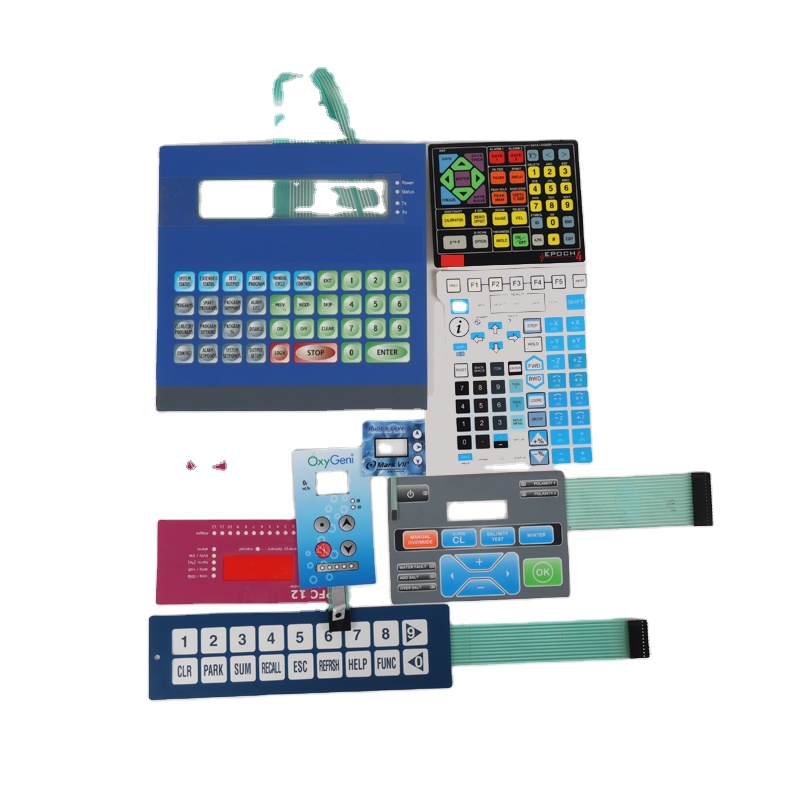
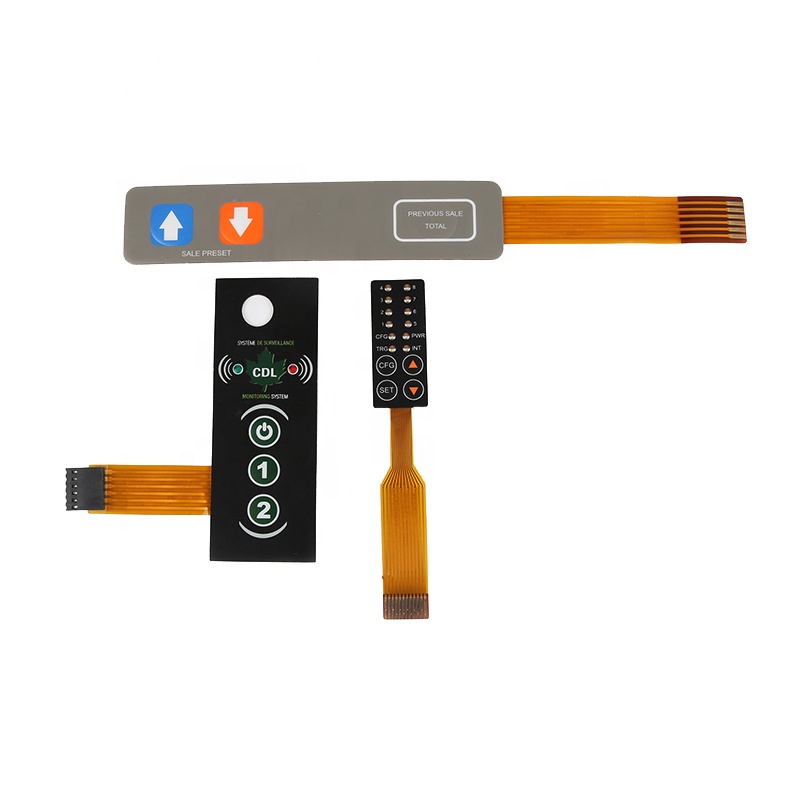
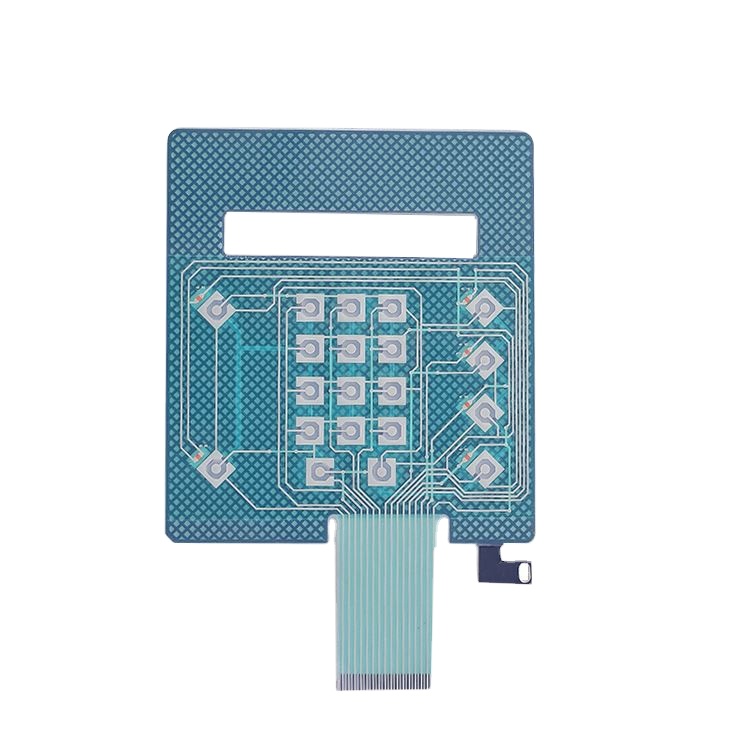
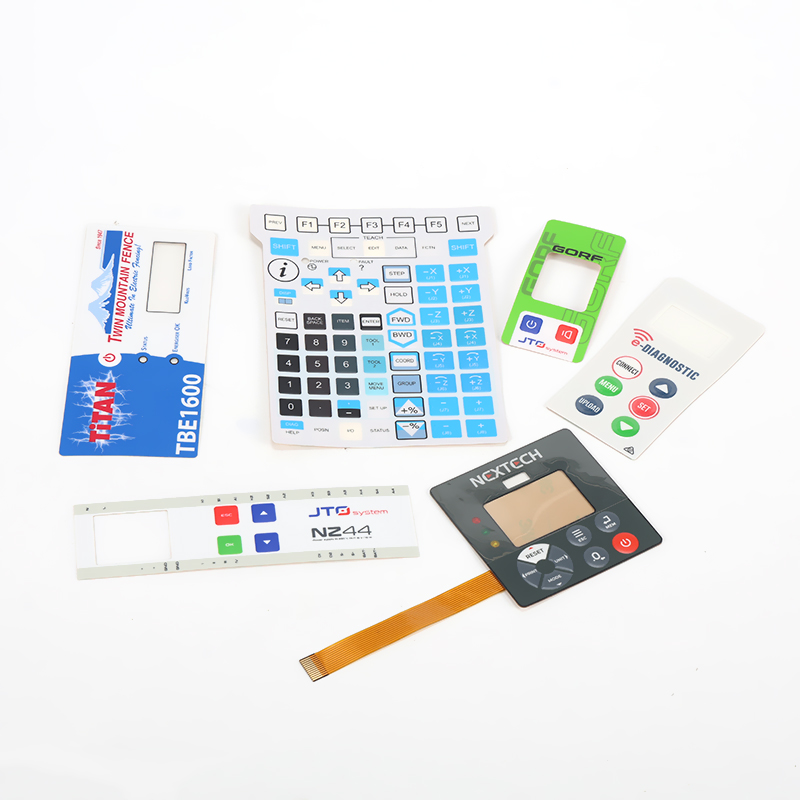
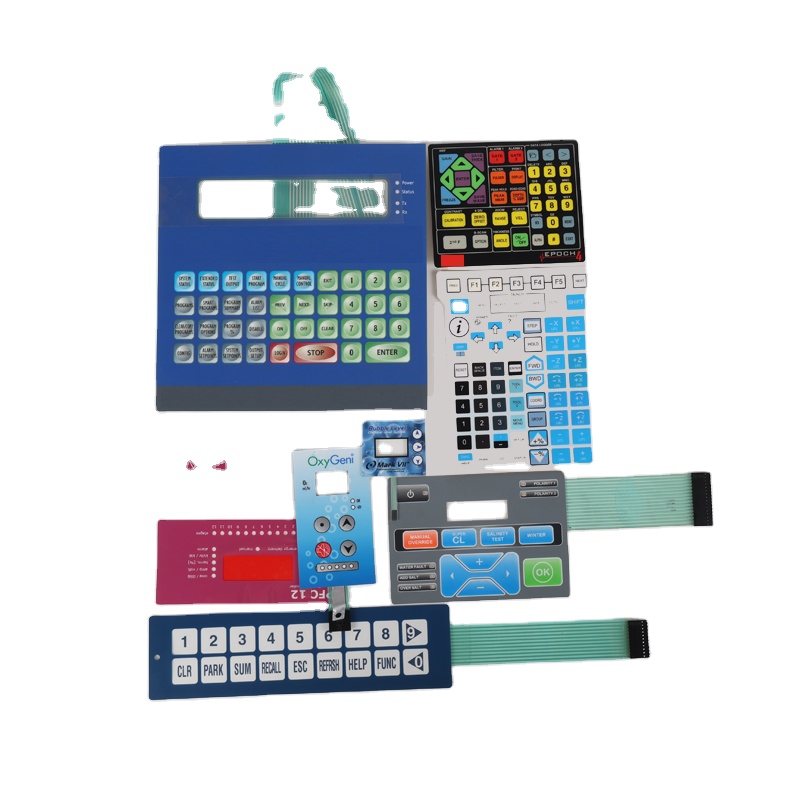
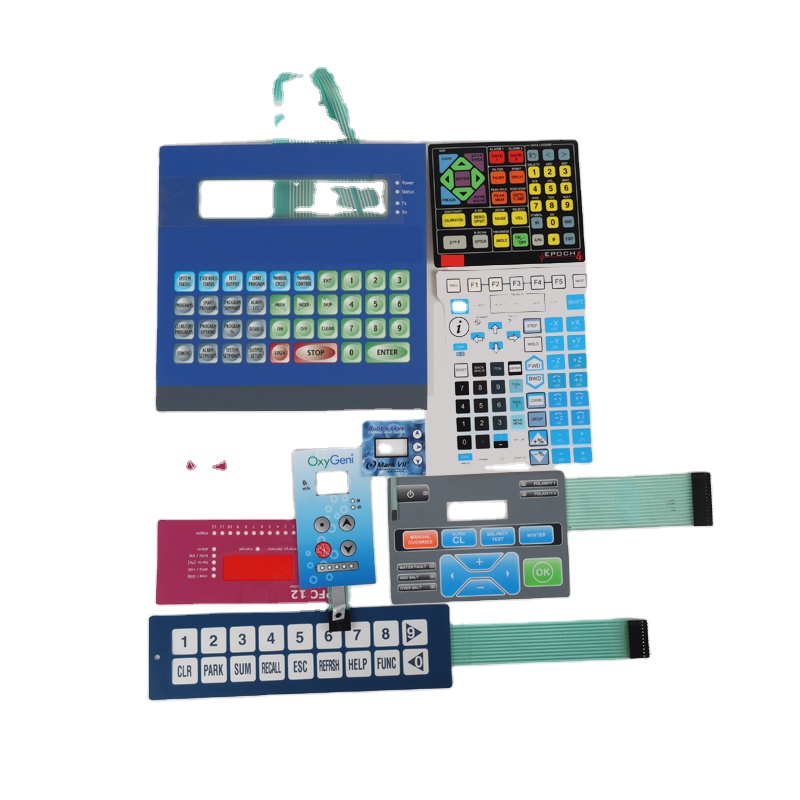
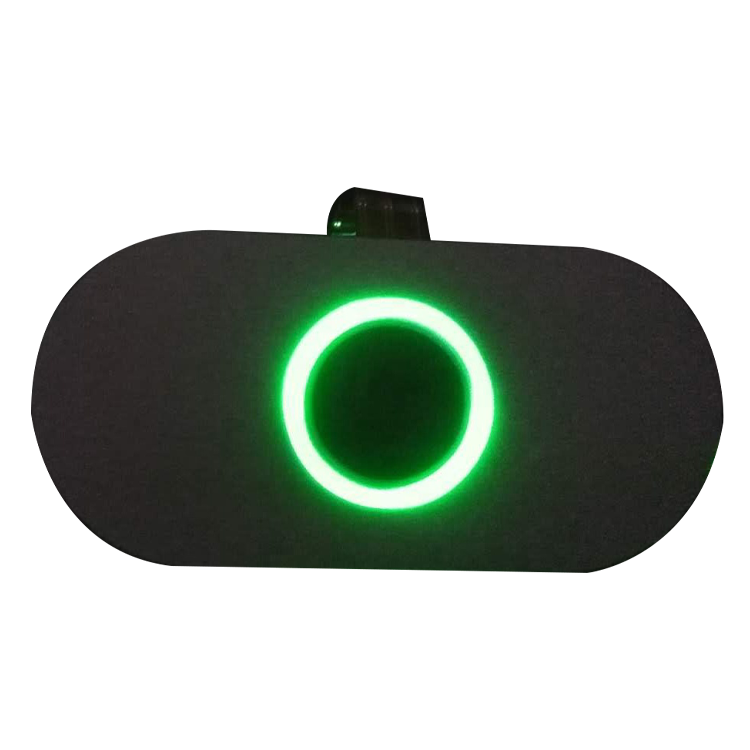
Explore our flagship custom human-machine interface assemblies, featuring conductive carbon contact pills, tactile metal domes, perimeter hermetic seals, and long-life industrial graphic overlays.
A comprehensive engineering guide for Croatian instrumentation designers, mechanical engineers, and procurement specialists specifying silicone elastomer keymats and conductive carbon pill contacts.
A conductive carbon pill keypad (commonly referred to in European electronics manufacturing as a conductive rubber contact pad or elastomeric carbon pill switch) operates on the physical principle of mechanical elastomer deflection bridging an interdigitated printed circuit trace. The core switch element consists of a vulcanized conductive carbon pellet permanently bonded to the underside of a compression-molded silicone rubber webbing dome.
When an operator applies actuation force ($F_a$) to the keytop, the engineered silicone rubber webbing undergoes elastic shear buckling. This delivers an ergonomic tactile sensation before the carbon pill strikes the stationary traces on an underlying Printed Circuit Board (FR4) or Flexible Printed Circuit (FPC). Unlike momentary metal dome contacts which rely on point-contact metallic deflection, the conductive carbon pill offers an intrinsic elastomeric compliance. This compliance absorbs excessive over-travel forces, cushions shock loads, and establishes a remarkably stable electrical closure with zero mechanical contact degradation over 10 million cycles.
“In high-vibration marine electronics and rugged industrial controllers across Croatia, traditional tactile mechanical switches suffer from contact chatter and oxidation. Conductive carbon pills molded into high-grade VMQ silicone establish an airtight contact chamber, virtually eliminating environmental contact fouling from Adriatic saline humidity.”
The electrical conductivity of the molded pill is determined by its percolation threshold—the volumetric concentration of conductive carbon black particles distributed within the non-conductive silicone polymer matrix. Standard carbon pills manufactured by Zhejiang ZIRA utilize a specialized high-structure carbon black compound yielding an ohmic contact resistance typically between 10 Ω and 100 Ω when actuated against gold-plated or screen-printed carbon PCB traces with a nominal actuation force of 150g to 250g.
For low-voltage micro-controller logic (such as 3.3V or 5V TTL/CMOS input pins commonly deployed in Croatian automation consoles), a contact resistance below 150 Ω is ideal. Because logic gates only require signal voltage level transitions, high current carrying capacity is unnecessary. However, when lower resistance is required for power circuits or analog signal scanning, ZIRA engineers integrate Low-Resistance Carbon Pills (< 10 Ω) or co-molded gold-plated metal pill contacts directly into the compression tooling cavity.
| Performance Metric | Conductive Carbon Pill Keypad | Metal Dome Membrane Switch | Capacitive ITO Touch Panel |
|---|---|---|---|
| Key Travel Distance | 1.0 mm – 3.5 mm (Deep, cushioned stroke) | 0.3 mm – 0.6 mm (Crisp, shallow snap) | 0.0 mm (Zero mechanical stroke) |
| Switch Actuation Life | ✔ 5,000,000 to 10,000,000 cycles | 1,000,000 to 3,000,000 cycles | Infinite (Solid-state sensor) |
| Contact Chatter / Bounce | < 5 ms (Smooth elastomeric closure) | < 5 ms to 10 ms (Metallic bounce) | 0 ms (Debounced in firmware) |
| Resistance to Saline / Moisture | ✔ Impervious (IP67 sealed silicone) | Requires perimeter gasket barrier | Glass sealed, sensitive to water puddling |
| Gloved Hand Operation | ✔ Excellent (Thick winter / safety gloves) | Moderate (Requires localized pressure) | Poor (Requires specialized glove firmware) |
| Tactile Customization | Webbing angle, wall thickness, durometer | Limited to pre-formed dome geometry | Haptic vibration motor required |
| NRE Tooling Investment | Moderate (Steel compression mold) | Low (Steel rule cutting & embossing dies) | Medium to High (Photolithography / glass) |
The ergonomic feel of a conductive silicone keypad is mathematically defined by its Snap Ratio ($S_r$), calculated from the actuation peak force ($F_a$) and the contact return force ($F_r$):
Snap Ratio ($S_r$) = [(Peak Force $F_a$ - Return Force $F_r$) / Peak Force $F_a$] × 100%
For Croatian industrial equipment manufacturers targeting high-reliability user feedback, ZIRA maintains an optimal snap ratio between 40% and 55%. A snap ratio below 35% feels spongy and lacks positive engagement, often causing operator error in high-noise manufacturing plants. Conversely, a snap ratio above 65% accelerates silicone fatigue and shortens the operational lifespan of the dome webbing. Our engineers utilize finite element analysis (FEA) to tailor the silicone webbing thickness (typically 0.35mm to 0.60mm) and angle (40° to 50°) according to your custom enclosure constraints.
Croatia’s diverse industrial landscape—from the coastal shipyards of Rijeka and Split to the electromechanical and high-tech clusters in Zagreb and Varaždin—requires HMI devices built to endure demanding regional environments.
Salt fog, intense UV radiation, and direct sea-spray along the Dalmatian coast rapidly corrode unprotected switch contacts. ZIRA's silicone keymats feature integrated perimeter sealing ribs and molded conductive carbon pills that create an IP67 hermetic barrier. Combined with PU/epoxy hard coatings and UV-stabilized silicone compounds, these keypads endure years on fishing consoles, yacht navigation panels, and naval telecommunications rigs.
Croatia’s power generation and distribution sector demands explosion-proof, non-sparking switchgear controls. Because conductive carbon pills utilize carbon-to-copper or carbon-to-gold contact mechanics without exposed metal-to-metal arcing, they are intrinsically safer in substation relays, telemetry monitoring boxes, and high-voltage grid control terminals engineered throughout Central Croatia.
Agricultural harvesters, forestry machines, and wine production facilities in continental Croatia face extremes of fine airborne dust, mud, and high-pressure steam washdowns. Carbon pill silicone keypads provide an impervious, seamless rubber skin that prevents grain dust ingress and resists agricultural fertilizers, hydraulic fluids, and industrial food cleaning biocides.
Medical startups and biomedical analytical instrument makers in Zagreb require sealed control interfaces that withstand frequent wipe-downs with hospital-grade isopropyl alcohol and bleach solutions. Our silicone rubber keypads can be formulated with anti-microbial additives and seamless wrap-around bezels that eliminate crevices where contaminants can pool.
Navigating the electromechanical supply chain landscape following Croatia’s accession to the Eurozone and the Schengen area.
Following Croatia’s adoption of the Euro (€), Croatian OEMs have eliminated currency conversion risks with Asian manufacturing partners. ZIRA supports seamless invoicing and customs declarations in EUR, simplifying tariff calculations and establishing fixed, long-term procurement budgets for contract manufacturers in Zagreb and Split.
Croatia’s full integration into the Schengen Area has streamlined the Port of Rijeka as a premier maritime freight gateway into Central Europe. Containerized sea freight from Ningbo to Rijeka offers rapid transit times, after which shipments clear European customs with zero border friction, reaching facilities across Croatia within 24 to 48 hours of port discharge.
Driven by pioneering electric supercar development and expanding precision robotics clusters in northwestern Croatia, there is surging demand for ruggedized, high-density elastomer keymats. These applications require laser-etched backlit graphics, negative-molded silicone gaskets, and integrated EMI/RFI shielding layers built to stringent automotive and aerospace standards.
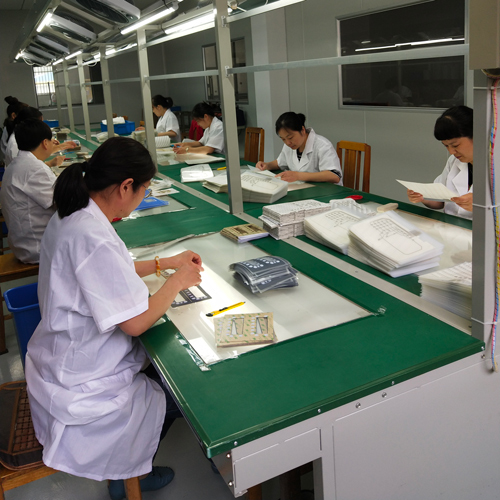
Established in 1996 in Ningbo, Zhejiang, ZIRA combines precision compression tooling, automated cleanroom screen printing, and rigorous third-party audited quality control.
Our workshop floor, machinery assets, legal legitimacy, and QA/QC procedures are thoroughly audited and independently certified onsite by Intertek. Review our public assessment report for full provenance.
For more than two decades, ZIRA has manufactured mission-critical interface assemblies for world-renowned automation pioneers including ABB and Emerson, fulfilling rigorous PPM defect targets.
Every single conductive carbon pill keypad undergoes automated computerized continuity testing, insulation resistance checking, switch force/stroke validation, and visual cosmetic scrutiny prior to export packaging.
From 3D CAD/DFM engineering and CNC mold tooling to silicone compression, laser etching, epoxy pouring, and cleanroom assembly, we manage the entire value chain under one roof with rapid prototyping from 1 piece.
Clear, direct answers regarding technical specifications, European regulatory compliance, tooling investments, and shipment terms for importing into Croatia.
Our standard conductive carbon pills yield a contact resistance of < 50 Ω (typically measuring between 15 Ω and 30 Ω) when pressed against gold-plated or silver-plated PCB pads with standard actuation pressure. For specialized circuits requiring minimal resistance, we offer ultra-conductive low-bleed carbon formulations achieving < 10 Ω, as well as gold-plated metal pill contacts co-molded directly into the silicone dome.
All raw silicone polymers (VMQ), conductive carbon compounds, color pigments, protective varnishes, and 3M adhesive backings used in our factory are 100% compliant with EU Directive 2011/65/EU (RoHS 2.0) and Regulation (EC) No 1907/2006 (REACH). We provide complete third-party SGS/TÜV test reports and Certificates of Conformity (CoC) with every production lot to ensure smooth customs clearance through Croatian Customs at Zagreb Airport (ZAG) or the Port of Rijeka.
Yes. Many Croatian industrial clients require the 3-dimensional tactile feel of rubber buttons combined with the sealing and backlighting versatility of flat membrane circuits. We specialize in hybrid HMI assemblies where an injection-molded or compression-molded silicone rubber keymat is laminated directly over a polyester membrane switch or an FR4 PCB with embedded surface-mount LEDs and tactile metal domes.
We support all standard international commercial terms, including FOB Shanghai/Ningbo, CIF Port of Rijeka, CIP Zagreb, and DDP (Delivered Duty Paid) directly to your manufacturing warehouse anywhere in Croatia. For rapid prototyping and urgent pilot runs, we partner with DHL Express and FedEx to deliver samples from our Ningbo cleanroom to your desk in Zagreb, Rijeka, or Split within 3 to 5 business days.
To provide a detailed DFM analysis and quote, please supply a 3D CAD model of the silicone keypad (STEP, IGES, or SolidWorks format), a dimensioned 2D drawing (PDF, DWG, or DXF) indicating key travel, actuation force specifications, carbon pill diameters/locations, and graphic artwork (Adobe Illustrator or vector PDF) with specified Pantone or RAL color codes. If you only have a physical sample or conceptual sketch, our engineering team can reverse-engineer your interface.
Silicone rubber is chemically inert and completely resistant to salt water, ozone, and thermal cycling. The conductive carbon pill is vulcanized into the silicone structure, meaning there is no metallic plating to flake, tarnish, or oxidize. When engineered with an integrated perimeter sealing ring that seals against your plastic or aluminum enclosure, the contact chamber achieves IP67/NEMA 4X ingress protection, passing rigorous 96-hour ASTM B117 salt spray exposure tests.
Send your CAD models, schematic pin-outs, or application specifications directly to our engineering department. Receive a comprehensive DFM manufacturability review, technical stack-up drawing, and transparent quotation within 24 hours.