In modern industrial automation, medical diagnostic instruments, aerospace control systems, and high-reliability commercial electronics, the requirement for robust, space-saving, and environmentally resilient Human-Machine Interfaces (HMIs) has made FPC Membrane Keypads the global engineering gold standard. Unlike traditional flexible silver-printed PET circuit membranes, Flexible Printed Circuit (FPC) keypads utilize copper foil etched on polyimide (PI) or polyester substrates. This offers higher circuit density, lower trace resistance, exceptional resistance to micro-cracking under repetitive flexing, and direct Surface Mount Technology (SMT) compatibility for micro-LEDs, ICs, resistors, and complex connectors.
Featured FPC & High-Reliability Industrial Keypad Solutions
Below is a curated selection of advanced FPC and industrial-grade membrane switch assemblies manufactured to rigorous engineering standards with 100% electrical testing and custom design verification.
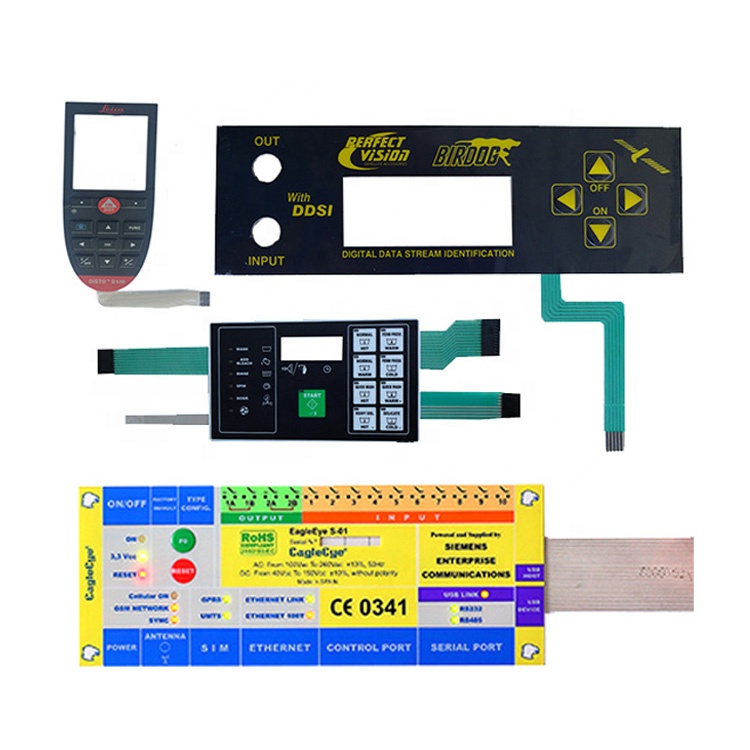
Waterproof Industrial Membrane Panel with Shock Resistance Feature Membrane Switch
View Product Details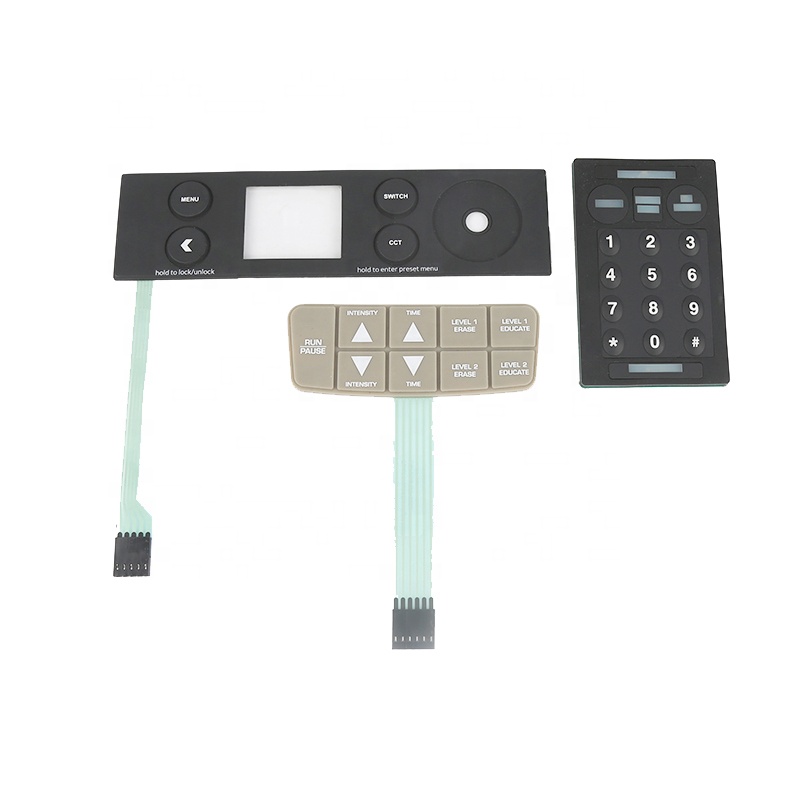
Customize High Sensitivity Metal Dome 3M Adhesive Medical Membrane Switch
View Product Details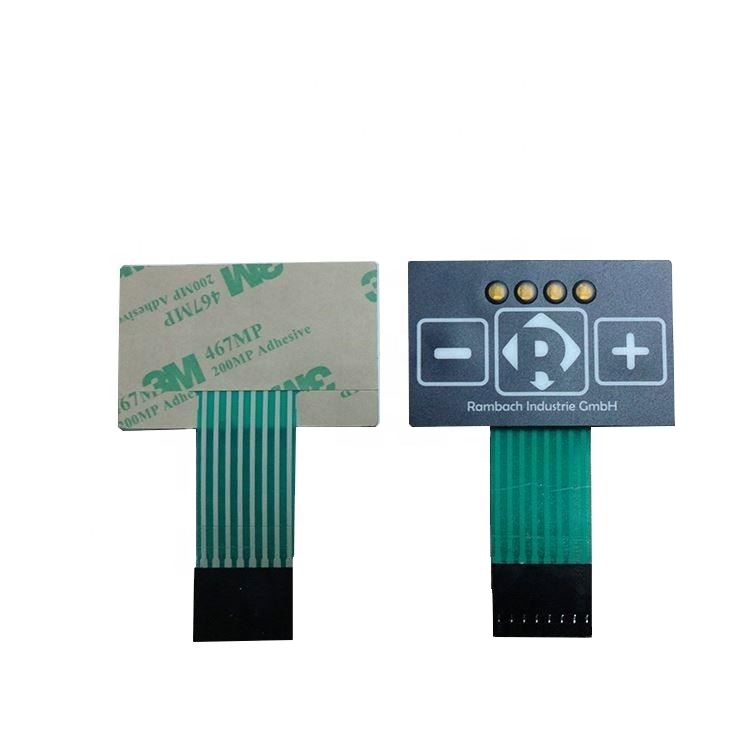
Custom Thin Film Illuminated Panel Lgf/LED Backlight Membrane Switch for Electronics
View Product Details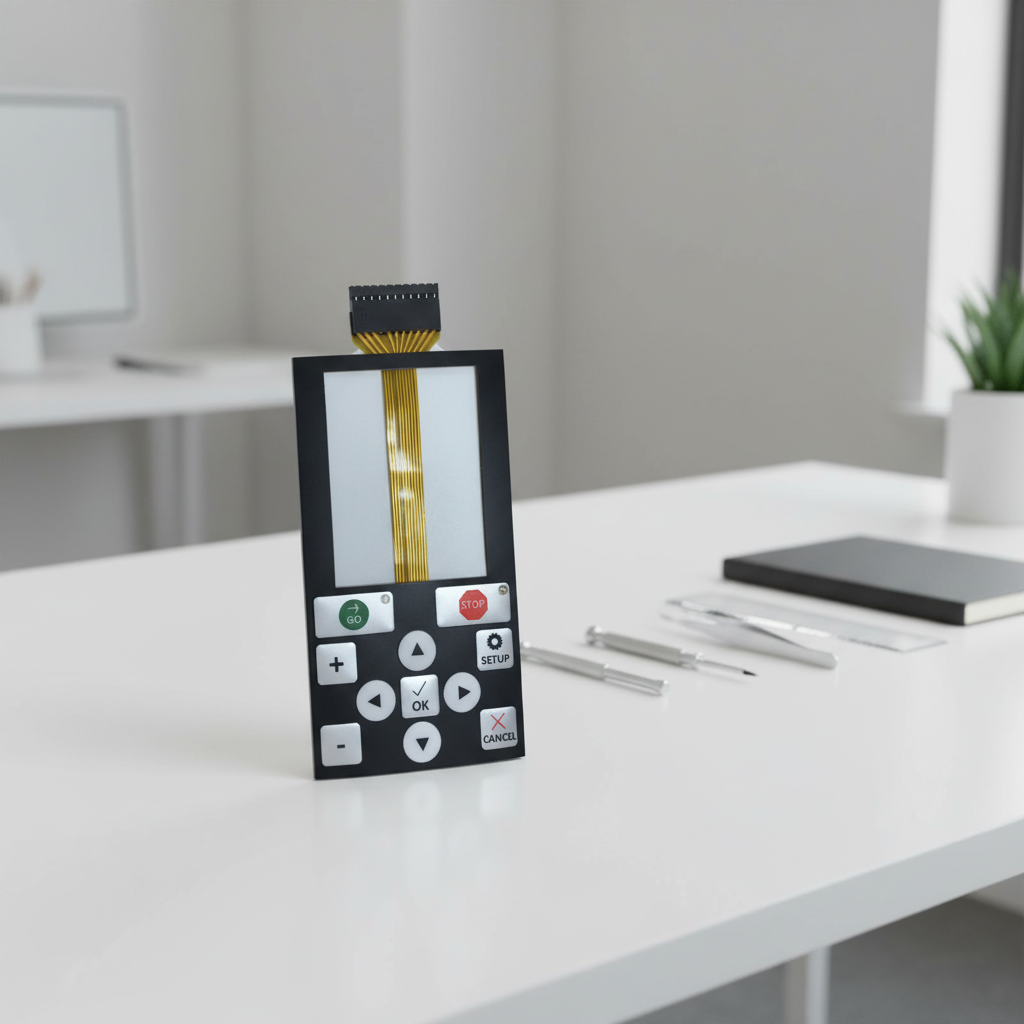
High Quality Reasonable Price Waterproof Membrane Keyboard with LEDs and 3M Adhesive Flat Design
View Product Details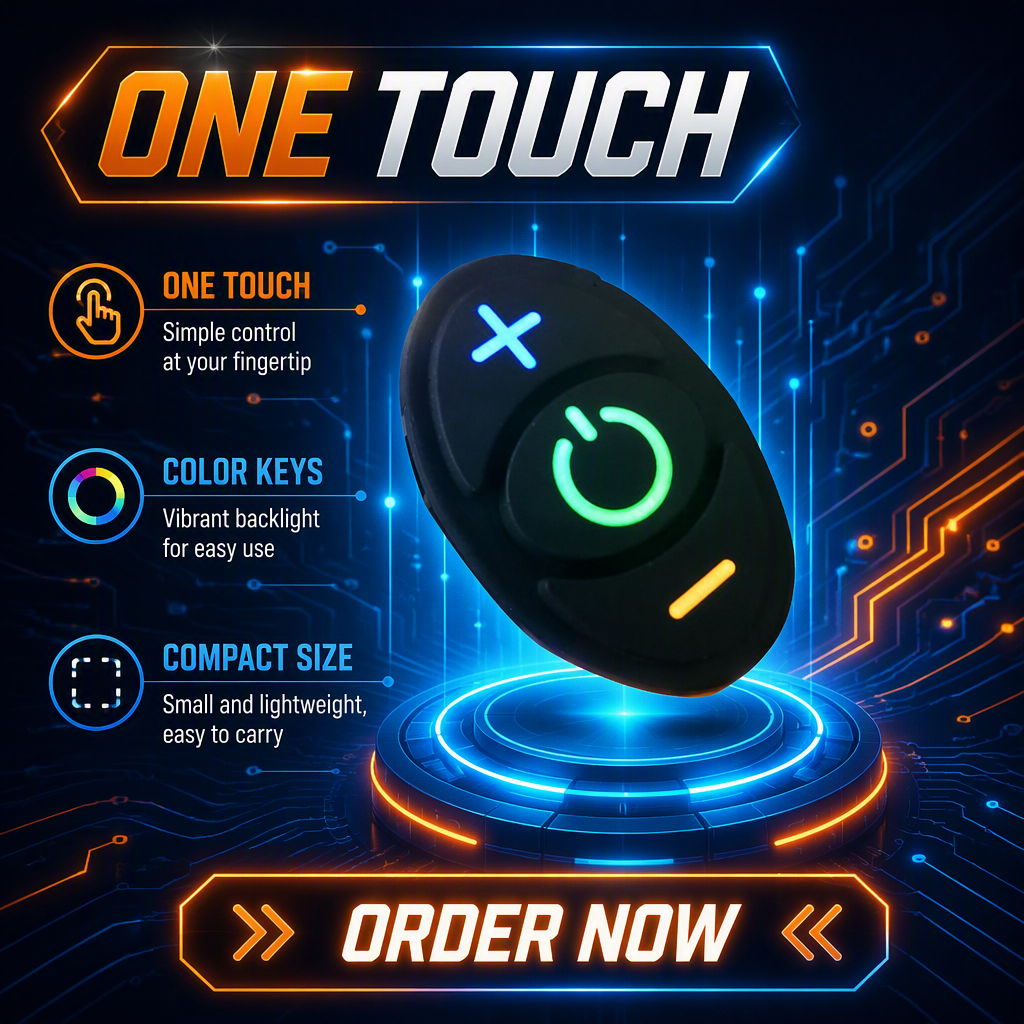
Multi Zone Backlight Design Independent Circuit Routing Uniform Illumination Custom Backlit Silicone Rubber Membrane Switch
View Product Details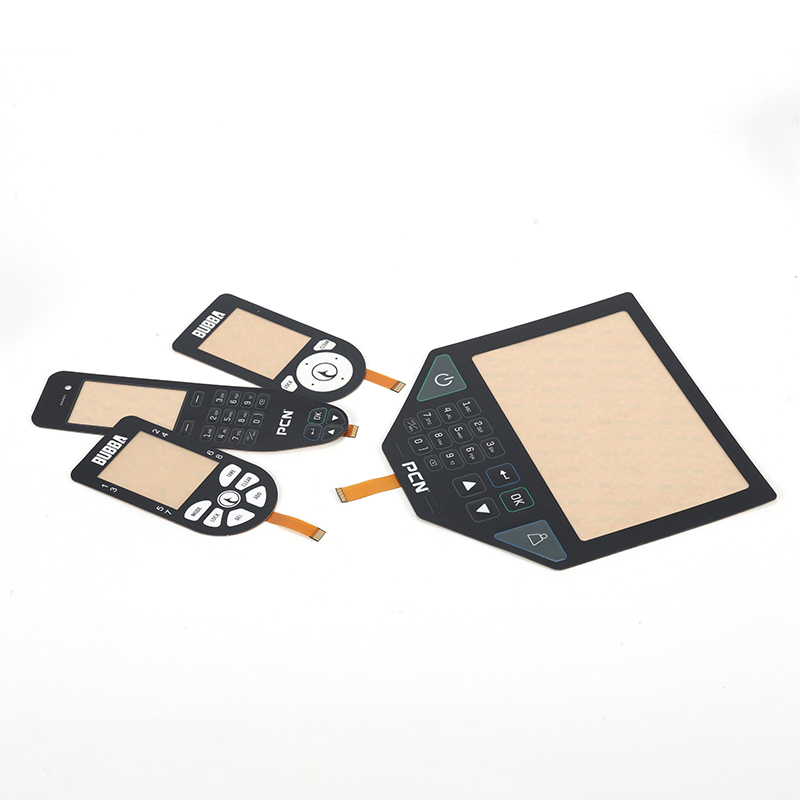
High Quality Customized Membrane Push Button Switch, FPC Circuit Membrane Keypad Switch With Shielding Layer
View Product Details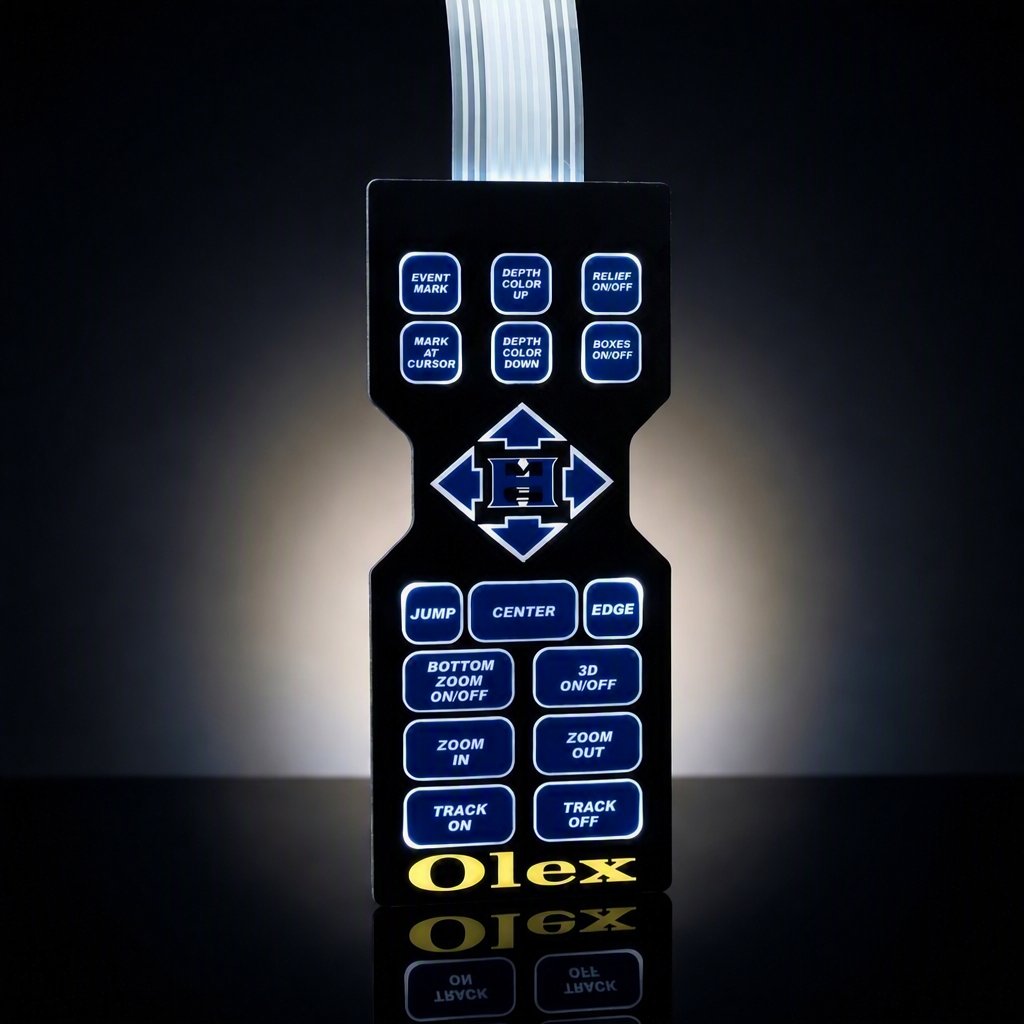
Free Backlight Simulation and Light Guide Design Support Customized Uniform Illumination Backlight Membrane Switch Keyboard
View Product Details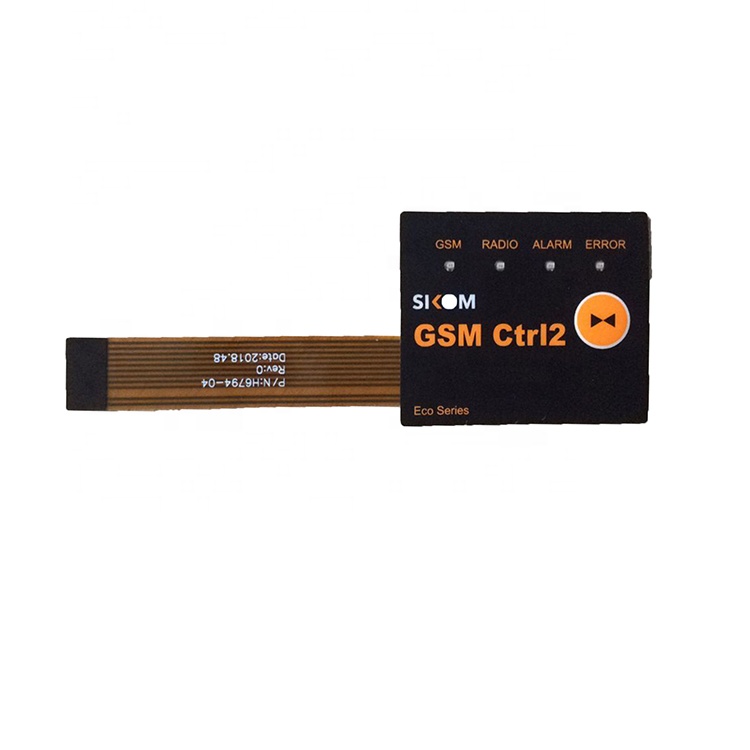
RoHS Compliant Industrial Membrane Push Button Switch Custom Tactile Membrane Keypad Switch for Medical Instrument Control Panel
View Product DetailsUnderstanding FPC Membrane Keypad Engineering & Stack-Up Architecture
When selecting a top-tier manufacturer for FPC-based membrane switches, design engineers must look beyond basic aesthetic overlays. The core advantage of an FPC keymat lies in its layered structural integrity, trace density capabilities, and electrical reliability under demanding operating environments.
Fine Pitch Trace Capabilities
Photolithographic etching allows copper trace widths and spacing down to 0.15mm (6 mil), enabling compact connector tails, matrix density, and seamless integrated circuit routing impossible with screen-printed silver ink.
Superior SMT Soldering Integrity
Polyimide FPC substrates withstand reflow and manual soldering temperatures up to 260°C. SMT side-firing LEDs, micro-capacitors, and active IC components remain permanently bonded without delamination risks.
Integrated EMI / ESD Shielding
Dedicated continuous copper ground planes or printed conductive grid layers mitigate electromagnetic interference and dissipate electrostatic discharges up to 15kV, protecting sensitive host electronics.
Technical Comparison: FPC Substrate vs. Traditional PET Silver Ink Circuits
To assist procurement managers and systems architects in technical evaluation, the matrix below outlines crucial performance metrics between Flexible Printed Circuits (FPC) and conventional Silver-Printed PET membranes:
| Performance Parameter | FPC Membrane Switch (Copper/Polyimide) | PET Membrane Switch (Printed Silver Ink) |
|---|---|---|
| Trace Loop Resistance | Ultra-low (< 1 Ω per trace depending on length) | Moderate to High (20 Ω – 100 Ω+ per trace) |
| Minimum Line Width / Space | 0.12 mm / 0.12 mm (High Pitch Density) | 0.50 mm / 0.50 mm (Limited Routing Space) |
| Component Mounting (SMT) | Reflow / Conductive Soldering (High Bond Strength) | Conductive Epoxy Bonding Only (Vulnerable to Vibration) |
| Flexural Fatigue Life | > 5,000,000 Cycles (Exceptional Flex Resistance) | ~ 1,000,000 Cycles (Prone to Silver Migration) |
| Operating Temperature Range | -40°C to +125°C (Extreme Environmental Tolerance) | -20°C to +70°C (Standard Application Range) |
| Moisture & Chemical Resistance | Immune to silver migration; full chemical resistance | Risk of silver migration in high humidity environments |
Enterprise Capabilities: Why Partner with Zhejiang ZIRA Membrane Switch Co., Ltd.
When selecting a supplier from the top 10 global FPC keypad manufacturers, verified enterprise history, factory automation, quality management systems, and transparent trade verification form the foundational pillars of supply chain security.
Headquartered in Changhe Industrial Park, Ningbo, Zhejiang, Zhejiang ZIRA Membrane Switch Co., Ltd. has grown since 1996 into an industry-leading specialized designer and custom manufacturer of custom membrane switches, graphic overlays, silicone rubber keypads, PCB/FPC membrane keypads, and display labels. Serving premier global buyers across North America, Western Europe, South America, Oceania, and Asia, ZIRA delivers complete end-to-end manufacturing solutions under one roof.
Core Competitive Strengths of ZIRA Manufacturing:
- Fully Integrated Manufacturing: In-house precision screen printing, dust-free optical bonding, automated SMT pick-and-place lines, high-precision embossing, CNC laser cutting, and hydraulic compression molding.
- Verified Quality Management: Intertek onsite-inspected and ISO-compliant operations. Every production lot undergoes rigorous 100% electrical continuity testing, key actuation force testing, actuation life cycling, and insulation resistance measurement.
- Long-Term Global Engineering Partnerships: Proven track record of strategic collaboration with Tier-1 industrial engineering leaders including ABB and Emerson, proving our ability to fulfill stringent industrial, medical, and defense compliance mandates.
- Comprehensive DFM Engineering Support: Dedicated engineering teams supporting rapid prototyping from 1 piece, custom backlight simulation (LGF/LED/EL), ESD shielding layout, and 3M adhesive selection (e.g., 3M 467MP, 468MP, 300LSE for low surface energy plastics).
Future Product Development Trends in FPC Keypad Technology
Driven by the rapid growth of Smart IoT devices, portable medical diagnostics, automated robotic interfaces, and harsh-environment industrial computing, FPC membrane switch technology is evolving along four definitive engineering trajectories:
1. Ultra-Thin Light Guide Film (LGF) Backlighting
Transitioning from bulky EL backlights and uneven discrete LEDs to micro-etched LGF layers. Side-firing SMT LEDs mounted directly on the FPC direct light evenly across keys and icons with zero light bleed and under 0.8mm total thickness profile.
2. Capacitive Touch Hybrid Interfaces
Integrating ITO (Indium Tin Oxide) or copper-etched capacitive sensor channels onto flexible circuits. Eliminating mechanical moving parts enables 100% flat glass or plastic front panels with smooth wipe-clean surfaces suitable for sterile medical environments.
3. Active On-Board Component Integration
FPC keypads are morphing into full sub-assemblies. Engineers are placing capacitive touch controller ICs, microcontrollers, shift registers, and haptic vibration motors directly onto the FPC tail, saving main-board real estate and simplifying final device assembly.
Future Global Procurement Trends for FPC Keypad Sourcing
Strategic procurement managers are reshaping how HMI components are selected, audited, and ordered. Sourcing professionals must adapt to four critical purchasing shifts over the next decade:
1. Shift Toward Total Cost of Ownership (TCO) vs. Initial Unit Price: While traditional PET switches offer lower initial tooling costs, field failures caused by silver migration, trace fracture, or cold solder joints on LEDs result in expensive product recalls. Procurement teams are increasingly choosing FPC keypads due to their near-zero field failure rate, reducing warranty overhead and long-term TCO.
2. Demand for Rapid DFM & Virtual Prototyping: Lead times for product design iterations are shrinking. Top suppliers now offer computerized optical simulation, backlighting uniformity modeling, 3D DFM checking, and rapid 1-piece sampling within 3 to 5 business days prior to full production tooling commitment.
3. Transparent Third-Party Supply Chain Verification: Cross-border OEM sourcing requires rigorous verification. Enterprise buyers now insist on independent onsite inspection reports (such as Intertek or TÜV Rheinland assessments) and public credit index tracking rather than relying on unverified broker promises.
4. Environmental Compliance & Material Traceability: RoHS 3.0, REACH, and Conflict Minerals compliance are non-negotiable. Leading factories provide complete material chemical composition documentation, halogen-free options, and eco-friendly adhesive backing systems for seamless global regulatory approval.
Frequently Asked Questions (FAQ) for Keypad Sourcing
At Zhejiang ZIRA Membrane Switch Co., Ltd., prototyping orders can be initiated from 1 piece to support engineering validation and functional field trials. Standard volume production runs typically start at 100 pieces, while high-volume standard keypads start around 1,000 pieces depending on stack-up complexity, metal dome count, and adhesive selection.
To provide an accurate engineering quote and DFM feedback, please furnish:
1. Dimensional mechanical drawings (DXF, DWG, STEP, or vector AI/PDF).
2. Circuit schematic or pin-out diagram detailing key matrix layout and LED polarity.
3. Color codes specified in Pantone C or RAL color matching systems.
4. Environmental operation constraints (operating temperature, UV exposure, chemical contact, IP sealing requirement).
5. Tail length, pitch (e.g., 1.0mm, 2.54mm), and connector specification (ZIF, female housing, or male pin).
Stainless steel metal domes (four-leg, round, or triangle domes) offer a sharp, tactile snap response with actuation force ranging between 180g and 450g and a operational life exceeding 1,000,000 to 5,000,000 presses. Non-tactile or embossed poly-domes provide a softer feel and lower profile but slightly less distinct tactile feedback. Metal domes mounted on gold-plated FPC pads yield the lowest contact resistance and maximum operational lifespan.
For industrial control and medical instruments subjected to frequent chemical cleaning, petroleum contact, or scratch hazards, high-grade Autotype MacDermid PET (Polyethylene Terephthalate) films (such as Autotex XE UV-resistant or Fine Matte PET) are recommended. PET outperforms standard PC (Polycarbonate) in chemical resistance, flexing life, and resistance to stress cracking under repetitive button press cycles.
Every order undergoes rigorous multi-tier quality control: incoming raw material quality control (IQC), automated optical inspection (AOI) during circuit printing, in-process quality control (IPQC) during lamination and embossing, and 100% electrical open/short circuit, resistance, and LED functionality testing (FQC) prior to anti-static vacuum packaging and global shipment.
Ready to Accelerate Your HMI Project with Premier FPC Keypad Engineering?
Partner directly with an Intertek-verified, 29-year custom manufacturer. Receive professional DFM feedback, stack-up recommendation, and an accurate factory quote within 24 hours.
Inquire Now