Engineered Flexible Circuits & Control Switch Solutions
Explore our industrial-grade customizable product lineup, deployed globally across automation, medical diagnosis, aerospace, and instrumentation.
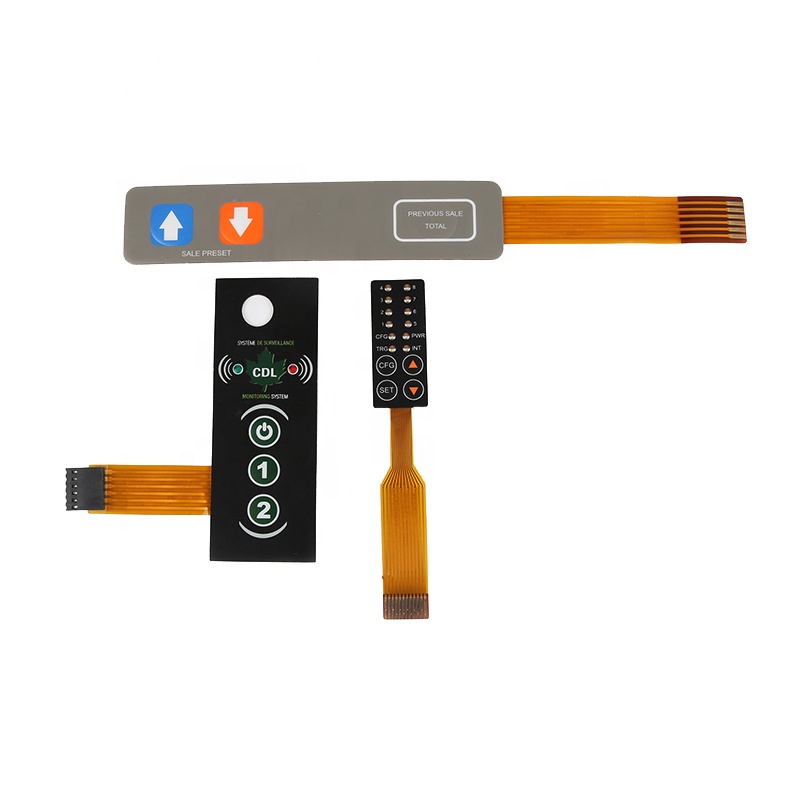

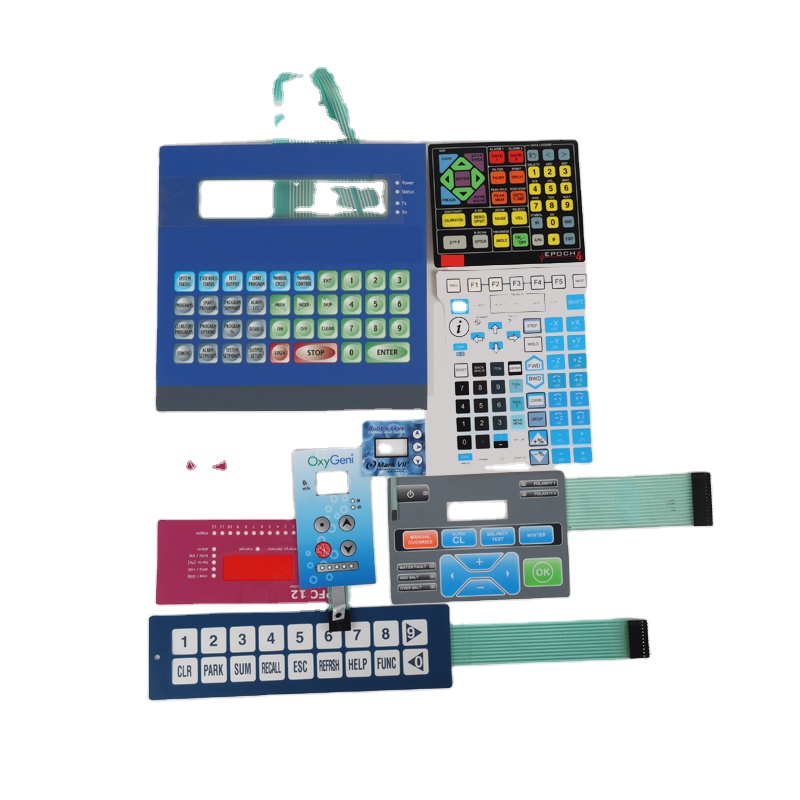
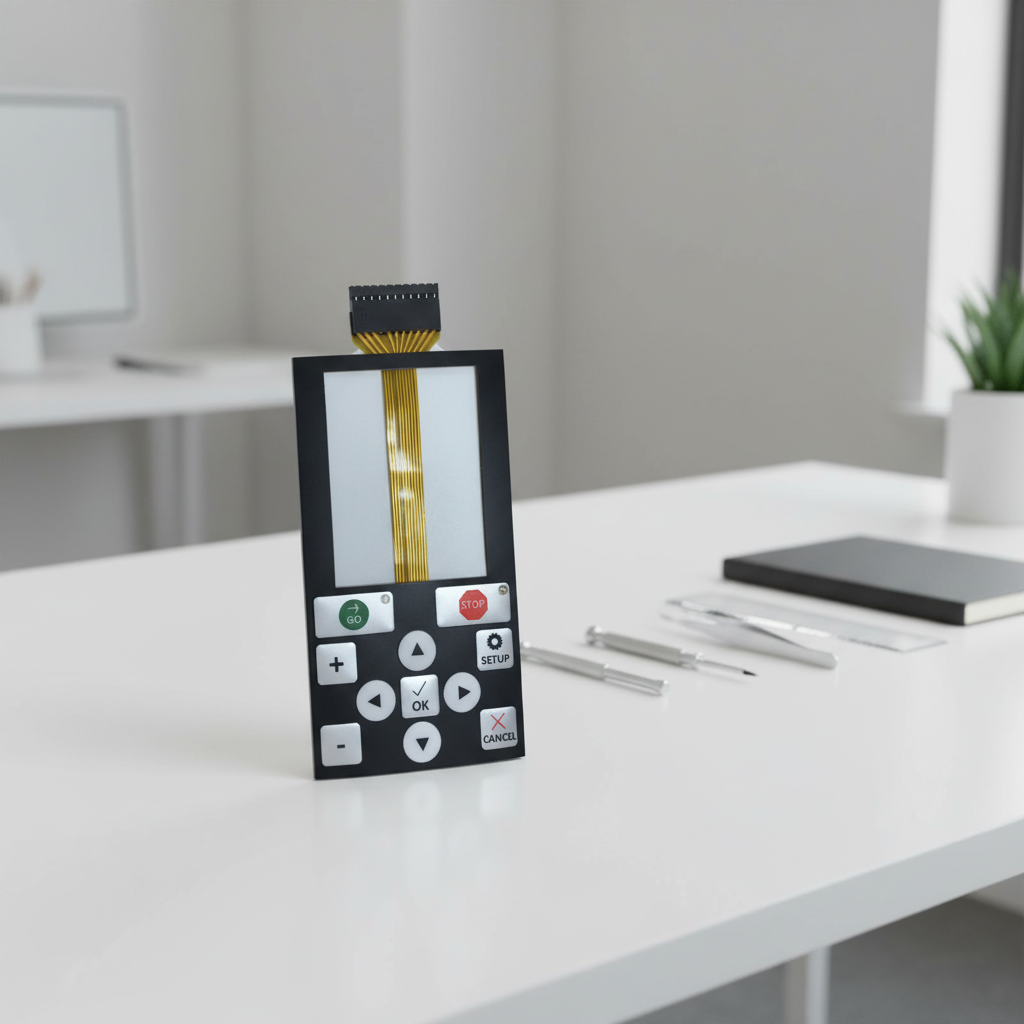
Why Tier-1 Industrial Brands Partner with Us
Delivering precision, end-to-end trace integrity, and stable OEM/ODM engineering capacity to eliminate failure rates in high-stress operational environments.
Vertically Integrated FPC Facilities
From precision copper etching, surface mount technology (SMT), to multi-layer thermal bonding, our Ningbo plant operates 5 dedicated cleanroom production lines eliminating subcontracting overhead.
Third-Party Verified Reliability
Our facilities are audited on-site by Intertek. Serving global icons such as ABB and Emerson, we guarantee full compliance with RoHS, REACH, and ISO quality management systems.
Rapid Prototyping & Flexible MOQ
Accelerate your development cycle with functional sample batches starting from 1 unit. Seamless transition into mass manufacturing runs exceeding millions of units annually.
Advanced EMI/RFI Shielding
Integrated solid or grid printed conductive silver/carbon ink layers or copper foil planes to shield micro-signals against harsh electromagnetic and radio interference.
Engineering Overview: High-Reliability Copper Flex Circuits (FPC) vs. Screen-Printed Silver
Modern Human-Machine Interfaces (HMI) and electronic interconnects increasingly mandate transition from conventional screen-printed polymer thick film (PTF) silver circuits to etched Copper Flexible Printed Circuits (Copper FPC). As an industry-leading OEM/ODM manufacturer established in 1996, our engineering teams solve the physical limitations of silver migration, trace resistance variance, and dynamic mechanical fatigue through single-sided, double-sided, and multi-layer copper flex circuits built on high-grade Polyimide (PI) substrates.
The standard construction utilizes copper foil (electrolytic or rolled annealed) adhesively or adhesivelessly bonded to a polyimide dielectric core. Rolled annealed copper yields exceptional performance in dynamic flex configurations, sustaining over millions of tight-radius bends without microscopic microfractures. In applications where fine-pitch component mounting (such as 0402 or 0201 LEDs, microcontrollers, and low-profile connectors) is requisite, copper traces allow high-yield automated lead-free surface mount reflow soldering, eliminating the interface degradation associated with conductive epoxy bonding on pure polyester substrates.
Global Procurement Trends: What Engineering Teams Prioritize in 2025–2030
Procurement directors and electronic hardware engineers are optimizing supply chains around total system footprint, interconnect density, and environmental harshness tolerance. The primary industry trends driving OEM/ODM copper flex circuit sourcing include:
1. Miniaturization and Ultra-Dense Routing: The demand for high component density in portable diagnostic tools and automotive cockpits requires trace/space geometries shrinking below 75µm/75µm (3 mil/3 mil). Copper etching enables precision line definitions impossible with traditional conductive paste screen printing.
2. Structural Durability in Hostile Environments: Resistance against aggressive sanitization, oil spatter, and thermal swings (-40°C to +105°C) has positioned polyimide-based copper flex assemblies as the de-facto standard in healthcare device inputs and heavy industrial controllers.
3. Supply Chain Consolidation via Turnkey Subassemblies: Buyers increasingly seek single-source suppliers capable of integrating graphic overlays, metal snap domes, silicone rubber boots, embedded backlighting (LGF/LEDs), and final flex-to-board connectors into fully validated, 100% electrically verified assemblies.
Technological Evolution & Future Directions in Flex Circuit Systems
Looking into future product life cycles, flexible circuit fabrication converges with intelligent surfaces. We observe surging demand for capacitive touch sensors embedded directly on transparent conductive films or fine copper meshes, circumventing mechanical contacts entirely. Furthermore, the synthesis of Light Guide Film (LGF) backlighting alongside copper flex substrates ensures ultra-thin, uniform key illumination while drawing minimal power, preventing hot spots and eliminating bulky discrete light pipes.
Another profound evolution is the proliferation of Hybrid HMI Structures. By pairing an external compression-molded silicone elastomer keypad with an internal copper flex circuit and metal dome array, equipment designers attain tactile travel stroke feedback combined with IP67-rated washdown protection and prolonged actuation life spans exceeding 5,000,000 cycles.
| Performance Parameter | Copper Flex Circuit (PI Base) | Silver Conductive Print (PET Base) | Rigid FR4 PCB |
|---|---|---|---|
| Trace Resistance | Ultra Low (< 0.1 Ω/sq) | Moderate to High (> 15 Ω/sq) | Ultra Low (< 0.05 Ω/sq) |
| Bending & Dynamic Flex Life | Excellent (Up to 10M bend cycles) | Moderate (Risk of silver fracture) | None (Rigid structure) |
| Component Soldering | Standard SMT Reflow Compatible | Conductive Epoxy Only | Standard SMT Reflow Compatible |
| Trace/Space Pitch Capability | Ultra-Fine (Down to 0.075 mm) | Coarse (> 0.35 mm) | Ultra-Fine (Down to 0.075 mm) |
| Environmental Resistance | Superior (-40°C to +125°C) | Standard (-20°C to +65°C) | High (-40°C to +130°C) |
