DIY / MCU
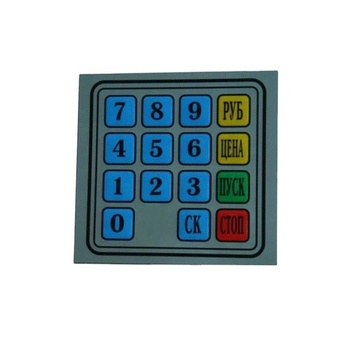
Custom Silicone Membrane Switch Keypad with Rubber Buttons (4x4, 4x5, 3x4 Layout)
$0.83 / pc
MOQ: 1 pc
Custom compression-molded silicone elastomer keypads, conductive carbon pill contact assemblies, laser-etched backlit buttons, and IP67 sealed rubber keymats built to customer specifications by Zhejiang ZIRA Membrane Switch Co., Ltd.
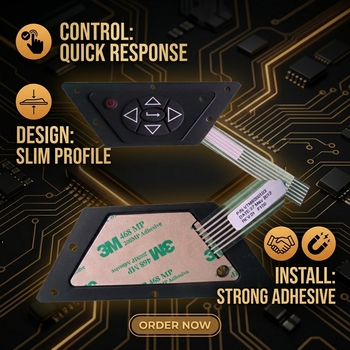
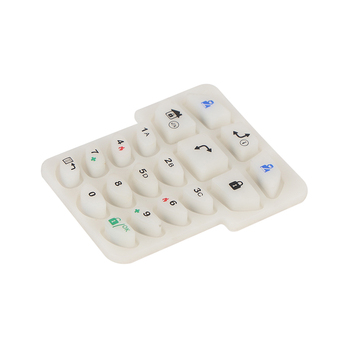
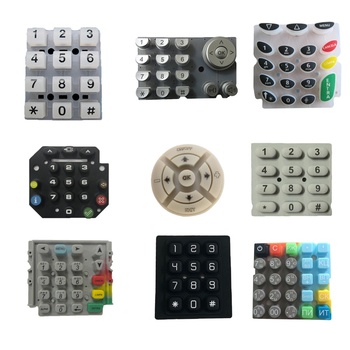
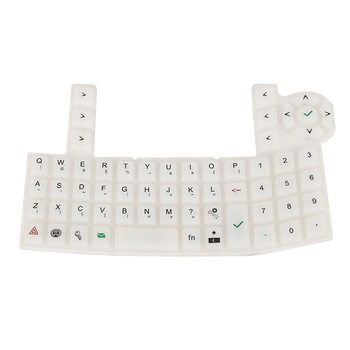
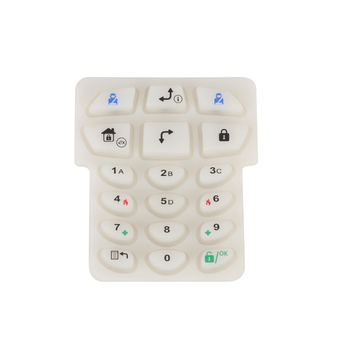
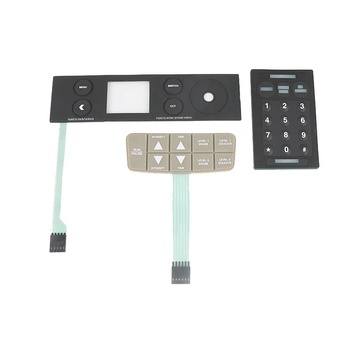
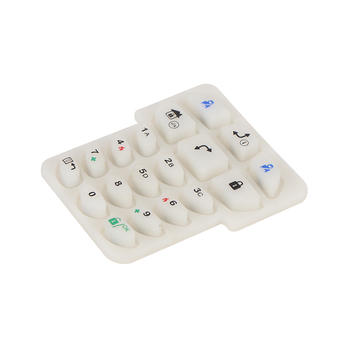
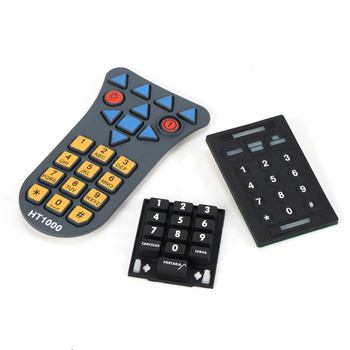
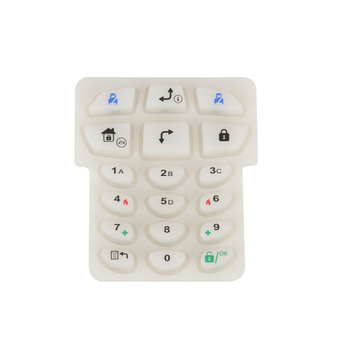
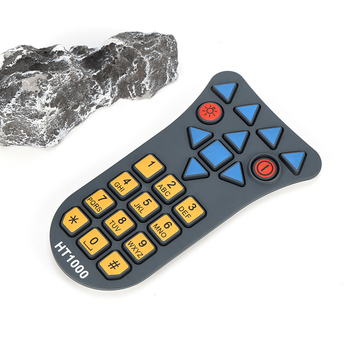
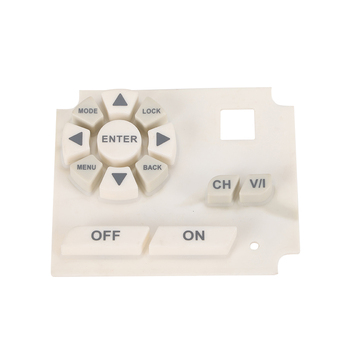
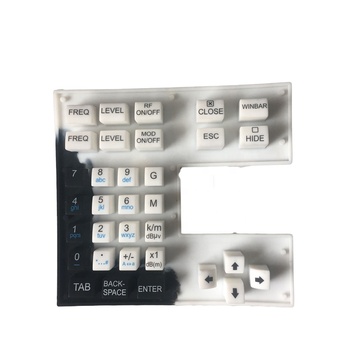
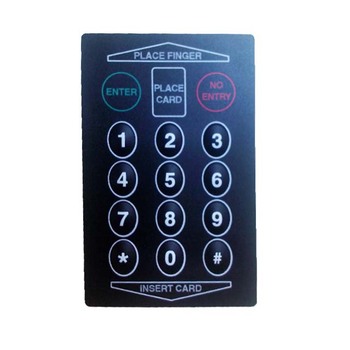
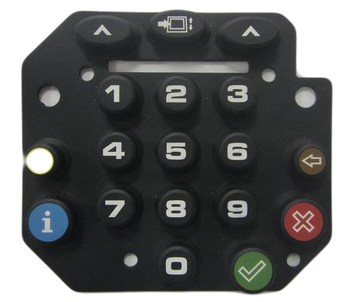
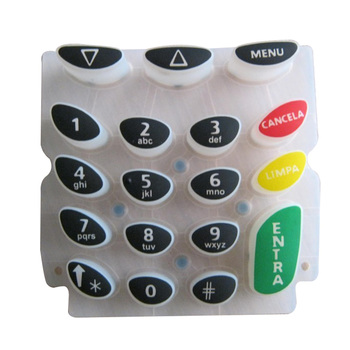
From custom compound compounding to multi-cavity tooling, laser etching, and automated electrical testing, Zhejiang ZIRA Membrane Switch Co., Ltd. controls every critical step in-house.
In-house CNC and EDM steel mold machining ensures tight dimensional tolerances (±0.05 mm), precision key webbing profiles, and consistent snap-ratio actuation across all cavities.
We provide vulcanized carbon pills (<100Ω standard, <30Ω ultra-low resistance), gold-plated pills (<10Ω), nickel pills, conductive ink screening, or actuation directly onto metal domes.
Optical translucent silicone molded with precision light pipes, followed by opaque color masking and automated fiber laser engraving for razor-sharp backlit icons and uniform LED diffusion.
High-durability clear Polyurethane (PU) spray, crystal-clear 3D epoxy drip keytops, silicone smooth-feel oil spray, and chemical-resistant barriers tested for 1,000,000+ key presses.
Review standard physical, electrical, and environmental performance benchmarks maintained across our silicone keypad production lines.
| Engineering Parameter | Standard Specification | Premium / Customized Options |
|---|---|---|
| Silicone Hardness (Durometer) | 40° – 60° Shore A (Standard Tactile) | 30° – 80° Shore A (Ultra-soft to High-rigidity) |
| Actuation Force (Peak Force) | 80g – 220g (±30g tolerance) | 50g – 500g (Custom tactile feel & snap ratio) |
| Key Travel Distance | 0.8 mm – 1.5 mm | 0.5 mm – 3.0 mm (Long-stroke options) |
| Snap Ratio (Tactile Ratio) | 40% – 60% ([Fp - Fs] / Fp) | Up to 70% for crisp, audible click feedback |
| Contact Resistance | < 100 Ω (Standard carbon pill) | < 30 Ω (Low-ohm carbon) / < 10 Ω (Gold pill) |
| Insulation Resistance | > 100 MΩ at 250V DC | > 1,000 MΩ at 500V DC |
| Contact Chatter / Bounce | < 12 ms | < 5 ms (Debounce circuit compliant) |
| Operating Temperature | -40°C to +120°C | -55°C to +200°C (High-temp automotive silicone) |
| Mechanical Duty Life | 1,000,000 cycles | Up to 5,000,000 cycles (Special fatigue webbing) |
| Flammability Rating | RoHS / REACH compliant | UL94-HB / UL94-V0 flame retardant compound |
Verified on-site by Intertek. Every batch undergoes strict in-process inspection and 100% finished electrical testing prior to export packing.
Incoming silicone elastomer tested for specific gravity, Shore A hardness, cure rate, and tensile strength.
Hydraulic vacuum-assisted vulcanizing presses ensure void-free molding with uniform webbing thickness.
Post-cure oven baking at 200°C for 4 hours removes volatiles, preventing outgassing and stabilizing mechanical properties.
Color-matched silicone inks silk-screened or laser etched, followed by PU or epoxy curing in dust-free tunnels.
Automated electrical continuity, contact resistance verification, key travel inspection, and visual defect audit.
Common technical, tooling, and procurement inquiries answered by our application engineering team.
We prefer 3D CAD files in STEP, IGES, or SolidWorks formats to evaluate key geometry, travel, and webbing thickness, along with a 2D drawing (PDF/DWG/DXF) showing legend artwork, Pantone/RAL color codes, durometer hardness, and electrical contact specifications.
Carbon pills are solid conductive pellets vulcanized directly into the silicone during compression molding, offering extremely low contact resistance (<100Ω) and exceeding 1,000,000+ cycles. Conductive ink printing is screen-printed onto flat key bottoms, offering lower initial tooling cost for simpler applications with shorter duty lifecycles.
We mold the keymat using optical-grade translucent silicone. The keys are then spray-painted with white ink (for translucence), followed by an opaque top coat (black or custom color). A high-precision laser cuts through the top coat to expose the white layer, allowing LED light to shine through with crisp definition and no light bleed.
Yes. We frequently supply hybrid assemblies where a molded silicone keypad acts as the tactile front interface, actuated directly against gold-plated contacts on an FR-4 PCB, a flexible printed circuit (FPC), or a sealed silver membrane switch layer with metal domes.
Prototype single-cavity tooling is typically completed within 10 to 14 days, with samples available from 1 piece. Mass production multi-cavity tooling takes 15 to 20 days. Standard production orders generally start at 100 pieces.
