[email protected] Engineering reply within 24 hours (Mon–Sat, GMT+8) English
ISO 9001:2015 & Intertek-Verified OEM/ODM Factory

Illuminated Membrane Switch Manufacturer & Exporters in All Saints

Engineered Human-Machine Interfaces (HMI), Micro-Lens Light Guide Films (LGF), and Hermetically Sealed Control Panels Configured for Extreme Tropical, Marine, and High-Duty Industrial Systems.

Precision Catalog Selection

High-Reliability Switch Assemblies Engineered for Global Export

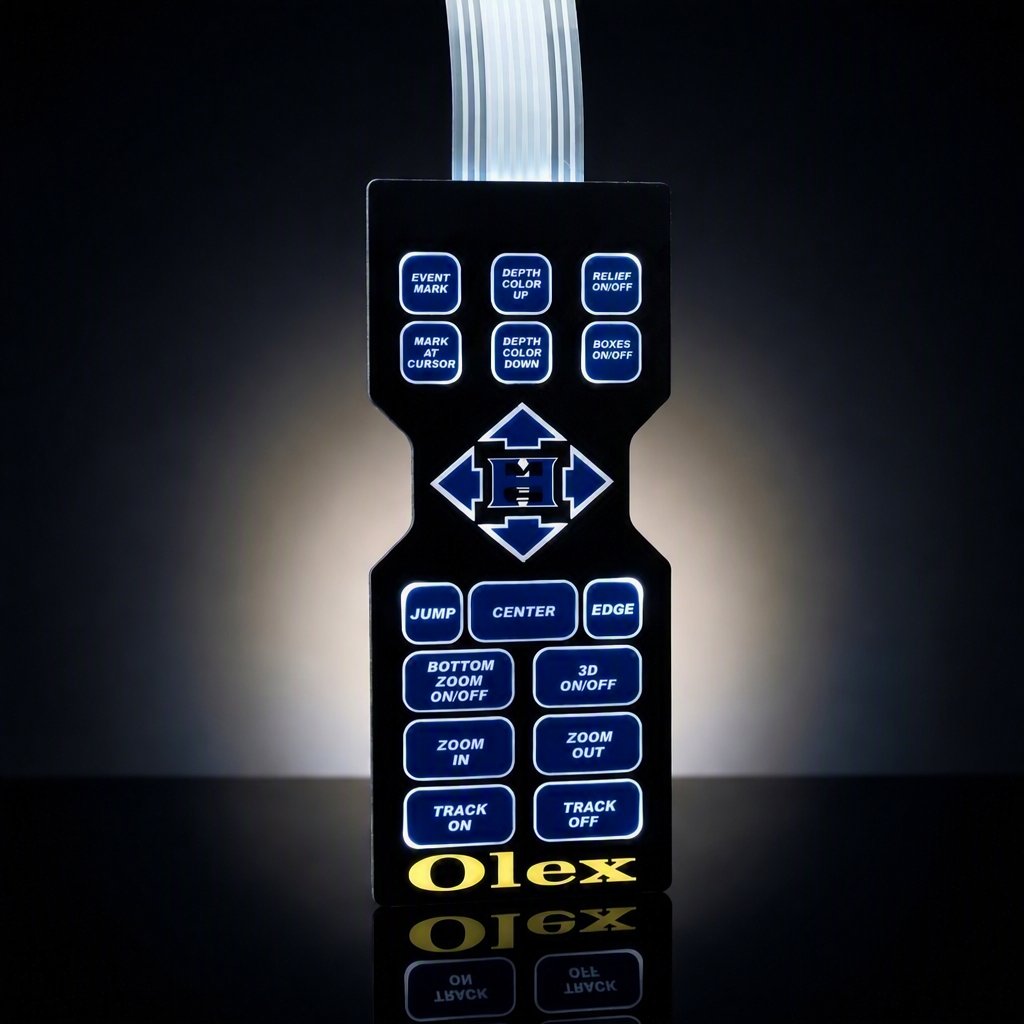
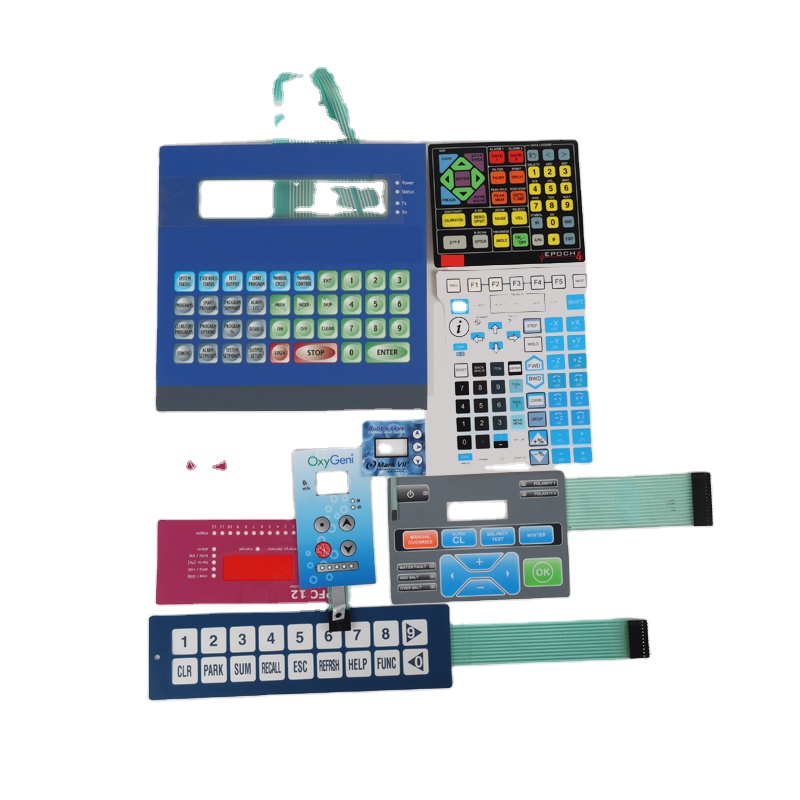
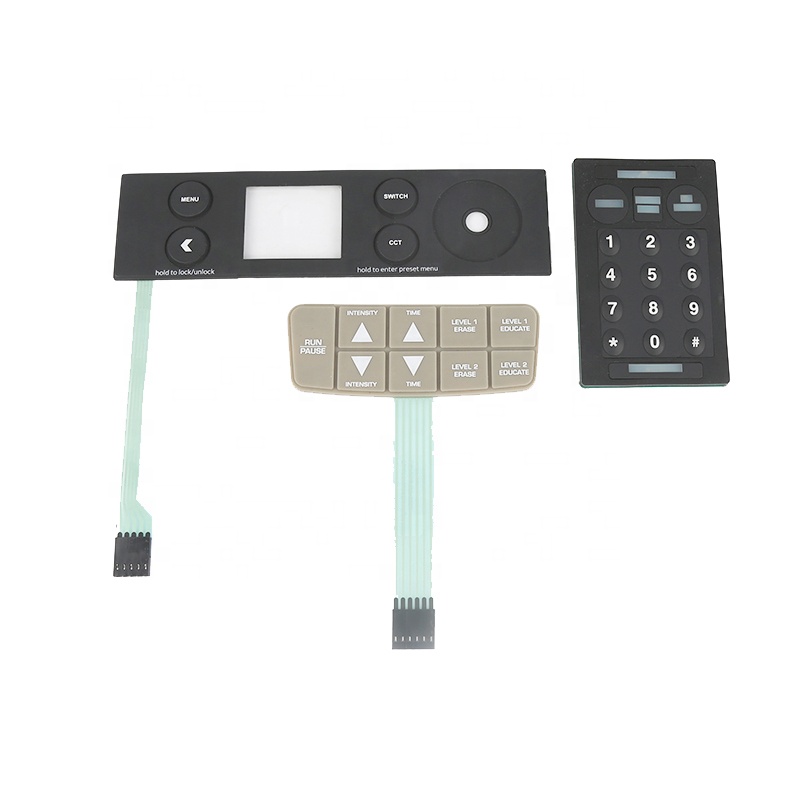
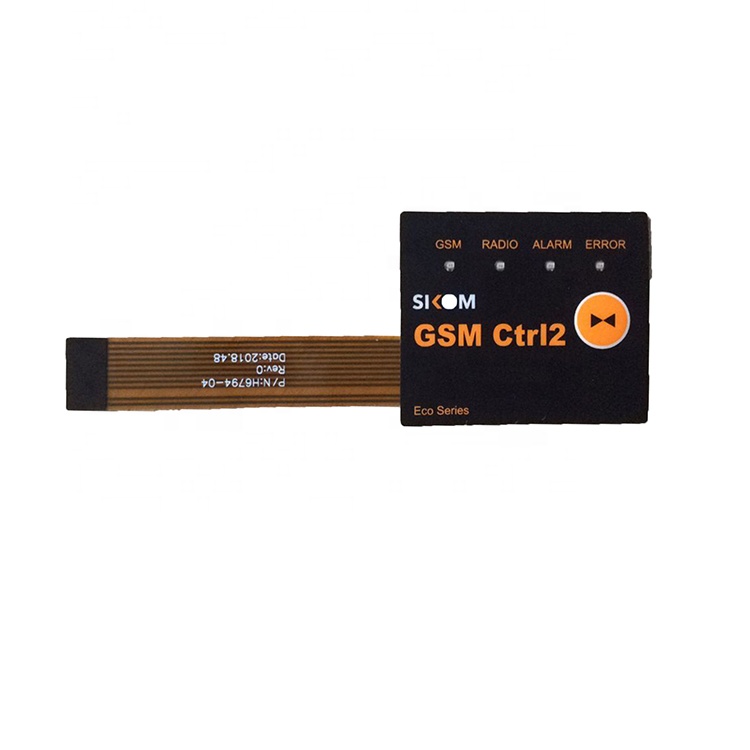
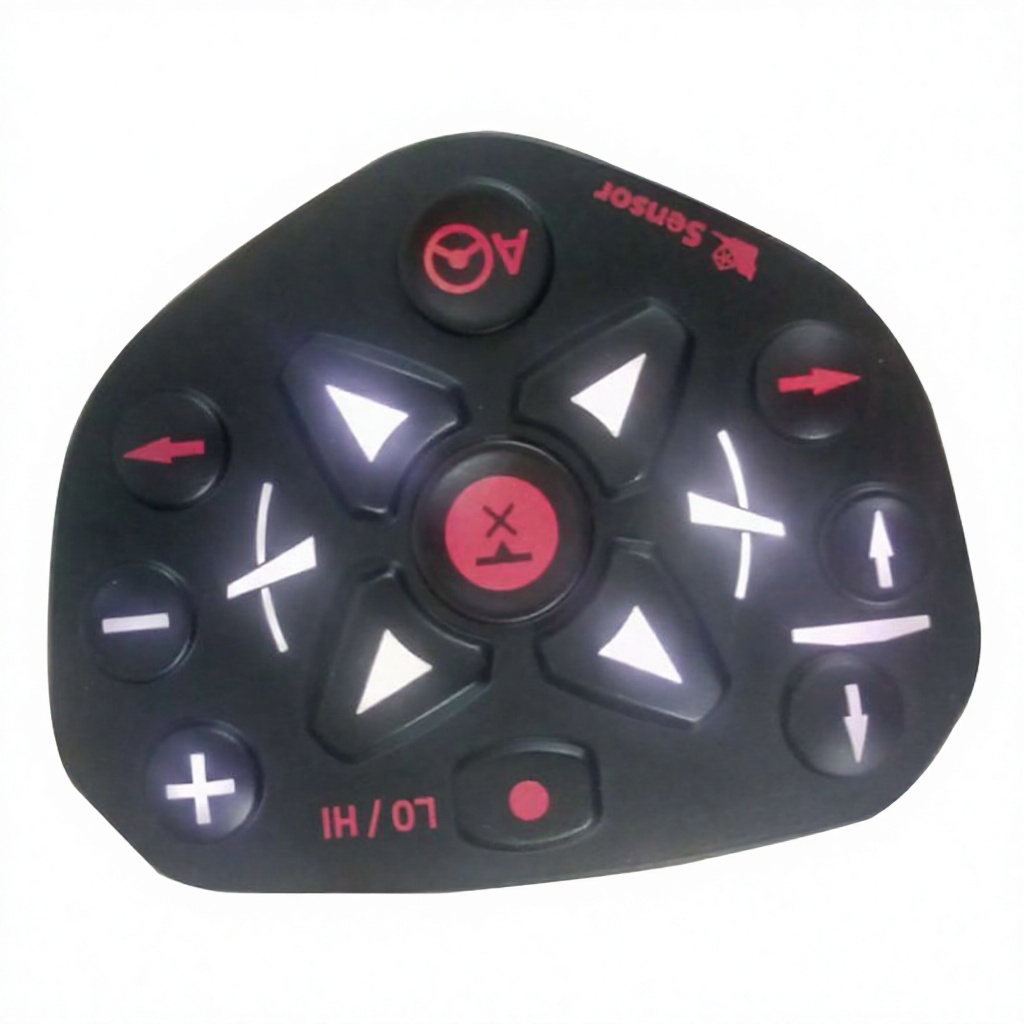
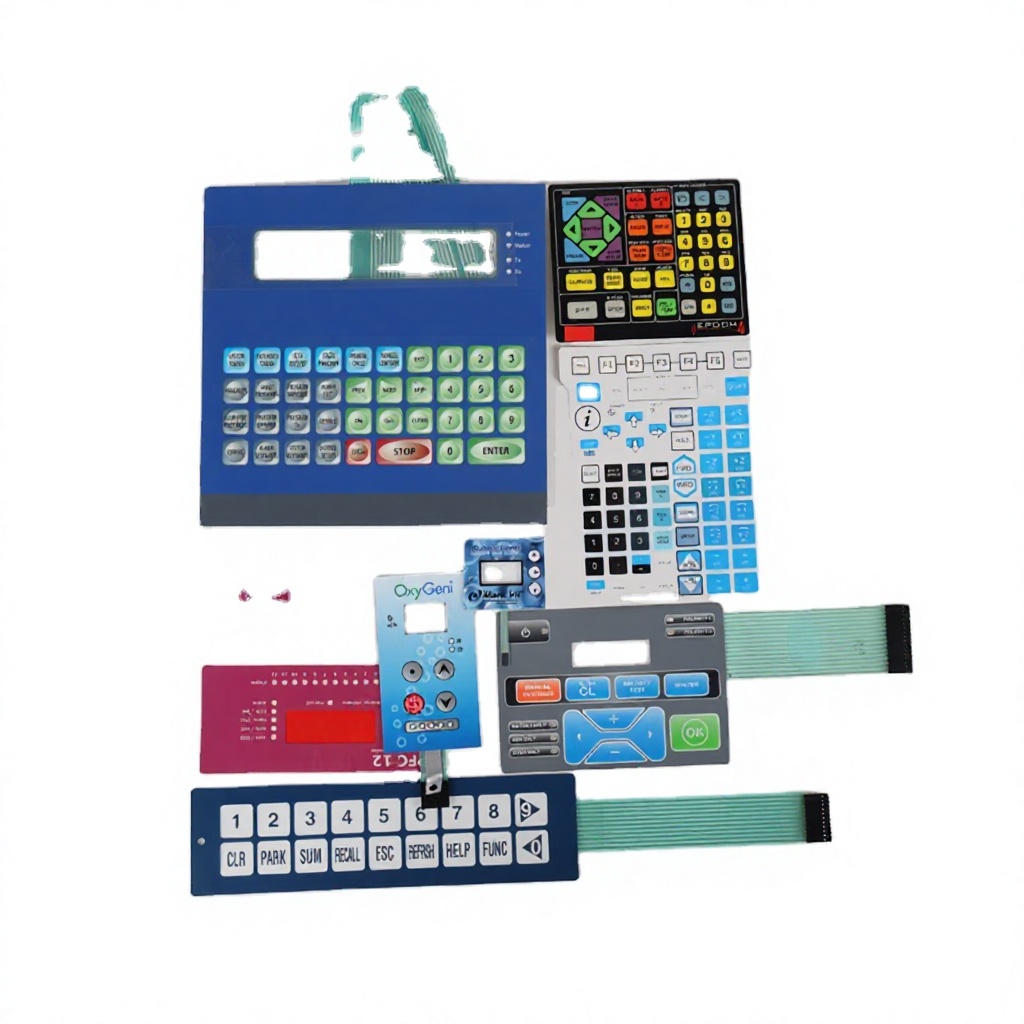
Explore our foundational illuminated and tactile membrane control switches. Built with genuine 3M adhesives, Japanese stainless-steel tactile domes, and high-efficiency optical arrays for seamless integration into All Saints equipment builds.

Inquire Now
Technical Whitepaper: Illumination Engineering

Photometric Optimization, Multi-Layer Lamination & Environmental Defense

An in-depth technical analysis of high-luminance, low-draw human-machine interface technologies designed for mission-critical deployment in coastal, tropical, and heavy industrial environments.

In modern electronic systems, the Human-Machine Interface (HMI) serves as the primary bridge between complex embedded microcontrollers and human operators. When operating equipment under extreme lighting variations—such as direct, high-UV midday equatorial sunlight transitioning into zero-light marine or emergency environments—standard graphic overlays fail to provide operators with instantaneous visual confirmation. The engineering imperative behind illuminated membrane switches is not purely cosmetic; it is a critical safety and ergonomics mechanism designed to prevent operator error, reduce cognitive fatigue, and safeguard internal electronics against aggressive atmospheric corrosives.

Core Engineering Standard: An illuminated membrane switch is a precision multi-layer composite consisting of a graphic overlay, an optical diffusion/guiding layer, upper circuit traces, mechanical spacer films, metal dome tactile arrays, lower circuit routing, and high-tack acrylic pressure-sensitive adhesives (PSA). Achieving uniform surface luminance without compromising tactile switch displacement requires micro-tolerance stack-up design.

1. Optical Architecture: LGF, LEDs, and Electroluminescence (EL)

Achieving uniform backlighting across expansive control panels without introducing bulky lightboxes requires precise optical physics. At Zhejiang ZIRA Membrane Switch Co., Ltd., our engineering team utilizes optical ray-tracing simulations to configure dot-matrix extraction patterns across ultra-thin Light Guide Films (LGF). Ranging in thickness from 0.125 mm to 0.250 mm, these optical films redirect light injected from side-firing surface-mount (SMD) LEDs horizontally through total internal reflection (TIR), scattering light vertically only where laser-etched micro-dots disrupt the optical boundary.

This contrasts sharply with conventional discrete surface backlighting, which relies on high-density LED arrays behind translucent polycarbonate diffusion windows. While discrete backlighting remains an economical choice for localized status indicators (Power, Fault, Run), it creates visible "hot-spotting" when applied across text legends or expansive tactile keypads. Conversely, Electroluminescent (EL) lamps provide exceptional velvet-smooth lighting across complex contours but exhibit a limited half-life (typically 3,000 to 5,000 operating hours) and demand high-voltage AC inverter circuitry (80–120 VAC at 400 Hz), generating unwanted electromagnetic interference (EMI) in sensitive wireless or medical microcontrollers.

Optical Technology Typical Thickness Operating Voltage Luminance Half-Life Power Consumption Best Suited Application
Side-Emitting LGF (Light Guide Film) 0.125 mm – 0.300 mm 2.8V – 3.3V DC (LED) >50,000 Hours Low (20–40 mA) Marine consoles, Medical diagnostics, Defense
Surface-Mount Discrete LEDs 0.800 mm – 1.600 mm 1.8V – 3.2V DC >100,000 Hours Very Low (5–20 mA) Status annunciators, Numeric keypads, Breakers
Electroluminescent (EL) Foil 0.200 mm – 0.400 mm 60V – 115V AC (Inverter) 3,000 – 5,000 Hours Medium (High inverter draw) Short-duty avionics, Emergency night panels
Fiber Optic Woven Mesh 0.300 mm – 0.500 mm Driver LED Dependent >50,000 Hours Low to Moderate Explosion-proof hazardous areas (Zero heat)

2. Contact Mechanics: Snap Ratio and Actuation Force Dynamics

Tactile feedback is vital in high-consequence control systems. Operators wearing industrial rubber gloves or maritime foul-weather gear cannot rely on passive capacitive glass screens; they require unmistakable mechanical confirmation that a contact has crossed its resistance threshold. ZIRA incorporates precision-stamped four-leg and round metal domes manufactured from heat-treated SUS301 stainless steel with gold or nickel plating.

The mathematical snap ratio—defined as R = (F1 - F2) / F1 × 100%, where F1 is the peak actuation force and F2 is the return force—is calibrated between 45% and 60% with actuation forces from 220g to 450g. This dynamic balance prevents accidental actuation from physical vibration while eliminating "finger stall," allowing high-speed typing on numeric entry units without missing pulses or experiencing electrical contact bounce.
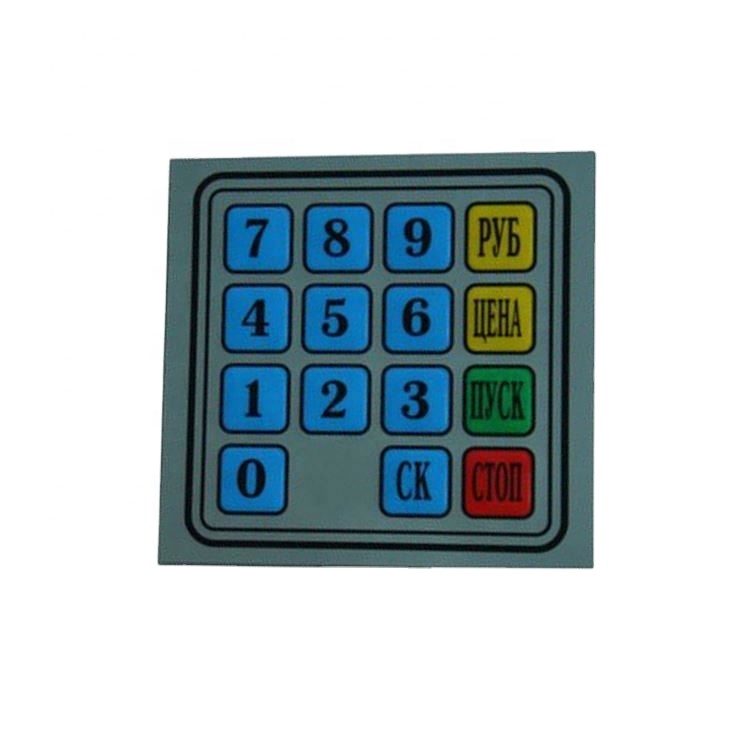
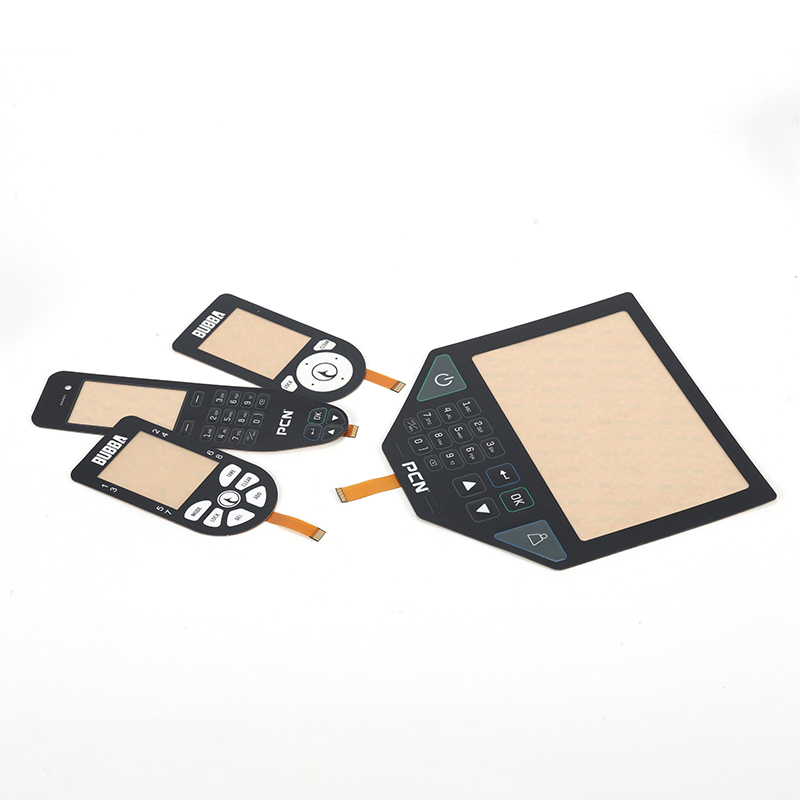
Silver-Carbon Dual Passivation

Conductive silver traces are overprinted with a formulated conductive carbon ink layer to prevent dendritic silver migration under 95% relative humidity and continuous DC voltage bias.

Hermetic Perimeter Gasketing

Closed-cell modified acrylic foam bonding films create an impenetrable barrier rated to IP67/IP68 standards, stopping moisture, saline vapor, and hydraulic fluids from breaching the dome cavity.

ESD & EMI Faradaic Cage

Integrated solid or honeycomb aluminum/copper flexible shielding ground layers absorb electrostatic discharges up to 15 kV, protecting underlying sensitive microcontrollers from latch-up.

UV-Resistant Autotex XE PET

Graphic overlay films treated with biaxially oriented fluoropolymer exterior resins prevent embrittlement, yellowing, and micro-cracking under severe, continuous tropical ultraviolet radiation.

Local Deployment Context

Mission-Critical Applications Across All Saints & Surrounding Regions

Serving as an essential commercial crossroad, transit node, and industrial equipment support corridor in Antigua, engineering installations in All Saints demand specialized membrane solutions configured for intense tropical maritime exposure.

Marine Engineering & Yacht Refit

Tropical Marine Instrumentation & Bridge Consoles

Centrally located between the historic sailing hubs of English Harbour/Falmouth and the northern commercial docks, marine electrical contractors operating through All Saints require backlit switchboards impervious to salt spray, humidity-induced fogging, and corrosive Atlantic brine.

  • 500-Hour ASTM B117 5% Salt Fog Proofing
  • Night-Vision Red/Green Dimmable LGF Backlight
  • 3M VHB Closed-Cell Mounting Adhesives
Renewable Utility Infrastructure

Solar Inverter & Microgrid Energy Storage Controls

With widespread expansion of decentralized solar-plus-storage microgrids across the island, outdoor-rated solar inverters and battery energy storage systems (BESS) installed in All Saints substations face ambient heat up to 45°C inside metal enclosures alongside high relative humidity.

  • Continuous Operating Range: -30°C to +85°C
  • Sunlight-Readable High-Contrast Graphics
  • GORE-Tex Micro-Vent Pressure Equalization
Public Utilities & Water Treatment

Desalination Plants & Cold-Chain Pumping Systems

Critical water treatment facilities, reverse osmosis (RO) plants, and refrigerated logistics hubs in the parish rely on chemical-washdown front panels that endure constant exposure to chlorinated cleaners, brine discharge, and pressurized spray without ingress.

  • IP67 Ingress Sealing Against Heavy Jets
  • Chemical Resistance to Acids, Alkalis & Solvents
  • Tactile Embossed Domes for Gloved Operators
Market & Technology Trends

Next-Generation HMI Evolution in the Caribbean Engineering Landscape

Industrial procurement teams in All Saints and the broader West Indies are transforming their technical criteria to embrace ruggedized intelligence, reduced lifecycle maintenance, and hybrid optical technologies.

Migration from Mechanical Switches to Sealed LGF Membranes

Traditional electromechanical push-buttons and rocker switches feature physical barrel openings that invite airborne salt mist and moisture, leading to internal terminal oxidation within 12–18 months. Equipment retrofits across All Saints increasingly specify monolithic, IP67-rated membrane panels with Light Guide Films, eliminating mechanical openings while maintaining tactile feel.

Edge-Connected Smart Panels with Capacitive-Tactile Hybrids

Utility automation systems require interfaces that blend modern capacitive slider aesthetics with the fail-safe security of tactile mechanical domes for critical emergency stops (E-Stop) and power toggles. ZIRA's hybrid ITO film + metal dome architectures satisfy both intuitive multi-touch navigation and absolute operational security.

Antimicrobial & UV-Stabilized Coated Formulations

Healthcare facilities and food-processing operations in the region are mandating silver-ion antimicrobial films (such as MacDermid Autotype Autotex AM) integrated directly into the polymer matrix. These permanent coatings inhibit bacterial and fungal colonization on interfaces without leaching or degrading during daily sterilization routines.

Manufacturing Authority

Why Procurement Leaders & Global OEMs Partner with ZIRA

Since 1996, Zhejiang ZIRA Membrane Switch Co., Ltd. has delivered precision-engineered human-machine interface assemblies from our 5,000 m² facility in Ningbo directly to international markets, backed by third-party verification and rigorous quality audits.

29+
Years Engineering (1996)
5,000m²
Dedicated Cleanroom Facility
100%
Automated Electrical Testing
50+
Export Destination Markets

Tier-1 Audited Excellence: ZIRA has cultivated long-term manufacturing partnerships with Fortune 500 automation pioneers including ABB and Emerson. Our factory undergoes independent, periodic onsite verification by Intertek, ensuring our QA/QC systems, material provenance, environmental compliance (RoHS, REACH, UL94 V-0), and trade capacity adhere to the most demanding international engineering thresholds.

Our 10-Step Zero-Defect Manufacturing Lifecycle

STEP 01

Raw Materials IQC

Incoming inspection of Autotype PET, 3M adhesive lots, and conducting silver paste viscosities.

STEP 02

CAD/DFM Validation

Engineering review of circuit trace clearance, tail routing, and light-guide ray simulations.

STEP 03

Precision Screen Prep

Laser photoplotting and fine-mesh tension calibration for conductive and dielectric layers.

STEP 04

Cleanroom Printing

Class 10,000 environment screen printing of conductive silver, carbon, and graphic inks.

STEP 05

Tunnel Oven Curing

Multi-zone precision thermal curing to stabilize electrical sheet resistance and prevent flaking.

STEP 06

Optical Registration

CCD automated positioning hole punching ensuring <±0.05 mm interlayer alignment.

STEP 07

Tactile Embossing

Hydro-pneumatic hot/cold forming of rim, pillow, and poly-dome tactile key profiles.

STEP 08

SMD & Connector Crimp

Surface-mount LED placement and high-pressure crimping of Nicomatic/FCI female block terminals.

STEP 09

Lamination Gasketing

Cleanroom roll lamination of internal adhesive spacers, light guides, and metal dome matrices.

STEP 10

100% Final Testing

Automated electrical check for loop resistance, open/short circuits, insulation, and tactile force.

Procurement Intelligence

Frequently Asked Questions by All Saints Procurement & Engineering Teams

Direct technical answers addressing tropicalization, shipping logistics, customization tolerances, and engineering support for projects in Antigua and the wider Caribbean.

How do ZIRA illuminated membrane switches resist tropical island marine air and salt fog?
We employ a multi-tier defense architecture specifically engineered for high-salinity coastal environments. First, the exterior graphic overlay utilizes Autotype Autotex XE or polyester films that are chemically inert to salt mist and UV degradation. Second, all conductive silver circuits undergo an overprinted conductive carbon passivation pass; this eliminates silver ion migration, which typically causes trace short-circuits under continuous DC voltage and high humidity. Finally, our perimeter seals utilize 3M 300LSE or 200MP acrylic adhesives applied in continuous, unbroken perimeter gaskets, forming a hermetic barrier rated up to IP67.
What logistics channels, lead times, and Incoterms apply for delivery into All Saints, Antigua?
We support EXW, FOB (Ningbo/Shanghai), CIF, and fully delivered DDP terms into Antigua. For rapid prototype verification and fast-track engineering batches, we partner with DHL Express, FedEx, and UPS with transit times from our Ningbo facility to V.C. Bird International Airport (ANU) typically within 4 to 7 business days. For volume manufacturing orders, consolidated ocean freight ships via major Caribbean container lanes directly to the Port of St. John's, followed by bonded overland transit to your facility or staging warehouse in All Saints.
What CAD and engineering documentation do your engineers require to initiate DFM and quotation?
To begin a comprehensive Design For Manufacturability (DFM) review, please provide: (1) Vector graphic overlay artwork in Adobe Illustrator (.AI), CorelDraw (.CDR), or high-resolution PDF format with designated Pantone (PMS) or RAL color codes; (2) Mechanical dimensional drawings in DXF or DWG showing outline cutouts, emboss heights, and tail exit positions; (3) Schematic or circuit pin-out matrix detailing contact closures, discrete LED polarities, common bus lines, and chosen connector mating pitch (standard 2.54 mm or high-density 1.00 mm / 1.27 mm); and (4) Operating environmental specifications (temperature range, UV exposure, liquid chemical exposure). If an original CAD file is unavailable, our team can reverse-engineer physical working samples.
What are the minimum order quantities (MOQs) for prototype evaluation versus mass production?
Recognizing that specialized marine refits, localized utility control updates, and R&D pilots in All Saints require flexible initial volumes, ZIRA offers low-volume prototype builds starting at just 1 to 5 pieces using precision digital cutting and direct-to-substrate digital imaging, bypassing expensive hard steel tooling. For volume production utilizing custom silk-screen masks and steel die tooling, our standard production runs typically start at 100 units, scaling smoothly to 100,000+ units with tiered volume discounts.
Can custom backlighting be calibrated for dual-mode daylight sunlight readability and night-vision operation?
Yes. Utilizing our micro-lens Light Guide Film (LGF) technology, we can partition illumination zones across distinct circuits. Daytime operation utilizes high-luminance cold-white LEDs configured to deliver up to 800+ cd/m² luminance to ensure visibility under direct overhead sun. For night operation or marine navigation stations, low-current red, amber, or NVIS-compliant green LEDs can be activated via separate microcontroller lines or integrated PWM dimmer switches, maintaining operator dark-adaptation without stray glare.
What electrical verification and quality documentation is provided with every shipment?
Every production lot undergoes 100% automated electrical testing on multi-point computerized harness analyzers before packaging. Tests include contact loop resistance (<100 ohms standard), insulation resistance (>100 megohms at 100V DC), contact bounce time (<5 ms), dielectric breakdown tolerance, and LED forward voltage verification. Each shipment is dispatched with an official Certificate of Conformance (CoC), dimensional inspection reports, and full material lot traceability in compliance with our ISO 9001:2015 quality management procedures.

Accelerate Your HMI Project with ZIRA’s Senior Engineering Team

Whether you require a salt-proof illuminated marine console for a refit in Antigua, a sunlight-readable utility controller for Caribbean microgrids, or high-volume OEM membrane production, our application engineers provide complete DFM reviews, layer stack-up proposals, and photolithography simulations within 24 hours.

Inquire Now
Direct factory reply • NDA protection • Rapid prototyping