High-Reliability Human-Machine Interface Solutions
Engineered to meet the stringent demands of Austrian mechanical engineering (Maschinenbau) and CE/DIN standards. From harsh alpine washdowns to cleanroom diagnostic instruments, our keypads offer long-term tactile endurance, chemical resistance, and electromagnetic compatibility.
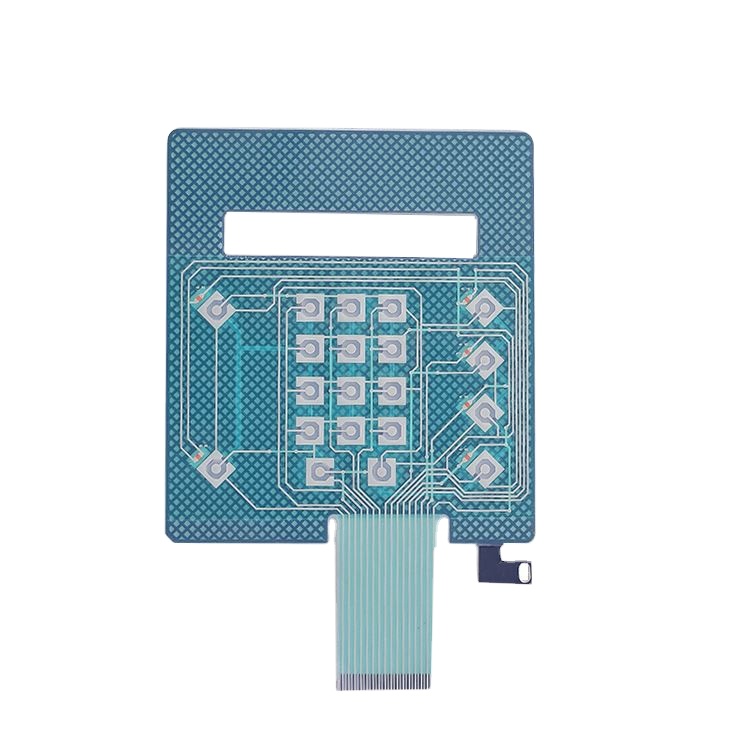
Custom PET Membrane Switch Keypad, ESD Shielding Layer Thin Film Push Button Switch
- ESD Protection >15kV via Aluminum/Copper Foil
- Autotex® F150 / F200 Fine Texture PET
- Actuation: Stainless Steel Dome (Snap Ratio >45%)
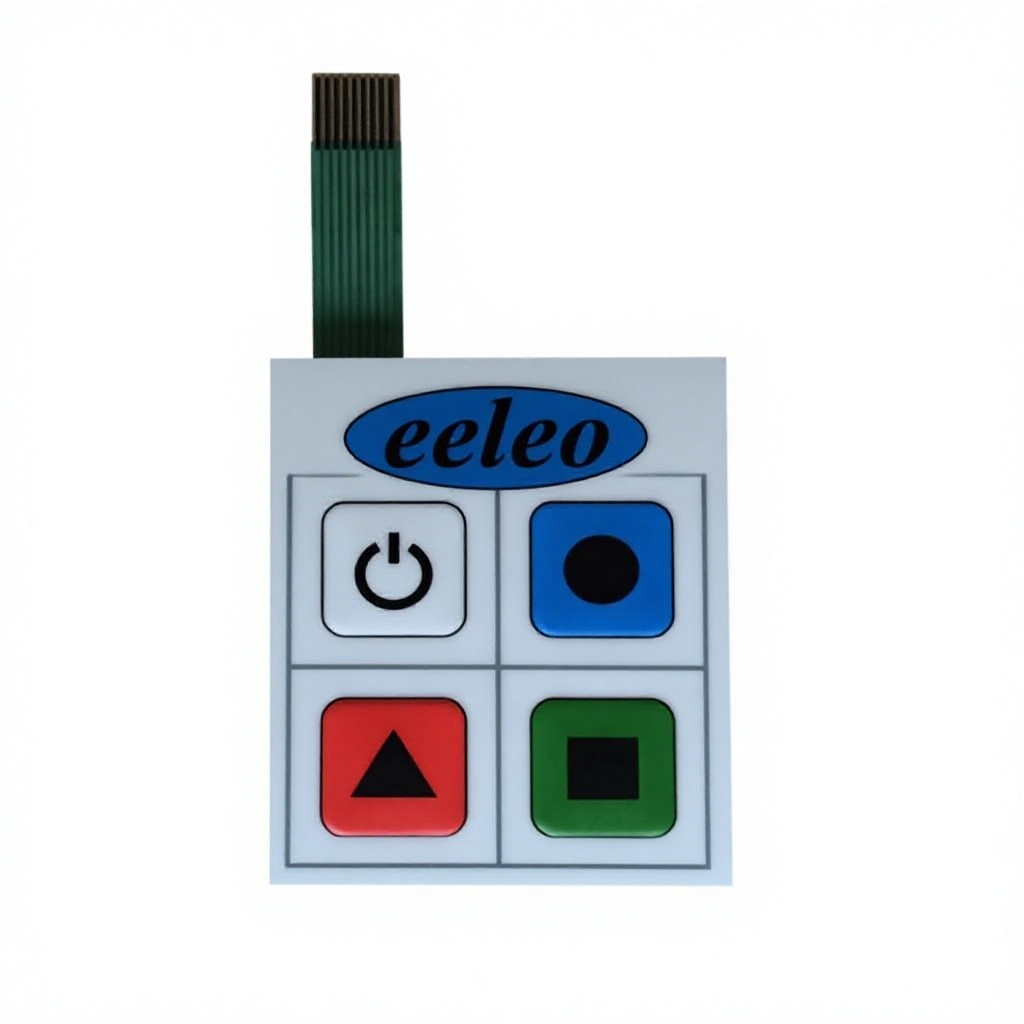
OEM ODM Membrane Switch Home Appliance Control Panel Custom Graphic Overlay Polyester PET RoHS
- RoHS & REACH Compliant UV Sub-Surface Print
- Resistant to CIP Cleaning Agents & Alcohols
- 3M 467MP / 468MP High-Cohesion Adhesive
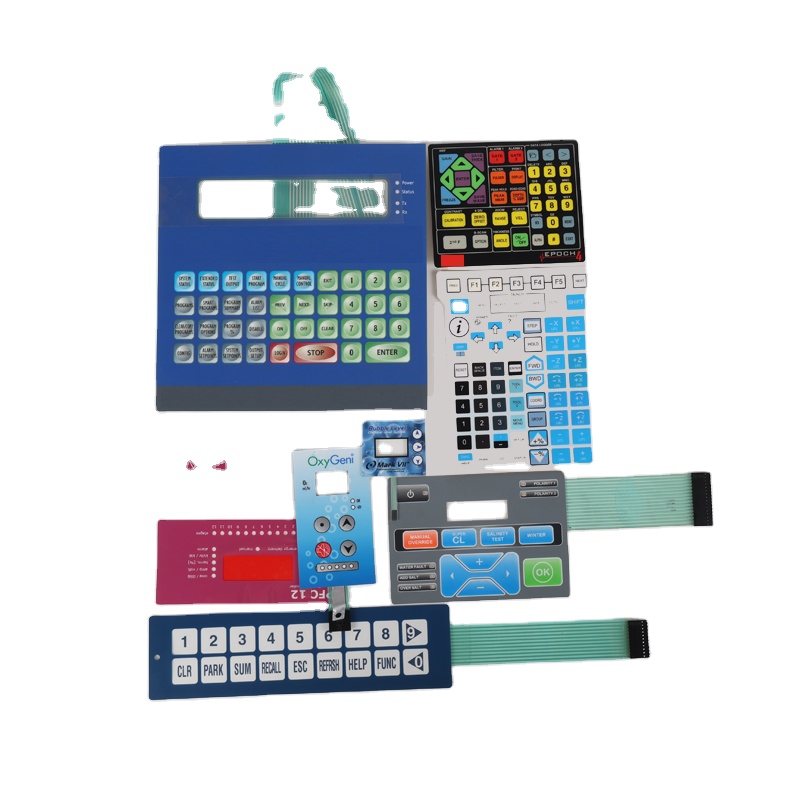
Waterproof Flexible Circuit Membrane Switch for Medical Equipment
- IP67 Complete Perimeter Gasket Sealing
- Antimicrobial Film Surface (ISO 22196)
- Polyimide FPC Tail with Gold-Plated Fingers
Custom LED EL Backlit Membrane Switch Keypad, Uniform Light Guide LGF FPC Control Keypad
- Ultra-Thin Light Guide Film (LGF 0.125mm)
- Side-Firing SMT LEDs with Homogeneous Lux
- Ideal for Low-Light Alpine Industrial Consoles
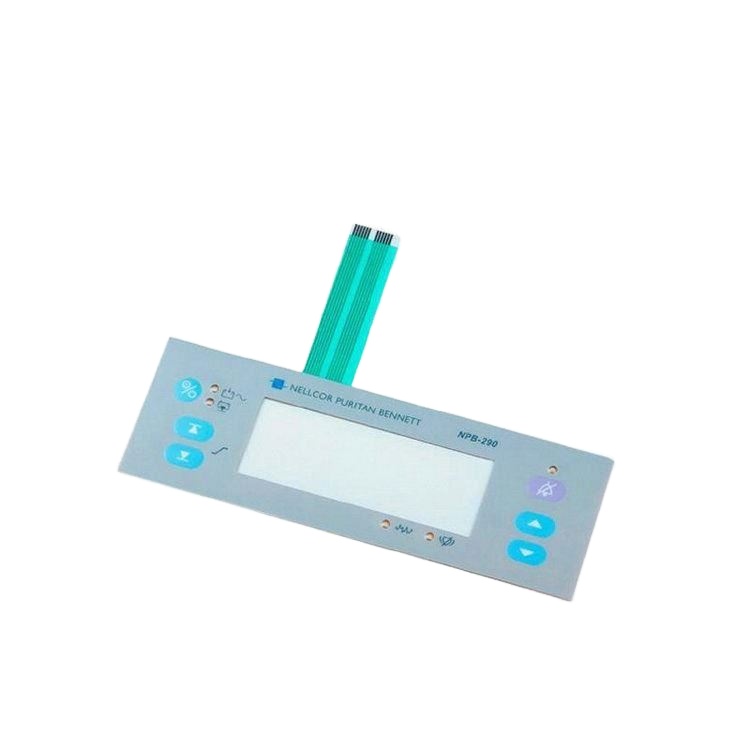
China Manufacturer Custom Membrane Push Button Switch, Flexible Keypad OEM ODM
- Low Initial Tooling Cost with 1-Piece Prototyping
- Silver Conductive Paste <0.05 Ω/sq Resistance
- 2.54mm Pitch FCI / Nicomatic Standard Crimp
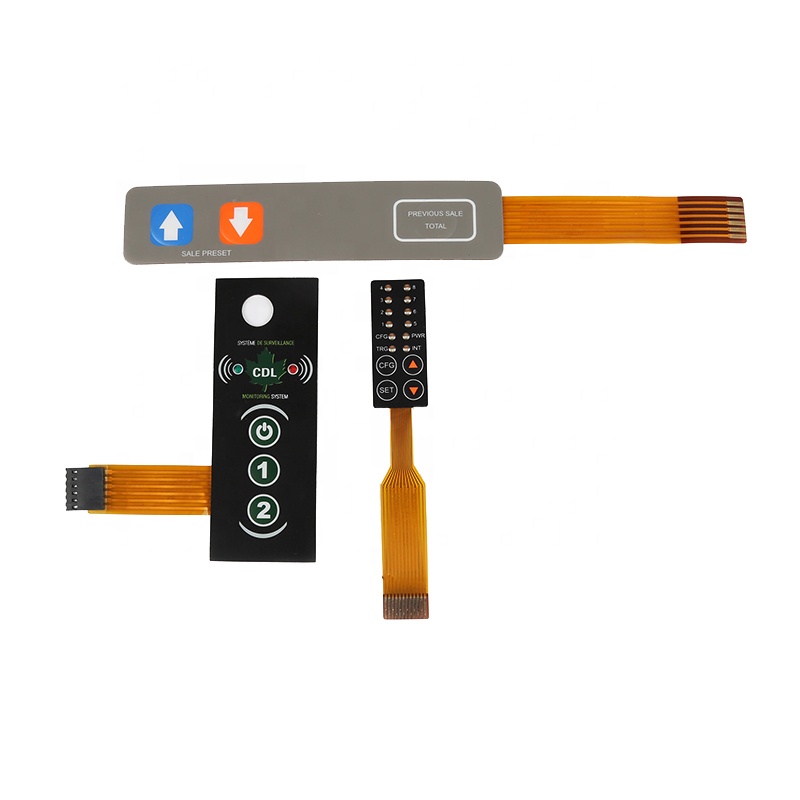
Waterproof Capacitive Touch Membrane Switch with Customizable Color & Texture
- Zero Mechanical Wear; Unlimited Touch Cycles
- ITO Sputtered Film Circuit with Microcontroller IC
- Immune to Condensation, Frost & Liquid Pooling
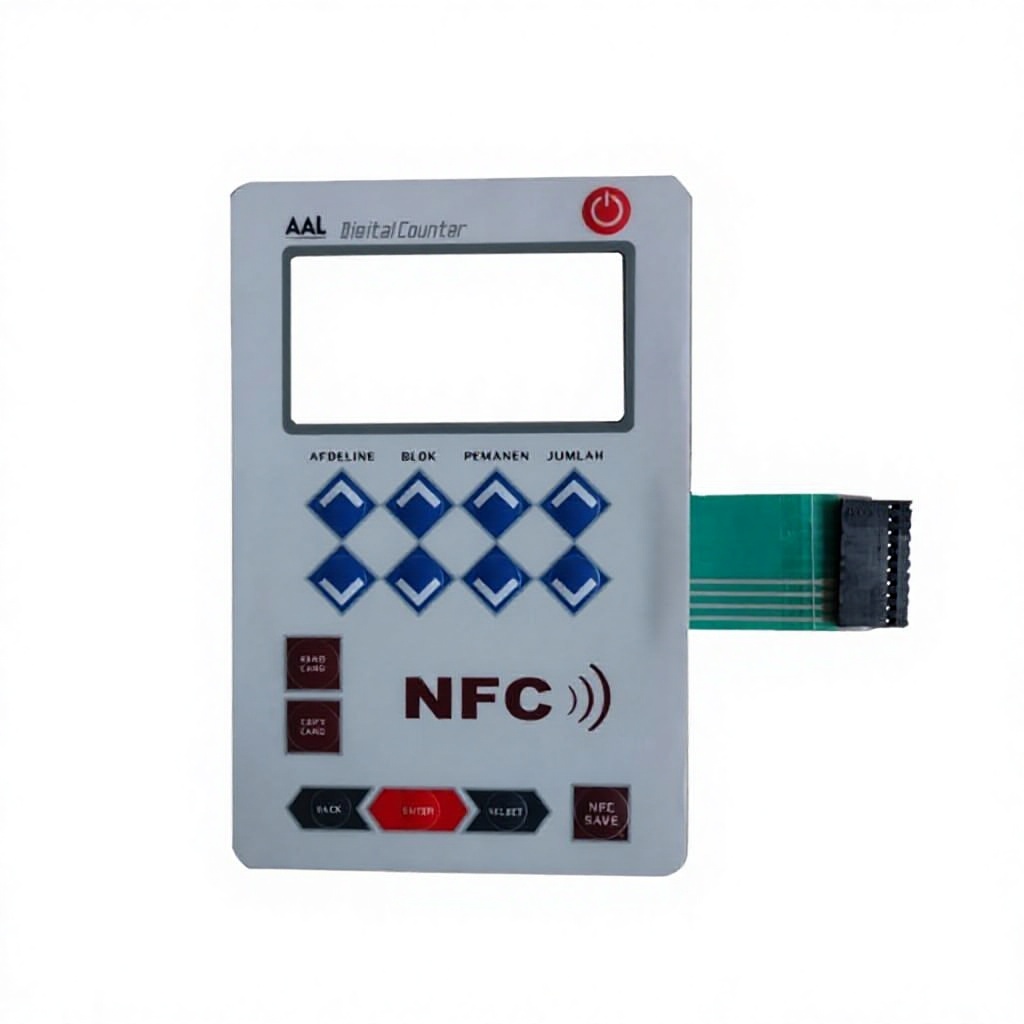
Polyester Dome or Metal Dome Options Rated 1 Million Custom Instrumentation Keypad
- Precision Embossed Rim or Pillow Tactile Feedback
- Nickel / Gold-Plated Metal Domes (250g–450g)
- Certified to DIN 42115 High-Durability Specs
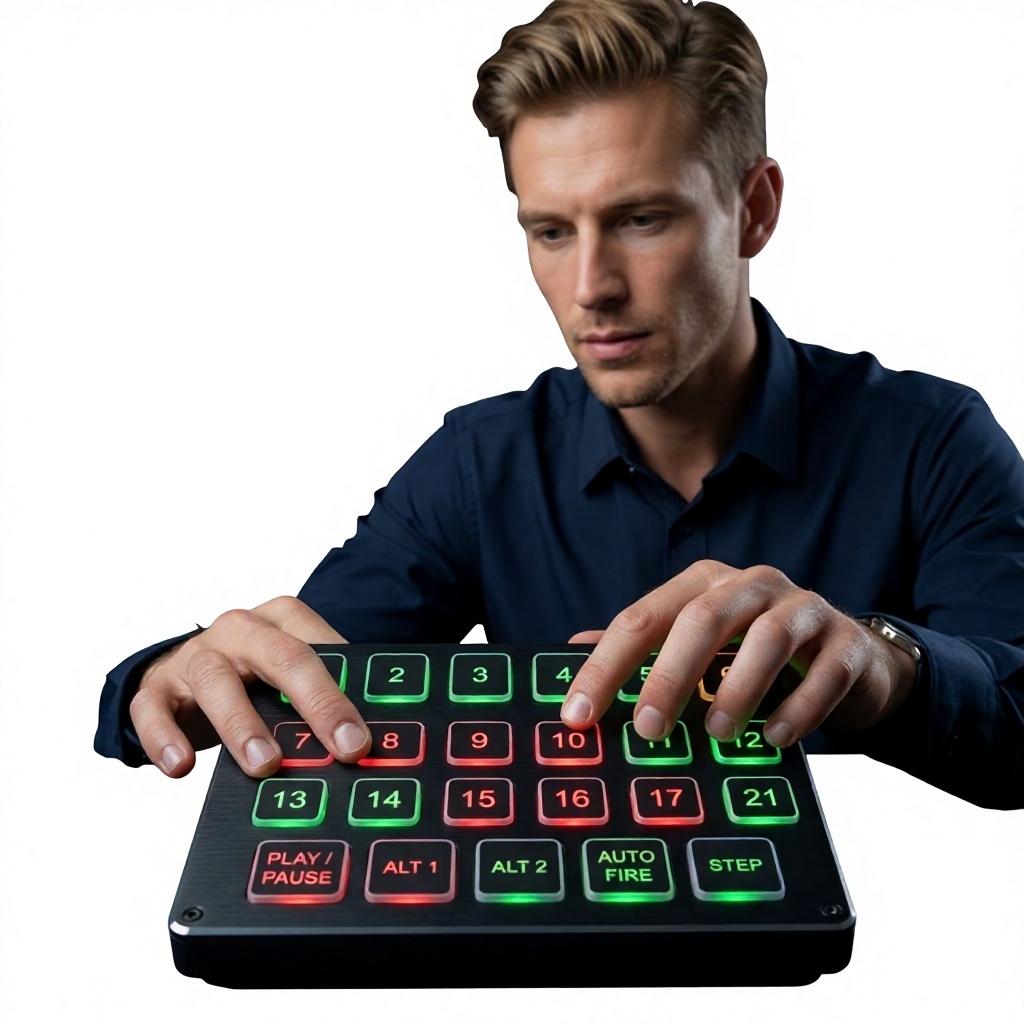
RoHS REACH Compliance Even Illumination Every Key Backlit Membrane Keypad Switch
- Even Backlight Distribution Without Hotspots
- Dual-Color Status LEDs (Bi-color Red/Green SMT)
- Dead-Front Printing (Hidden-Until-Lit Legends)
Material Science & Structural Architecture for Alpine Environments
Industrial machinery deployed across the Salzburg basin, the Salzach valley, and surrounding sub-alpine zones experiences severe environmental gradients: from -30°C winter cold shocks to high-humidity washdowns and extreme UV indices at higher altitudes. Off-the-shelf control panels fail prematurely due to micro-cracking, delamination, and silver migration.
Substrate & Overlay Optimization: PET vs. Polycarbonate
For industrial applications in Austria, material selection dictates mechanical lifespan. While Polycarbonate (Lexan™) provides exceptional impact resistance and optical clarity for indoor consumer equipment, it suffers from plasticizer embrittlement and environmental stress cracking (ESC) when exposed to aggressive industrial cleaners or prolonged solar UV.
ZIRA prioritizes biaxially oriented polyethylene terephthalate (PET), specifically MacDermid Autotype Autotex® XE and Autoflex®. PET substrates exhibit an flexural fatigue endurance exceeding 5 million switch actuations without micro-fracturing. For outdoor alpine telemetry and cableway ground terminals, Autotex XE integrates chemical UV-stabilizers in its primer layer, withstanding solar degradation (ASTM G154) up to 10 years without yellowing.
Silver Migration Mitigation & Copper Flex (FPC) Reliability
Condensation is the primary failure mode in alpine control cabinets. When traditional screen-printed silver ink traces are subjected to continuous DC voltage in the presence of micro-moisture, dendritic silver migration occurs, causing permanent short circuits across circuit traces.
To eliminate this vulnerability for Salzburg engineering clients, ZIRA incorporates two advanced mitigation technologies: First, full encapsulation of silver traces with an overprinted hydrophobic carbon ink shield and cross-linked dielectric barrier. Second, for mission-critical medical diagnostics and SIL-rated automation controllers, we implement Flexible Printed Circuit (FPC) technology utilizing roll-annealed copper laminated to polyimide film, delivering absolute zero silver migration, lower line resistance (<0.01 Ω/sq), and high-density pitch integration down to 0.5mm ZIF.
| Performance Parameter | Standard Silver PET Membrane | Copper Flex (FPC) Membrane | Silicone Keymat over PCB / Rigid | Capacitive Solid-State ITO |
|---|---|---|---|---|
| Operating Temperature | -20°C to +65°C | -40°C to +85°C (Alpine Grade) | -40°C to +125°C | -30°C to +75°C |
| Actuation Lifespan | 1,000,000 cycles | 3,000,000 cycles | 5,000,000 cycles | Virtually Unlimited (>10M) |
| Trace Resistance | < 1.0 Ω/cm | < 0.05 Ω/cm | Direct Copper Trace (~0 Ω) | 50 – 200 Ω/sq (ITO) |
| Tactile Ratio & Feel | Crisp Snap (40–60%) | Precision Metal Dome Snap | Soft Elastomeric Stroke (1.2–2.5mm) | Non-tactile (Audible / Haptic IC) |
| Ingress Protection Rating | IP65 (Gasketed) | IP67 / IP68 Continuous Submersion | IP66 Perimeter Gasketed | IP69K High-Pressure Washdown |
| Glove Operation Compatibility | Excellent (Mechanical Snap) | Excellent (Mechanical Snap) | Superior (Thick Thermal Gloves) | Requires Tuned Controller IC |
Salzburg & Upper Austrian Industrial Application Scenarios
Salzburg sits at the pivotal junction of Central European advanced mechanical engineering, serving as a gateway between Bavarian automation corridors and Upper Austria's high-tech industrial belt. We customize HMI architectures specifically for these dominant regional industries.
Industrial Automation & Robotic Controllers
Salzburg's machinery fabricators demand rugged teach-pendant interfaces and cabinet front panels that endure vibration, motor electromagnetic interference (EMI), and grease exposure. Our ESD-shielded assemblies protect microcontrollers against electrostatic discharge during direct machine-room servicing.
Alpine Cableway & Ski Infrastructure Control
Control systems installed at high-altitude stations (such as Kaprun, Zell am See, or Saalbach) encounter sub-zero blizzards, freezing fog, and intense solar UV. We configure hermetically sealed IP67 silicone-on-membrane keyboards with high-tactile snap domes operable by operators wearing heavy thermal work gloves.
Medical Diagnostics & Cleanroom Instruments
Medical equipment manufacturers in the Salzburg-Hallein biomedical corridor require zero-crevice, perfectly smooth front panels conforming to DIN EN 60601-1. We utilize antimicrobial textured films resistant to bleach, chlorhexidine, and isopropyl alcohol disinfection protocols.
Food & Beverage Processing Equipment
The Salzburg dairy and brewing technology sector requires HMI interfaces capable of surviving daily high-pressure, hot-water sanitization (Clean-In-Place / SIP cycles). Our capacitive touch membrane interfaces offer continuous flat surfaces with IP69K ingress resistance and zero particulate entrapment.
Emerging Technology Trends in the Austrian HMI Market
Austrian OEMs are rapidly upgrading control panels from passive push-buttons to connected, intelligent user interfaces. As procurement directors and lead engineers re-evaluate their supply chains, three distinct HMI engineering trends have emerged.
Hybrid Touch & Physical Tactile Combinations
While capacitive glass touchscreens are popular, Austrian industrial machine safety regulations frequently mandate tactile certainty for critical operating states (e.g., motor jogging, emergency pauses). The trend points to hybrid panels: an optically bonded display window framed by physical tactile metal-dome membrane buttons with embossed finger-locating ridges, ensuring blind operational precision even under emergency conditions.
Homogeneous LED Light Guide Film (LGF) Integration
Traditional discrete LEDs create unsightly hot-spots and generate unnecessary thermal dissipation within sealed cabinets. Austrian design aesthetics favor thin-line, architectural backlighting. By deploying 0.125mm optical-grade Light Guide Films (LGF), ZIRA guides light from edge-mounted micro-SMT LEDs evenly across entire icon clusters, lowering power draw by up to 60% while matching corporate RAL/Pantone chromatic guidelines.
Sustainable Circularity & REACH SVHC Elimination
With Austria's aggressive decarbonization targets and rigorous enforcement of EU chemical directives, procurement audits heavily scrutinize hazardous substances. Leading Salzburg OEMs reject phthalates, halogenated flame retardants, and SVHC candidates. ZIRA's manufacturing lines run certified solvent-free UV-curing inks, RoHS 3-compliant silver systems, and halogen-free adhesives tested under strict Intertek surveillance.
Why Austrian Procurement Teams Partner with ZIRA
Founded in 1996, Zhejiang ZIRA Membrane Switch Co., Ltd. has accumulated nearly three decades of precision HMI manufacturing experience. We operate as an end-to-end factory-direct source, bridging high-volume precision manufacturing with responsive German/English engineering documentation.
Tier-1 Global Proven Reliability
We maintain multi-year supply-chain partnerships with international power and automation titans, including ABB and Emerson. Our quality control processes replicate the strictest Western supplier audits.
Complete In-House DFM Engineering
Our bilingual CAD/CAM engineers perform Design-for-Manufacturability (DFM) reviews on every Gerber, DWG, and AI file. We optimize silver trace widths, tail bend radii, spacer venting, and snap ratios prior to steel tooling.
1-Piece Prototyping to Mass Production
Support your R&D timeline with rapid laser-cut prototypes starting from 1 piece without expensive hard steel tooling. Seamlessly scale to 100k+ series production with hardened steel rule dies.
Frictionless DDP Austria Logistics
We routinely handle door-to-door delivery (Incoterms DDP Salzburg / Hallein / Bergheim) via direct air cargo to Salzburg Airport (SZG) or Munich Hub (MUC), managing Austrian customs clearance and EU VAT directly.

Intertek Onsite Assessed Facility
Production lines, environmental QA/QC, electrical test benches, and legal export licensing verified onsite by Intertek Testing Services.
Salzburg Procurement & Engineering FAQ
Key technical, contractual, and logistical questions frequently raised by Austrian engineering managers and procurement heads.
What is the typical prototype and production lead time to Salzburg?
Engineering DFM review and digital color proofs take 24–48 hours. Rapid laser-cut prototypes are fabricated and electrically tested in 5–7 business days. Upon final golden sample sign-off, series production runs in 12–18 business days. Priority air shipments to Salzburg (SZG) or Munich (MUC) transit in 3–5 working days.
How do you verify compliance with EU RoHS, REACH, and CE directives?
Every raw material batch (Autotex films, 3M adhesives, conductive silver paste, terminal connectors) is accompanied by current third-party laboratory test reports (SGS/Intertek). We guarantee 100% compliance with EU Directive 2011/65/EU (RoHS 2/3) and REACH Regulation (EC) No 1907/2006, delivering formal CoCs (Certificates of Conformance) with each shipment.
Can you manufacture membrane keypads matching exact RAL or Pantone colors?
Yes. Graphic overlays are reverse-screen printed using precision color-matching spectrophotometers. We precisely match standard Austrian industrial color codes, including RAL Classic (e.g., RAL 7035 Lichtgrau, RAL 7016 Anthrazitgrau) and Pantone Matching Systems (PMS), under standardized D65 lighting booths.
What testing procedures are performed before series shipment?
Every single membrane switch passes 100% automated electrical testing on multi-channel testers: trace loop resistance verification, contact bounce time (<5ms), insulation resistance (>100MΩ at 100V DC), and active LED forward voltage/polarity checks. Tactile force testing (actuation curve and snap ratio) is sampled per lot via automated force-displacement gauges.
How are air-pressure differentials handled for high-altitude alpine installations?
Equipment operating between Salzburg city (424m elevation) and mountain summits (over 2,500m) experiences atmospheric pressure changes that can cause sealed membrane switches to pillow, distort tactile snap, or self-actuate. We engineer micro-vented channels connecting dome chambers to a rear desiccant breather membrane, equalizing barometric shifts without compromising IP67 ingress seals.
What files are required to initiate a detailed quotation and engineering review?
Provide your graphic overlay artwork in vector format (Adobe Illustrator .AI, CorelDRAW .CDR, or vector .PDF) and mechanical dimensions/circuit pinout in DXF or DWG format. If you have an existing physical keypad or competitor sample, our reverse-engineering lab can extract schematic routing and layer stack-ups directly.
Accelerate Your Salzburg Engineering Project
Submit your CAD drawings or technical specifications today. Our senior HMI engineering team will provide a comprehensive DFM feasibility review, stack-up recommendation, and transparent quotation within 24 hours.
