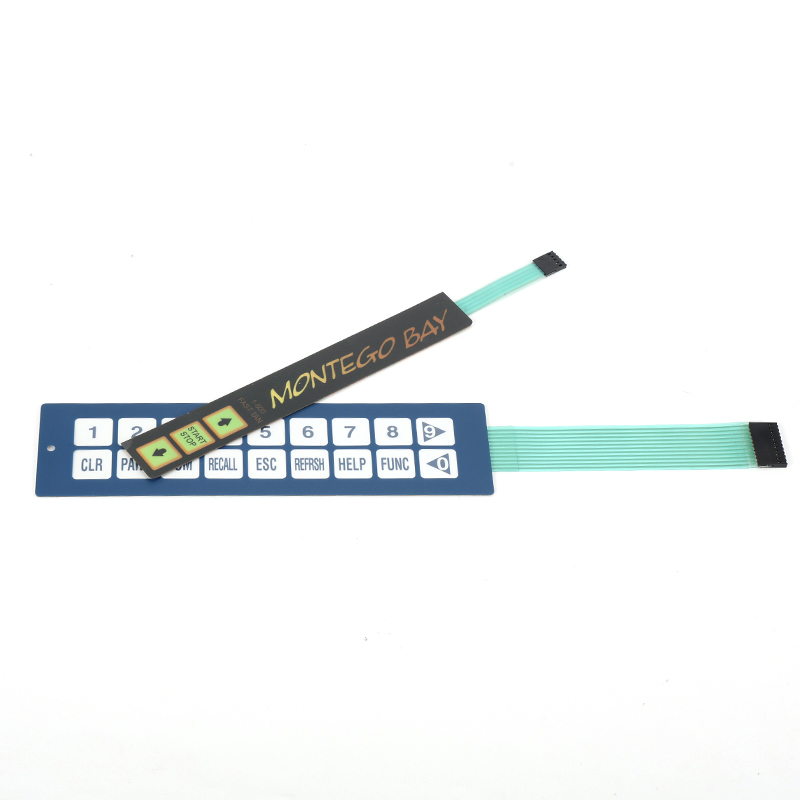
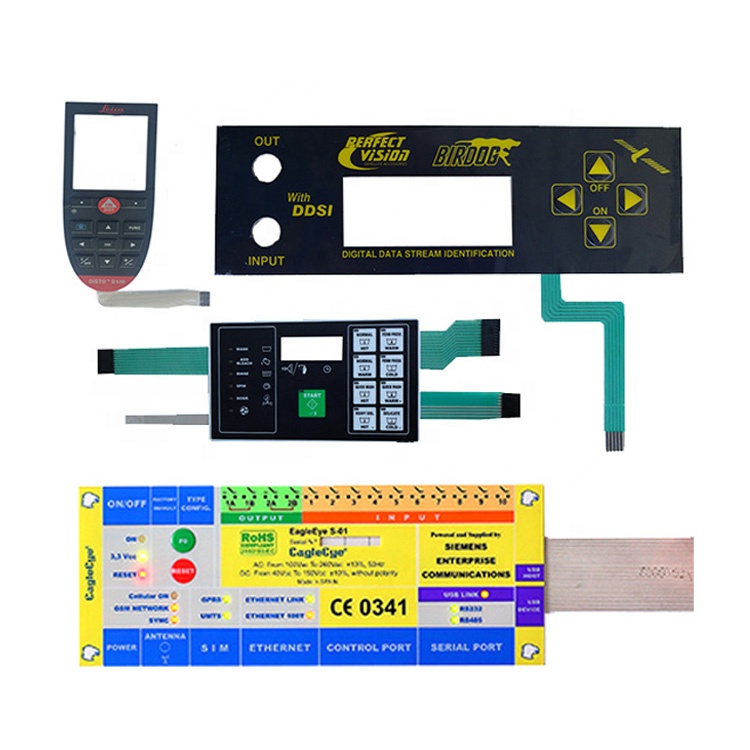
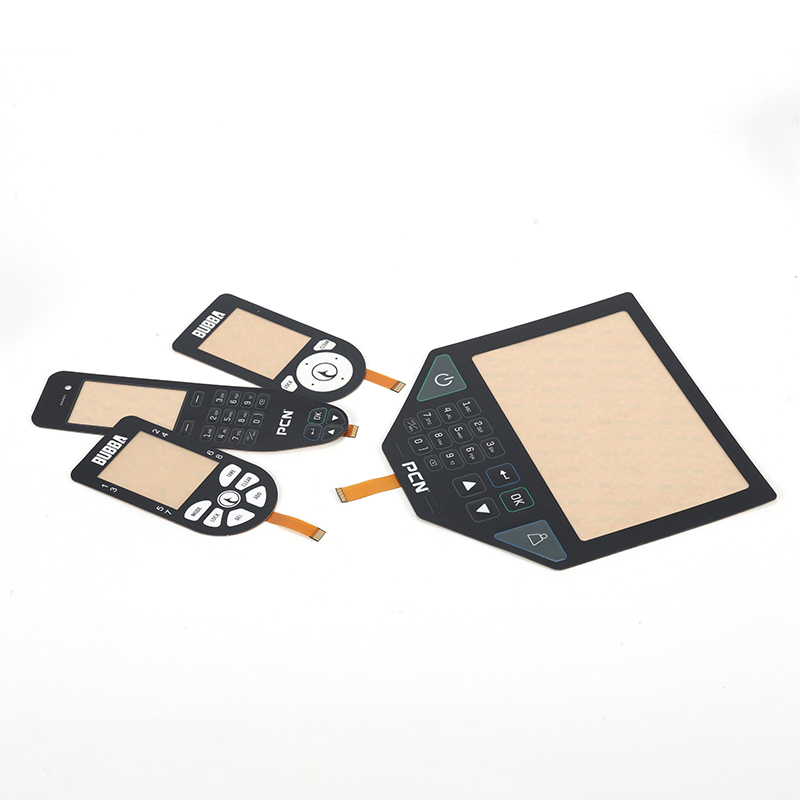
High-Performance OEM Membrane Key Switch with LED Backlight
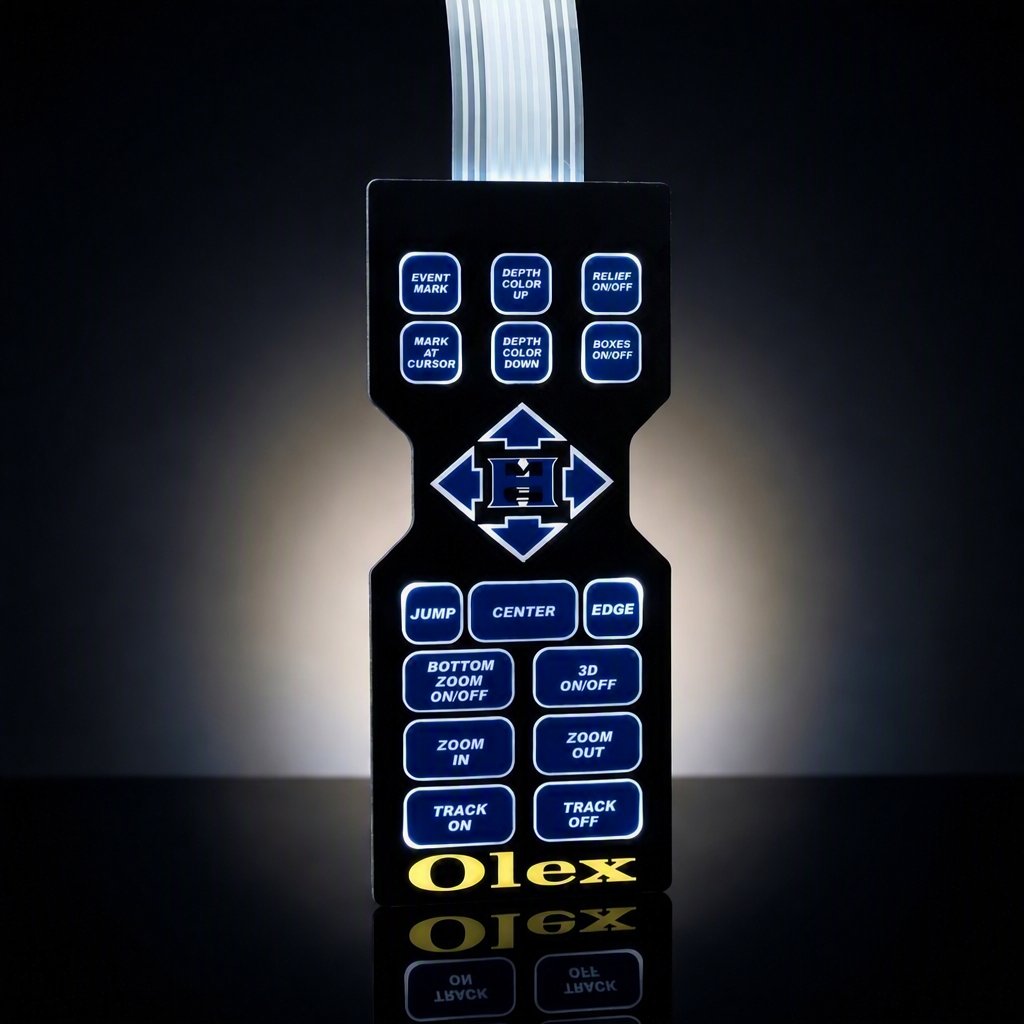
Integrated SMT LEDs with custom light guide films (LGF) ensuring balanced lux levels across industrial control consoles.
View Technical DataCustom-built switching assemblies configured to exact European mechanical tolerances, optical densities, and environmental IP ratings for industrial, agro-automation, and medical instrumentation.
Integrated SMT LEDs with custom light guide films (LGF) ensuring balanced lux levels across industrial control consoles.
View Technical Data
CAD-assisted optical ray tracing to eliminate hot spots across critical visual readouts and tactile command arrays.
View Technical Data
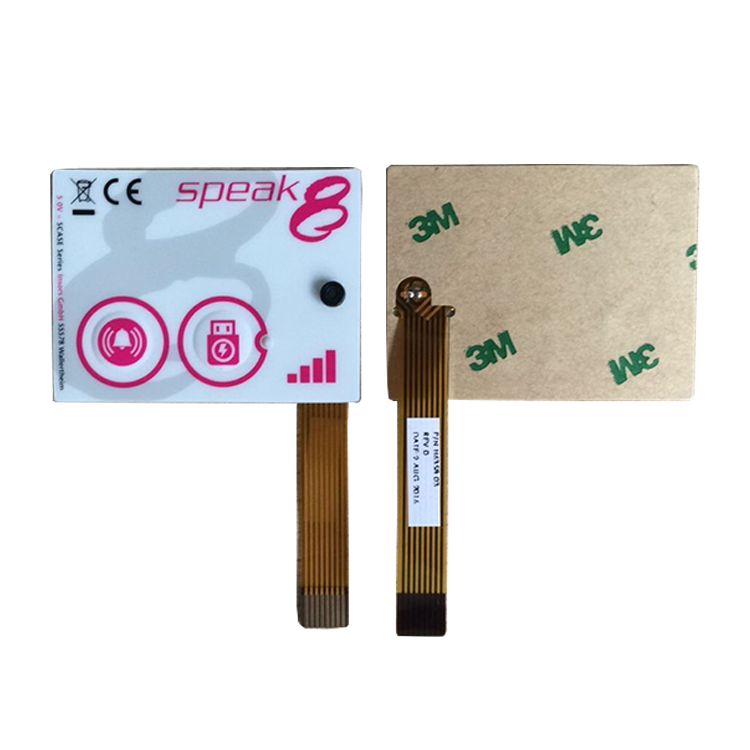
Chemical-resistant Autotex PET film with precision silver circuit conductor pathways for diagnostic devices.
View Technical DataCompression-molded silicone rubber mat laminated with printed membrane circuit layers and conductive carbon contacts.
View Technical Data
Certified lead-free assembly designed for continuous 24/7 dark-environment operational reliability in utility consoles.
View Technical Data
Engineered for high duty-cycle domestic and commercial equipment with fatigue-resistant return spring webbing.
View Technical Data
Closed-cell perimeter adhesive sealing combined with elastomeric shock absorption for outdoor machinery.
View Technical Data
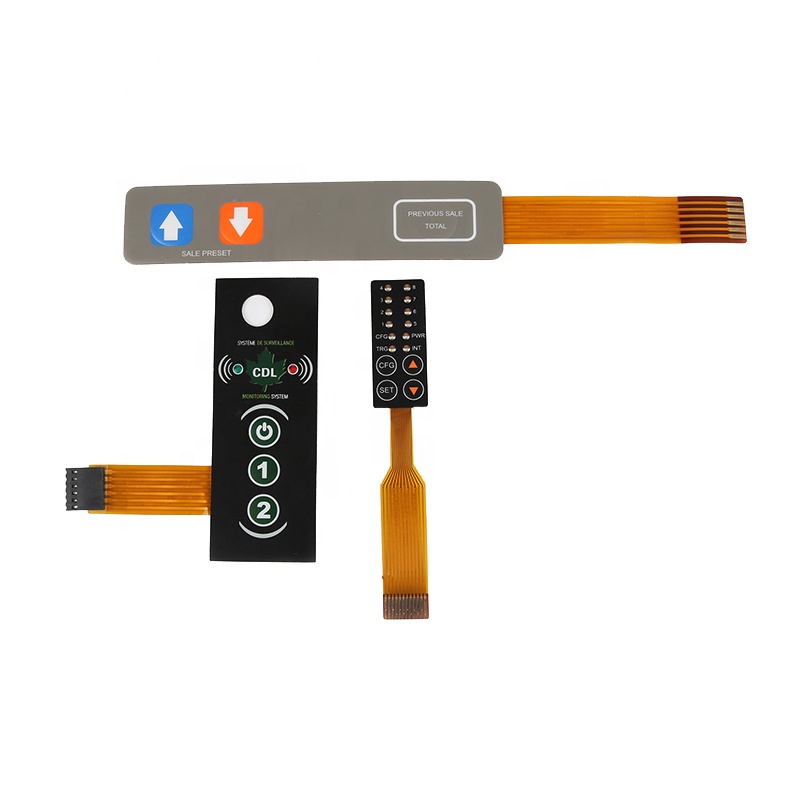
Polyimide flexible printed circuit base with comprehensive EMI/RFI aluminum shielding foil for high-frequency settings.
View Technical DataIn modern electronic engineering, human-machine interface (HMI) reliability depends fundamentally on contact mechanics, galvanic stability, and elastomeric resilience. While traditional tactile metal domes provide sharp, clicky snap ratios, continuous industrial use in harsh environments demands switching mechanisms immune to contact oxidation, fretting corrosion, and atmospheric moisture ingress. This is precisely where conductive carbon pill keypads dominate.
A conductive carbon pill keypad consists of a compression-molded silicone rubber substrate (polydimethylsiloxane matrix) integrated with vulcanized, high-density conductive carbon black pellets. Unlike metal contacts that can tarnish or suffer from mechanical fatigue over millions of actuations, carbon pills offer an inherently non-metallic, non-corroding interface that mates smoothly against rigid printed circuit boards (FR4 with ENIG or carbon paste routing) or flexible circuits (FPC). For hardware development teams operating within the emerging manufacturing hubs of the Republic of Moldova, specifying the correct carbon pill geometry, contact resistance, and actuation force is decisive in securing European CE and RoHS compliance.
A critical technical distinction evaluated by senior procurement engineers is the method of carbon contact deposition. Lower-cost consumer keypads often utilize printed conductive carbon ink applied directly to the underside of silicone plungers. Under repeated cycling, ink adhesion degrades, shedding micro-particles that cause cross-circuit leakage and erratic contact bounce. In contrast, solid conductive carbon pills are pre-formed under high heat and pressure, then placed directly into the compression mold tooling where they co-vulcanize with the raw silicone gum. This molecular bonding creates an inseparable physical contact capable of enduring over 5,000,000 cycles without physical spalling or electrical drift.
| Technical Parameter | Solid Carbon Pill Silicone | Metal Dome Membrane | Capacitive Touch ITO |
|---|---|---|---|
| Typical Contact Resistance | <100 – 150 Ω (Load Dependent) | <1.0 Ω (Direct Metallic) | High-Impedance Sensor Field |
| Switch Actuation Life | 3,000,000 – 10,000,000 cycles | 1,000,000 cycles | Infinite (Solid State) |
| Audible & Tactile Feel | Smooth, cushioned, ergonomic | Crisp, audible metallic click | Zero intrinsic (Needs Haptic Motor) |
| Environmental Sealing | Inherent IP67/IP68 compression seal | Requires perimeter gasket lamination | Hermetic flush glass/plastic cover |
| Operating Temperature | -40°C to +180°C (Silicone Base) | -20°C to +65°C (Adhesive Critical) | -20°C to +70°C |
| Tooling Cost Structure | Steel Compression Tool (Moderate) | Steel Rule / Etching Dies (Low) | Photolithography / Etching (High) |
The tactile feedback of an elastomeric carbon pill keypad is dictated by the geometry of the silicone webbing wall supporting the button keycap. During depression, the force-displacement curve rises until the wall buckles at the peak actuation force ($F_a$), dropping rapidly to the contact force ($F_c$) where the carbon pill makes electrical continuity across the interlocking interdigital PCB traces. The tactile snap ratio, defined as:
Snap Ratio (%) = [(Fa - Fc) / Fa] × 100
Typically ranges between 40% and 60% for industrial applications. For Moldovan instrumentation engineers designing agricultural processing terminals or automotive dash controllers, tuning this ratio ensures operators wearing protective gloves receive unambiguous physical feedback without premature finger fatigue.
Moldova's expanding industrial footprint—accelerated by regional Free Economic Zones (FEZs) and integration into European supply chains—presents rigorous use cases for heavy-duty switching technology.
In the industrial clusters of Bălți and Ungheni, Tier-1 and Tier-2 automotive contractors assemble wire harnesses, relay switchboards, and testing benches. Conductive carbon pill keypads provide the ideal interface for end-of-line harness test jigs and rugged transport vehicle cabin controls, resisting motor vibration, grease, and wide thermal fluctuations from Moldovan sub-zero winters to hot summers.
Winemaking facilities across Cricova, Purcari, and southern Cahul deploy automated destemming machines, pneumatic press controllers, and temperature-regulated fermentation vats. Carbon pill silicone keypads feature continuous waterproof skins impervious to acidic grape juices, caustic washing solutions, alcohol vapors, and high-pressure steam sanitization cycles.
Chișinău's expanding biomedical technology sector demands silent, biocompatible, and completely sealed control surfaces for infusion pumps, analytical centrifuges, and patient-monitoring devices. Smooth laser-etched silicone elastomer keypads combined with conductive pills prevent micro-bacterial harbors and withstand aggressive chlorhexidine and isopropyl alcohol wipe-downs.
National energy efficiency directives in Moldova require the large-scale deployment of residential and commercial smart meters. The low current draw, stable contact resistance, and zero-corrosion properties of carbon pill contacts ensure that utility meters remain fully operable over an expected 15-to-20-year field lifespan without electrical failure.
From base station transceivers to access control terminals deployed at logistics centers along the Moldovan-Romanian border, keypad inputs require UV resistance, anti-freeze silicone compliance, and backlighting for 24-hour visual identification under harsh outdoor conditions.
Moldova's fruit and vegetable packing plants require washdown-rated machinery panels. Keypads featuring overmolded silicone bezels eliminate moisture traps, preventing electrical shorting when processing equipment is sanitized at the conclusion of every production shift.
Understanding the micro- and macroeconomic factors shaping electronic procurement decisions within the Moldovan and Eastern European landscape.
Under the EU-Moldova Deep and Comprehensive Free Trade Area, domestic electronics manufacturers export finished assemblies directly into Germany, Austria, and Romania. Every component must strictly adhere to CE, RoHS (2011/65/EU), REACH (EC 1907/2006), and WEEE requirements. Sub-tier suppliers must provide verified full-material declarations, eliminating banned phthalates and halogenated flame retardants.
European OEMs continue diversifying manufacturing away from complete dependency on final Asian assembly by establishing satellite plants in Eastern Europe. Moldovan assembly plants require strategic component partners who offer agile prototyping (DFM engineering) coupled with reliable volume ocean or air-freight logistics straight to Chișinău International Airport (KIV) or via Giurgiulești Port.
As plant automation replaces manual oversight, equipment downtime becomes unacceptable. Industrial designers are steadily replacing mechanical momentary pushbuttons with unified elastomeric carbon pill mats that integrate graphic overlays, status LED light pipes, and multi-pin FPC connectors into single, self-sealing drop-in sub-assemblies.
Addressing the practical, regulatory, and mechanical questions raised by Moldovan hardware developers and purchasing teams.
Leveraging 29 years of factory-direct human-machine interface manufacturing for global automation leaders including ABB and Emerson.
Full facility verification by Intertek. Comprehensive quality management systems, ethical auditing, and fully audited cleanroom workshops.
In-house CNC machining, laser etching, and silicone compounding ensure rapid DFM iterations, sub-millimeter tolerances, and direct cost control.
Every single production batch undergoes automated computerized continuity, contact resistance verification, and high-voltage dielectric breakdown testing.
From 1-piece engineering proof-of-concept prototypes to scalable 500,000-unit recurring runs, supporting European pilot testing and scale-up.
Submit your 2D/3D CAD drawings (STEP, DWG, DXF) or schematic pinout files today. Our senior interface design engineers will return a comprehensive DFM review, mold layout proposal, and commercial quotation within 24 business hours.
Get Catalog