Precision Conductive Keypads & Membrane Interface Assemblies
Configured with low-resistance conductive carbon pills, precision tactile metal domes, perimeter IP67/IP68 sealing, and high-dielectric polyester substrates for mission-critical deployments.
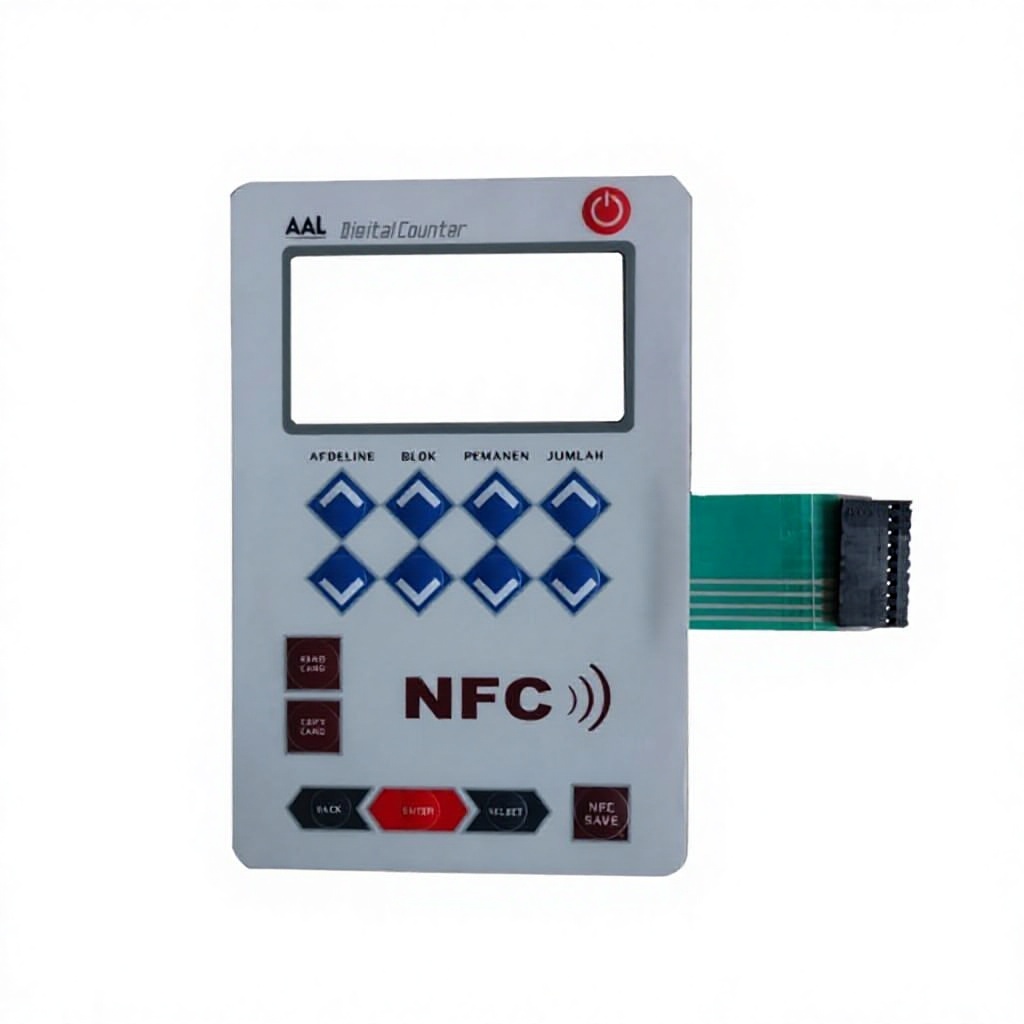
Polyester Dome or Metal Dome Options Rated 1 Million Custom Membrane Switch Instrumentation Keypad
Tactile poly/metal dome contacts, customized actuation forces (180g–450g), engineered for analytical instruments.
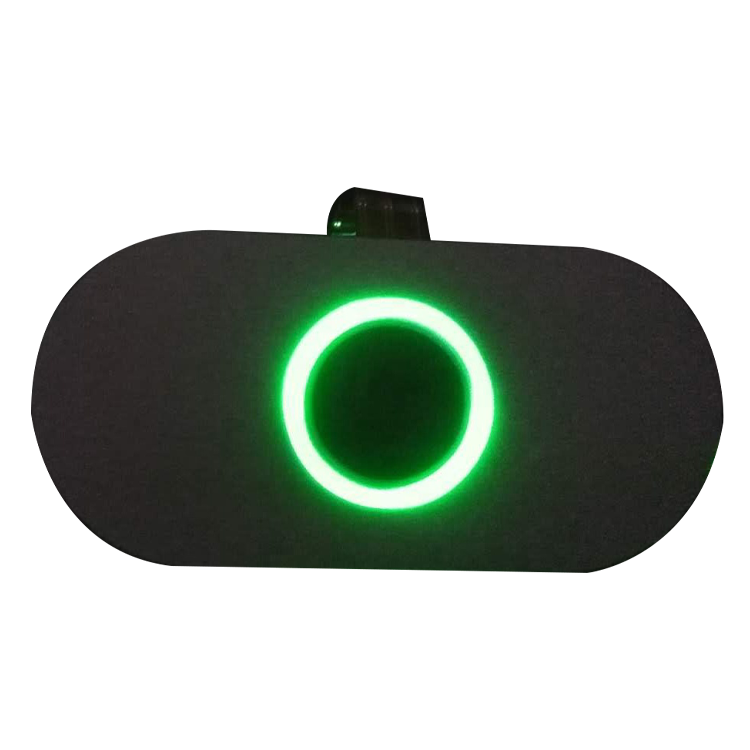
Custom LED Backlit Membrane Switch Keypad, Tactile Metal Dome Push Button Membrane Switch for Industrial Device Control Panel
SMD chip LEDs integrated with custom light-guide film; crisp tactile response for machine operation consoles.
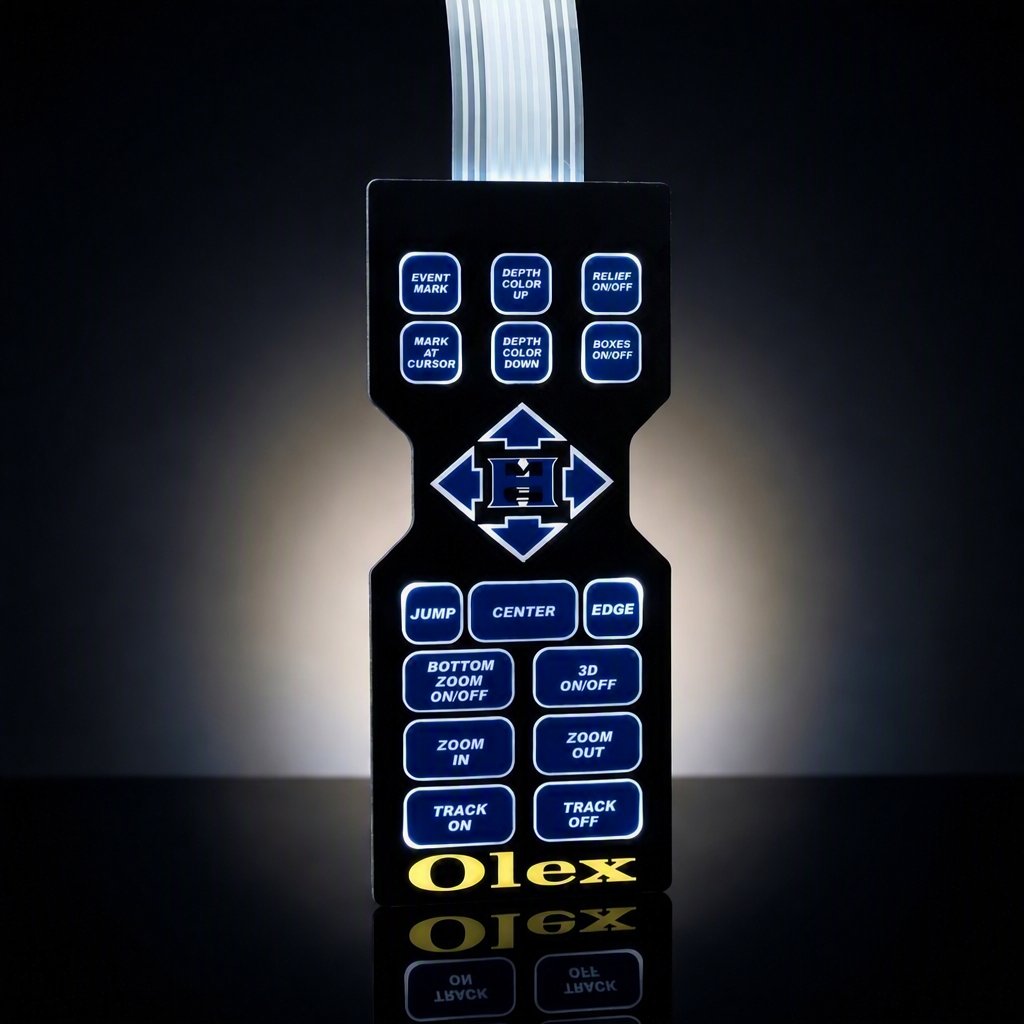
Free Backlight Simulation and Light Guide Design Support Customized Uniform Illumination Backlight Membrane Switch Keyboard
Optical simulation for homogenous low-power backlighting without hot spots; high visual clarity in low-light environments.
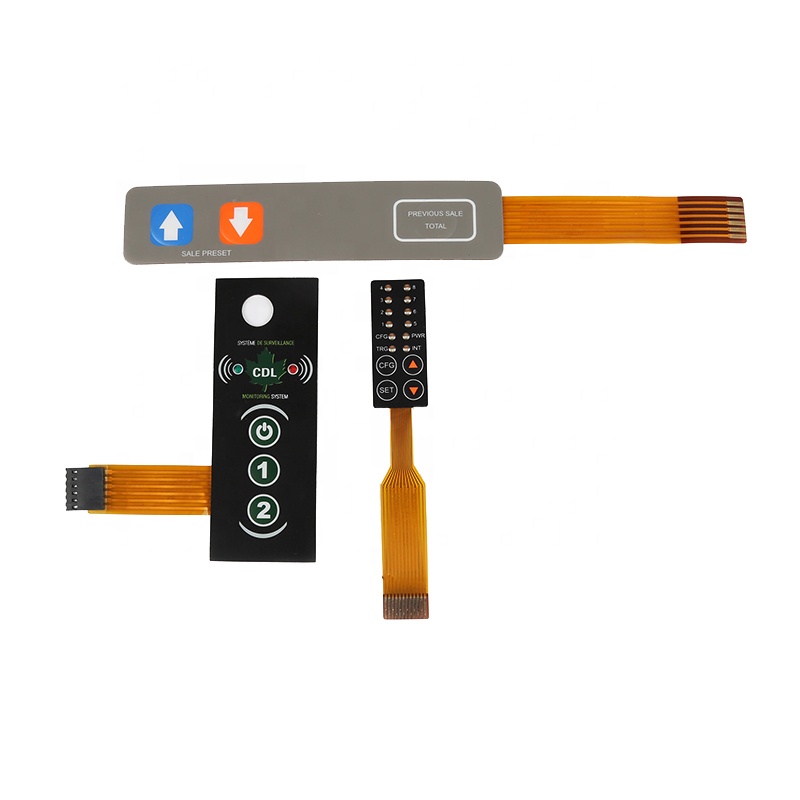
Waterproof Capacitive Touch Membrane Switch with Customizable Color and Texture
Zero-wear touch sensors, solid-state ITO construction with full fluid ingress immunity and customized graphic finishes.
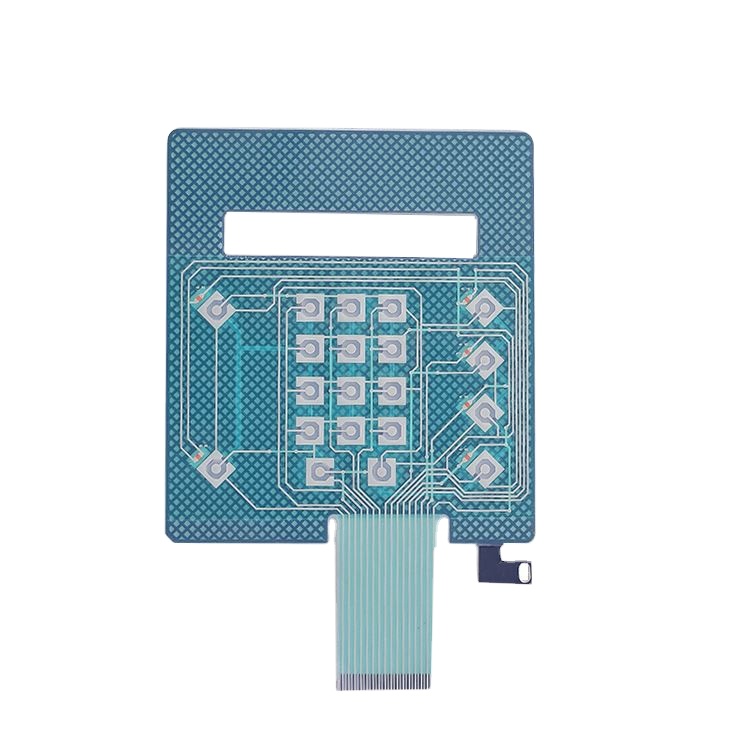
Custom PET Membrane Switch Keypad, ESD Shielding Layer Thin Film Push Button Membrane Switch for Electronic Equipment
Integrated aluminum or printed carbon ground grid offering >15kV ESD isolation protection for sensitive digital logic.
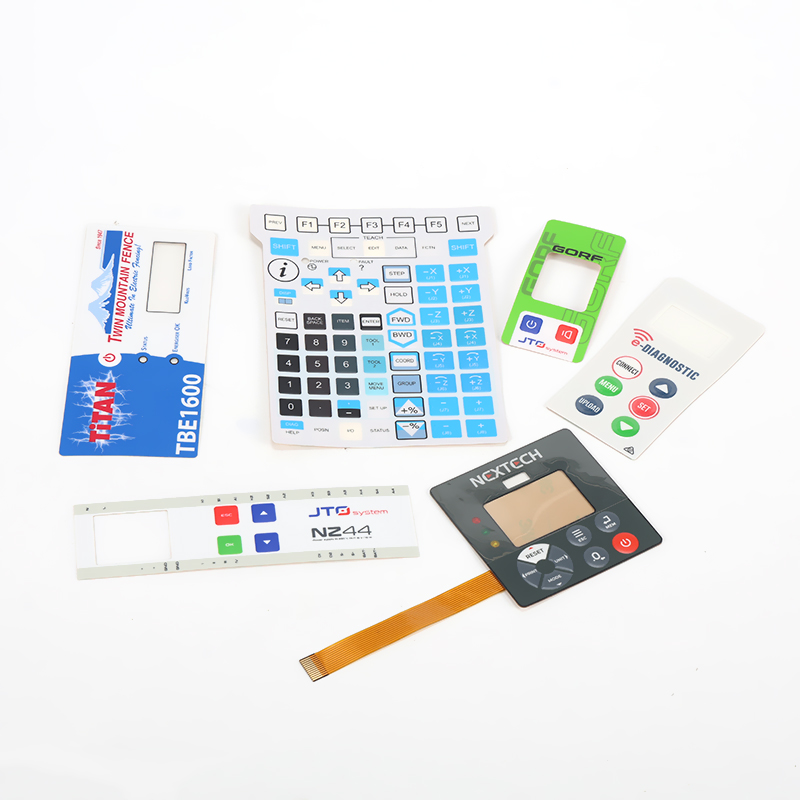
Waterproof Dustproof Custom Membrane Keypad Switch, PET Graphic Overlay Membrane Push Button Switch for Harsh Environment
Autotex textured polyester overlay, perimeter gasket seal, chemically inert to fuels, industrial solvents, and detergents.
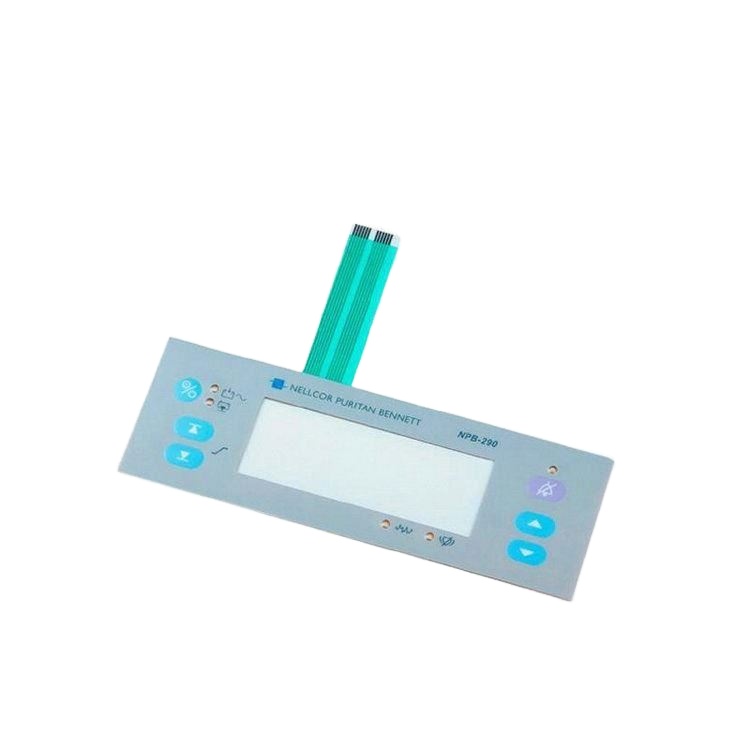
China Manufacturer Custom Membrane Push Button Switch, Flexible Membrane Keypad Switch OEM ODM Sample Available
Conductive silver circuit printed on high-grade Mylar; compact pitch tail with FCI/Nicomatic female housing.
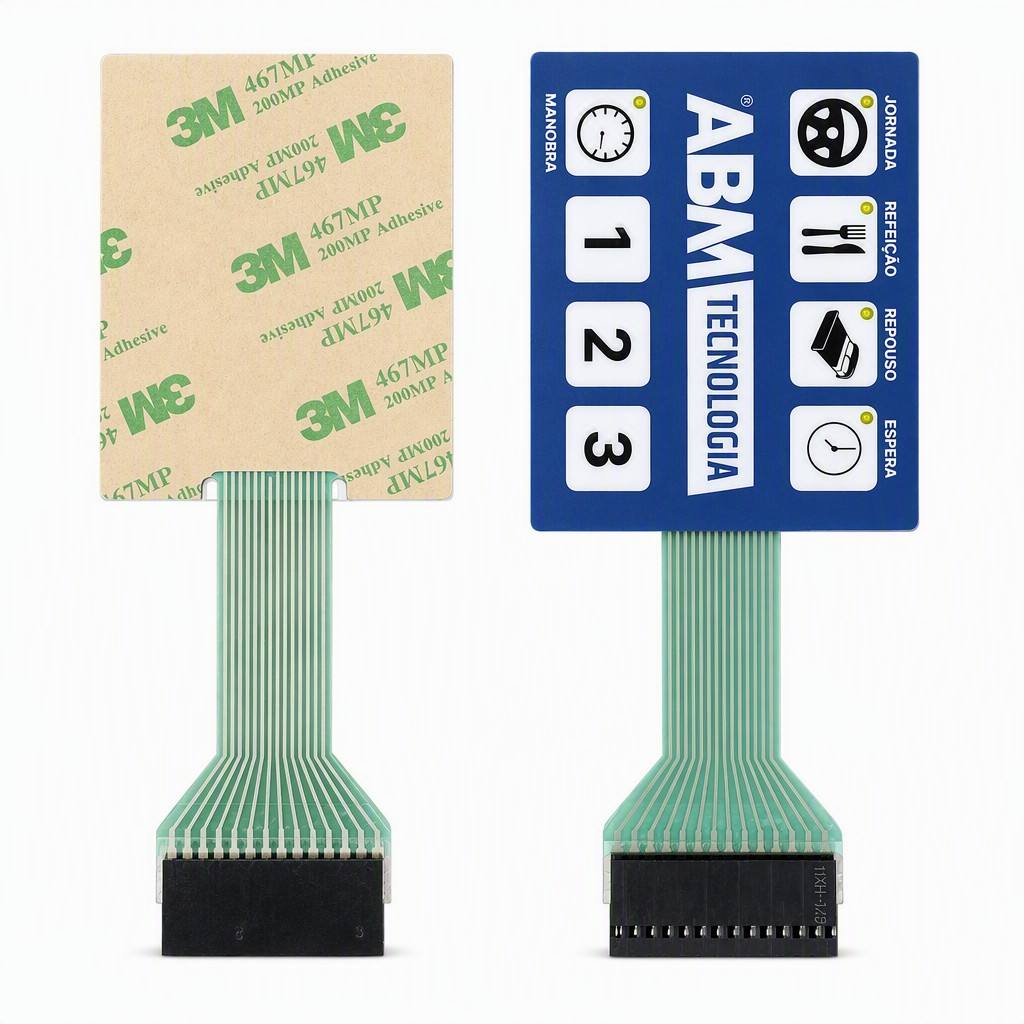
Custom Membrane Switch Industrial Control Panel Keypad OEM ODM Tactile Metal Dome RoHS UL94V0 Wholesale 5 Million Cycles
UL94-V0 rated flame-retardant sub-components, nickel/gold plated domes, verified for severe duty industrial automation.
Electromechanical Dynamics of Conductive Carbon Pill Silicone Keypads
In modern industrial Human-Machine Interface (HMI) design, conductive carbon pill silicone rubber keypads represent the pinnacle of cost-effective reliability, mechanical longevity, and environmental resilience. Unlike pure mechanical push-buttons that suffer from particulate ingress, oxidation of spring contacts, and mechanical fatigue, elastomeric carbon contact keypads utilize a compression-molded silicone rubber webbing that acts as both an environmental seal and a return spring.
At the core of this technology is the carbon pill (often referred to as a conductive carbon contact pad). Formulated from a dense dispersion of conductive carbon black particles suspended within an elastomeric silicone matrix, these pills undergo secondary vulcanization or vulcanized lamination directly to the base of the silicone actuator key. When an operator depresses a key, the elastomeric webbing undergoes controlled elastic buckling, causing the conductive carbon pill to bridge interdigitated conductive traces on an underlying Printed Circuit Board (FR-4) or Flexible Printed Circuit (FPC).
Low Contact Resistance Stability
Standard conductive carbon pills maintain electrical resistance between 10Ω and 150Ω over 5 million cycles, avoiding contact bounce and micro-welding common to metallic contacts in inductive switching circuits.
Custom Snap Ratio & Tactility
By engineering the angle, thickness, and radius of the elastomeric collapsible webbing wall, actuation profiles can be dialed from 80g to 500g, with snap tactile ratios ranging from 35% to 65% for tactile confirmation.
Intrinsic Hermetic Barrier
The monolithic silicone keymat provides seamless IP67 perimeter sealing, shielding underlying PCB traces from marine atmospheric salt-spray, ambient condensation, chemical washdowns, and high relative humidity.
Localized Deployment Scenarios in Grenville Industrial & Coastal Sectors
Grenville's distinct economic profile demands hardware engineered for tropical maritime microclimates, high saline content, agro-processing particulate, and rugged logistics operations.
Maritime & Port Logistics Controls
Grenville's coastal hub and harbor operations require deck-mounted marine electronics, navigation repeaters, and crane pendants capable of withstanding constant sodium chloride vapor, relentless UV irradiation, and direct tropical rainstorms. Our silicone keymats with carbon pills feature vulcanized silicone formulations that do not crack or chalk under extreme solar UV exposure.
Agro-Processing & Nutmeg Refining
As the agricultural powerhouse of Grenada, Grenville processes high volumes of nutmeg, cocoa, and spices. Dust from sorting mills easily penetrates standard mechanical micro-switches, leading to contact pitting. Monolithic carbon pill rubber keypads completely encapsulate the switch chamber, ensuring particulate cannot reach the contact pads or trigger false actuations.
Solar Inverters & Microgrid Interfaces
Decentralized island power infrastructure in Grenville depends on outdoor solar inverter controls and battery energy storage systems (BESS). Enclosed within IP66 outdoor housings, internal temperatures fluctuate wildly from 20°C at night to over 65°C under direct sunshine. Our keypads operate flawlessly between -40°C and +180°C without elastomer degradation.
Healthcare & Portable Diagnostics
Regional health centers and ambulatory clinics in eastern Grenada require medical monitors and drug dispensing pumps that withstand repeated wipedowns with isopropyl alcohol, bleach solutions, and quaternary ammonium compounds. Custom medical-grade silicone keypads provide continuous wipe-clean graphic skins that eliminate crevices harboring bacterial biofilm.
Rugged Field Handhelds & POS Terminals
Logistics couriers, utility metering teams, and municipal field service personnel in Grenville use handheld terminals that suffer frequent drop impacts. The elastomeric silicone keymat acts as a mechanical shock damper, protecting internal solder joints, LCD panels, and delicate surface-mount components from kinetic shock.
Telecom & Outdoor Repeater Enclosures
Transmitter consoles positioned on regional hilltops surrounding Grenville endure persistent humidity and tropical winds. Our conductive carbon pill assemblies prevent galvanic corrosion that typically destroys tin- or bare copper-plated contacts, utilizing specialized carbon-to-gold or carbon-to-carbon print contacts on the matching PCB traces.
Technological & Procurement Trends Shaping Keypad Integration
How Caribbean and regional manufacturing operations are moving from legacy discrete mechanical switches toward smart, backlit, and hybrid elastomeric touch systems.
1. The Transition to Hybrid Silicone-Over-Membrane Architectures
Historically, industrial designers faced a compromise: select a thin, moisture-sealed membrane switch with short 0.3mm actuation travel, or specify an elastomeric rubber keypad that requires a dedicated, rigid PCB backer. Today, procurement teams in Grenville are adopting hybrid HMI assemblies. In this configuration, a 3D molded silicone rubber keymat is mated directly over a flexible polyester circuit layer featuring internal metal domes or printed carbon contacts. This delivers the rich, ergonomic 1.5mm–2.5mm key travel that operators prefer, while preserving the lightweight, low-profile cabling harness of a flexible flat circuit (FFC).
2. Laser-Etched Translucent Keycaps with Integrated Light Guide Films (LGF)
In low-light marine bridge consoles, nighttime agricultural processing plants, and emergency responder equipment, discrete surface backlighting is no longer an option—it is a functional safety imperative. Modern conductive carbon pill keypads manufactured for export feature dual-shot translucent silicone molding coated with opaque PU coatings and precision CNC laser ablation. When paired with ultra-thin 0.125mm Light Guide Films (LGF) and side-firing SMD LEDs, light is distributed with 90%+ photometric uniformity across legends while consuming less than 15mA of current.
3. Specialized Anti-Microbial & Chemical Barrier Top Coatings
Post-pandemic sanitation standards across municipal and food packaging operations have led to aggressive chemical exposure from bleach, sodium hypochlorite, and ammonia sprays. Untreated silicone rubber swells when exposed to hydrocarbons and aggressive cleaners. To counter this, advanced keypads are now treated with secondary coatings of thermally cured polyurethane (PU) or UV-curable silicone sealants that prevent surface swell, eliminate friction tackiness, and provide resistance exceeding 500 rubs on the Taber Abrader test (ASTM D4060).
Technology Benchmarking: Carbon Pill vs. Competing HMI Systems
| Parametric Criteria | Conductive Carbon Pill Keypad | Tactile Metal Dome Switch | Capacitive ITO Touch Panel | Mechanical Push-Button Switch |
|---|---|---|---|---|
| Contact Resistance | <100 Ω (Standard) / <10 Ω (Low-R) | <1.0 Ω (Gold/Nickel Plated) | Solid-State (High Impedance Sensor) | <0.05 Ω (Initial) |
| Stroke / Travel Distance | 1.0 mm – 3.5 mm (Deep Travel) | 0.25 mm – 0.6 mm (Crisp Snap) | 0.0 mm (Zero Mechanical Motion) | 2.0 mm – 4.5 mm (Bulky) |
| Actuation Lifespan | > 5,000,000 Cycles | 1,000,000 – 3,000,000 Cycles | > 50,000,000 Cycles | 100,000 – 500,000 Cycles |
| Environmental Sealing | IP67 / IP68 (Integral Gasket) | IP65 – IP67 (Perimeter Adhesive) | IP68 / IP69K (Hermetic Glass/PET) | IP40 (Difficult to Seal) |
| Environmental Salt-Fog Tolerance | Exceptional (Chemically Inert Carbon) | Moderate (Depends on Plating) | High (Optically Sealed) | Poor (Prone to Corrosion) |
| Tooling & Setup NRE Cost | Moderate (Hard Steel Compression Molds) | Low (Steel Rule Dies & Screen Plates) | Medium to High (Photo Etching/Firmware) | Standard Off-the-Shelf Parts |
Our 10-Stage Precision Manufacturing Pipeline
Every conductive carbon pill keypad exported to international clients passes through rigorous physical, chemical, and electrical quality gates under ISO 9001:2015 protocol.
Elastomer Compounding
High-consistency silicone rubber (HCR) is compounded with customized pigment masters and vulcanizing agents to match client Shore A durometers.
Pill Placement
Conductive carbon pills (∅2.0mm to ∅8.0mm) are mechanically or pneumatically arrayed into precision CNC-machined mold cavities.
Compression Molding
Heated hydraulic vacuum presses (180°C–200°C) co-vulcanize the carbon pills permanently to the silicone keymat under 150–250 tons pressure.
Post-Curing Chamber
Keymats are baked in high-temperature ovens for 4 hours at 200°C to offgas volatile peroxide residues and stabilize mechanical tensile strength.
Deflashing & Trimming
Precision cryogenic deflashing or high-speed steel punch dies remove excess flash cleanly around key perimeters and mounting holes.
Legend Printing
Multi-color screen printing with elastic silicone inks or secondary laser engraving creates indelible, wear-resistant key legends.
Protective Coating
Clear polyurethane or medical-grade anti-friction matte topcoats are sprayed over the entire assembly to prevent chemical degradation.
Adhesive Lamination
Industrial-grade adhesive backings (3M 467MP, 468MP, or VHB) are laminated under controlled roller pressure for field mounting stability.
Force-Displacement Test
Automated tactile testing systems sample keys to generate force-versus-displacement actuation curves, validating snap ratio tolerances.
100% Electrical Inspection
Custom bed-of-nails automated fixtures test 100% of keys for contact resistance (<100Ω), insulation resistance (>100MΩ at 100V DC), and bounce.
Why OEM Engineers & Global Procurement Choose ZIRA
Founded in 1996 in Ningbo, Zhejiang, ZIRA has evolved over 29+ years into an internationally accredited powerhouse in precision human-machine interface manufacturing. Delivering direct from our 5,000m² state-of-the-art facility, we eliminate intermediary trading costs and provide end-to-end design engineering accountability.
- Tier-1 Audited Quality: Long-term strategic manufacturing cooperation with global Fortune 500 automation pioneers including ABB and Emerson.
- Design for Manufacturability (DFM): Free engineering stack-up design, light guide simulations, and 3D CAD modeling within 24 business hours.
- In-House Compression Tooling: Automated high-precision CNC mold making, screen exposure, cleanroom printing, and die-cutting all under one roof.
- Flexible Volume Ramping: Agile NPI prototyping starting from just 1 unit; scalable to high-volume production runs exceeding 500,000 units/month.

Our manufacturing workshops, testing infrastructure, raw material inspection protocols, and management systems have been comprehensively audited and verified on-site by Intertek.
• Export Capacity: >50% Total Annual Revenue
• Annual Turnover: US$10 Million – US$50 Million
• Compliance: RoHS, REACH, UL94-V0, ISO 9001:2015
Frequently Asked Questions for Sourcing to Grenville
Clear, direct answers regarding tooling costs, environmental specifications, shipping logistics, and quality assurance criteria.
What is the typical tooling (NRE) investment and turnaround for custom silicone keypads?
Tooling for conductive carbon pill keypads requires a hardened steel compression mold. Precision tooling fees generally range from US$800 to US$2,500 depending on overall dimension, key count, undercut webbing geometry, and laser etching requirements. Prototype tooling typically completes in 12–15 calendar days, with pilot production parts submitted alongside full FAI (First Article Inspection) reports.
How do conductive carbon pills endure marine salinity and tropical moisture in Grenville?
Carbon is chemically inert and does not oxidize or form galvanic couples when exposed to high sodium chloride atmospheres, unlike standard tin or copper contacts. When combined with our perimeter compression-molded silicone sealing ribs and gold-plated or printed carbon contact pads on the PCB, the switch contact zone remains hermetically isolated from atmospheric corrosion.
What minimum order quantities (MOQ) apply to custom OEM/ODM production runs?
We support dynamic development lifecycles. Prototype sampling begins at just 1 to 10 pieces for functional engineering validation. Once tooling is qualified, standard production batches generally start at 100 to 500 pieces, enabling small-to-medium enterprises in Grenville to procure high-end custom elastomeric interfaces without excessive inventory holding costs.
What engineering deliverables are required to initiate a formal DFM review and quotation?
To provide an expedited quotation within 24 hours, please supply a 2D mechanical drawing (PDF, DXF, or DWG) with dimensional tolerances, key travel, and force specs; a 3D STEP/IGES model of the keypad geometry; graphic artwork in vector format (Adobe Illustrator or CorelDraw) with Pantone/RAL color codes; and electrical schematic guidelines including pinout designations.
What shipping arrangements and Incoterms are available for delivery into Grenville?
We export globally using standard international commercial terms including FOB Ningbo/Shanghai, CIF, CIP, EXW, and door-to-door DDP (Delivered Duty Paid). For urgent engineering prototypes, we dispatch via air express (DHL, FedEx, UPS) directly to Grenville within 4–7 transit days. Consolidated sea freight is offered for bulk production volumes via major regional transshipment hubs.
Can you manufacture low-resistance gold contact pills instead of carbon pills?
Yes. While conductive carbon pills typically provide 10Ω–100Ω contact resistance (ideal for digital microcontrollers), certain analog sensing and audio circuits require contact resistance below 0.5Ω. In these scenarios, we co-mold gold-plated brass contact pills or integrate stainless steel tactile metal domes with gold plating directly beneath the silicone key stem.
Ready to Engineer Your Custom Keypad Solution?
Connect with ZIRA's senior HMI engineering team today. Send us your dimensional drawings, 3D CAD files, or performance targets, and receive a comprehensive DFM evaluation, stack-up proposal, and transparent factory quotation within 24 hours.
