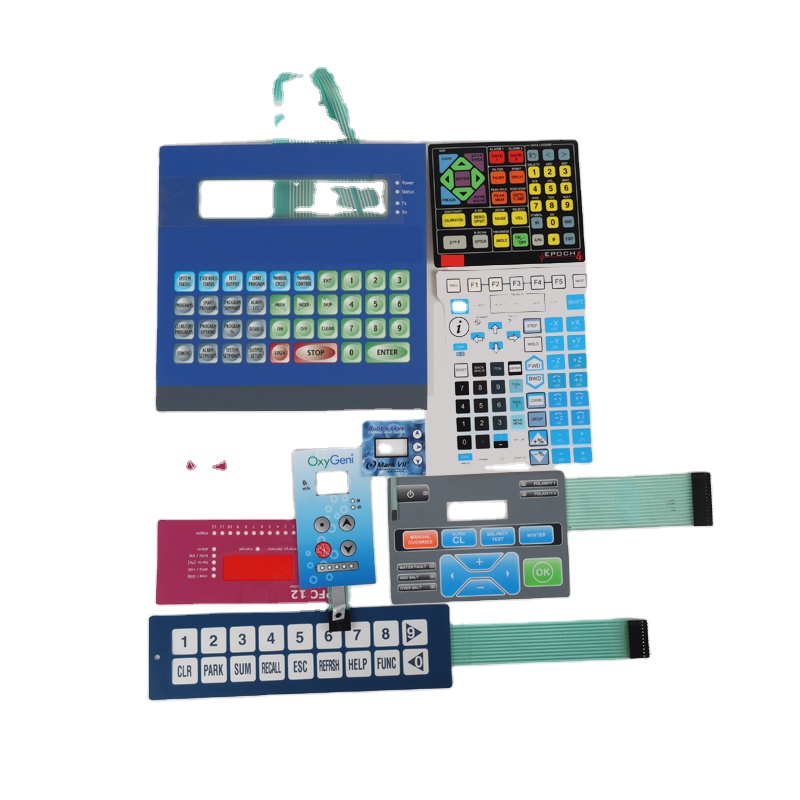
Engineered FPC & Membrane Interface Assemblies
Explore our high-reliability human-machine interface product portfolio. All units feature customized layer stack-ups, 100% electrical circuit qualification, and precision component integration.
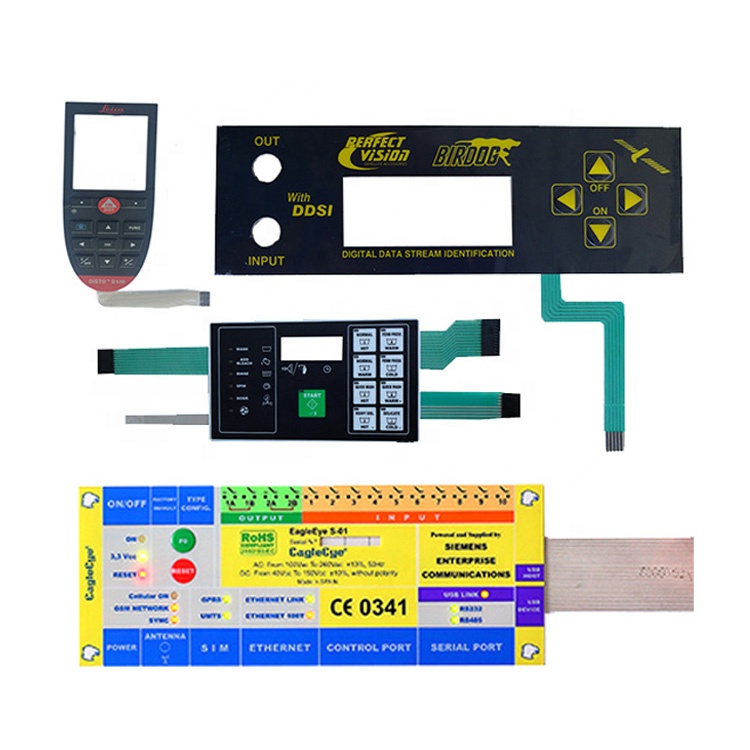
Waterproof Industrial Membrane Panel with Shock Resistance Feature
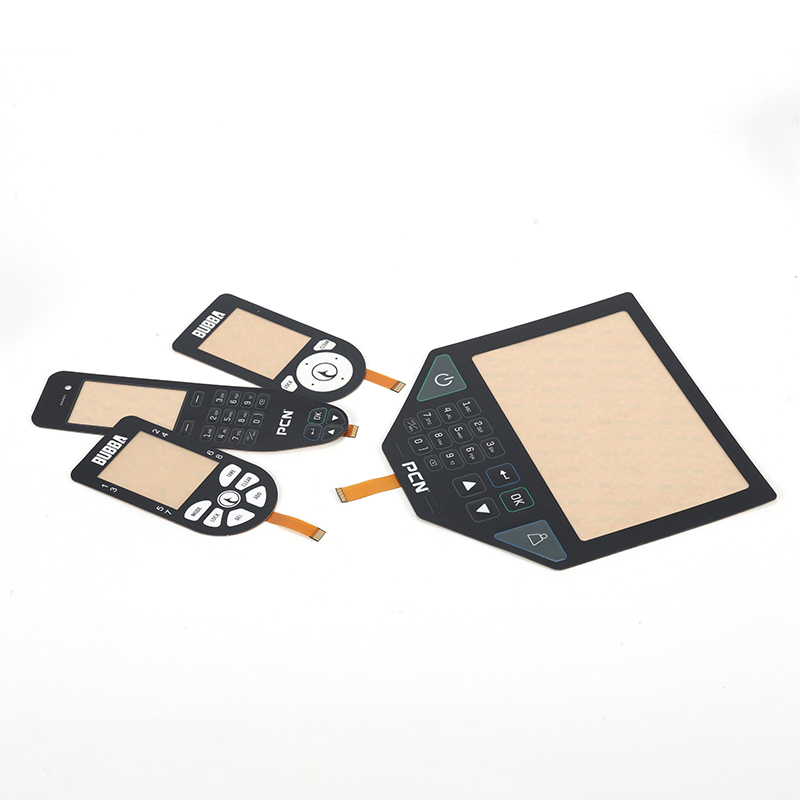
Customized Membrane Push Button Switch, FPC Circuit with Shielding Layer
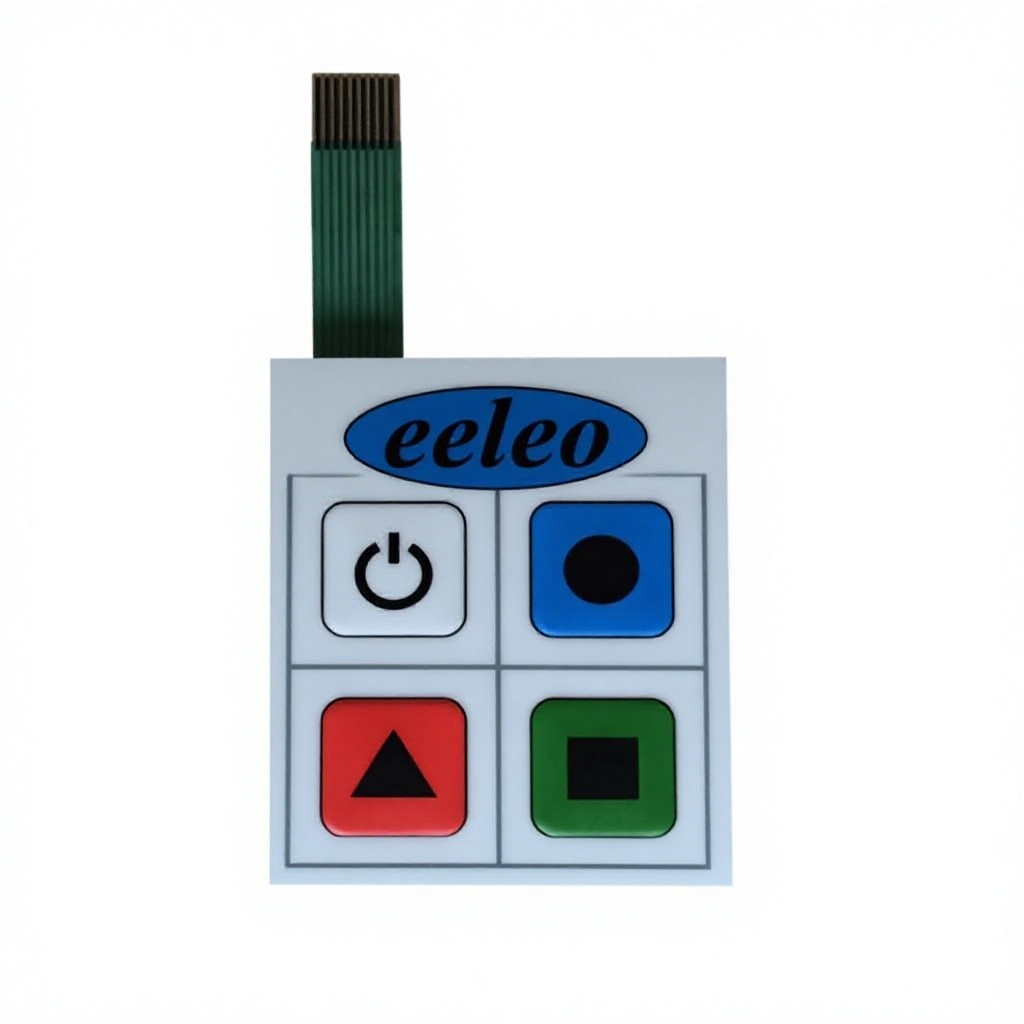
OEM ODM Membrane Switch Home Appliance Control Panel Graphic Overlay
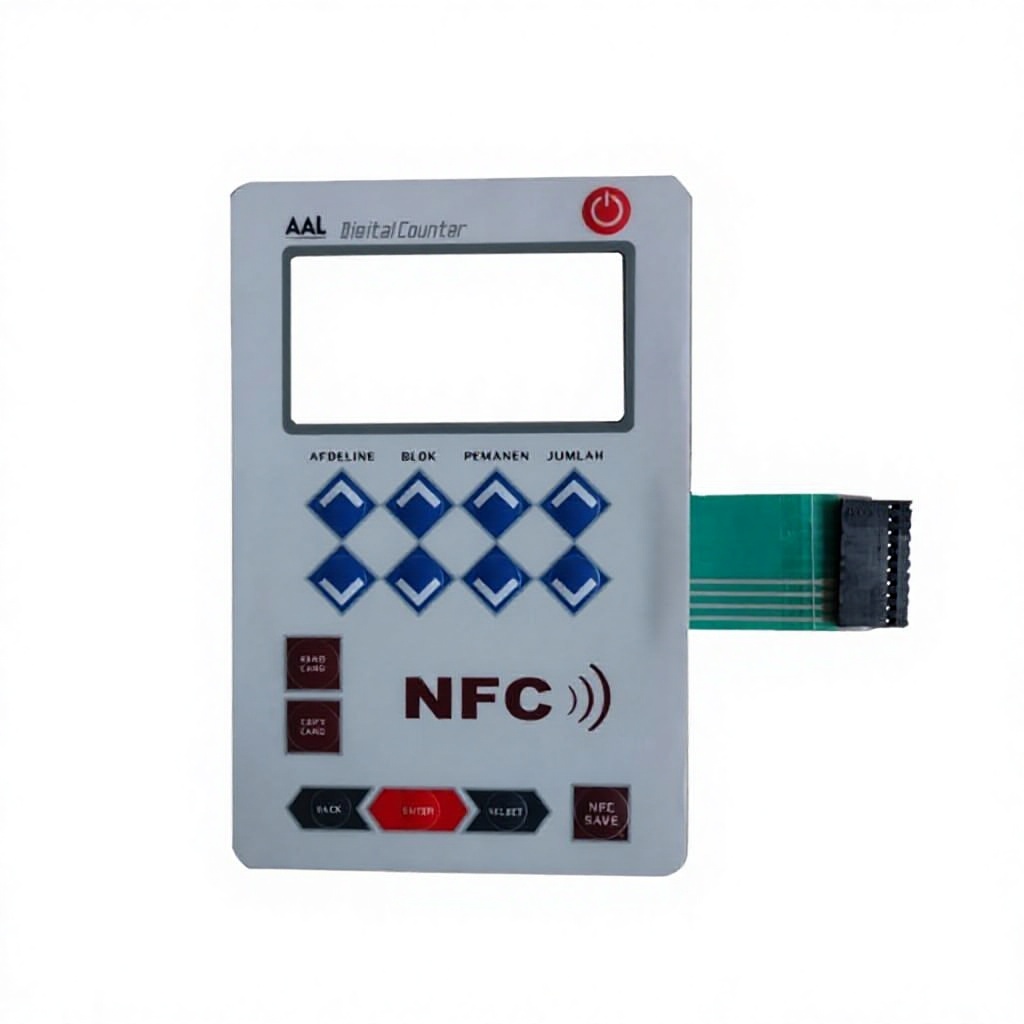
Polyester Dome or Metal Dome Options Rated 1 Million Instrumentation Keypad
Multi Zone Backlight Design Uniform Backlit Silicone Rubber Membrane Switch
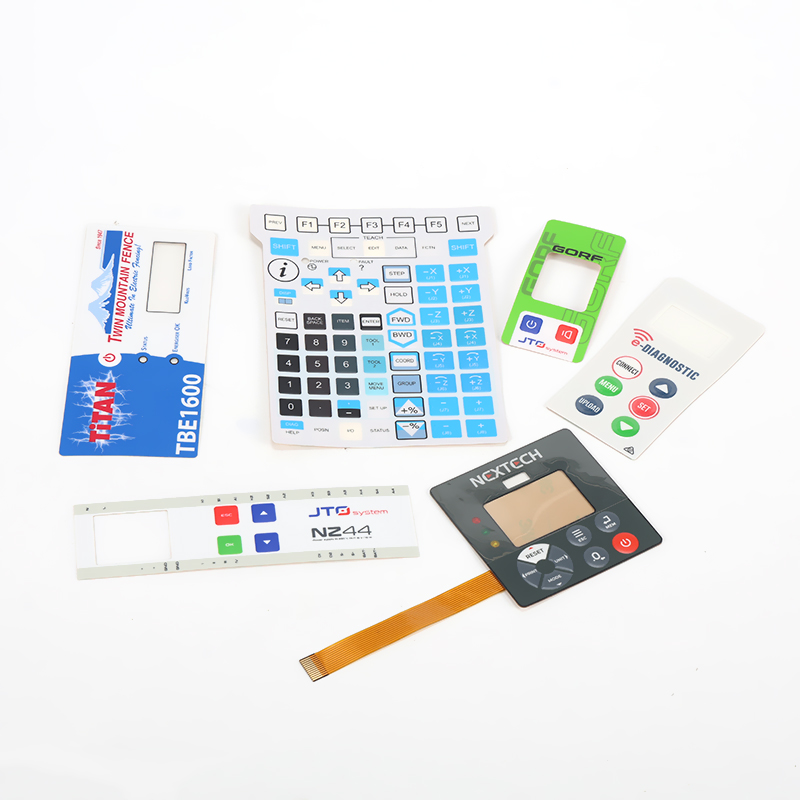
Waterproof Dustproof Custom Membrane Keypad Switch for Harsh Environment
Custom LED EL Backlit Membrane Switch Keypad LGF FPC Control Keypad
1996
Established Year (29+ Yrs)
5,000m²
Cleanroom Factory Floor
100%
Electrical & Optical QC
0.5mm
Ultra-Fine Pitch Precision
Why Lithuanian Advanced OEMs Migrate from Silver Screen-Printed PET to Polyimide FPC Keypads
A rigorous engineering analysis on circuit density, mechanical bend endurance, impedance stability, and surface-mount device integration for the Baltic tech cluster.
Ultra-Low Trace Resistance & Signal Integrity
Traditional membrane switches rely on screen-printed conductive silver paste on polyester (PET) film, which typically yields a loop resistance of 10Ω to 100Ω per trace depending on length. For high-precision optoelectronics and laser control interfaces manufactured in Vilnius, this parasitic resistance introduces voltage drops and capacitive delays. In contrast, our Flexible Printed Circuit (FPC) keypads utilize rolled-annealed (RA) or electro-deposited (ED) copper bonded to polyimide (Kapton). This copper architecture reduces trace resistance to <0.1Ω per trace, enabling high-speed I2C, SPI, and multiplexed matrix communications with zero signal degradation.
High-Density SMT Component Soldering
Conductive silver inks on PET cannot endure standard reflow soldering profiles due to the lower thermal melting thresholds of polyester (~140°C). Consequently, component integration on PET relies on conductive epoxy adhesives, which are susceptible to shear failure under thermal expansion cycles. Polyimide FPC substrates withstand soldering temperatures up to 260°C - 300°C. This enables automated surface mount placement of 0402/0603 bi-color micro LEDs, pull-up resistors, phototransistors, and active capacitive controller ICs directly onto the keypad tail, drastically simplifying the main board architecture.
Dynamic Flexing & Fine-Pitch Tail Routing
In compact medical housings and handheld monitoring instrumentation, circuit tails must navigate sharp chassis contours. While silver ink micro-cracks under repeated dynamic bending (often failing after 20,000 tight flexes), polyimide copper circuits achieve bend radii under 1.0mm with >1,000,000 dynamic cycles. Furthermore, FPC photolithography supports a track pitch down to 0.5mm or 0.3mm, allowing 20+ circuit connections to terminate into a compact Zero Insertion Force (ZIF) socket instead of bulky 2.54mm pitch crimped connectors.
Tailored HMI Implementations for Lithuania's High-Tech Hubs
Lithuania is recognized across Northern Europe for optical physics, clinical engineering, and industrial loT. Here is how our custom FPC keypad engineering aligns with specific local manufacturing hubs.
Vilnius Laser & Photonics Systems
Vilnius produces a significant fraction of the world’s scientific ultrafast lasers. These systems require HMIs impervious to high-voltage discharges and severe electromagnetic noise from flashlamp/diode power drivers. We engineer FPC keypads featuring continuous perimeter grounding and solid copper shielding. Coupled with gold-plated contact pads under sealed metal domes, our panels guarantee no phantom triggers occur during laser firing cycles.
Kaunas Medical & Laboratory Tech
Biomedical innovators in the Kaunas region require user interfaces that withstand daily contact with hospital-grade sanitizers, isopropyl alcohol, and sodium hypochlorite without legend deterioration or liquid intrusion. Our assemblies integrate antimicrobial textured Autotex PET overlays laminated over an IP67 perimeter silicone seal, ensuring complete hermetic encapsulation of tactile metal domes and FPC circuit traces.
Baltic EV Chargers & Smart Energy
Deployed across outdoor charging corridors from Klaipėda to Panevėžys, charging station interfaces face Baltic seasonal extremes from -30°C winter frost to maritime salt mist and heavy summer UV exposure. By utilizing 3M 300LSE/VHB high-tack adhesives and UV-cured outdoor-grade graphic films, our FPC assemblies prevent delamination, yellowing, or brittle switch fatigue across a -40°C to +85°C window.
Industrial Telematics & Automation
Lithuania's rapid expansion in IoT tracking, smart metering, and automated warehouse machinery demands control interfaces capable of sustained vibration. We combine high-elasticity silicone rubber keymats with internal FPC backings, featuring gold-plated nickel domes rated for over 3 million tactile cycles, ensuring crisp tactile feedback even when operated by technicians wearing heavy gloves.
Engineering Architecture Comparison Table
A side-by-side evaluation of traditional silver membrane switches, polyimide FPC keypads, and rigid PCB-backed switches to guide your Bill of Materials (BOM) decision.
| Evaluation Parameter | Silver Printed PET Keypad | Polyimide FPC Keypad | Rigid FR4 PCB Keypad |
|---|---|---|---|
| Base Material | Polyester (PET) Film | Polyimide (Kapton) | FR4 Glass-Epoxy Laminate |
| Circuit Conductor | Screen-Printed Silver Paste | Etched Copper (RA / ED) | Etched Copper Clad (1oz / 2oz) |
| Trace Loop Resistance | 10Ω – 100Ω (Length dependent) | <0.1Ω – 0.5Ω (Ultra-Low) | <0.05Ω – 0.1Ω |
| Minimum Conductor Pitch | 1.0mm – 1.27mm | 0.3mm – 0.5mm (Ultra-Fine) | 0.2mm – 0.4mm |
| Component Assembly Method | Conductive Silver Epoxy | Lead-Free SMT Reflow (260°C) | Standard SMT Reflow (Wave) |
| Dynamic Flex Resistance | Fair (<50,000 cycles at R5mm) | Superior (>1,000,000 cycles) | Inflexible (Rigid Plane Only) |
| Operating Temperature | -20°C to +65°C | -40°C to +85°C (Extended) | -40°C to +105°C |
| Overall Thickness | 0.6mm – 1.0mm | 0.5mm – 0.8mm (Ultra-Thin) | 1.8mm – 3.2mm (Bulky) |
| Connector Interface | Crimpflex / FCI Berg Housing | ZIF Socket / Solder Pin Header | Pin Headers / Terminal Blocks |
Precision Fabrication at Zhejiang ZIRA Membrane Switch Co., Ltd.
Founded in 1996 in Ningbo, Zhejiang, ZIRA combines over 29 years of specialized HMI engineering with rigorous Intertek onsite-verified operations. Supplying Fortune 500 automation enterprises such as ABB and Emerson, our cleanroom facilities produce precision control panels engineered to world-class tolerances.
Direct Design for Manufacturability (DFM)
Every engineering project from Vilnius, Kaunas, or Klaipėda receives a comprehensive DFM audit within 24 hours. Our electrical and mechanical engineers evaluate trace isolation, bend radius clearances, dome actuation forces, and graphic layer bleed lines. We identify and resolve trace bottlenecks, component clearances, and solder-mask apertures prior to tooling, eliminating costly iterative revisions.
100% Automated Electrical & Mechanical Testing
Reliability is built into each production step. Every manufactured FPC keypad undergoes computerized continuity validation, contact resistance verification, short-circuit insulation probing (>100MΩ @ 100VDC), and switch bounce profiling (<5ms). Tactile metal domes are verified using automated force-displacement test benches to ensure consistent snap ratios between 40% and 60%.
Seamless Baltic & EU Logistics
We provide full export-compliant logistics to Lithuania under Incoterms 2020 (DDP, DAP, CIP, FOB). Prototype batches reach Vilnius International Airport (VNO) or Kaunas Airport (KUN) via expedited express in 3 to 5 business days. Volume shipments utilize direct air or multimodal rail freight. All documentation includes correct TARIC customs classification, CE declarations, and complete RoHS/REACH compliance files.
Frequently Asked Questions by Lithuanian Hardware Engineers
Everything you need to know regarding technical inputs, regulatory compliance, quality gates, and delivery terms when sourcing custom FPC keypads from China.
What specific file formats are needed to initiate an FPC keypad quotation and DFM review?
To provide an accurate technical quote and perform a complete DFM analysis, our engineering team prefers standard Gerber RS-274X or ODB++ files for the flexible printed circuit layer, alongside vector graphic artwork (Adobe Illustrator .AI, .EPS, or .PDF) for the graphic overlay with Pantone or RAL color references indicated. For mechanical dimensioning, spacer cutouts, embossing profiles, and tail fold definitions, please provide an AutoCAD (.DXF or .DWG) or STEP/IGES 3D file. If you are reverse-engineering an existing interface, a physical sample shipped to our Ningbo laboratory is also fully supported.
How do you guarantee compliance with EU RoHS 3 and REACH regulations for entry into Lithuania?
Every material integrated into our HMI assemblies—from the DuPont or equivalent polyimide film, copper cladding, ENIG gold surface finishes, 3M pressure-sensitive adhesives, and screen inks to the SMT lead-free solder pastes—is strictly verified to comply with EU Directive 2011/65/EU as amended by (EU) 2015/863 (RoHS 3) and Regulation (EC) No 1907/2006 (REACH SVHC). We provide comprehensive third-party testing certifications (such as SGS or Intertek reports) with every production delivery, ensuring smooth customs processing at Lithuanian points of entry without regulatory holdups.
Can you mount surface-mount LEDs and active sensor components directly onto the FPC keypad tail?
Yes. Unlike standard polyester membrane circuits that use fragile conductive adhesive pastes, our polyimide FPC keypads are fully compatible with high-temperature lead-free SMT solder reflow processes. We regularly assemble ultra-low-profile 0402, 0603, and 0805 single-color and RGB indicator LEDs, current-limiting resistors, back-to-back Zener protection diodes, tactile backlight switches, and capacitive touch ICs directly onto the flexible circuit substrate. Components are encapsulated with specialized UV-curing conformal coatings to prevent solder fracture during tail routing.
How do your FPC keypads handle electromagnetic interference (EMI) in photonics and industrial gear?
For sensitive laser controllers and high-power industrial equipment manufactured in Vilnius and Kaunas, we implement dedicated multi-layer shielding strategies. We incorporate a continuous copper shield layer (either cross-hatched for flexibility or solid for maximum attenuation), a conductive printed carbon/silver grid, or an aluminum-mylar barrier tied to a designated ground pin on the FPC tail. This reduces EMI/RFI interference and provides ESD discharge protection exceeding 15kV, protecting internal microprocessors from electrostatic transients.
What is your standard Minimum Order Quantity (MOQ) and turnaround for prototypes?
We support European New Product Introduction (NPI) workflows. Prototyping quantities for custom FPC membrane keypads start from as low as 1 to 10 units. Following approval of our engineering drawings, rapid prototype fabrication is completed within 7 to 10 working days. Standard production batches typically start at 100 pieces, with high-volume runs exceeding 50,000 units. Prototype orders can be delivered to Vilnius or Kaunas via DHL/FedEx within 3 to 5 business days.
How does polyimide FPC survive condensation and freeze-thaw cycles in the Baltic climate?
In outdoor smart-grid and maritime logistics environments along the Baltic coast, moisture condensation can induce silver electromigration across printed traces, resulting in short circuits. Because our FPC keypads utilize etched copper conductors encapsulated by heat-laminated polyimide coverlays (Kapton), silver migration is fundamentally eliminated. Furthermore, we apply complete closed-cell perimeter gaskets using waterproof 3M 300LSE adhesive systems, achieving an IP67 or IP68 seal rating that protects tactile domes and contacts against liquid penetration and sub-zero ice expansion.
What connector options are available on the flexible circuit tail?
We configure keypad tails to interface directly with your PCB architecture. Options include bare contact fingers with Electroless Nickel Immersion Gold (ENIG) or immersion tin plating designed for 0.5mm, 1.0mm, or 1.25mm pitch Zero Insertion Force (ZIF) or Non-ZIF connectors; female crimped contacts housed in standard 2.54mm black Amphenol/FCI housings; male solder pins; or direct-solder pads for hot-bar bonding. The contact area can be reinforced with a FR4 or polyimide stiffener backer to guarantee secure locking and high insertion cycling.
Accelerate Your HMI Development Cycle
Send your CAD layouts, schematics, or target specifications to our engineering team today. Receive a comprehensive DFM audit, detailed layer stack-up recommendation, and rapid prototype quote within 24 hours.
