Engineered Backlit Switches & Control Interfaces for Critical Operations
Direct-from-factory custom membrane assemblies featuring high-durability polyester films, micro-tactile snap domes, integrated optical guide systems, and hermetic perimeter bonding.
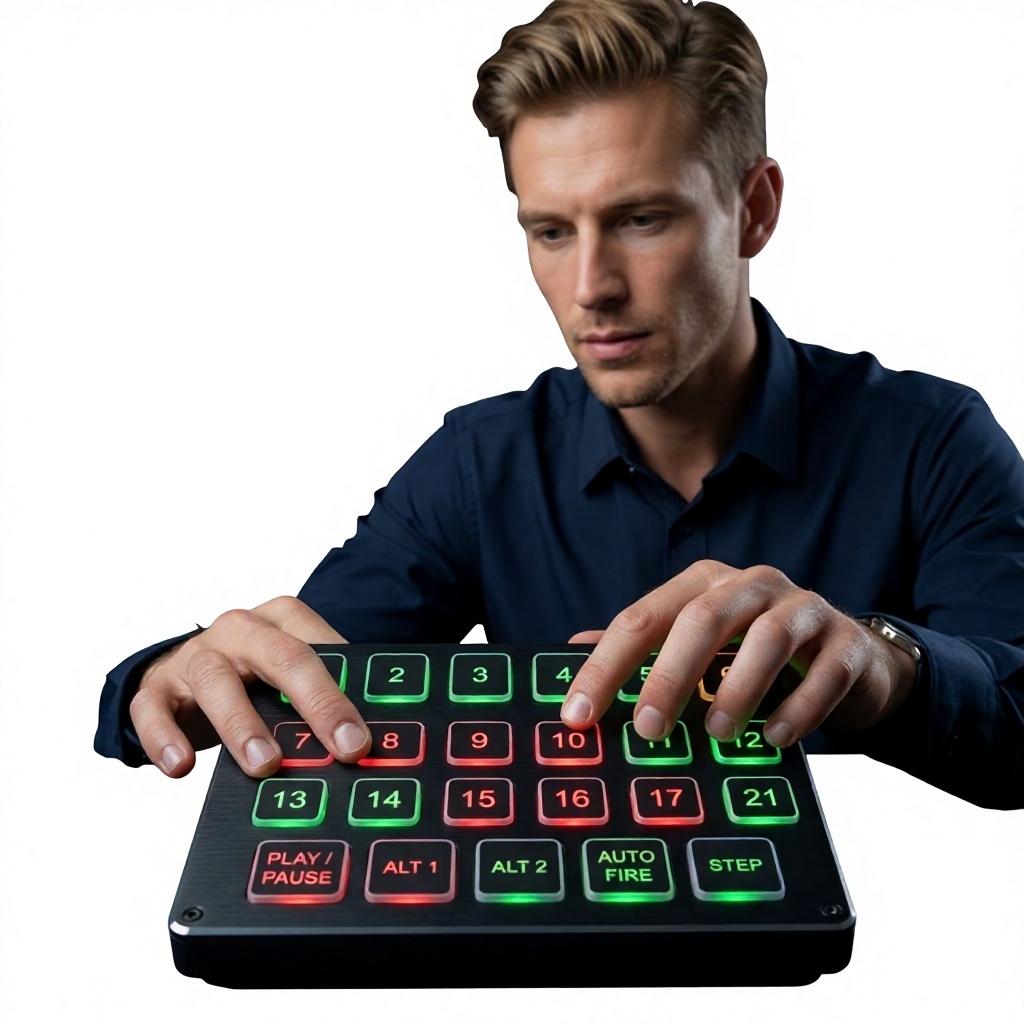
RoHS REACH Compliance Even Illumination Every Key Makes Night Operation Customized Backlit Membrane Keypad Switch
Uniform Light Guide Film (LGF) optics, balanced lumen dispersion for night shifts, zero hotspot leakage, and certified chemical wipe resistance.
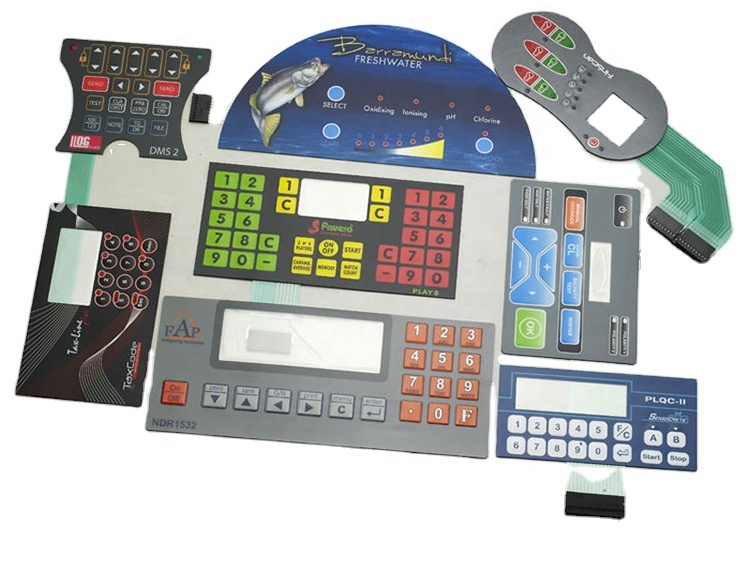
Custom Membrane Keyboards LED Backlit Membrane Switch for Electronics Quick Sampling
High-density SMT LED embedding, ultra-thin multi-layer PET structure, rapid DFM validation, and fast-track prototyping under 7 business days.
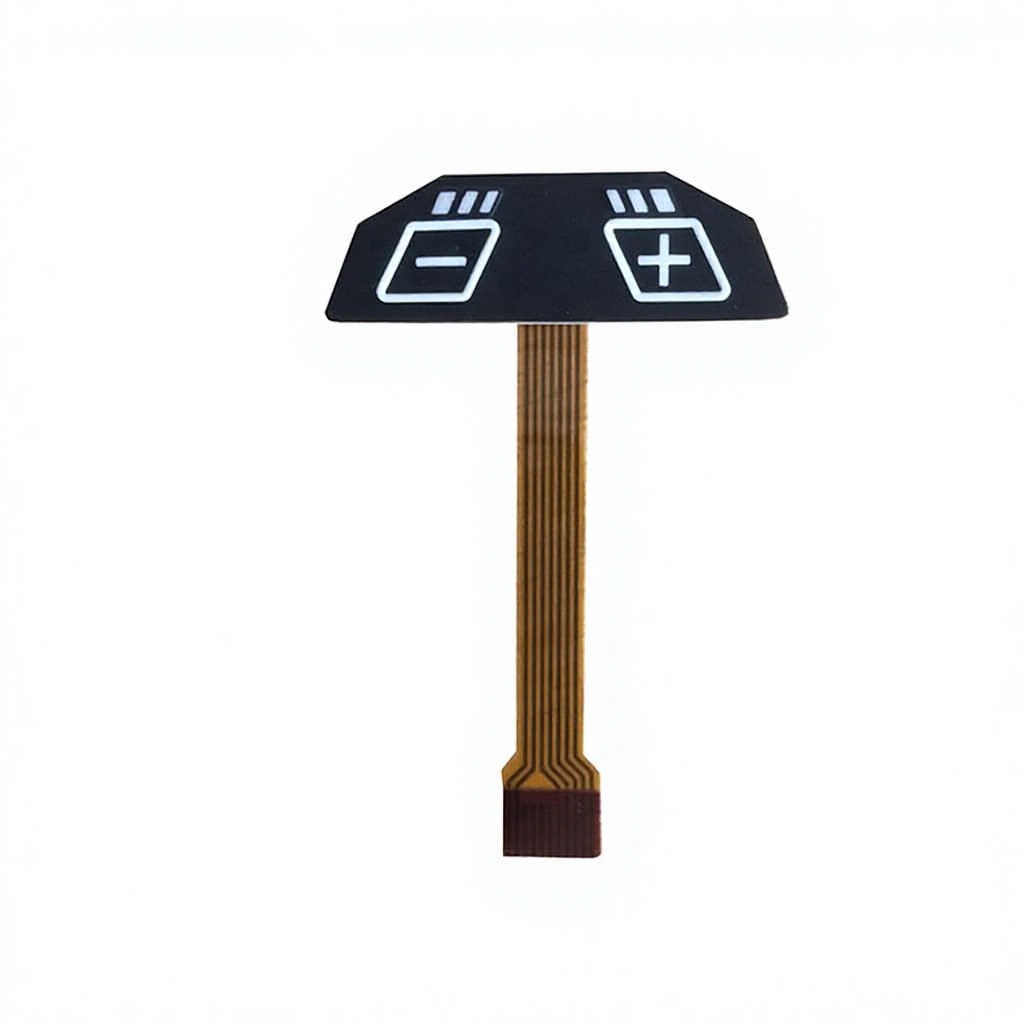
Customized Multi Layer Construction Printed Silver Circuit OEM ODM Wholesale Graphic Overlay Membrane Keypad
Low-impedance conductive silver tracks with cross-over carbon bridging, UV-curable dielectric barriers, and custom color-matched graphic overlays.
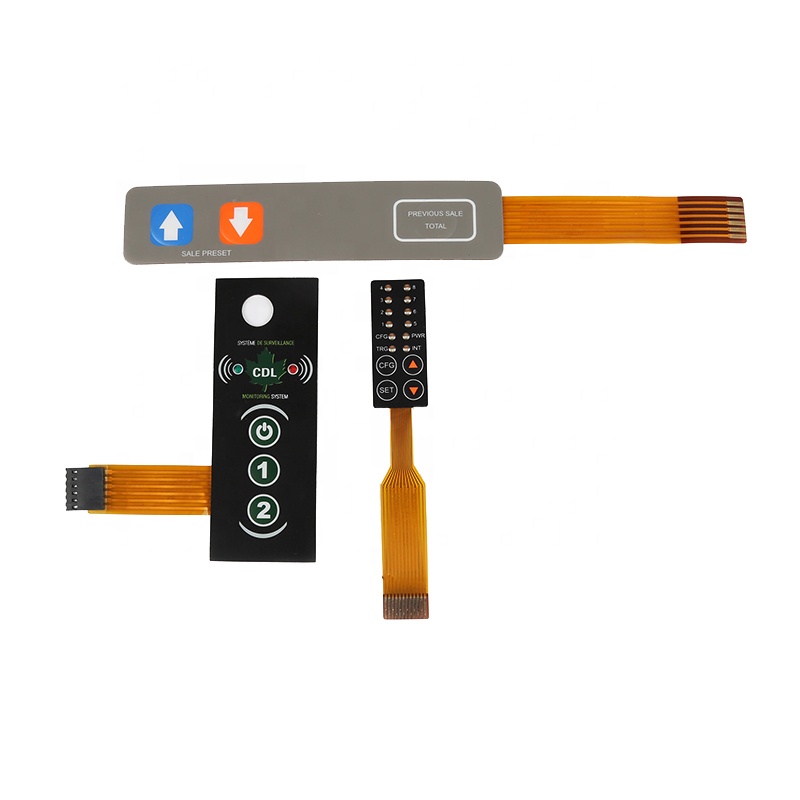
Waterproof Capacitive Touch Membrane Switch with Customizable Color and Texture
Zero mechanical wear, hermetically sealed perimeter gasket, ITO touch sensor matrix, and false-trigger rejection against marine spray.
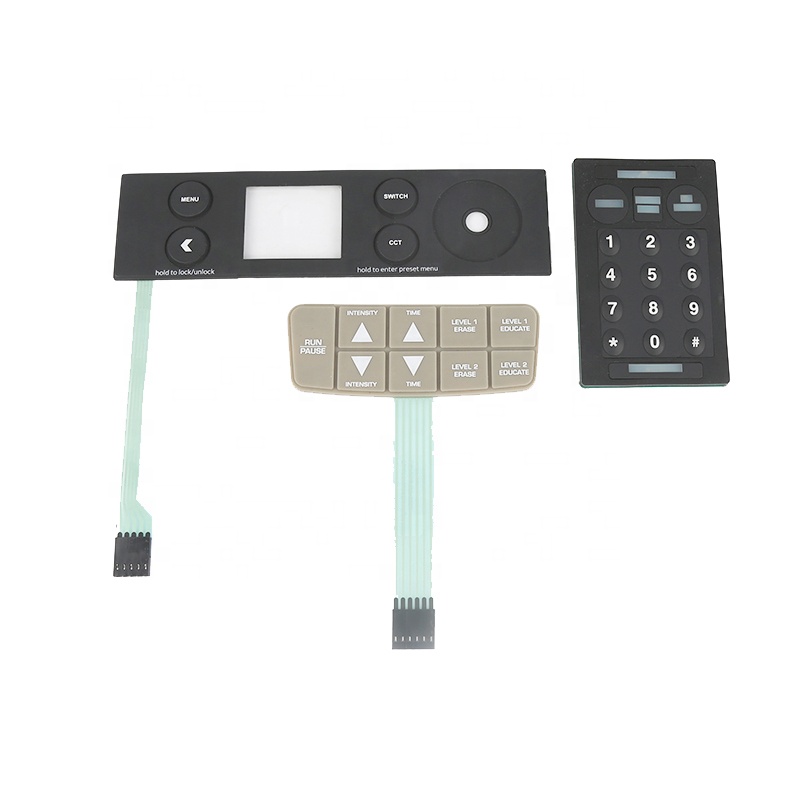
Customize High Sensivity Metal Dome 3M Adhesive Medical Membrane Switch
Crisp tactile feedback stainless steel domes (SUS301), antimicrobial textured Autotex overlay, and industrial-strength 3M 467MP/468MP backing.
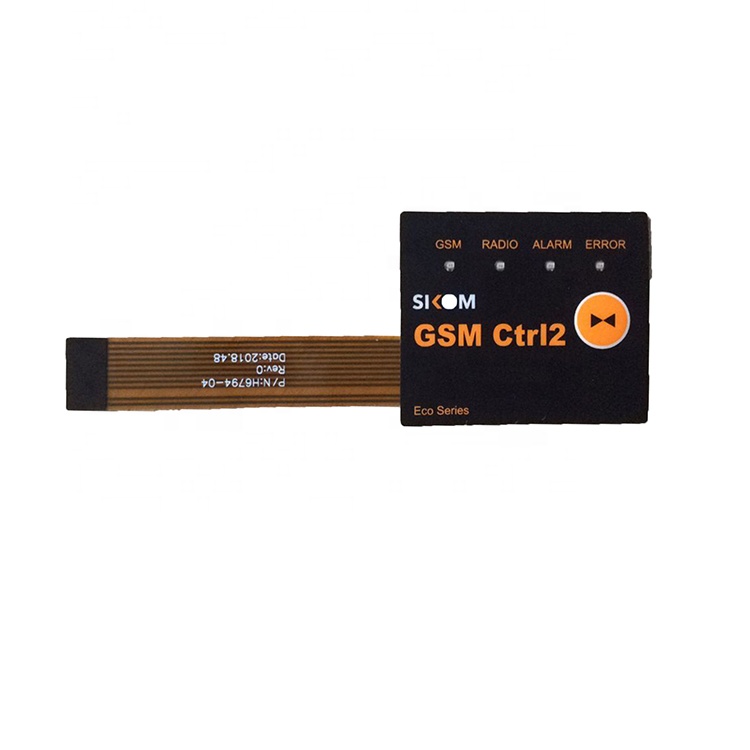
RoHS Compliant Industrial Membrane Push Button Switch Custom Tactile Membrane Keypad Switch for Medical Instrument Control Panel
Embossed rim and pillow tactile buttons, LED window backlighting, multi-pin FCI/Molex connector tails, and high cycle-life actuation exceeding 1M presses.
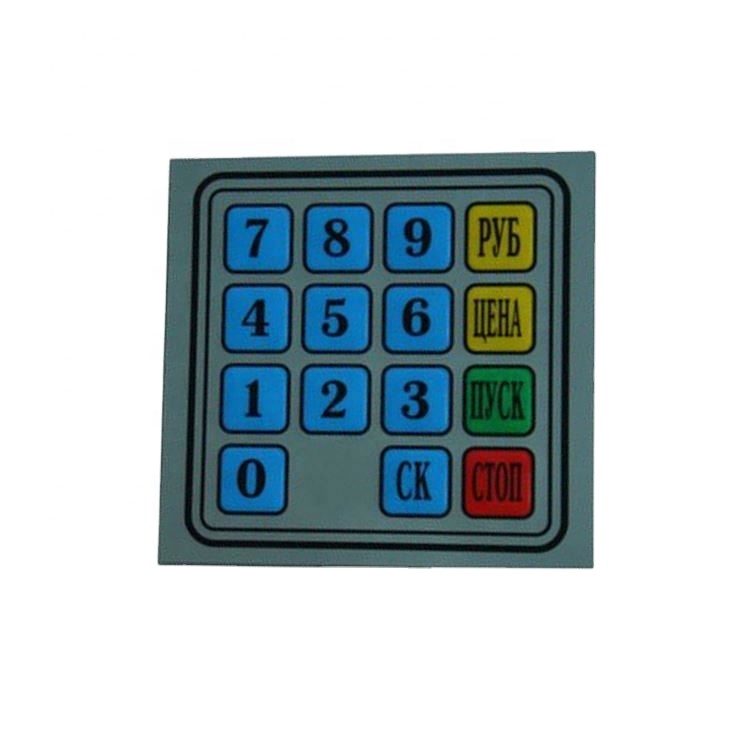
Hoee Factory Membrane Switch Keypad with Rubber Buttons 4*4/1*4/3*4/4*5 Layout MCU Expansion DIY Electronic Keyboard
Compression-molded silicone elastomer keymat laminated to a precision membrane switch sub-assembly, giving long travel with hermetic sealing.
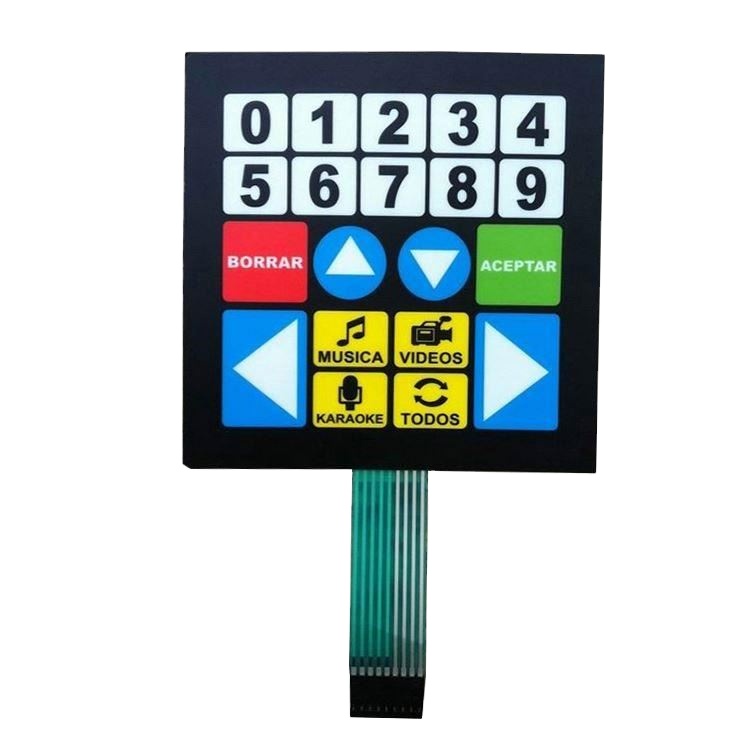
OEM ODM Custom Membrane Switch Keypad, PET PC Graphic Overlay Tactile Push Button Membrane Switch for Industrial Control Panel
Heavy-duty chemical resistant Lexan PC / Autotex PET overlay, selective back-printing, ESD/RFI shield foil layer, and high-temp tolerance.
Optical Architecture & Environmental Sealing in Coastal Industrial Zones
An in-depth technical analysis for hardware engineers, systems designers, and procurement managers deploying Human-Machine Interfaces across high-salinity and continuous-operation environments.
In global industrial logistics hubs and coastal petrochemical centers like the Freeport industrial market, human-machine interface (HMI) hardware confronts severe operational stresses rarely observed in standard commercial electronics. Designers and sourcing engineers require backlit membrane switches that simultaneously manage 24/7 low-light operational clarity, high relative humidity approaching 100%, airborne chloride deposits (salt fog), severe ultraviolet radiation, and aggressive caustic cleaning washdowns.
Traditional front-panel controls relying on mechanical rocker switches or open-bezel push buttons suffer catastrophic premature failures in these micro-climates. Capillary action pulls conductive marine moisture into internal mechanical gaps, causing dendritic silver migration, intermittent open circuits, and switch lockup. To address these vulnerabilities, contemporary engineering teams are migrating toward fully laminated, hermetically sealed backlit membrane switches. The foundational challenge lies in balancing uniform luminous intensity across every key legend while preserving unbroken IP67/NEMA 4X ingress barriers without inflating overall switch profile thickness.
Light Guide Film (LGF) Optics
High-refractive-index polycarbonate or optical-grade acrylic films etched with microscopic light-extraction dot matrices.
- Side-firing micro LEDs redirect light perpendicular to the surface.
- Profile thickness minimized to 0.125 mm – 0.250 mm.
- Uniformity exceeds 85% with zero luminous hot-spotting.
- Low heat generation preserving adhesive integrity.
Hermetic Perimeter Adhesion
Multi-tier barrier gasket construction utilizing modified acrylic adhesive transfer systems like 3M 467MP, 468MP, or 300LSE.
- Continuous perimeter seal preventing moisture and gas capillary intake.
- IP66, IP67, and NEMA 4X ingress isolation.
- Embedded micro-porous membrane vents for barometric equalization.
- Resistant to splash diesel, hydrocarbons, and saline brine.
Anti-Migration Circuitry
Screen-printed conductive silver traces formulated with micro-flake binders and carbon crossover protection barriers.
- Dielectric encapsulation layers prevent electrochemical silver bridging.
- Loop resistance tuned under 100 Ω for optimal microcontroller sensing.
- Polyimide FPC or FR4 backers for high-vibration engine consoles.
- 100% automated dielectric isolation testing up to 500V DC.
A critical consideration in optical switch design is thermal dissipation and parasitic power consumption. In portable outdoor equipment or marine battery-backed remote cranes, power reserves are constrained. Electroluminescent (EL) foils, while offering exceptionally thin profiles, require high-frequency AC inverters (typically 80–120V @ 400Hz), which introduce electromagnetic interference (EMI) into sensitive serial communication buses (RS-485, CAN bus, Modbus) prevalent in industrial port equipment. Furthermore, EL phosphors suffer rapid half-life degradation when subjected to tropical humidity and heat. Modern engineering protocol therefore favors surface-mount LED arrays coupled with precision-etched Light Guide Film (LGF). This architecture delivers long-term luminous half-lives exceeding 50,000 hours with minimal DC drive currents, eliminating EMI while maintaining a sealed, cold-operation surface.
Backlighting Technology Engineering Trade-Off Analysis
Quantifying luminance, mechanical stack-up thickness, thermal impact, and reliability across primary industrial backlighting methods.
| Evaluation Parameter | Surface-Mount Discrete LEDs | Light Guide Film (LGF) + LED | Electroluminescent (EL) Foil | Fiber Optic Woven Mesh |
|---|---|---|---|---|
| Typical Luminance (cd/m²) | 50 – 150 (Localized) | 120 – 350 (Homogeneous) | 20 – 60 (Low/Subtle) | 80 – 220 (Uniform) |
| Overall Stack-Up Added Thickness | 0.8 mm – 1.6 mm (Requires pocket) | 0.125 mm – 0.30 mm | 0.15 mm – 0.25 mm | 0.35 mm – 0.60 mm |
| Luminance Uniformity | Moderate (Hotspots) | High (>85%) | Exceptional (>95%) | High (>80%) |
| Operating Voltage & Drive | 2.0V – 3.4V DC (Direct logic) | 2.0V – 3.4V DC (Direct logic) | 60V – 120V AC (Inverter needed) | Requires High-Output Source LED |
| EMI / RFI Generation | None | None | High (Inverter RF switching) | None |
| Expected L70 Operational Lifespan | 50,000+ Hours | 50,000+ Hours | 3,000 – 8,000 Hours (Decays) | 40,000+ Hours |
| Sealing & Chemical Resistance | Good (Requires embossed relief) | Excellent (True flat sealing) | Moderate (Sensitive to moisture) | Good (Bulkier perimeter) |
| Tooling & Unit Cost Balance | Lowest tooling / Low unit cost | Moderate tooling / Very low unit | Low tooling / High unit cost | High tooling / High unit cost |
Localized Application Scenarios in Freeport Logistics & Industrial Hubs
How precision backlit membrane keyboards solve human-machine interface challenges across harsh maritime, chemical, and transportation corridors.
Intermodal Port & Crane Interfaces
Overhead gantry crane operator cabins and container spreader control pendant boxes require high-visibility illuminated keys during nocturnal stevedoring. Tactile metal snap domes provide physical feedback through heavy leather work gloves.
Petrochemical Bulk Terminals
Custody transfer metering stations, pipeline valve manifolds, and hazardous cargo loading bays in coastal export complexes. Backlit switches are constructed with intrinsically safe low-current loops and spark-free conductive closures.
Offshore Marine Vessel Consoles
Workboats, supply tugs, and dredging equipment require bridge consoles compliant with night-vision ergonomics. Red or amber NVIS-compatible backlighting ensures key readability without compromising the pilot’s dark-adapted vision.
Cold Storage & Warehouse Logistics
Rapid thermal transitions from sub-zero refrigerated freezers (-25°C) to humid coastal loading bays trigger condensation. Differential pressure breathing membranes prevent internal overlay pillowing and condensation pooling.
Emerging Technological Trends in the Freeport Manufacturing Ecosystem
Tracking the evolutionary shift from legacy mechanical panels to integrated smart-surface human interface assemblies.
Industrial procurement dynamics across North American and international trade zones have shifted fundamentally over the past five years. Original Equipment Manufacturers (OEMs) and contract manufacturers (CMs) within Free Trade Zones (FTZs) and marine corridors are aggressively streamlining their vendor consolidation strategies. Rather than procuring a bare graphic overlay from one printer, stainless steel snap domes from a distributor, and a printed circuit board from a PCB fabricator, engineering leaders demand turnkey integrated HMI assemblies from a single accountable manufacturer.
Three concrete technological shifts dominate current requests for quotation (RFQs):
- Transition to Capacitive-Touch Hybrid Overlays: Mechanical domes are increasingly paired with or replaced by solid-state capacitive sensing arrays. By embedding ITO or copper capacitive traces behind an optically clear, chemically hardened PET surface, equipment designers achieve zero mechanical friction parts, eliminating wear out across million-cycle operational spans while enabling dynamic multi-color RGB status backlighting.
- Laser-Etched Silicone Rubber on Membrane Switches: Combining the tactile travel and three-dimensional ergonomic grip of compression-molded silicone elastomer with the ultra-low profile and sealing of a polyester membrane switch circuit. Laser-ablation etching strips back surface opaque coatings to permit razor-sharp backlit legends that resist abrasive sand, gravel, and grease exposure.
- Direct Bonded Display Integration: Modern front panels demand seamless optical bonding between the polyester overlay window and underlying TFT/OLED displays. Anti-reflective (AR), anti-glare (AG), and anti-fingerprint (AF) chemical vapor coatings ensure high sunlight readability on open-air marine docks.
Direct-from-Factory Engineering with 29+ Years of Heritage
Zhejiang ZIRA Membrane Switch Co., Ltd. (founded 1996) stands as an elite OEM/ODM engineering and manufacturing facility based in Ningbo, Zhejiang. Our integrated 3,000–5,000 m² cleanroom manufacturing plant encompasses precision screen printing, automated SMD LED placement, laser cutting, hydraulic embossing, and Class 10,000 cleanroom optical lamination.
As an onsite verified manufacturing supplier audited by Intertek, we maintain a long-term supply pedigree partnering with Fortune 500 automation pioneers including ABB and Emerson. Every membrane switch and rubber keypad assembly undergoes rigorous 100% automated electrical continuity, contact resistance, and optical isolation validation prior to export.
Frequently Addressed Inquiries by Freeport Procurement Engineers
Direct technical answers addressing environmental testing, rapid prototyping, international shipping, and material longevity.
How do your backlit switches survive accelerated salt spray (ASTM B117)?
What is the rapid prototyping lead time for custom LGF backlighting?
How do you prevent light bleed between closely spaced backlit buttons?
What Minimum Order Quantities (MOQs) and delivery terms are available?
Can the switch integrate Electrostatic Discharge (ESD) and RFI shielding?
Which tail connectors and termination options are supported?
Ready to Engineer a Rugged Backlit Interface for Your Next Platform?
Consult directly with our Ningbo-based application engineering team. Submit your DXF, DWG, Step file, or 2D artwork for a comprehensive DFM audit, layer stack-up proposal, and transparent manufacturing quotation.
