ESD Shielded
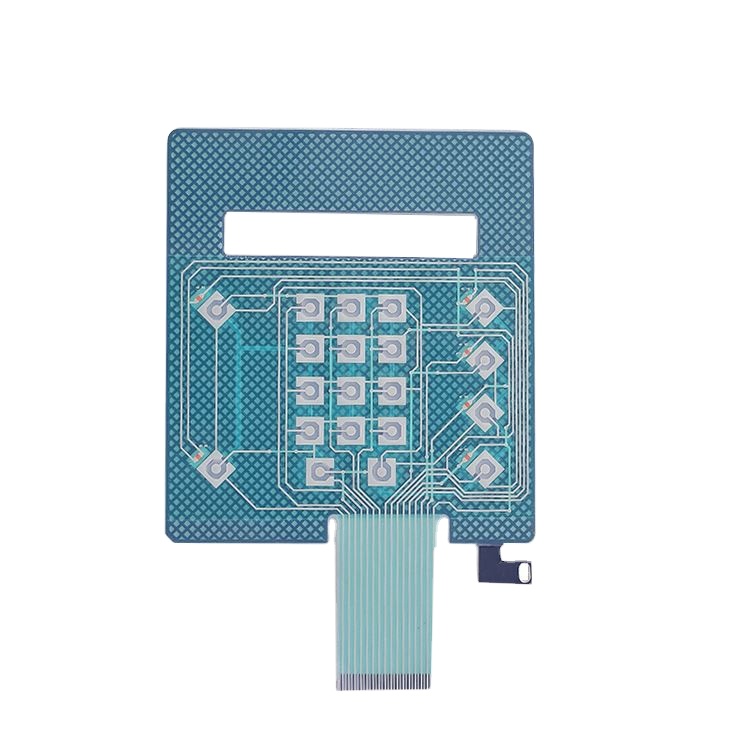
Custom PET Membrane Switch Keypad, ESD Shielding Layer Thin Film Push Button Membrane Switch for Electronic Equipment
- Up to 15kV ESD Grid Protection
- Autotype Autotex PET Film Core
- Actuation: >1,000,000 Cycles
Precision-manufactured human-machine interfaces designed for harsh industrial, medical diagnostic, and electronic appliance applications. Evaluated under strict IPC-TM-650 and ASTM F1578 standards.
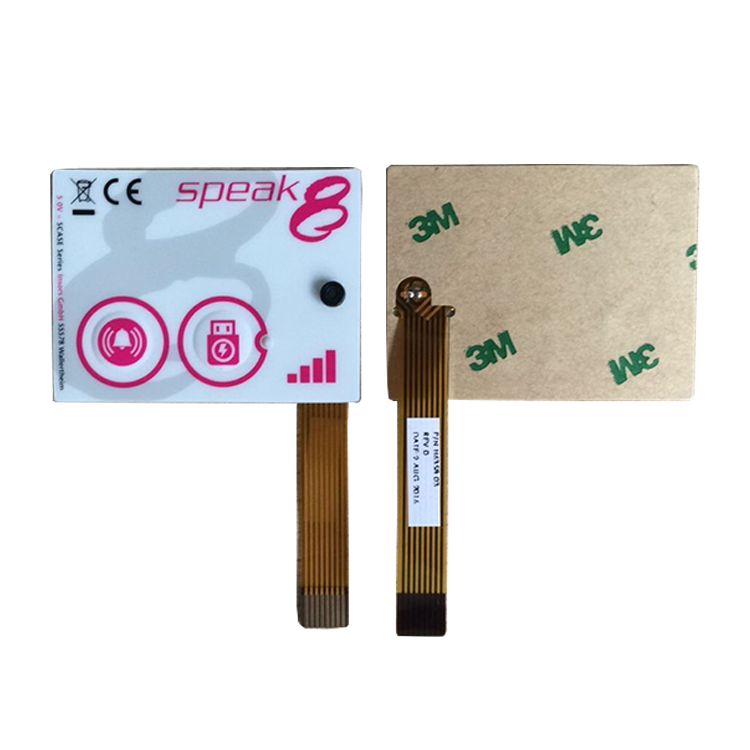
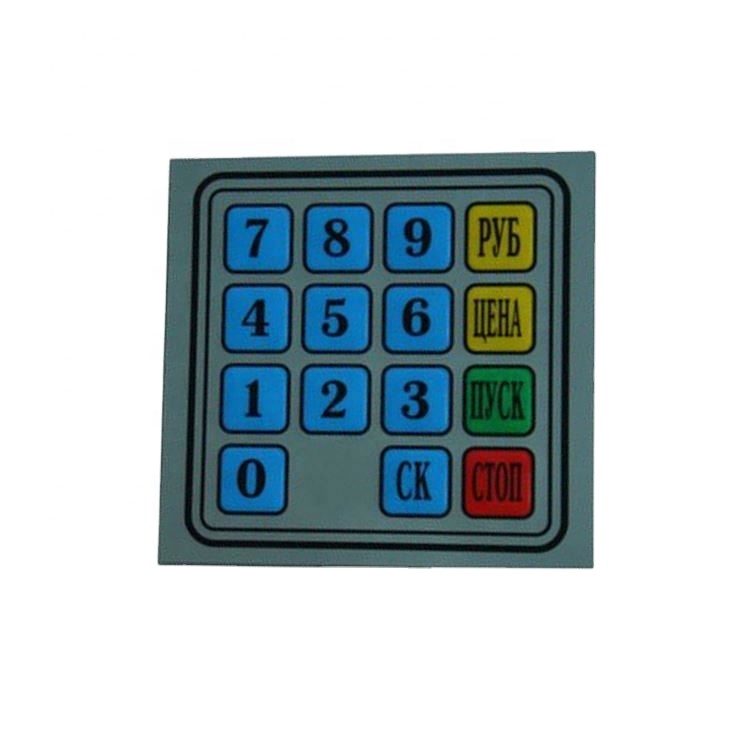
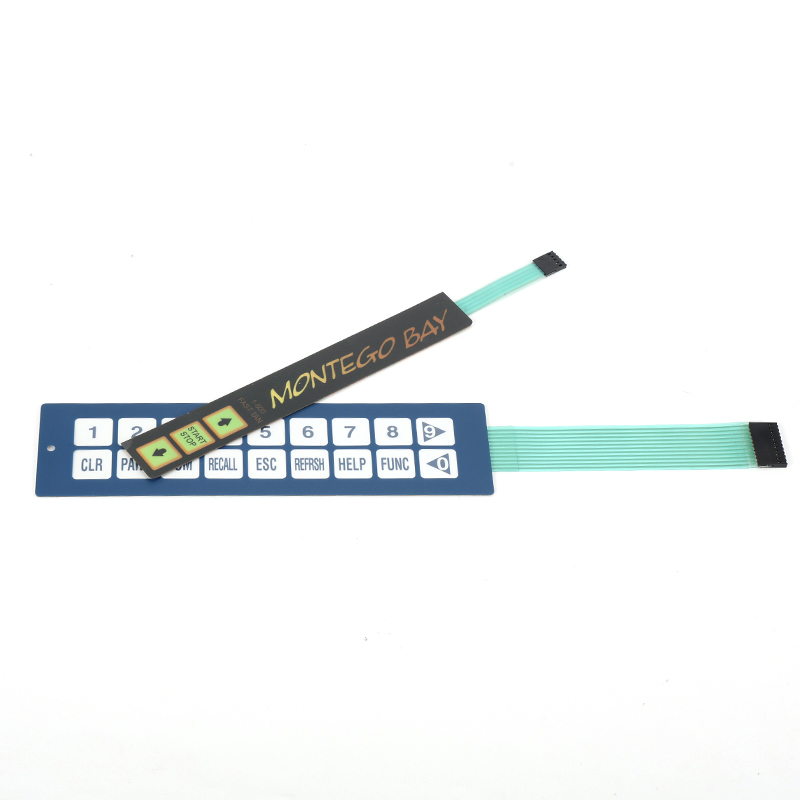
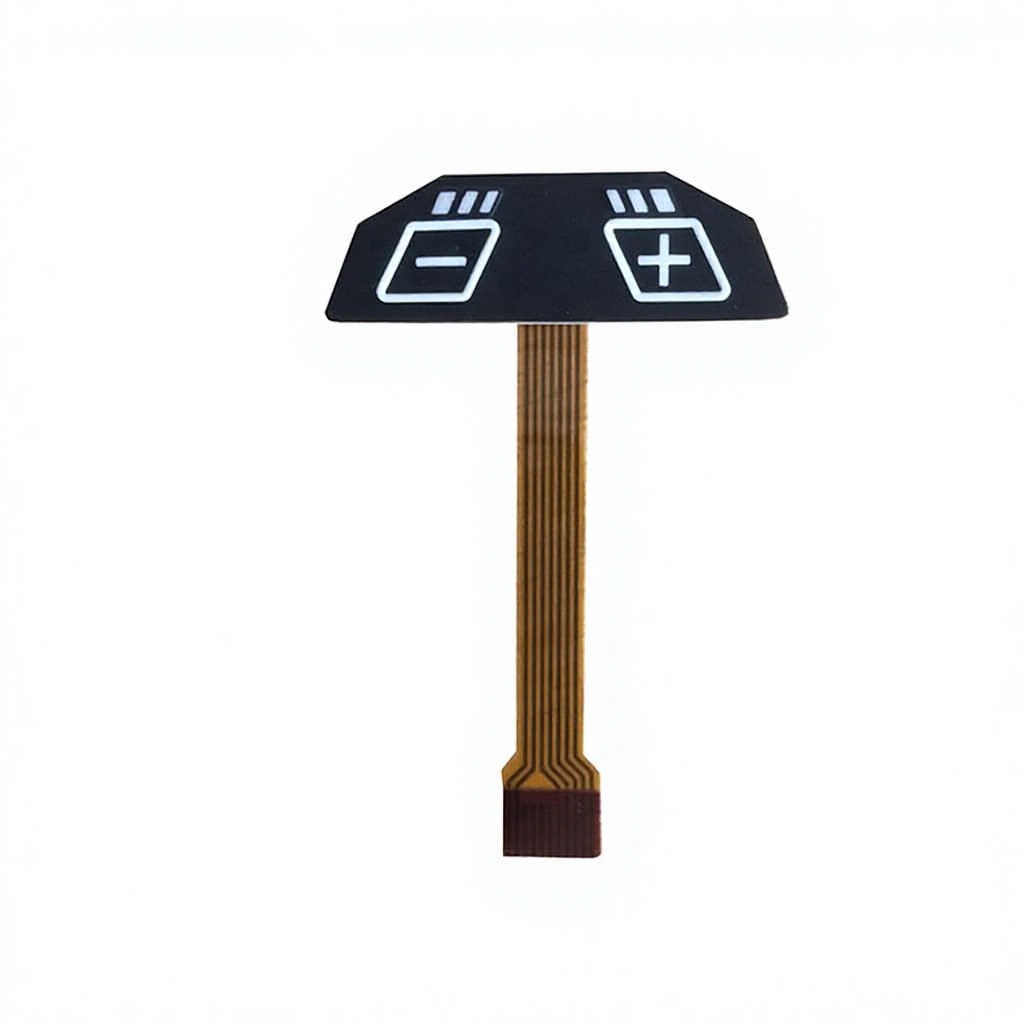
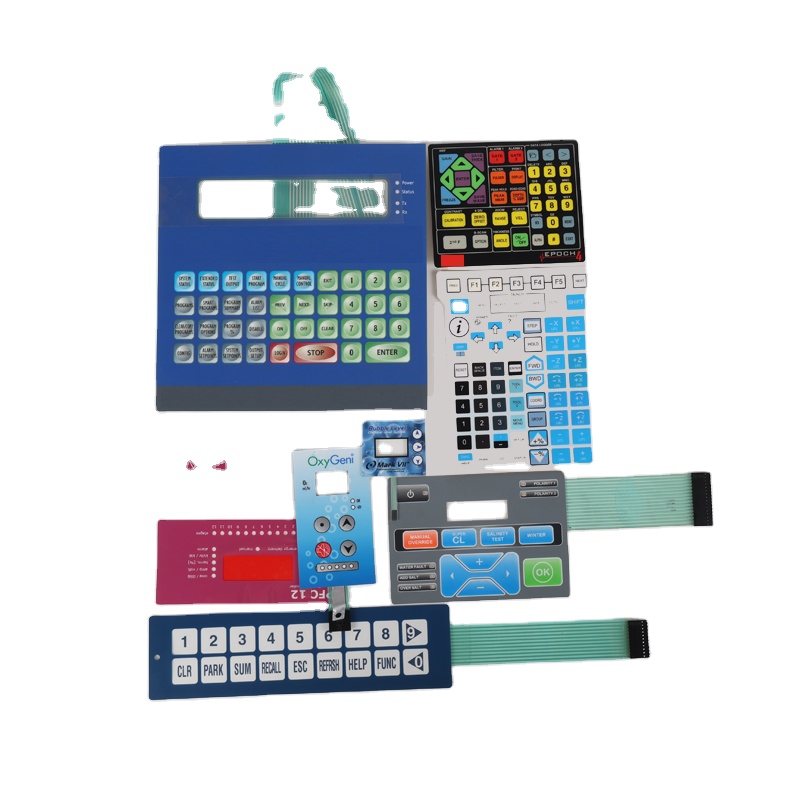
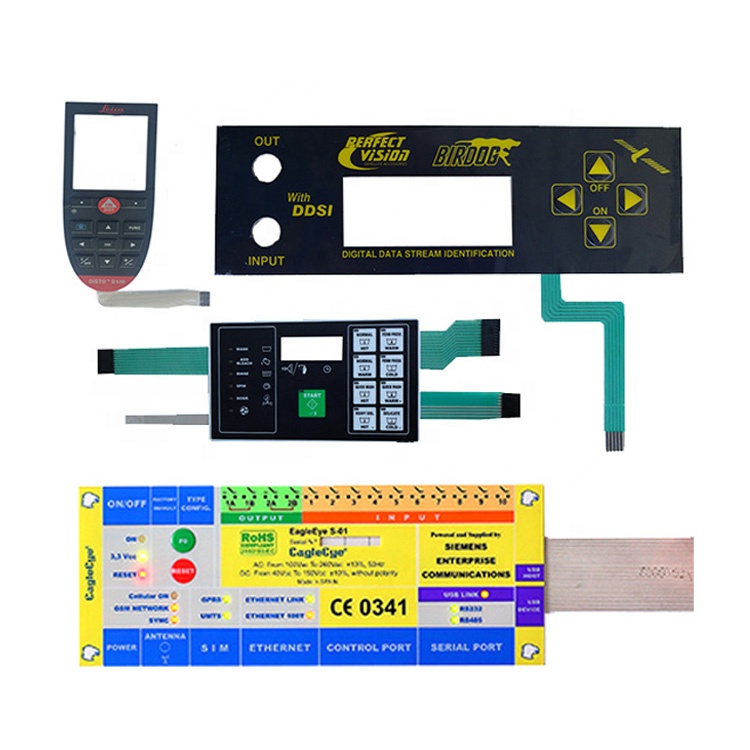
Modern industrial and medical Human-Machine Interfaces (HMI) demand high ambient visibility, strict power efficiency, and minimal chassis thickness. Selecting the appropriate backlighting technology directly dictates mechanical tooling, tooling lead times, and unit thermal performance. Engineers procuring backlit switches typically navigate between three dominant illumination paradigms:
LGF employs micro-etched optical-grade polycarbonate or polyurethane films (typically 0.125mm to 0.25mm thick). Side-firing surface-mount (SMD) LEDs direct photon streams horizontally into the film layer. Precision micro-dots reflect light upward at 90° angles.
Key Benefit: Ensures ultra-uniform lux distribution across broad legends while preserving thin stack profiles and isolating tactile snap sensations.
Chip LEDs (0603, 0805, or 1206 packages) are bonded directly onto flexible printed circuit (FPC) or rigid FR4 backer boards using conductive epoxy or lead-free reflow soldering. Embossed domes accommodate component height.
Key Benefit: Lowest cost per localized status indicator; excellent for isolated power rings, discrete alert icons, and dual-color LED status confirmation.
EL lamps utilize screen-printed phosphors excited by alternating high-frequency voltage (60-110VAC, 400-1000Hz). They produce cold, soft illumination across the entire visual surface with negligible thickness additions (<0.15mm).
Key Benefit: Excellent thinness and smooth illumination; however, requires inverter circuits and exhibits a shorter half-life (~3,000 to 5,000 operational hours).
| Evaluation Parameter | Light Guide Film (LGF) | SMD Discrete LED Array | Electroluminescent (EL) Panel | Fiber Optic Weave |
|---|---|---|---|---|
| Average Thickness Impact | 0.125 mm – 0.250 mm | 0.80 mm – 1.60 mm | 0.10 mm – 0.20 mm | 0.30 mm – 0.50 mm |
| Illumination Uniformity | Exceptional (Laser-Matrix Dotted) | Segmented / Localized Hotspots | Superior (Continuous Surface) | High Uniformity |
| Operating Power Drive | 3.0V – 3.3V DC (LED Forward Voltage) | 2.0V – 3.4V DC Standard | 60V – 115V AC (Requires Inverter) | 3.0V – 5.0V DC (External Light Engine) |
| Service Life Expectancy | >50,000 Hours (L70 LED Rating) | >50,000 Hours (L70 LED Rating) | 3,000 – 5,000 Hours to Half-Brightness | >30,000 Hours |
| Tooling & Unit Cost Balance | Moderate Tooling / Low Unit Cost | Minimal Tooling / Lowest Unit Cost | Low Tooling / Moderate Unit Cost | High Tooling / Elevated Unit Cost |
Global procurement teams in medical systems, smart agricultural cockpits, cleanroom industrial robotics, and consumer avionics are redesigning human-machine interfaces around these pivotal technical trajectories:
Pure touch interfaces often fail when operators wear heavy gloves or work in wet environments. Leading OEM buyers specify hybrid architectures pairing tactile metal domes for primary actuation with capacitive slider wheels or dead-front wake-up zones.
Procurement Impact: Demands combined firmware calibration and impedance control across conductive silver and ITO circuits on single substrates.
Post-pandemic healthcare standards have intensified requirements for hospital-grade surface resistance against aggressive cleansers (quaternary ammonium, bleach, isopropyl alcohol). Specifiers avoid polycarbonate in favor of textured, chemically crosslinked Autotex PET.
Procurement Impact: Demands DIN 42 115 chemical immersion certifications and continuous perimeter ring seals passing IP67 and IP68 tests.
Global supply chain managers are migrating away from buying loose membrane tails that must be mated to rigid backing plates and display modules on internal factory lines. The trend favors turnkey HMI box builds incorporating aluminum carriers, integrated displays, and wire harnesses.
Procurement Impact: Shortens supply chains and passes line-level integration liability directly to certified OEM/ODM manufacturers.
As pin pitches shrink down to 0.5mm and 1.0mm ZIF connectors to interface directly with compact mainboards, silver conductive inks experience dendrite migration risks under sustained humidity. Polyimide-based copper etching offers absolute zero migration and lower trace resistance (<0.1Ω/sq).
Procurement Impact: Prolongs MTBF in outdoor telemetry and high-amperage LED driver circuits.
Modern visual design favors minimalist matte surfaces where icons, warning indicators, and numeric readouts remain entirely invisible until backlit by internal LEDs. This requires precise multi-pass translucent ink layering with tight optical density matching.
Procurement Impact: Demands automated optical transmission spectroscopy checks across every screen-printed batch.
Tier-1 Western industrial enterprises now enforce rigorous compliance assessments extending beyond basic RoHS/REACH into halogen-free flame retardancy (UL94 V-0/VTM-0) and recyclable adhesive matrices, requiring verified chemical disclosure.
Procurement Impact: Requires certified material pedigree with full supply chain traceability back to base resin suppliers.

Zhejiang ZIRA Membrane Switch Co., Ltd. (operating since 1996 in Ningbo, Zhejiang) maintains complete in-house tooling, high-precision screen printing, cleanroom lamination, and automated 100% electrical continuity inspection. Long-term supplier partner to international automation titans including ABB and Emerson.
How our factory mitigates risk across critical electrical, optical, and adhesive layers:
Our senior HMI application engineers audit your CAD outlines, trace spacing, dome placement, and connector clearances prior to cutting tooling steel. Eliminates trace cracking and unexpected contact resistance in early pilot runs.
We build strictly with verified, tier-one materials: 3M acrylic transfer adhesives (467MP, 468MP, 300LSE for low surface energy plastics), Autotype Autotex/Autoflex PET, and Acheson conductive silver pastes. Full material certs furnished per production lot.
Every single membrane switch passes multi-point continuity testing, insulation resistance validation (>100MΩ at 100V DC), LED forward voltage drop calibration, and switch bounce time measurement on computer-controlled test jigs before leaving the plant.
Direct technical answers addressing lead times, actuation life, tactile snap ratio, sealing, and testing parameters:
We support fast-track engineering prototypes from 1 to 5 pieces using laser-cut tooling to accelerate design verification. Standard batch production typically initiates at 100 pieces for complex backlit configurations, and 1,000 pieces for high-speed automated roll-to-roll screen printed units. Typical prototype lead times run 5 to 7 working days upon Gerber/artwork approval.
To achieve zero light pollution between adjoining buttons, our engineering team implements multi-layer light blocking masks using high-opacity printed black/white carbon barrier inks. For uniform icon backlighting, Light Guide Film (LGF) paired with laser-graduated diffusion extraction micro-dots distributes photons evenly across the entire key boundary, eliminating bright spots.
Stainless steel metal domes (four-leg, round, or oblong profiles from 6mm to 20mm diameter) deliver a crisp snap ratio of 40%–60% with actuation forces spanning 180g to 450g and rated life exceeding 1,000,000 cycles. Embossed polyester polydomes provide a quieter, lower-cost tactile response ideal for consumer interfaces, rated typically for 500,000 actuations.
Achieving true IP67 or IP68 immersion protection requires an unbroken closed-loop perimeter gasket spacer cut from closed-cell acrylic tape (e.g., 3M 467MP/468MP) positioned outside the active venting channels. Internal key vents breathe through interior channels to maintain atmospheric equalization without breaching the perimeter water seal.
Screen-printed silver flake circuits represent the most economical approach for standard keypads. However, Flexible Printed Circuits (FPC) with etched polyimide copper traces should be selected when soldering dense fine-pitch LEDs (<0805 packages), connecting via 0.5mm/1.0mm ZIF terminations, carrying traces with trace resistance <1Ω, or operating in extreme condensing humidity environments.
For mechanical overlays and dimensions, we accept vector CAD files (DXF, DWG, STEP). For graphic overlay artwork, vectorized Adobe Illustrator (.AI), editable PDF, or EPS files with specified Pantone PMS or RAL color callouts are preferred. For complex schematic tails and FPC layouts, standard Gerber (RS-274X) files ensure immediate DFM turnaround within 24 hours.
Consult directly with our Ningbo engineering team. Upload your engineering drawings, schematic requirements, and environmental specifications for a complete DFM audit and custom quotation within 24 business hours.
