Featured Custom Graphic Overlays & HMI Assemblies
Engineered to custom technical specifications with 100% electrical continuity testing, selective UV texture lacquers, Autotex® polyester films, and genuine 3M™ high-performance laminating adhesives.
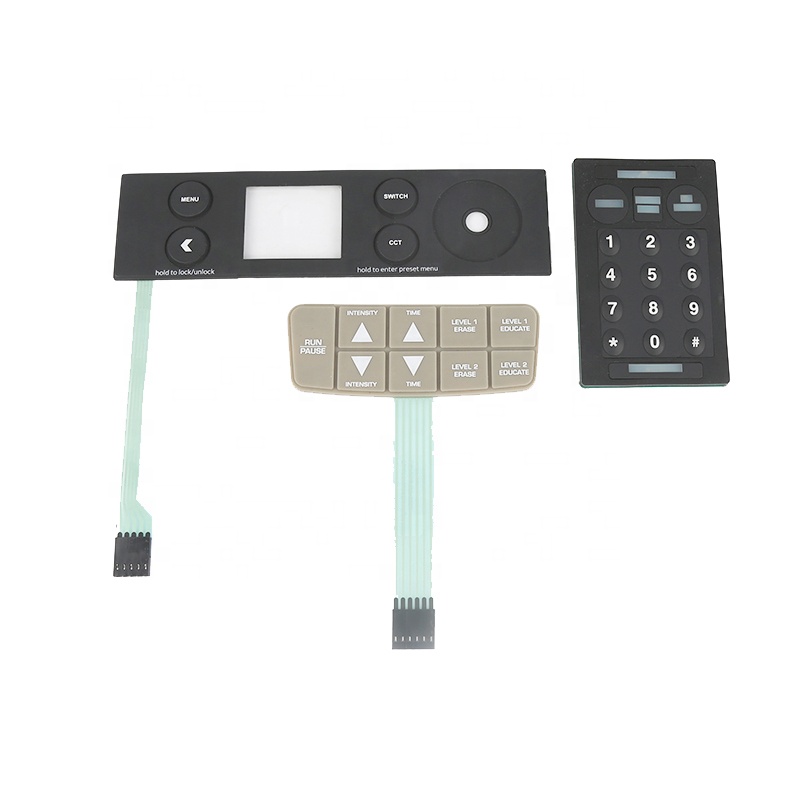
Customize High Sensivity Metal Dome 3M Adhesive Medical Membrane Switch
Subsurface printed medical PET, nickel/gold plated metal dome tactility, IP65 perimeter fluid barrier, 3M 467MP peel-and-stick.
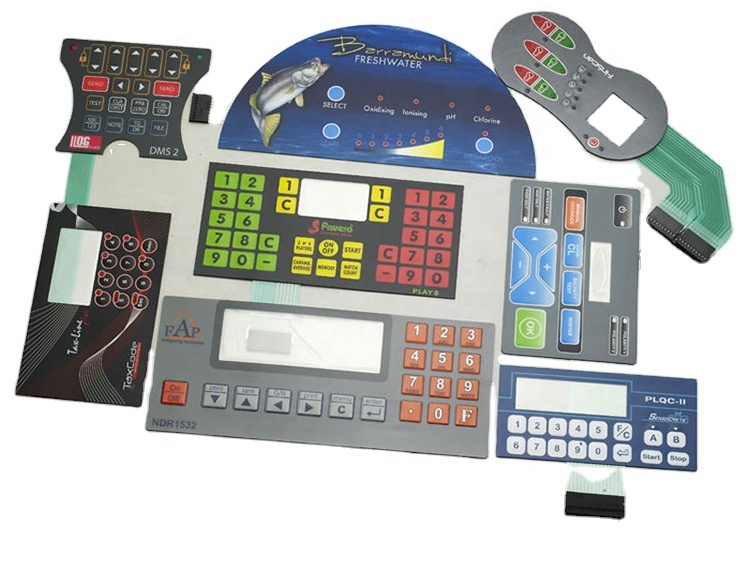
Custom Membrane Keyboards LED Backlit Membrane Switch for Electronics Quick Sampling
Integrated SMT micro-LEDs, light-guide diffusion film, embossed tactile keypads, and fast 72-hour engineering proof turnaround.
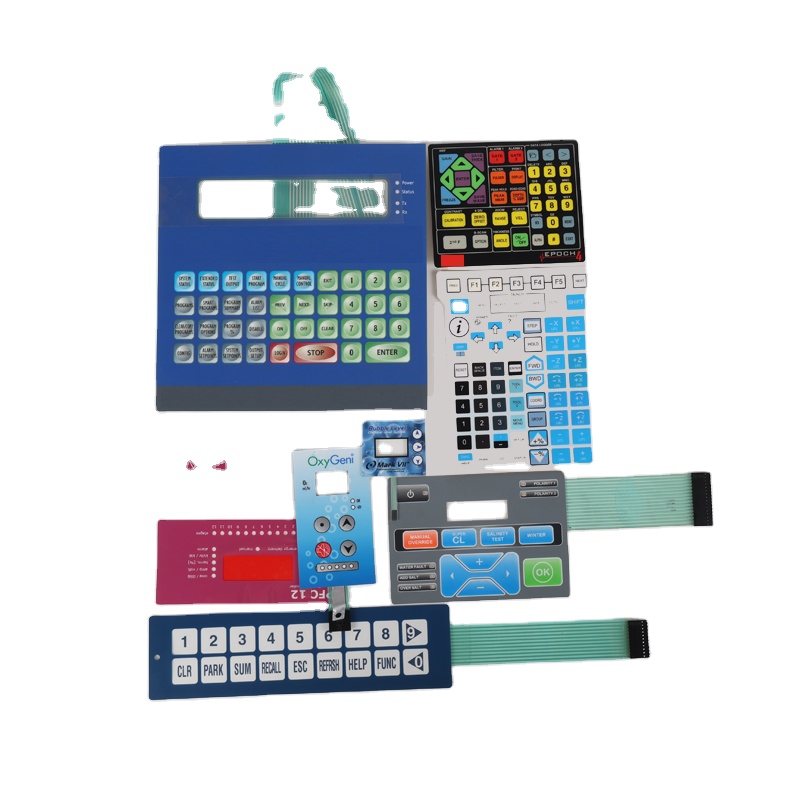
Waterproof Flexible Circuit Membrane Switch for Medical Equipment
Chemical-resistant Autotex XE anti-microbial overlay, dielectric isolation barrier, polyimide FPC interconnect, zero liquid seepage.
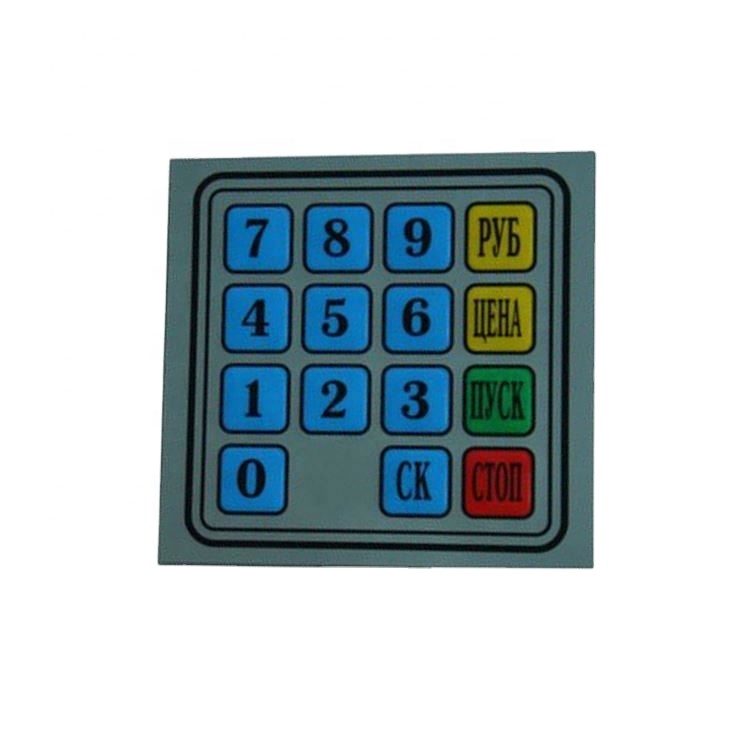
Membrane Switch Keypad with Rubber Buttons Matrix Layout
Compression-molded silicone rubber integrated over silver printed circuit, long key travel, ergonomic tactile actuation for microcontrollers.
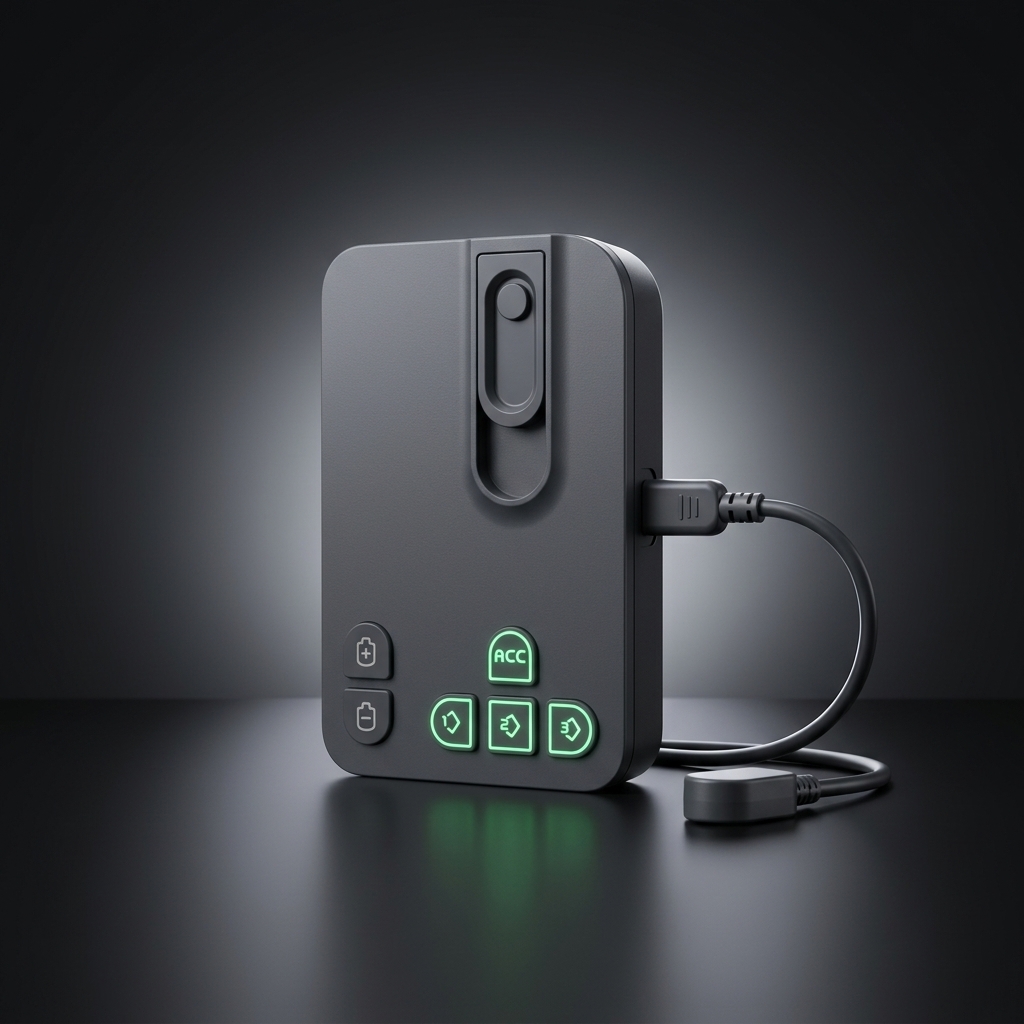
Custom Backlight Silicone Membrane Keyboard Switch EL LED
Electroluminescent (EL) / LGF uniform surface lighting, laser-etched legends, RoHS compliant raw components, wide thermal stability.
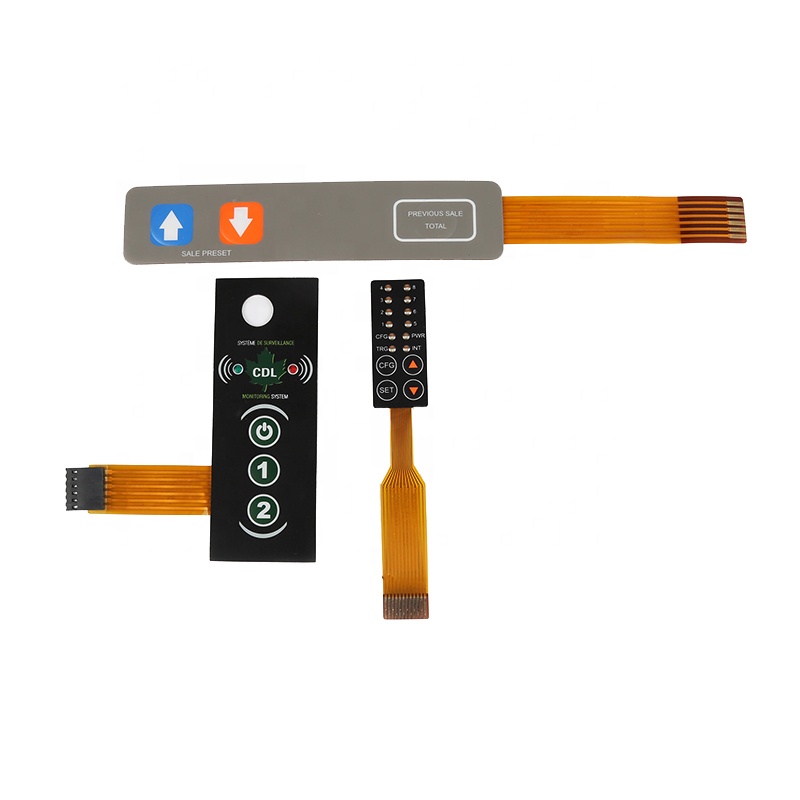
Waterproof Capacitive Touch Membrane Switch with Custom Color & Texture
Solid-state ITO conductive sensor layer, abrasion-proof graphic faceplate, non-mechanical design providing infinite actuation lifespan.
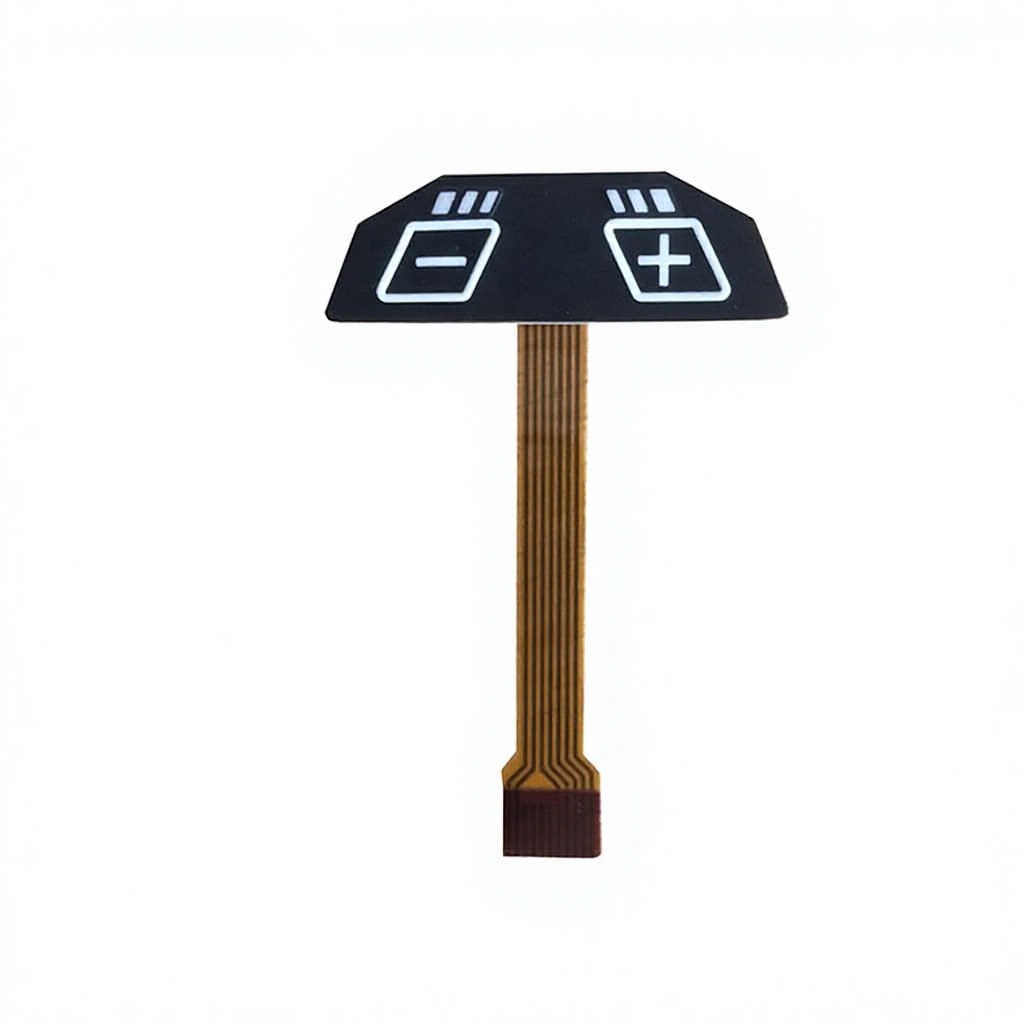
Multi-Layer Construction Printed Silver Circuit Graphic Overlay Keypad
Precision screen-printed silver flex traces, cross-over dielectric coatings, tail connector housing crimped with standard 2.54mm pitch.
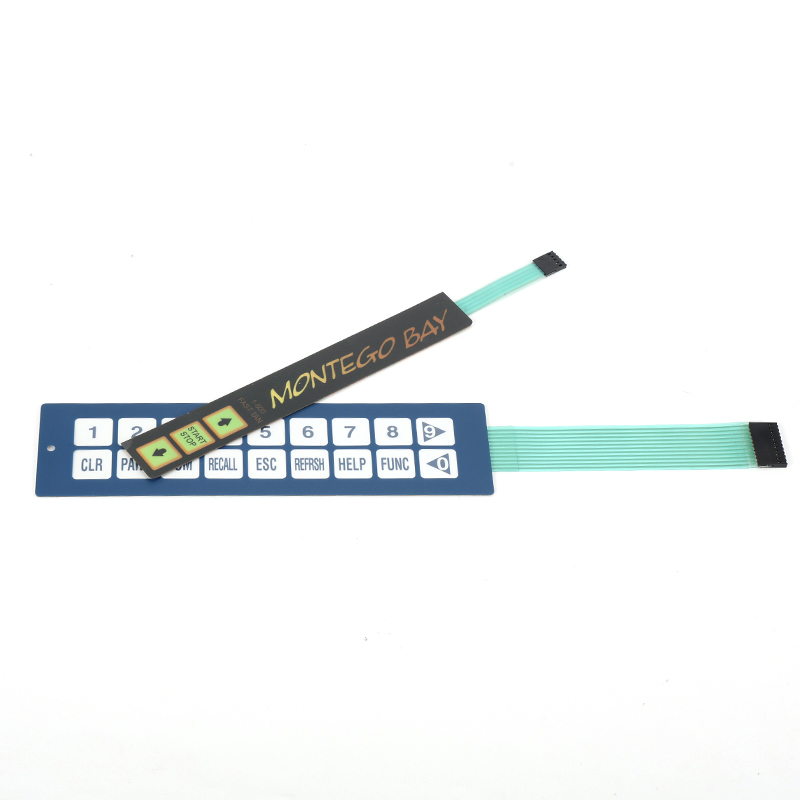
Long-Lasting High Durability Membrane Keypad for Electronics
UV-stabilized polycarbonate overlay, 5-million cycle fatigue strength, transparent display filter window with anti-glare scratch coating.
Why Global Tier-1 OEMs Audit & Partner With Us
Founded in 1996 in Changhe Industrial Park, Ningbo, ZIRA operates an integrated 3,000–5,000 m² cleanroom manufacturing facility. With nearly three decades of dedicated HMI manufacturing, we eliminate offshore supply risk through complete vertical process control.

In-House Vertical Manufacturing
Screen fabrication, color matching, CCD automated silkscreen printing, precision CNC die-cutting, embossing, and cleanroom lamination performed under one roof to protect intellectual property.
DFM & Substrate Physics Review
Our R&D engineers assess tail routing, bend radius, tactile snap ratios, and environmental exposure before cutting tooling, avoiding costly field revisions.
Audited by Industrial Leaders
Proud long-term Tier-1 & Tier-2 supplier to global automation titans such as ABB and Emerson, strictly complying with RoHS, REACH, and ISO 9001 quality standards.
Low MOQ & Global Logistics
Rapid engineering sampling starting from 1 piece for pilot builds. Full export support with DDP, FOB, CIF, or CIP Incoterms, serving North America, Europe, Oceania, and Latin America.
Subsurface Printed Graphic Overlay Architecture & Substrate Physics
In human-machine interfaces (HMI), a custom printed graphic overlay serves as both the aesthetic faceplate and the primary environmental barrier shielding internal electronics from fluid ingress, UV degradation, mechanical abrasion, and electrostatic discharge (ESD). Understanding the physical and chemical differences between substrate polymers and bonding adhesive chemistries is vital for long-term field reliability.
1. Substrate Selection: Polyester (PET) vs. Polycarbonate (PC)
Biaxially-Oriented Polyethylene Terephthalate (PET): Substrates like MacDermid Autotex® are the industry benchmark for demanding industrial and medical environments. PET exhibits exceptional flexural fatigue resistance—enduring well over 5,000,000 switch actuations without flex cracking. It resists aggressive solvents such as isopropyl alcohol, MEK, household bleach, and hydraulic fluids. PET is standard for embossed keys and perimeter sealed switches.
Polycarbonate (PC / Lexan™): Offers optical clarity, dimensional stability, and self-extinguishing flame resistance (UL94 V-0 or V-2 rated). It is economical and easily thermoformed or die-cut. However, PC is prone to micro-cracking under repeated mechanical flexing (<100,000 cycles) and is vulnerable to aromatic hydrocarbons. PC is recommended for rigid instrument bezels, flat non-tactile fascia, and high-impact industrial windows.
| Engineering Property | Autotex® Polyester (PET) | Lexan™ Polycarbonate (PC) | Rigid Cast Acrylic (PMMA) |
|---|---|---|---|
| Actuation Flex Life | > 5,000,000 switch cycles | < 100,000 switch cycles | Non-flexible (Static panels only) |
| Chemical Resistance | High (Alcohols, Cleaners, Acids, Oils) | Moderate (Vulnerable to solvents & ketones) | Moderate (Scratch prone without hardcoat) |
| Key Embossing Formability | Excellent (Pillow, Rim, Metal Dome snap) | Fair (Risk of stress whitening over time) | Not formable (Machined/Laser only) |
| Optical Haze / Anti-Glare | Textured fine/velvet < 1.5% gloss shift | High gloss / Matte available | Near 92% optical transmission |
| Flammability Rating | UL94 VTM-2 standard | UL94 V-0 / V-2 options | UL94 HB rated |
| Operating Temperature | -40°C to +105°C continuous | -30°C to +85°C continuous | -20°C to +70°C continuous |
2. Display Windows, Selective Texturing & Dead-Front Inks
To optimize readability of integrated LCD, OLED, vacuum fluorescent (VFD), or 7-segment LED readouts, graphic overlays employ optical treatments:
- Selective UV Texture Printing: Screen printing a UV-curable matte lacquer over selective areas creates fine-grain, scratch-resistant body surfaces while leaving display windows crystal clear with high optical clarity.
- Anti-Glare / Anti-Reflective (AG/AR) Hardcoats: Prevents specular reflections in outdoor sunlight while maintaining pencil hardness up to 3H.
- Dead-Front Graphics: Semi-transparent tinted inks hide status icons, alert legends, or numeric indicators until illuminated by high-output backlighting LEDs, giving control consoles a sleek, modern finish.
- Color Filtering Windows: Red, green, or smoke translucent window tints optimize contrast ratios and eliminate optical bleed from background PCB componentry.
3. Adhesive Dynamics & Surface Energy Bonding
Adhesive failure causes panel buckling, fluid intrusion, and switch malfunction. ZIRA specifies genuine 3M™ transfer tapes based on enclosure substrate surface energy:
- High Surface Energy (HSE) Substrates: For metals (aluminum, stainless steel) and ABS/PC plastic housings, 3M 467MP (2 mil) and 3M 468MP (5 mil) high-performance acrylic adhesive (200MP family) deliver high shear strength, peel adhesion, and resistance to slippage under temperature swings from -40°C to 150°C.
- Low Surface Energy (LSE) Substrates: For powder-coated metals, polyethylene (PE), and polypropylene (PP) enclosures, 3M 300LSE or 3M 9472LE modified acrylic adhesive provides immediate wet-out, preventing edge lifting even in humid outdoor environments.
Future Trends in Printed Graphic Overlays & HMI Panels
Procurement teams and design engineers are adapting to evolving smart device expectations, miniaturization, and sustainability targets. Here are the shifts defining modern graphic overlay manufacturing.
Antimicrobial Surface Formulations
With stringent post-pandemic clinical regulations, medical device OEMs require permanent antimicrobial film treatments (e.g., silver-ion impregnated coatings) that inhibit MRSA, E. coli, and fungal colonies per ISO 22196, surviving hospital-grade quaternary disinfectants.
Capacitive ITO & Solid-State HMI
Transitioning from mechanical domes to solid-state capacitive touch sensors on transparent conductive ITO films. This eliminates mechanical fatigue, creating completely sealed IP69K washdown surfaces suitable for commercial food processing and sterile laboratories.
Light Guide Film (LGF) & Micro-LEDs
Bulky backlights are being replaced by micro-etched Light Guide Films (LGF) fed by side-firing surface mount LEDs. This yields uniform keycap illumination with stack-ups thinner than 0.8mm, cutting power draw by up to 60% in battery-powered field instruments.
Hybrid Digital-Screen Manufacturing
Modern production combines the color gradations and short-run speed of high-resolution digital flatbed inkjet printing with the high opacity, conductive silver, and selective UV hard-coat durability of industrial screen printing—optimizing both NPI iterations and high-volume costs.
In-Mold Electronics (IME) Integration
The convergence of thermoforming, functional screen-printed circuits, and injection molding. Graphic overlays are no longer just flat stickers—they are molded into structural, 3D curved bezels with embedded tactile feedback, lightening assemblies and simplifying supply chains.
Eco-Compliant Bio-PET & Halogen-Free Inks
Global carbon taxation and ESG mandates require suppliers to transition toward bio-based PET films and non-solvent UV-curable dielectric inks, supporting RoHS 3, REACH SVHC, and halogen-free low-VOC electronics production standards.
Frequently Asked Questions by Sourcing & Hardware Engineers
Key technical and supply chain clarifications to assist your DFM audits, RFQ drafting, and production tool preparation.
What engineering files are required to initiate an RFQ?
We accept vectorized 2D artwork in Adobe Illustrator (.AI), CorelDRAW (.CDR), or Vector PDF, with exact Pantone Matching System (PMS) or RAL color codes. For dimensional cutouts, embossing locations, display window outlines, and tail routing, please provide 1:1 scale DXF or DWG CAD files.
What dimensional tolerances can ZIRA hold on die-cut overlays?
Using precision steel-rule tooling, our standard tolerance is ±0.20 mm (±0.008"). For fine-pitch instruments and tight enclosure recesses, our laser cutting and hard-tooled CNC punch tooling achieve tolerances down to ±0.05 mm (±0.002"), with optical CCD print-to-cut registration.
What is the standard prototype turnaround and minimum order quantity?
We support prototyping and NPI pilots from as few as 1 to 5 pieces using digital flatbed cutting and direct film printing. Standard production orders typically start at 100 units. Prototype physical samples are dispatched within 3 to 7 working days following digital artwork sign-off.
How does ZIRA protect graphic overlays against ESD and EMI?
We integrate solid aluminum foil shielding, screen-printed conductive carbon/silver ground grids, or ITO-coated transparent films within the multi-layer stack-up. These shields are terminated directly to ground tabs or the interface tail to deflect high-voltage electrostatic discharge up to 15kV.
What embossing styles are available for tactile key feedback?
We offer pillow embossing (entire key area raised uniformly), rim/perimeter embossing (a clean tactile ridge framing the perimeter), dome embossing, and customized braille/logo embossing. Hydroforming and heated CNC male/female metal dies provide sharp retention and uniform tactile snap ratios.
How is ink adhesion and chemical endurance validated?
All printed lots undergo Cross-Hatch Tape Adhesion Testing according to ASTM D3359 standards, Taber Abrasion testing, and chemical rub immersion resistance tests against isopropyl alcohol, acetone, synthetic sweat, and industrial disinfectants to guarantee graphics will not lift or delaminate.
