Featured Industrial Membrane Keypad Assemblies
Explore our custom OEM solutions featuring tactile metal domes, LED backlighting, IP67 seals, and chemical-resistant PET overlays.
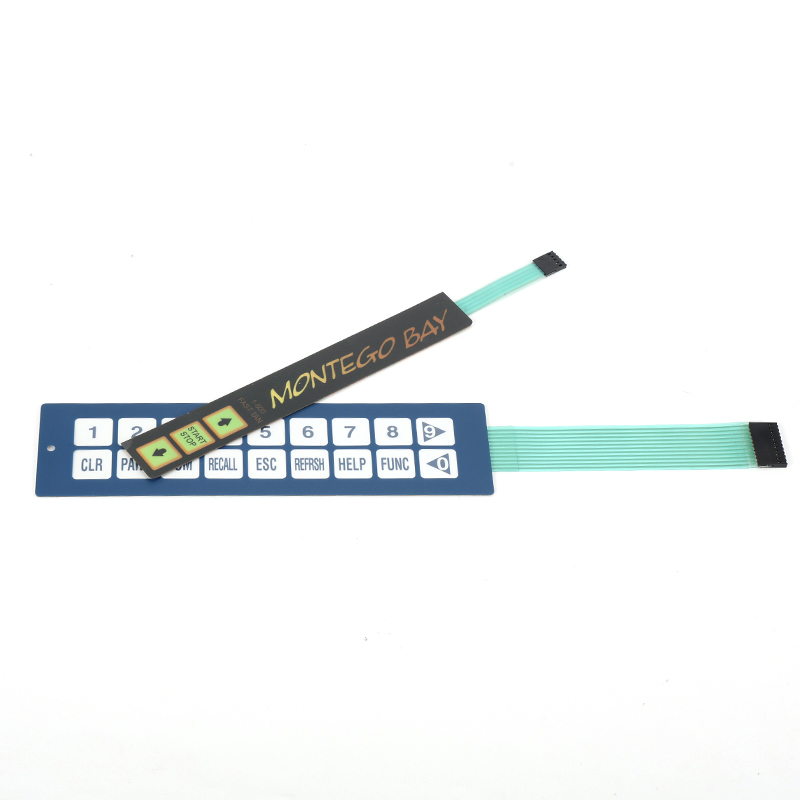
Long-Lasting High Durability Membrane Keypad for Electronic Appliances & Devices
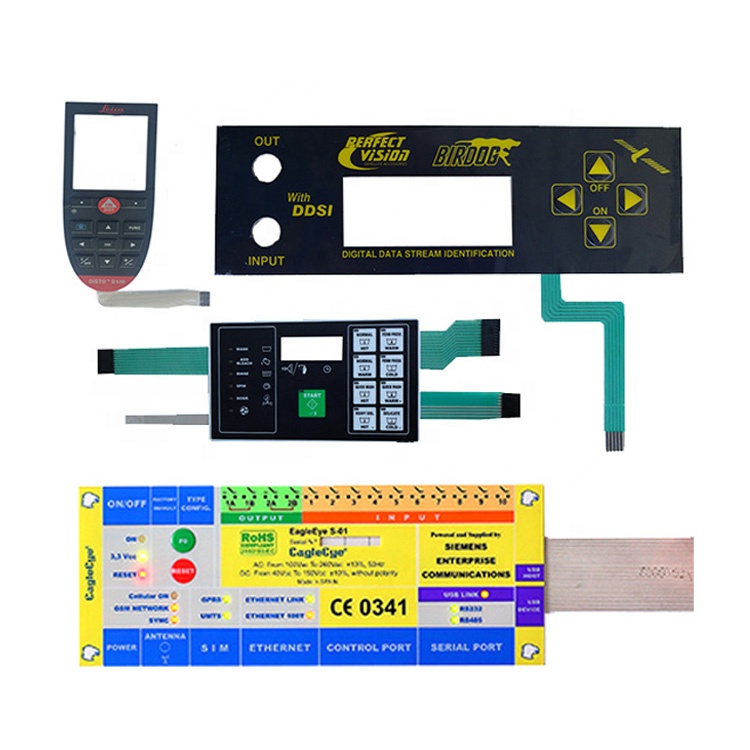
Waterproof Industrial Membrane Panel with Shock Resistance Feature Membrane Switch
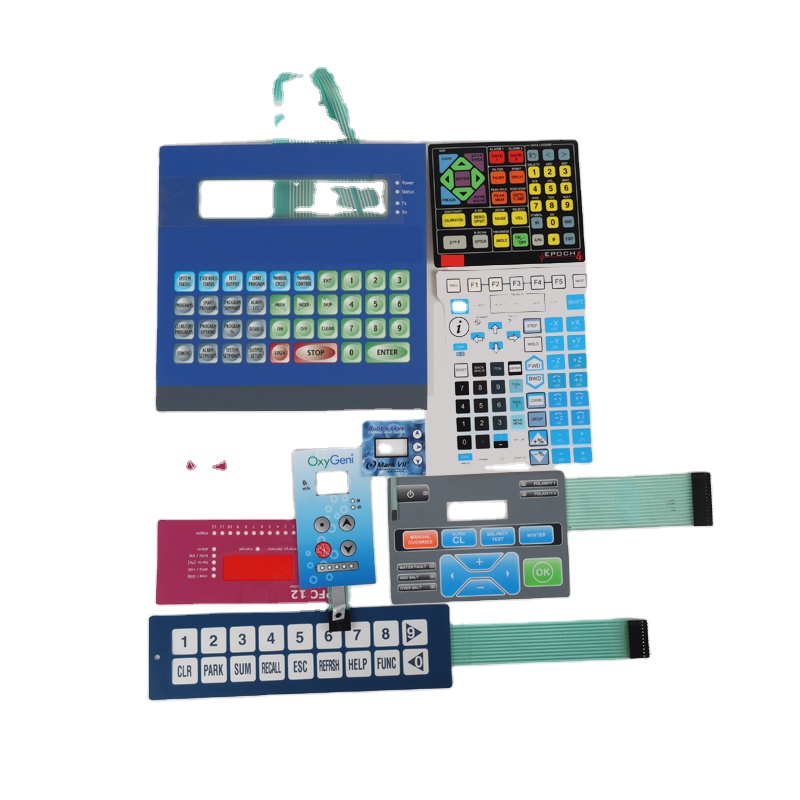
Custom Membrane Switch Medical Device Keypad Durable Medical Grade Polyester PET
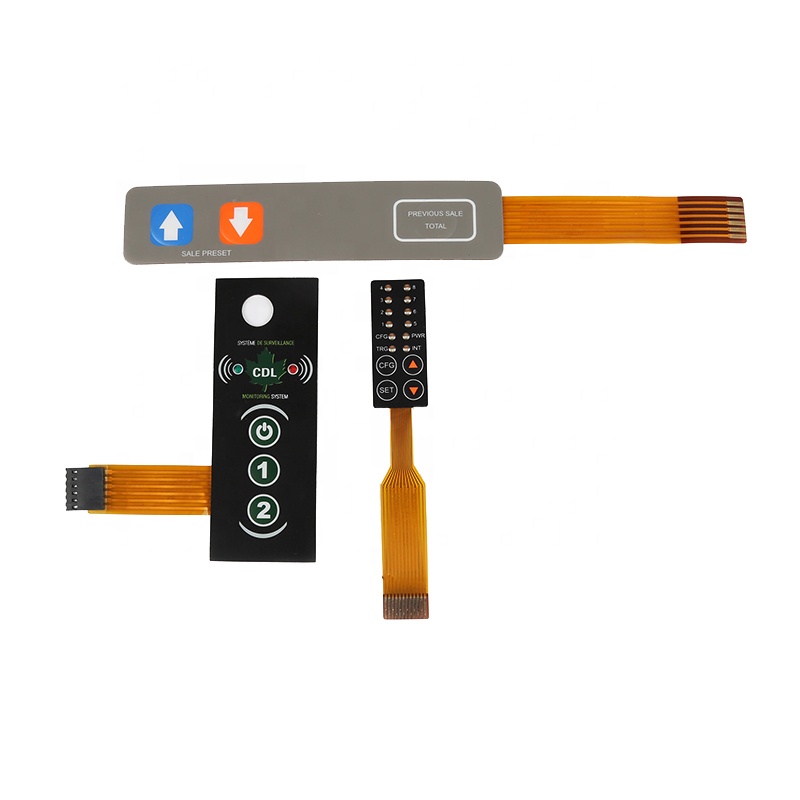
Waterproof Capacitive Touch Membrane Switch with Customizable Color and Texture
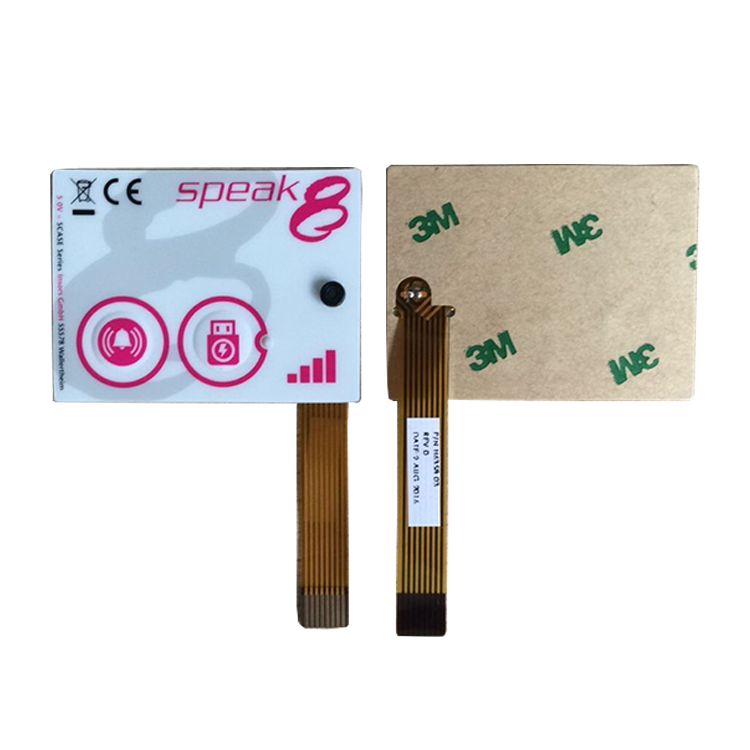
Custom Silk Screen Printing Flexible Thin Film Keypad Push Button Switch
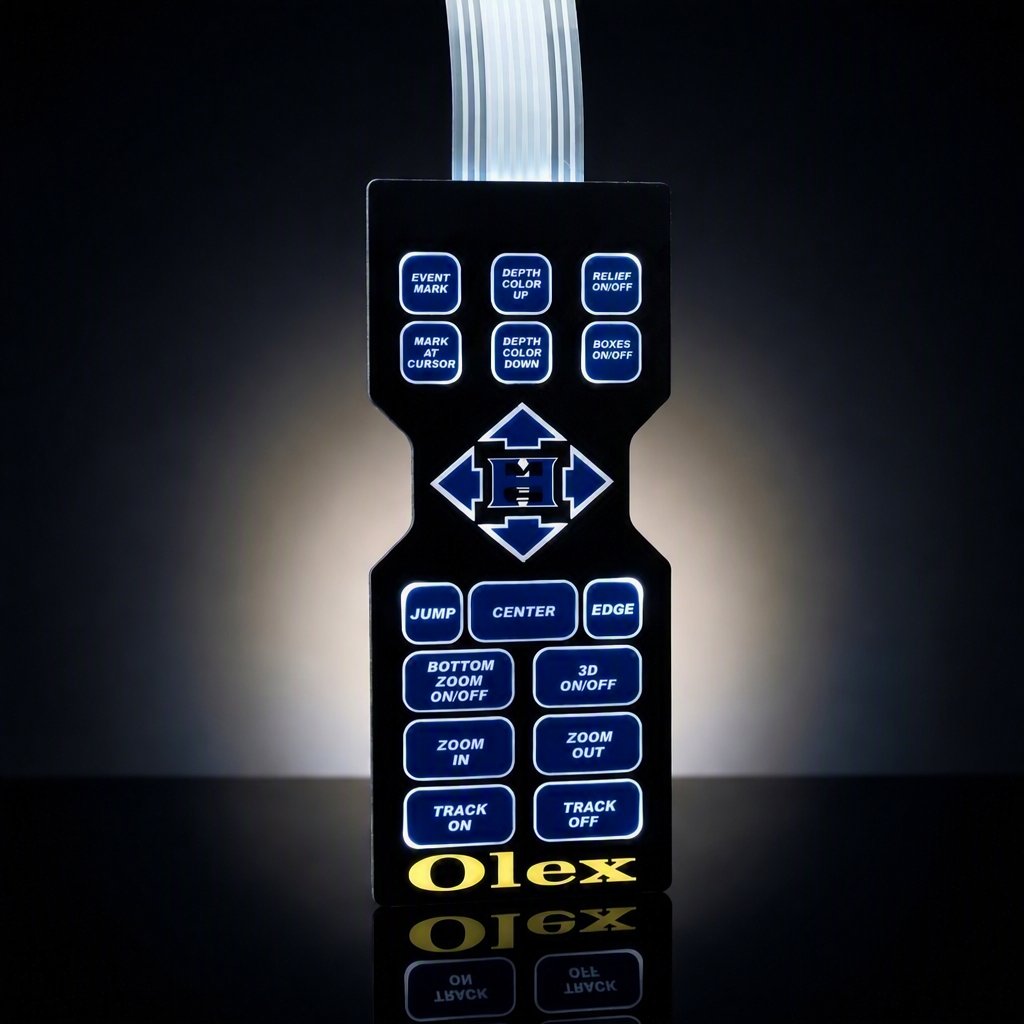
Free Backlight Simulation & Light Guide Design Customized Backlight Keyboard
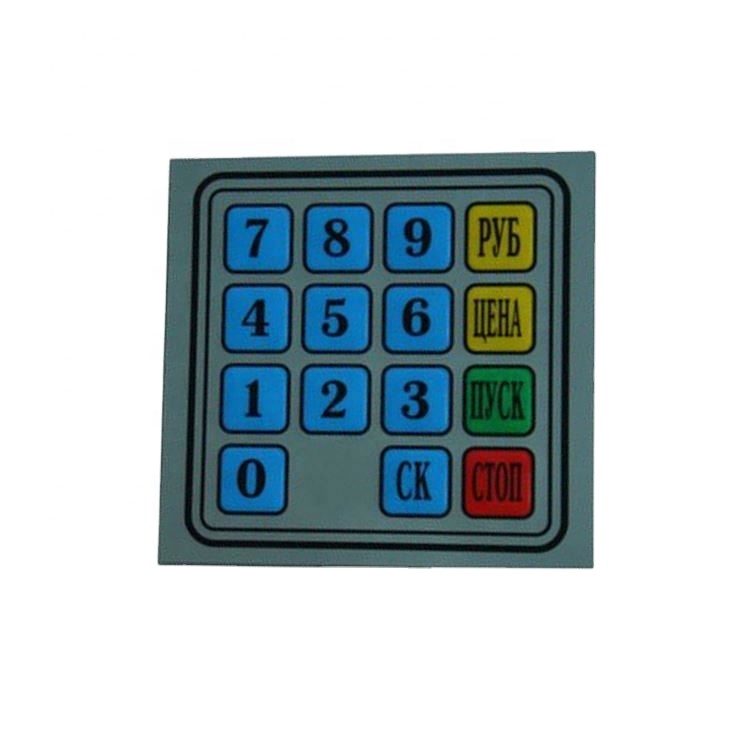
Membrane Switch Keypad with Rubber Buttons Layout MCU Expansion DIY Keyboard
Custom LED EL Backlit Membrane Switch Keypad Uniform Light Guide LGF FPC Control
Anatomy of an Industrial-Grade Membrane Keyboard
In modern industrial control, Human-Machine Interfaces (HMIs) must withstand continuous mechanical actuation, aggressive chemical washdowns, extreme temperature swings, and electromagnetic interference (EMI). Here is how precision layer engineering guarantees zero-defect operation.
Graphic Overlay & Substrates
Utilizing premium Biaxially Oriented Polyethylene Terephthalate (PET) like MacDermid Autotex XE or Sabic Lexan Polycarbonate (PC). Autotex PET offers over 5 million actuation cycles without flex fatigue, exceptional chemical resistance against hydraulic fluids, alcohols, and caustic cleaning agents, and UV-resistant hardcoats for outdoor exposure.
Tactile Element Integration
Engineered with high-grade 301 Stainless Steel Snap Domes (120g to 450g actuation force) or molded Poly-domes. Provides sharp tactile feedback ("snap ratio" of 40-60%), reducing operator input error in noisy factory floors. Optional gold/silver plating ensures contact resistance remains < 1.0 Ohm across lifespan.
Circuit Layers & Connectors
Conductive silver/carbon inks screen-printed onto stabilized PET or polyimide Flexible Printed Circuits (FPC). Integrated with ESD shielding layers (aluminum foil or silver grid) to withstand 15kV electrostatic discharges. Tails terminated with pitch-standard 2.54mm or 1.0mm ZIF female/male connectors.
Why Global Tier-1 OEMs Trust Zhejiang ZIRA
Founded in 1996 in Ningbo, Zhejiang ZIRA Membrane Switch Co., Ltd. operates a 5,000 m² cleanroom manufacturing facility verified onsite by Intertek. We deliver end-to-end custom keypad solutions for global leaders like ABB and Emerson.
Intertek Onsite-Verified Quality Control
Our facility holds full third-party verification for manufacturing infrastructure, cleanroom environmental management, and strict compliance with ISO9001:2015, RoHS, and REACH directives. Every custom membrane switch undergoes 100% automated electrical testing for continuity, short circuits, insulation resistance (>100MΩ at 250V DC), and LED luminosity before shipment.
Full In-House Tooling & Prototyping
By eliminating third-party sub-assembly, ZIRA controls costs and guarantees rapid DFM turnaround. From rapid 3D light-guide film (LGF) simulation and color-matching under D65 standard illuminants to high-precision laser die-cutting and silk-screen printing, we take projects from CAD/vector artwork to physical sampling in as fast as 5 business days.
Future Procurement & Technology Trends (2025–2030)
Keypad procurement is shifting from standalone electromechanical switches toward unified, intelligent, and highly sealed HMI modules. Procurement directors should consider these evolving standards when drafting OEM specifications.
1. Hybrid Capacitive Touch & Tactile Integration
Modern medical devices and cleanroom automation are transitioning from purely mechanical domes to hybrid ITO (Indium Tin Oxide) film capacitive touch keys combined with haptic force feedback. This eliminates all mechanical seams, enabling completely flat, wipe-down glass/PET surfaces with IP69K high-pressure washdown performance.
2. Precision Light Guide Film (LGF) Backlighting
Traditional discrete surface-mount LEDs often create uneven hot spots. Next-generation procurement specs demand ultra-thin (0.125mm to 0.25mm) LGF layers. LGF channels light from perimeter side-firing LEDs uniformly across all key legends and status windows, reducing power consumption by up to 60% while preserving a sleek, slim enclosure thickness.
3. Transition to FPC Substrates & SMT Components
While screen-printed silver ink on PET remains economical, harsh vibration environments (military, heavy machinery, automotive diagnostic tools) increasingly specify Polyimide Flexible Printed Circuits (FPC). FPC allows ultra-fine pitch trace routing (up to 0.1mm) and direct surface mounting of microcontrollers, resistors, and sensors directly on the keypad circuit layer.
Material Selection Benchmark Table for OEM Buyers
| Performance Feature | Autotex Polyester (PET) Overlay | Polycarbonate (PC) Overlay | Silicone Rubber Keymat Hybrid |
|---|---|---|---|
| Flex Fatigue Life (Actuations) | > 5,000,000 cycles | ~ 100,000 - 500,000 cycles | > 1,000,000 cycles |
| Chemical Resistance | Exceptional (Alcohols, Oils, Acids) | Moderate (Prone to crazing with harsh solvents) | High (When treated with PU/UV hardcoat) |
| Operating Temperature Range | -40°C to +85°C | -30°C to +105°C | -55°C to +200°C |
| Tactile Feel & Key Travel | Flat, Pillow / Rim Embossed (0.3-0.5mm) | Flat or Shallow Embossed | High 3D Ergonomic Travel (1.0-2.5mm) |
| UV Outdoor Weatherability | Excellent (XE Grade treated) | Moderate (Requires UV stabilizers) | Excellent |
| Recommended Industry | Medical, Industrial Machinery, Outdoor Panels | Indoor Appliances, Low-cost Displays | Rugged Handhelds, Defense, Marine Terminals |
Industrial Keypad Procurement & Engineering FAQ
Direct answers from our engineering desk regarding lead times, CAD file submissions, waterproofing, and custom manufacturing parameters.
What artwork and CAD file formats are required to initiate a custom membrane keyboard quote?
To provide an accurate engineering evaluation and quote within 24 hours, please supply vector artwork files for graphic overlay printing (Adobe Illustrator .AI, Vector .PDF, CorelDraw .CDR, or EPS) with color references specified in Pantone (PMS) or RAL. For internal circuit layout and mechanical dimensions, send DXF, DWG, or STEP files indicating tail lengths, pitch, connector types, and dome locations.
How do you guarantee an IP67 or IP68 waterproof rating for outdoor or medical membrane panels?
Waterproof sealing is achieved through a continuous perimeter gasket constructed from medical-grade 3M acrylic foam tapes (e.g., 3M 467MP, 3M 468MP, or 3M VHB). By isolating the interior circuit cavity and venting internally or through filtered moisture-barriers, liquid ingress is fully prevented even under high-pressure cleaning or submersion up to 1 meter depth.
What is the minimum order quantity (MOQ) and standard prototype delivery time?
Zhejiang ZIRA offers flexible OEM trial support. Custom functional prototypes can be produced from as low as 1 piece up to 10 pieces for initial client engineering validation. Typical prototype lead time is 5 to 7 working days upon design approval. Standard mass production runs generally start at 100 to 1,000 pieces with lead times averaging 12 to 18 working days.
What is the difference between Flexible Printed Silver Circuits (PET) and Flexible Printed Circuits (FPC)?
Silver PET circuits use screen-printed conductive silver and carbon inks on thin polyester film. They offer a highly cost-effective solution suitable for standard pitch layouts (2.54mm pitch) and low power applications. FPC circuits use etched copper traces on flexible Polyimide film. FPC supports fine-pitch connectors (0.5mm / 1.0mm), dense trace routing, higher current carrying capacity, and direct surface mounting (SMT) of micro-LEDs, microcontrollers, and active components with superior resistance to severe vibration.
How are electrostatic discharge (ESD) and electromagnetic interference (EMI) mitigated?
To prevent system resets or CPU damage caused by static charges from human touch, we integrate a dedicated ground layer into the stack-up. This consists of either a screen-printed conductive silver grid or a continuous aluminum foil shield connected directly to earth ground. This layer blocks ESD impulses up to 15kV and attenuates EMI radiation in sensitive field instruments.
Accelerate Your Custom HMI Project Today
Send your CAD drawing or technical specification to our Ningbo engineering team. Receive a full DFM stack-up analysis, material recommendation, and rapid prototype schedule within 24 hours.
