Precision HMI Keypads & Integrated Control Subsystems
Manufactured by Zhejiang ZIRA Membrane Switch Co., Ltd. (Founded 1996). Fully customizable layer architecture, selective embossing, light guide film integration, and hermetic perimeter seals optimized for industrial, medical, and mission-critical controls.
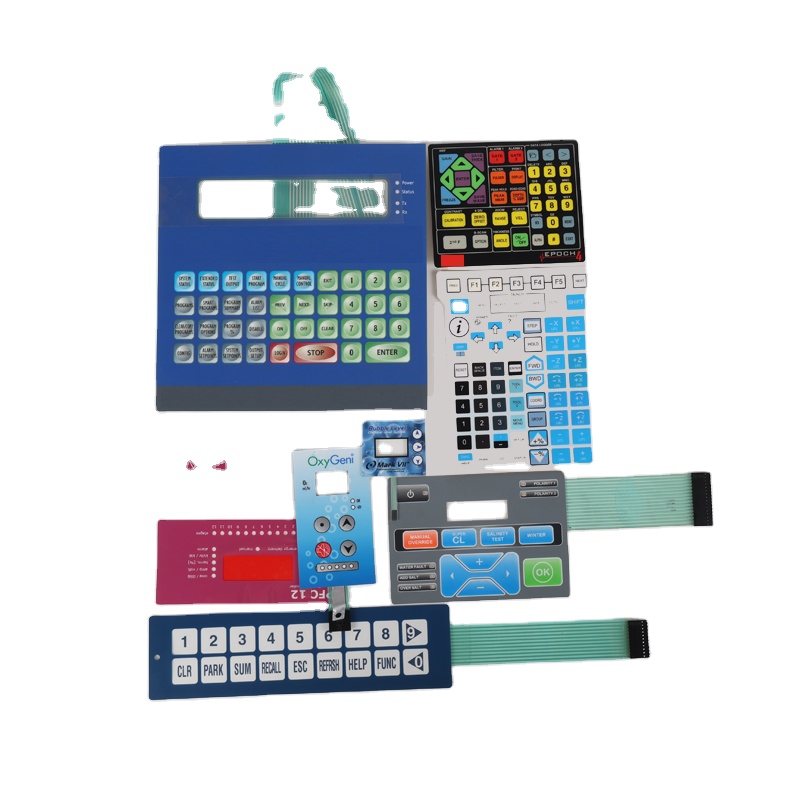
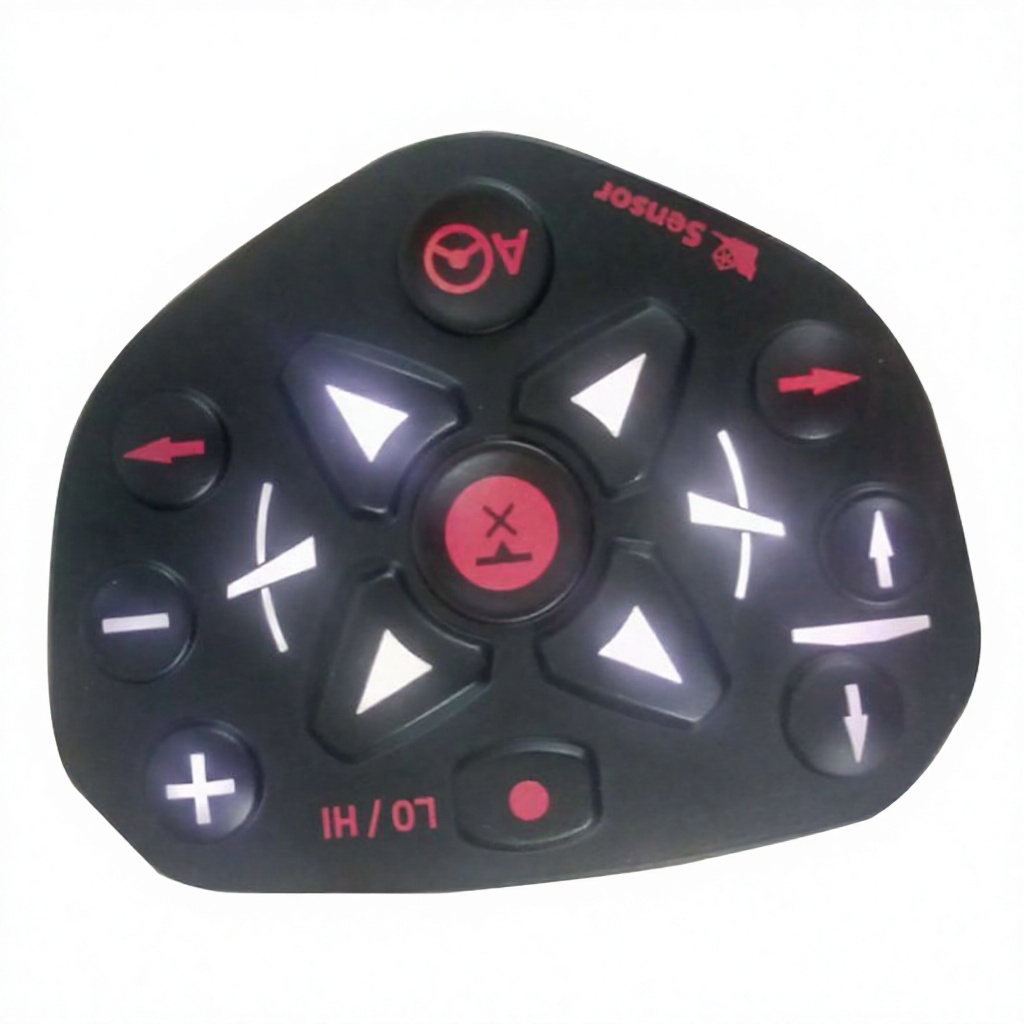
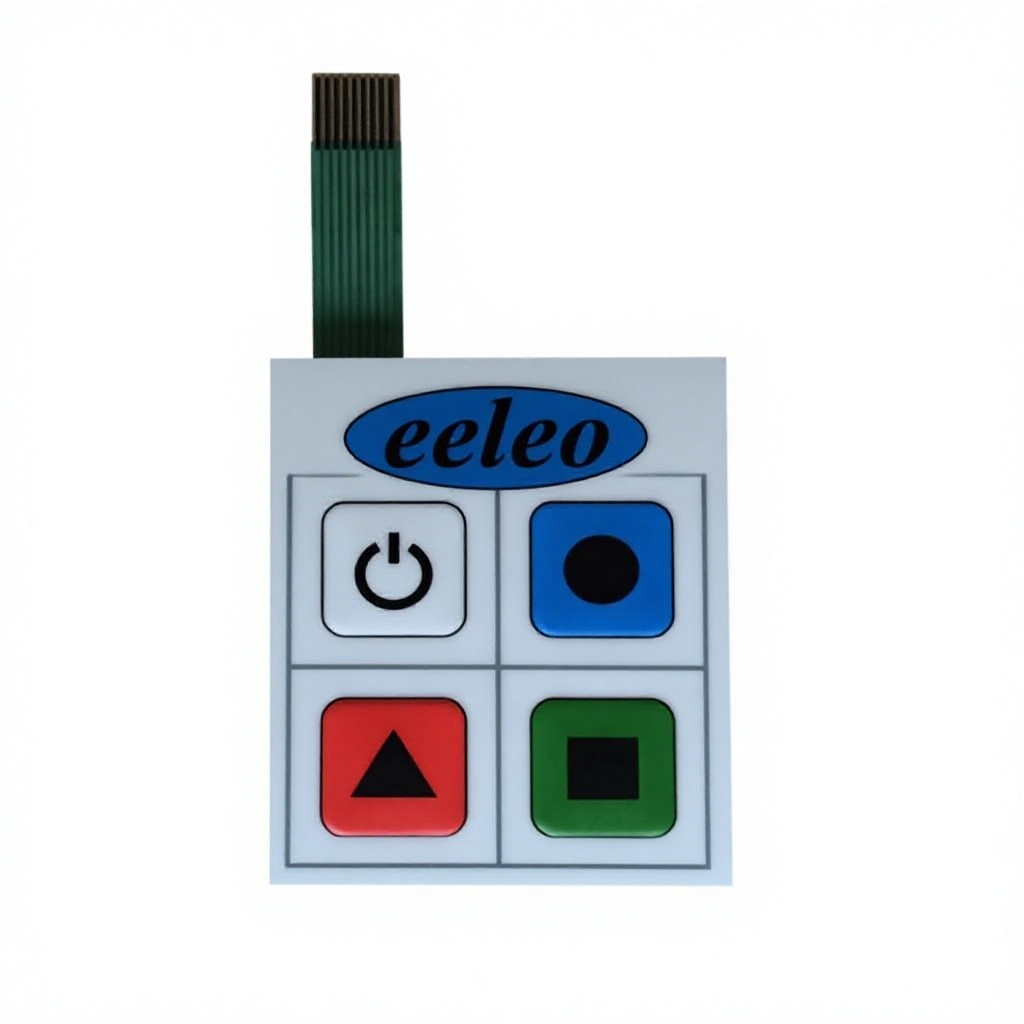
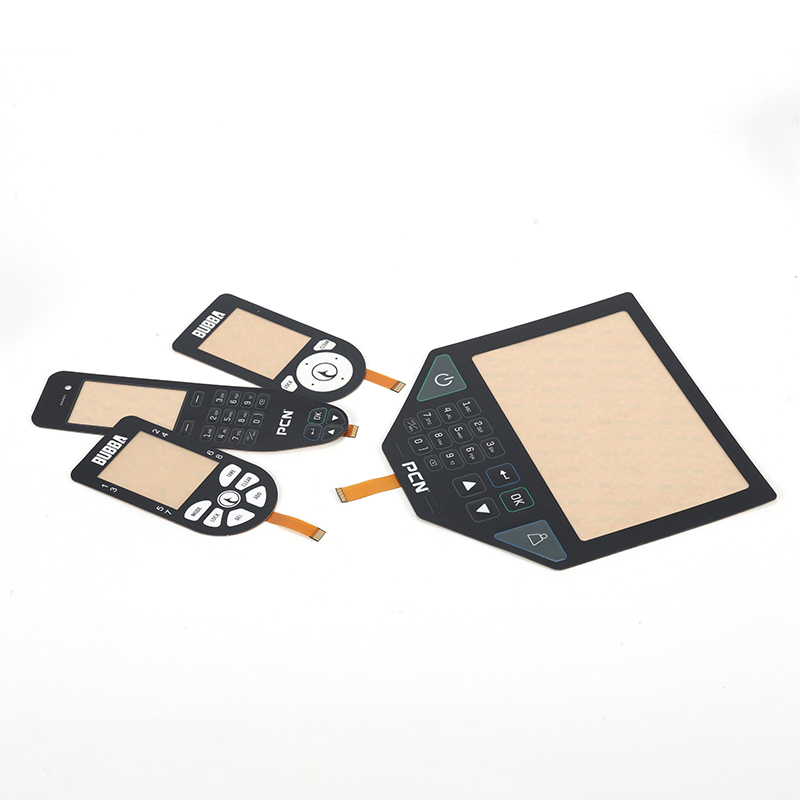
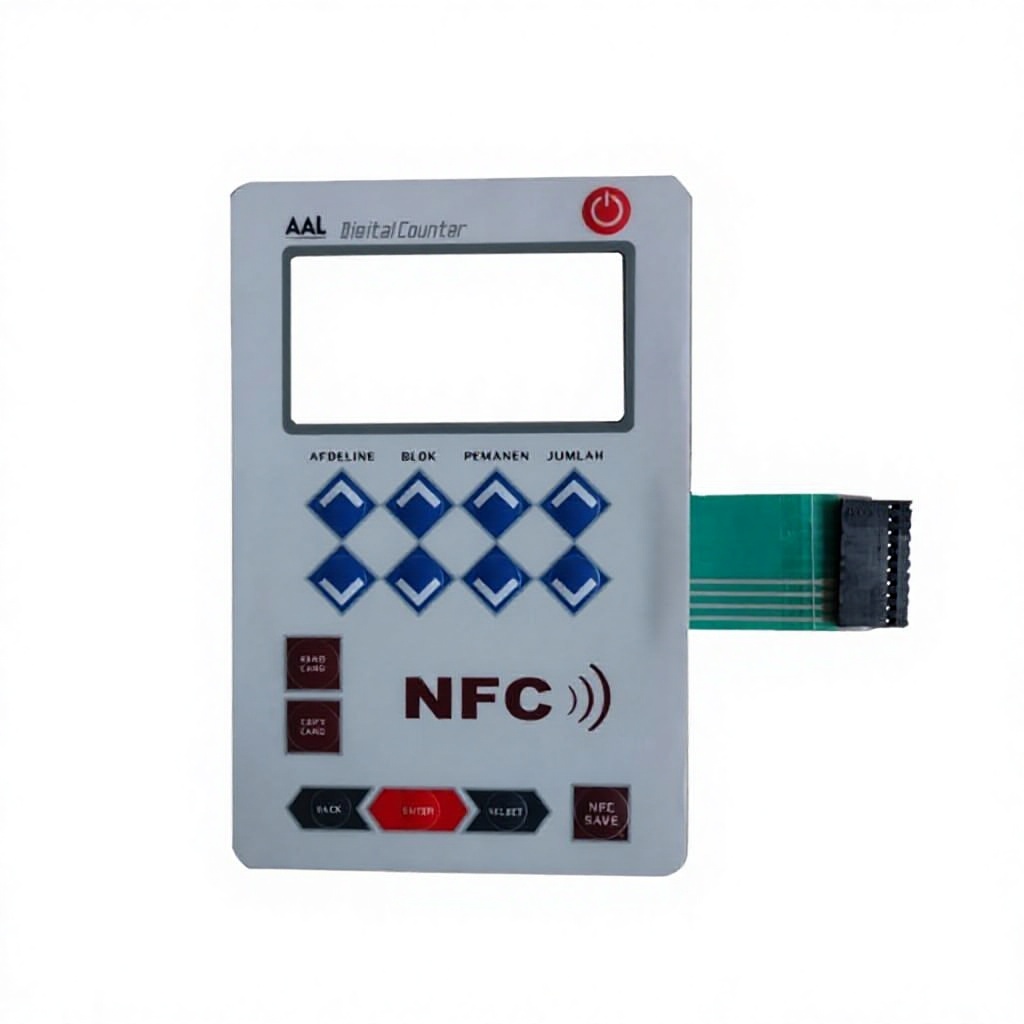
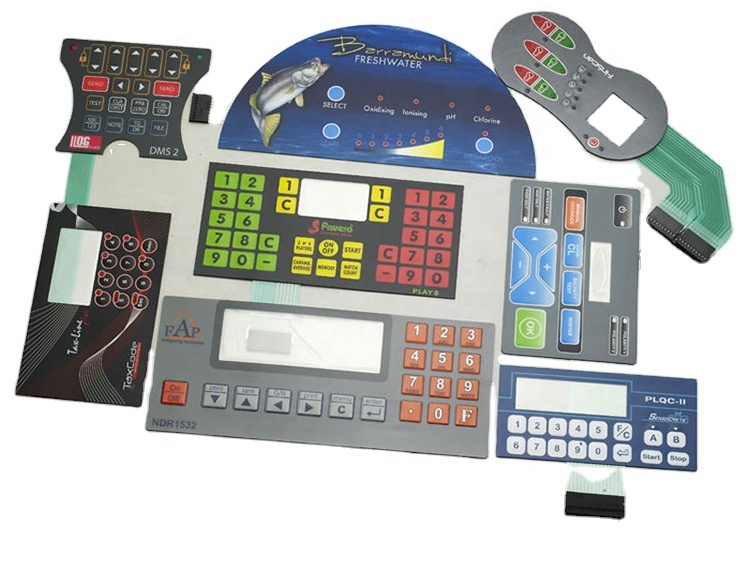
Need custom dimensions, tail lengths, or embedded surface-mount components?
Request Custom Engineering Spec SheetWhy Tier-1 Industrial OEMs Partner with ZIRA Factory
A Human-Machine Interface (HMI) keypad is not merely a cosmetic faceplate; it represents the primary physical touchpoint determining user safety, machine response time, and environmental sealing. Since 1996, Zhejiang ZIRA Membrane Switch Co., Ltd. has delivered turnkey engineering support, from initial DFM analysis to volume manufacturing in Changhe Industrial Park, Ningbo.
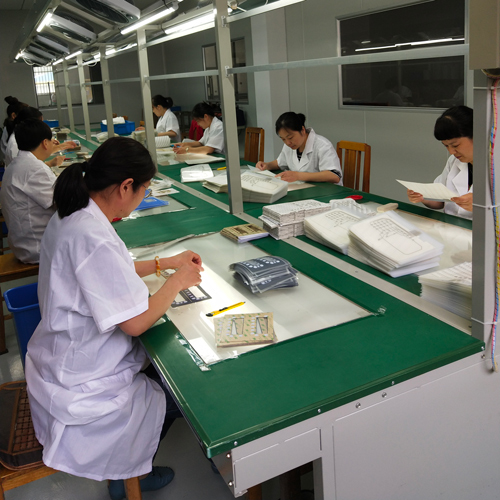
Full-Chain In-House Tooling, Printing & Environmental Lamination
Unlike broker intermediaries, our Ningbo facility controls the entire lifecycle under one roof. Tooling dies, film post-baking ovens, optical screen printers, convex key embossing presses, automated laser cutting machines, and automated terminal crimpers are operated by technicians with decades of specialized micro-circuit experience.
From single-prototype R&D proof-of-concept units to containerized mass production, our quality gates enforce zero tolerance for open circuits, intermittent micro-shorts, ink delamination, or tactile fatigue degradation.
Schedule Engineering Technical Audit
Intertek Onsite Audit
Legal standing, plant capacity, production line safety, and QC stations independently verified and logged on global trade registries.

29+ Years Dedicated HMI
Continuous operation since 1996 serving the world's most demanding telemetry, defense, medical, and process automation leaders.

Comprehensive ODM Support
Custom circuit layout, snap force tuning (180g - 450g), dead-front LED calibration, and schematic routing from your STEP/CAD drawings.

100% Quality Conformance
Every individual trace, connector terminal, contact resistance, and tactile dome inspected prior to clean packaging and dispatch.
Engineering Decision Matrix: Substrates, Conductive Traces & Actuators
Selecting the optimal material stack determines long-term field survivability under thermal cycling, solvent washdowns, UV exposure, and millions of actuations. Review our factory baseline engineering parameters:
| Architecture Component | Material / Option Selected | Key Operational Specifications | Optimal Environmental Match |
|---|---|---|---|
| Graphic Overlay Film | Autotex / MacDermid PET Film (F150 / V150) | Chemical resistance against ketones/alcohols, >5M flex cycles, 0.125mm - 0.200mm thickness | Medical instruments, outdoor agriculture, industrial controllers subject to harsh disinfectant wipe-downs |
| Economy Overlay Film | Lexan Optical Polycarbonate (8010 / 8A35) | Exceptional optical clarity, flame retardant (UL94 V-2), high dimensional stability, crisp embossing | Commercial indoor appliances, HVAC thermostats, audio consoles, consumer electronic keypads |
| Flexible Conductive Circuit | Screen-Printed Silver Ink on Stabilized PET | Trace resistance < 1Ω/cm, dielectric cross-overs > 50MΩ at 100V DC, flexible loop bend > 180° | Standard cost-effective membrane keyboards, domestic smart devices, instrumentation telemetry |
| High-Reliability Circuit | Polyimide Flexible Printed Circuit (Copper FPC) | 0.5oz - 1oz rolled annealed copper, micro-pitch SMT LEDs and IC components, zero silver migration | Aerospace cockpits, automotive under-hood diagnostic tools, surgical equipment requiring extreme stability |
| Tactile Actuator Core | Nickel/Gold-Plated Stainless Steel Metal Domes | Actuation force 220g - 420g, trip force snap ratio > 50%, tactile life > 1,000,000 operations | Rugged handheld terminals, high-vibration machinery interfaces, gloved industrial operations |
| Non-Tactile / Flat Keys | Direct Screened Conductive Spacer Voids | Zero stroke distance (< 0.15mm), silent actuation, ultra-flat aesthetic profile, infinite fatigue life | Cleanroom sterile panels, flat laboratory analytical analyzers, food processing washdown stations |
| Backlighting Subsystem | Side-lit LGF (Light Guide Film) with SMT Diodes | Light guide thickness 0.15mm - 0.25mm, uniform lux distribution, low power consumption (< 20mA) | Low-light defense keypads, marine chart plotters, night-shift intensive mining control cabins |
| Adhesive Lamination | 3M 467MP / 468MP / 300LSE / 9448A Adhesive | Shear adhesion up to 150°C, high peel strength on low-surface-energy (LSE) powder-coated plastics | Cast aluminum enclosures, stainless steel machine chassis, polycarbonate molded bezels |
Hermetic Moisture Barriers & IP67 Sealing
Traditional membrane switches fail in high-humidity or condensation cycles when moisture penetrates the vented spacer layer. Our factory utilizes continuous gas-tight perimeter ring seals and Gore-Tex breathing membranes that equalize atmospheric barometric pressure while locking out liquids, industrial washdowns, and saline aerosols.
Consult Sealing EngineersSilver Migration Prevention & Carbon Overprinting
In silver-printed traces subjected to continuous DC voltage biases in humid ambient operating environments, silver ions can migrate through damp polymer matrices, creating catastrophic micro-shorts. ZIRA prevents dendritic growth by applying a full protective carbon graphite ink encapsulation over all silver conductors.
Review Circuit ReliabilityEMI / RFI & Static Discharge (ESD) Shielding
Modern industrial equipment generates intense electromagnetic fields from variable frequency drives (VFD) and induction motors. We integrate either selective vapor-deposited aluminum foil layers or cross-hatched conductive carbon/silver grid grounding planes directly routed to ground pins, preventing ESD arcs up to 15kV.
Request Shielding SchematicsStrategic OEM Procurement Trends in HMI Manufacturing
Global supply chain managers, procurement executives, and hardware product directors are transitioning from simple piece-price cost hunting to holistic Total Cost of Ownership (TCO) evaluation. Understanding these structural purchasing vectors guarantees supply security and competitive margin protection.
1. Consolidation from Component to Integrated Sub-Assemblies
Global equipment assemblers no longer want to source a membrane switch from vendor A, a stamped aluminum backplate from vendor B, and an elastomer gasket from vendor C. Procuring fully validated sub-assemblies—where the HMI keypad is already mechanically laminated to a rigid CNC aluminum plate or molded bezel with display windows and integrated connectors—reduces assembly station cycle times by up to 45% and eliminates finger-pointing over dimensional tolerance stack-up errors.
2. Low-Volume High-Mix (LVHM) Sourcing Agility
While consumer electronics order runs run in the millions, specialized industrial, military, and med-tech instruments require flexible manufacturing structures capable of delivering batches between 100 and 5,000 units economically. Forward-looking OEM factories utilize digital plotting, laser cut prototyping, and modular screen tooling to amortize NRE tooling expenditures, enabling customers to initiate pilot launches without absorbing crushing initial capital commitments.
3. Rigorous Supply Chain Due Diligence & REACH/RoHS Audits
Global import compliance across the European Union and North America mandates strict environmental tracking. Tier-1 buyers demand batch-level material certifications verifying that printing inks, solvent carriers, structural adhesives, and plasticizers are completely free of banned phthalates, heavy metals, and per- and polyfluoroalkyl substances (PFAS). Partnering with an Intertek-audited factory with established raw material traceability avoids catastrophic customs seizures.
4. Rapid Prototyping Coupled with Real-World DFM Iterations
Shrinking product introduction cycles require prototype turnaround times under 7 business days. Advanced OEM factories now combine rapid laser-cut steel rule dies with UV direct-to-substrate digital printing for initial aesthetic reviews. This allows design engineering teams to test mechanical key travel, tactile snap ratio feedback, and LED backlighting uniformities before freezing high-volume steel tooling sets.
5. Dual-Sourcing Risk Mitigation & Direct-to-Factory Transparency
Following historical logistics disruptions, Western procurement directors are deliberately unwinding bloated multi-tier trading company markups in favor of direct communication with the engineering floor in Zhejiang. Direct factory partnerships eliminate telephone-game specification distortions, expedite engineering revision loops, and yield structural unit cost savings of 20% to 35% without compromising technical standards.
6. High-Durability Sustainable Chemistry Implementations
Environmental standards increasingly demand sustainable life cycles. This trend includes bio-based polycarbonate alternatives, closed-loop ink drying solvent recycling systems, and ultra-high-durability PET overlays engineered to survive decades of continuous use without micro-cracking. Longevity directly correlates with reduced e-waste and lower warranty recall liabilities for global OEM equipment brands.
Submit your current bill-of-materials (BOM) or 2D/3D CAD drawings for a comprehensive DFM cost analysis.
Future Development Trends: The Evolution of Next-Generation HMI Keypads
The human-machine interface sector is witnessing unprecedented technological convergence. The boundary between physical membrane switches, touchscreens, and smart electromechanical controllers is dissolving rapidly. Here are the core development horizons driving new hardware products.
Capacitive Sensing & Physical Tactile Hybridization
Pure capacitive touchscreens offer modern sleekness but lack tactile confirmation, leading to hazardous operator errors in high-stress medical or industrial environments. Next-generation designs merge printed capacitive ITO sensor fields with physical metal dome actuators underneath, providing water-tolerant proximity wake-up functionality alongside affirmative physical feedback.
Key Application: Surgical control panels where accidental touches must be blocked until positive physical mechanical pressure is registered.
Light Guide Film (LGF) & Micro-Dot Matrix Backlighting
Bulky, power-hungry traditional LED arrays that cause hot-spotting are rapidly giving way to ultra-thin optical micro-grooved Light Guide Films (LGF). By coupling side-firing sub-miniature 0603/0402 LEDs with computer-calculated laser etched refraction dots, our factory achieves uniform light distribution across complex icons with a profile thickness of less than 0.25mm.
Key Application: Handheld military communications gear and battery-powered portable ultrasound machines demanding ultra-low power consumption.
Embedded Smart Interfaces: CAN Bus, I2C, SPI & USB
Rather than outputting complex, high-pin-count matrix tail connectors that consume extensive microcontroller I/O pins, modern HMI keypads are integrating surface-mount microcontrollers directly onto rigid-flex PCB backers. The keypad outputs clean digital communication protocols (CANopen, Modbus, I2C, USB HID), incorporating integrated debouncing, auto-calibration, and LED drivers.
Key Application: Commercial vehicle cockpits, heavy crane telemetry, and automated industrial robotic cells.
Antimicrobial & Self-Healing Polymer Chemistries
Post-pandemic medical and public-access equipment requires continuous sterilization without hazing or peeling. Advanced textured polyesters incorporate active silver-ion compounds embedded into the bulk polymer matrix rather than a superficial top-coating, ensuring that active pathogen reduction persists across the entire operational lifespan despite aggressive bleach cleaning.
Key Application: Hospital patient monitoring stations, dental chair control consoles, and laboratory diagnostic gear.
In-Mold Structural Electronics (IME) & 3D Free-Forms
In-Mold Electronics (IME) integrates printed conductive traces and surface-mounted electronic components directly into thermoformed 3D plastic shells before injection molding. This completely eliminates internal mechanical brackets and fasteners, creating seamless, monolithic curved consoles that are inherently 100% waterproof and dustproof.
Key Application: Automotive center consoles, premium white-goods appliance interfaces, and luxury smart-home wall controls.
Haptic Resonance & Piezoelectric Actuator Modules
Replacing traditional snap domes with miniaturized piezoelectric ceramic discs or linear resonant actuators (LRA) enables programmable tactile sensations. Operators can receive distinct tactile feedback profiles corresponding to different software actions (warning double-pulse, confirming single click, or continuous vibration for slider adjustments).
Key Application: Heavy industrial machinery cockpits where gloved operators cannot look directly at the interface while operating.
Frequently Asked Questions: Custom OEM HMI Keypad Procurement
Direct technical responses from ZIRA's lead application engineers to assist your component specification, tooling budgeting, and supplier quality audits.
What is the standard Minimum Order Quantity (MOQ) for custom OEM keypads?
Our factory supports rapid prototyping and validation builds starting from as low as 1 to 10 pieces for functional engineering trials. Standard pilot production runs typically initiate at 100 units. For mass production of standardized numeric keypads or PET overlays, volume price scaling kicks in at 1,000 to 5,000 pieces. Our low tooling entry points allow emerging startups and specialized industrial OEMs to access world-class cleanroom manufacturing without excessive inventory exposure.
What engineering files and specifications are needed to receive a formal quotation?
To deliver a complete DFM proposal, we require: (1) Vector artwork or mechanical 2D/3D drawings (.DXF, .DWG, .STEP, .PDF, or .AI); (2) Circuit electrical schematic or pin-out matrix indicating trace routing and connector type (e.g., 2.54mm female Berg, 1.0mm ZIF); (3) Tactile feedback requirements (metal dome diameter and actuation force, e.g., 12mm 300g, or non-tactile); (4) Color matching references (Pantone PMS or RAL codes); and (5) Environmental operating limits (UV, solvent contact, temperature range, IP67 requirements).
How do metal dome tactile switches compare to silicone rubber keypads?
Membrane switches with stainless steel metal domes have an ultra-thin profile (< 1.5mm overall), crisp snap action with a distinct mechanical click, and an actuation life exceeding 1 to 3 million cycles, making them ideal for flat front panels, medical monitors, and lab instruments. Silicone rubber keypads offer deep 3D travel (1.2mm to 2.5mm), sculpted ergonomic buttons, excellent impact absorption, and backlighting through laser etching. We also build hybrid architectures combining an elastomer keymat over a membrane circuit.
What testing procedures are conducted to guarantee 100% electrical reliability?
Every single unit manufactured at ZIRA passes automated computer-controlled electrical testing before packaging. Our test jigs automatically verify: (1) 100% circuit continuity without opens; (2) Closed contact resistance (typically < 100Ω for silver traces, < 1Ω for copper FPC); (3) Insulation resistance across adjacent open traces (> 50MΩ at 100V DC); (4) Switch bounce time (< 5ms); (5) Active LED forward voltage, color temperature, and polarity; and (6) Tactile actuation force consistency using load-cell force-displacement analyzers.
How does the factory prevent silver migration in humid or tropical field environments?
Silver migration occurs when high humidity, ionic contaminants, and continuous DC electrical potential induce silver dendrite growth across open circuits, causing intermittent short circuits. ZIRA eliminates this failure mode via three engineering methods: (1) 100% encapsulation of all silver traces beneath a high-density conductive carbon overcoat; (2) Implementation of gas-tight closed-cell acrylic spacer borders; or (3) Specifying polyimide-copper flexible printed circuits (FPC) for tropical or mission-critical military/medical deployments.
What is the typical turnaround lead time for prototypes versus mass production?
Upon final sign-off of your engineering DFM drawings and circuit schematics: Rapid laser-cut prototypes are delivered in 5 to 7 business days. Hard-tooled pre-production verification samples with molded embossing dies typically require 10 to 14 business days. Repeat volume production orders (1,000 to 20,000 units) are shipped within 15 to 21 business days. Express turnaround options are available for priority program launches.
Can you mount SMT components, microcontrollers, and connectors onto the tail?
Yes. We integrate automated high-precision pick-and-place surface-mount technology (SMT) for ultra-compact 0402, 0603, and 0805 LEDs, phototransistors, resistors, capacitors, and microcontrollers. For PET silver circuits, components are bonded using conductive isotropic adhesives and encapsulated in UV-cured structural epoxy. For copper-clad FPC or rigid FR4 assemblies, standard reflow soldering provides extreme mechanical pull-strength and vibration resistance.
What global shipping terms and commercial payment conditions are supported?
As a verified direct exporter shipping to North America, Western Europe, South America, and Asia-Pacific, we handle FOB (Ningbo/Shanghai), CIF, EXW, CIP, CPT, and full DDP (Delivered Duty Paid directly to your facility door). We accept international transactions in USD, EUR, HKD, and CNY via T/T wire transfer, Letters of Credit (L/C), D/P, D/A, and Western Union, with flexible open-account credit terms available for qualified tier-1 repeat OEM accounts.
