[email protected] Engineering reply within 24 hours (Mon–Sat, GMT+8) English
0%

Global buyers sourcing a Conductive carbon pill keypad need more than a low unit price. The pill’s carbon contact closes a circuit when pressed, so its resistance, geometry, and alignment can affect signal consistency and key feel. Small differences matter. A pill that wears unevenly may produce intermittent input, while a poorly matched keypad can feel stiff or unresponsive.

WSTS reported global semiconductor sales of $627.6 billion in 2024, a 19.1% increase from 2023. This figure signals broad electronics demand, not keypad demand specifically. That distinction matters: public market reports rarely isolate conductive carbon pill keypads as a separate product category. Grand View Research’s automotive-switch market analysis offers adjacent context on control interfaces, but buyers still need supplier-level evidence. Useful context.

For a practical supplier comparison, check carbon contact resistance, actuation force, expected cycle life, environmental testing, and the process used to control rubber hardness. Ask for test conditions, not just headline ratings. Request samples with the intended circuit board and review performance after repeated presses, temperature exposure, and humidity testing. These checks can reveal issues a catalogue cannot. Also assess tooling ownership, production capacity, traceability, and export support. Supplier claims are not proof; request recent inspection records and clearly defined acceptance criteria. No single supplier is best for every design. This overview helps global buyers compare candidates with evidence, while recognizing that specifications and test results may vary by application.
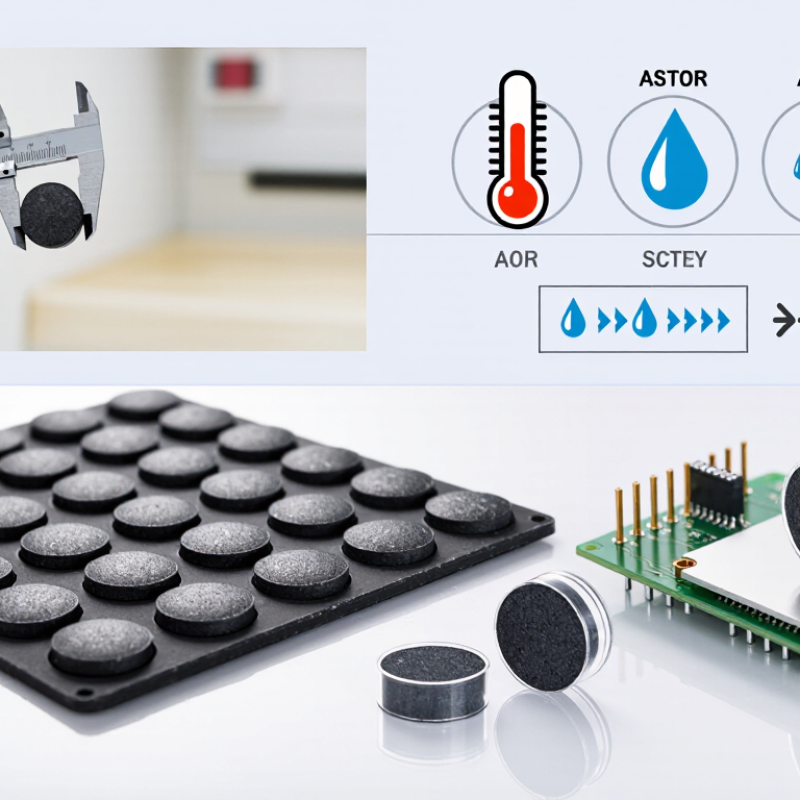
Top Conductive Carbon Pill Keypad Suppliers for Global Buyers

What Conductive Carbon Pill Keypads Are and How They Work

A conductive carbon pill keypad uses molded rubber keys with small carbon-loaded contact pads beneath them. These pads sit above patterned traces on a printed circuit board. Press a key, and its carbon pill touches two contacts, completing an electrical path. The controller detects that change and registers a keypress. Release the key, and the rubber dome lifts the pill away. The circuit opens again. Simple, but precise.

The rubber shape provides the return force and much of the tactile feel. Pill size, contact pressure, and surface condition can affect resistance and response consistency. A larger pill may offer a wider contact area, but the best geometry depends on the circuit and key design. For buyers, useful checks include contact resistance, actuation force, key travel, and performance after repeated presses. Ask how these values were measured; test methods can vary. A datasheet cannot tell the whole story. Samples tested in the intended device often reveal uneven feel, especially across a large keypad. Dust, oils, and wear may also change contact behavior over time, so enclosure design and maintenance deserve attention.

Key Capabilities to Assess in Carbon Pill Keypad Suppliers

Top Conductive Carbon Pill Keypad Suppliers for Global Buyers

When assessing conductive carbon pill keypad suppliers, ask how they control pill resistance and placement. Small variations can affect contact reliability and key feel. Request inspection records, material specifications, and samples from a production-representative batch. A polished prototype alone proves little. Check whether the supplier can explain its silicone molding process, tooling tolerances, and inspection methods in clear terms.

Consider performance under real use. Ask for test results covering key travel, actuation force, contact resistance, and repeated presses. If the keypad will face dust, moisture, or temperature changes, discuss suitable validation tests before approving the design. Review production capacity, lead times, packaging, and technical support across time zones. These details matter. Still, test data cannot fully capture how a keypad feels beneath a fingertip; your own evaluation is important.

Tips: Press samples at different points and compare their return feel. Ask for a change log when specifications are revised. No supplier is perfect, and a promising sample may not match every production run. Keep approval criteria written down, then verify them against delivered parts.

Top Conductive Carbon Pill Keypad Suppliers for Global Buyers - Key Capabilities to Assess in Carbon Pill Keypad Suppliers

Capability What to Assess Evidence to Request Practical Evaluation Why It Matters
Conductive pill performance Pill material, geometry, and electrical performance under the intended circuit conditions. Material specification and test results stating the measurement method, fixture, applied force, and test conditions. Measure contact resistance on the customer’s circuit or an agreed test coupon; set acceptance limits for the application. Resistance readings depend on the pill, contact finish, geometry, force, and measurement setup; results need defined conditions.
Silicone molding and dimensional control Control of key pitch, web thickness, key height, alignment, flash, and parting lines against the approved drawing. Dimensional inspection report, drawing revision control, and sample parts from the intended production process. Compare samples with drawing tolerances and check fit, travel, and return in the assembled housing. Dimensional variation can affect tactile feel, alignment, sealing, and electrical contact.
Force and tactile response Actuation force, travel, return behavior, and consistency across keys and production lots. Force-versus-travel measurements with the test method and sample size identified. Agree target ranges from the product requirements, then test multiple keys on assembled samples. A consistent force profile supports predictable user feedback and reliable contact closure.
Electrical and mechanical endurance Key actuation life, contact stability, and changes in force or appearance after cycling. Endurance-test plan and results, including cycle rate, load, environmental conditions, and failure criteria. Run the agreed cycle test on representative assembled parts and recheck electrical and tactile performance afterward. Life depends on the keypad design, circuit, actuation conditions, and environment; a defined test makes comparisons meaningful.
Environmental and chemical suitability Resistance to the temperatures, humidity, cleaning agents, oils, or other exposures specified for the end product. Silicone material data and test reports relevant to the actual exposure conditions. Test representative parts using the product’s defined exposure profile; inspect for changes in dimensions, feel, and conductivity. Silicone formulations and conductive materials can respond differently to heat, chemicals, and repeated cleaning.
Circuit and housing integration Compatibility with the PCB or membrane circuit, contact finish, mounting features, and enclosure design. Design review records, interface drawings, and samples tested with the intended circuit and housing. Check alignment, closure, release, key spacing, and electrical switching in the complete assembly. A keypad that performs well on its own may behave differently when installed in the final assembly.
Quality management and traceability Production controls, incoming material checks, lot identification, nonconformance handling, and change notification. Quality-system documentation, inspection records, lot traceability examples, and documented change-control procedures. Review how a production lot can be traced to material and process records, and how changes are communicated and approved. Traceability and controlled changes help buyers investigate defects and maintain consistency in repeat orders.
Regulatory and material documentation Availability of material declarations and documentation required for the buyer’s market and product. Current substance declarations or test documents applicable to the supplied material and relevant regulatory requirements, such as RoHS or REACH where applicable. Confirm document scope, material coverage, revision, and applicability to the actual part supplied. Requirements vary by product and destination market; declarations should match the specific supplied materials.
Sampling, tooling, and production readiness Prototype support, tooling ownership and maintenance terms, sampling stages, and approval before mass production. Tooling plan, sample schedule, approved-sample process, and production-readiness documentation. Define drawing approval, sample sign-off, and change approval milestones before placing a production order. Clear development controls reduce the risk of tooling or process changes affecting approved performance.
Packaging and international logistics Protection against deformation, contamination, and handling damage, plus export documentation and shipment planning. Packaging specification, sample shipment details, lead-time assumptions, and export-document checklist. Inspect shipped samples on receipt and confirm packing quantity, labeling, and agreed delivery terms. Packaging and logistics affect part condition, delivery predictability, and receiving inspection.

Note: Acceptance limits should be defined in the product drawing or purchase specification and verified using agreed test methods on representative parts.

Manufacturing Processes and Quality Controls to Compare

Compare suppliers by how they form the silicone body and create each conductive contact. Compression molding suits stable designs and moderate volumes; injection molding can support faster, repeatable production when tooling and process control are strong. Ask for documented cure settings, dimensional results, and lot traceability. For carbon pills, inspect bonding and contact resistance, not appearance alone. ASTM D991 describes methods for measuring volume resistivity in conductive rubber products; request test conditions and actual lot data, since readings depend on setup.

Quality systems matter, but certificates are only a starting point. The ISO Survey 2022 recorded 1,265,216 ISO 9001 certificates across 189 countries and economies. That broad figure does not prove a keypad supplier can hold tight resistance or actuation-force tolerances. Request control charts, sample sizes, and results from durability tests. Check whether suppliers test after environmental exposure, such as heat and humidity, because fresh samples can behave differently from aged ones. A neat report may still hide variation.

Tips: Send the same drawing and acceptance limits to every bidder. Compare resistance, key travel, force, and life-cycle results side by side. Ask suppliers to explain one failed batch and what changed afterward. Their answer can reveal more than a polished audit. Some limits may need revision after prototype testing; that is normal, if documented.

Global Supplier Regions, Strengths, and Sourcing Options

Global buyers can source conductive carbon pill keypads from East Asia, Europe, and North America. East Asian suppliers often offer broad tooling capacity and dense component supply chains. European manufacturers may suit buyers prioritizing engineering collaboration and documented process control. North American suppliers can offer closer communication and regional production. These are starting points, not guarantees. A capable factory matters more than its location.

Compare more than unit price. Request samples, tooling ownership terms, and test results for contact resistance, actuation force, and cycle life. Ask how suppliers control pill placement and inspect silicone flash around each key. UNCTAD’s Review of Maritime Transport 2024 reports that seaborne trade grew 2.4% in 2023. That makes shipping routes and buffer stock worth discussing early. A low quote can still carry hidden costs: freight, mold changes, and inconsistent batches.

Tips: Send the same drawing and test limits to every candidate. Request a small pilot run before committing to production. Check samples after heat and humidity exposure, not just on a clean bench. Keep one thing in mind: supplier claims need verification. Some test reports may use different methods, so compare the procedures, not only the numbers.

Top Conductive Carbon Pill Keypad Supplier Regions

A qualitative sourcing guide comparing common regional considerations—not supplier counts, market shares, or verified performance data.

How to use this chart: Asia-Pacific is often considered for broad electronics manufacturing ecosystems; Europe for proximity to European buyers and regional compliance needs; and North America for local sourcing and shorter regional supply lines. Ratings are indicative only. Confirm tooling, electrical performance, certifications, minimum order quantities, and lead times directly with each supplier.

How Buyers Verify Suppliers and Choose the Right Partner

Choosing a conductive carbon pill keypad supplier starts with evidence, not polished sales images. Request samples made with the proposed materials and process. Check pill placement, contact resistance, and key feel across several units. A multimeter can reveal variation, but it cannot replace testing inside the intended circuit. Ask for inspection records tied to production batches, plus details on how defects are handled. Specific answers matter.

Test samples under realistic use. Press keys repeatedly, inspect for inconsistent response, and check whether the carbon contacts remain aligned with the circuit pads. If the keypad will face heat, moisture, or cleaning, describe those conditions and ask what testing is available. Reports should identify methods and sample quantities. A small sample can look perfect and still miss production variation. That is easy to overlook.

The right partner should discuss drawings, tolerances, tooling changes, and realistic lead times without promising everything. Compare sample results with agreed acceptance criteria, then confirm those criteria in writing before production. Notice how quickly technical questions reach someone who can answer them. Price matters, but a low quote is less useful when inspection steps or material details remain vague. No checklist removes every risk; leave room to review the first production run carefully.

FAQS

How does a conductive carbon pill keypad register a press?

Pressing a rubber key moves its carbon pill onto two circuit contacts. The closed path registers a keypress. Releasing the key opens it again.

What affects a key’s feel and response?

Rubber shape provides return force and tactile feel. Pill size, contact pressure, and surface condition can affect resistance. Feel may vary across a keypad.

Which specifications should buyers check?

Check contact resistance, actuation force, key travel, and repeated-press performance. Ask how each value was measured. Methods can differ.

How should buyers evaluate samples?

Press several keys at different points and compare their return feel. Test samples in the intended circuit. A multimeter helps, but it is not enough.

What production details should buyers request?

Request material specifications, pill-placement controls, tooling tolerances, and inspection records. Ask how defects are handled. Keep a change log.

How should environmental conditions be assessed?

Describe expected dust, moisture, heat, temperature changes, or cleaning. Ask which validation tests are available, including methods and sample quantities.

What makes a supplier’s evidence useful?

Look for batch-linked inspection records and samples made with proposed materials and processes. Clear technical answers matter. Vague promises do not.

Does a good prototype guarantee consistent production?

No. A polished sample can hide production variation. Compare delivered parts with written criteria, then review the first production run carefully. Some risk remains.

Conclusion

This article explains how a Conductive carbon pill keypad works: pressing a key brings a conductive pill into contact with circuit traces, closing an electrical connection and sending an input signal. It outlines the supplier capabilities buyers should assess, including design support, material selection, customization, production capacity, communication, and delivery reliability. Understanding these factors helps buyers match a keypad design to its operating environment, expected use, and performance requirements.

The article also compares manufacturing processes and quality controls, such as material consistency, molding accuracy, electrical testing, and inspection procedures. It reviews sourcing options across global supplier regions without favoring any particular location, and offers practical steps for evaluating potential partners. Buyers can verify samples, review quality documentation, discuss production requirements, and compare service and lead times before choosing a supplier suited to their project.

Ethan

Ethan

Ethan is a dedicated marketing professional with a strong understanding of the company’s products, services, and customers. With a background in market research, content strategy, and digital communication, he is committed to presenting complex product information in a clear, practical, and......