Choosing China’s best custom keypad supplier requires more than comparing unit prices. The Custom silicone rubber keypad must match its enclosure, operating environment, and expected service life. Small design choices matter: key spacing, tactile force, legends, and the seal around each button. A poor fit can make a well-built device frustrating to use.
Industry data provides useful context, but not a direct ranking of keypad makers. Grand View Research estimated the global silicone market at USD 18.3 billion in 2023 and forecast a 6.7% compound annual growth rate from 2024 to 2030. Its report covers silicone applications broadly, not keypad demand specifically. The distinction matters. The International Federation of Robotics reported 541,302 industrial robot installations worldwide in 2023, reflecting continuing investment in automated production. More industrial equipment can mean more control interfaces, though it does not prove that every application needs a silicone keypad.
A capable supplier should explain material selection, tooling, and validation in practical terms. Ask for samples, dimensional inspection records, and test details for chemical exposure, temperature, and repeated presses. Check whether the supplier can control color, printed legends, and light transmission across production batches. Then verify the claims against your own device requirements. No single supplier is best for every project. A polished sample can still hide production variation, and I would treat that risk seriously. The right partner is the one that can show repeatable results, communicate limits clearly, and improve the design when testing exposes a weakness.
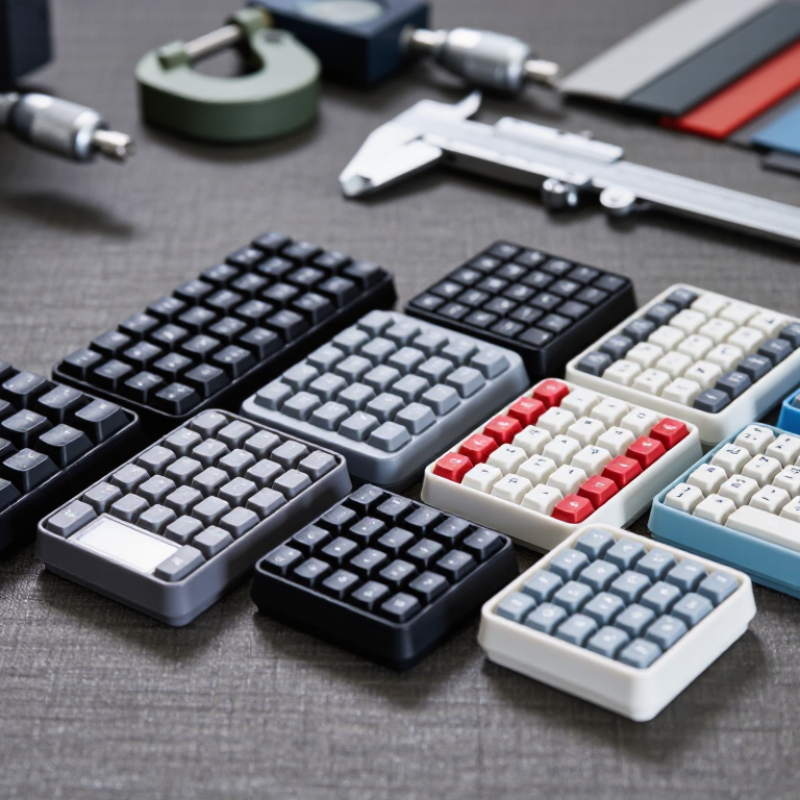
What a Custom Silicone Rubber Keypad Supplier Provides
A custom silicone rubber keypad supplier turns product requirements into a part that can be manufactured consistently. Support often begins with design review: button spacing, key travel, wall thickness, and the feel of each press. Small details matter. A raised symbol that looks clear on screen may feel too shallow after molding. Suppliers can recommend silicone hardness, surface textures, colors, and conductive carbon pills when electrical contact is needed. They may also advise on sealing features, but the keypad’s shape and enclosure must work together to achieve a reliable fit.
The service can include prototype tooling, sample production, and checks for dimensions, appearance, and button response. A useful supplier asks how the keypad will be used, cleaned, and assembled, rather than quoting from a drawing alone. For example, a soft keypad used with gloves may need different button height and spacing than a compact control panel. Samples help reveal these trade-offs. They are not perfect predictors of full production, though; material behavior and tooling can introduce small changes. Clear drawings, agreed inspection points, and written sample feedback reduce surprises. One overlooked issue is often packaging: keys can collect dust or rub against one another during shipping, so handling deserves attention too.
China Best Custom Silicone Rubber Keypad Supplier? - What a Custom Silicone Rubber Keypad Supplier Provides
| Supply Area | What a Supplier Can Provide | Details to Confirm During Quotation |
|---|---|---|
| Design and engineering | Design-for-manufacturing feedback, keypad layout review, and recommendations for key geometry, webbing, and actuation feel. | Provide drawings or 3D files, target dimensions, operating environment, and interface requirements. |
| Silicone material selection | Silicone rubber compound options selected for the application, with properties such as hardness, resilience, and resistance to environmental exposure considered. | Specify the required hardness scale, temperature range, chemical exposure, and any applicable material or regulatory requirements. |
| Keypad construction | Options may include molded keys, conductive carbon pills, metal snap domes, or combinations of these features. | Confirm switching method, electrical contact design, key travel, actuation force, and expected use conditions. |
| Tooling and prototypes | Custom molds and prototype samples for checking fit, appearance, and tactile performance before production. | Ask about tooling ownership, sample quantity, mold maintenance, revision charges, and prototype lead time. |
| Surface and visual finishes | Possible finishes include matte or textured surfaces, molded-in color, printed legends, and protective coatings. | Confirm color references, legend artwork, abrasion expectations, and whether coating or printing is required. |
| Backlighting and light control | Design options can include translucent silicone, selectively opaque areas, and light-transmission features for illuminated keys. | Share the light source, required illuminated areas, brightness goals, and any light-leakage limits. |
| Electrical and mechanical integration | Keypad designs can be developed to interface with a printed circuit board, enclosure, or membrane-switch assembly. | Provide PCB contact locations, enclosure dimensions, sealing needs, and assembly constraints. |
| Quality checks | Inspection plans may cover dimensions, appearance, key function, electrical contact, and material or process consistency. | Agree on acceptance criteria, inspection sampling, test methods, and documentation before production. |
| Production and delivery | Production planning, packaging, and shipment coordination for approved custom parts. | Confirm order quantity, forecast, packaging requirements, delivery terms, and production lead time. |
Available features, specifications, testing, and lead times vary by design and supplier. Confirm all technical requirements and acceptance criteria in the quotation and approved drawings.
FAQS
Start with the device’s available space and key positions. Define key travel, press force, and wall thickness. Small changes can affect how a key feels.
Hardness influences key feel and return speed. Temperature and cleaning routines can also affect durability. There is no universal formula.
They sit beneath selected keys and help close electrical contacts on a circuit board. Their size and contact layout need testing.
A metal mold is machined with the keypad’s shape. Silicone is placed or injected into it, then cured with controlled heat and pressure. Technicians trim excess material afterward.
Check dimensions, appearance, printed legends, and key response. Press the keys repeatedly, not just once. It takes testing.
They appear on industrial panels, handheld meters, appliances, and outdoor equipment. Compact controls can also suit communication devices and portable instruments.
A molded design may help limit dust entry near the switches. Sealing depends on the complete keypad and enclosure, though. Test the assembled device.
Test samples inside the actual enclosure. Compare press force, travel, and surface texture with real users. A desk test can mislead. The first sample is rarely perfect.
Conclusion
A Custom silicone rubber keypad supplier provides more than molded buttons. A capable partner can help refine the design, select suitable materials, create tooling, and produce keypads with the right shape, feel, color, symbols, and lighting features for a device. The manufacturing process typically moves from design review and prototyping to mold preparation, silicone molding, finishing, and inspection. Early collaboration helps ensure that the keypad fits its housing and performs as intended.
Material choice and consistent quality checks are essential, especially when a keypad must withstand repeated use, moisture, dust, or changing temperatures. When evaluating suppliers in China, consider their engineering support, production capabilities, sample process, communication, and ability to maintain clear quality standards. Custom silicone keypads are used in many products, including industrial controls, medical equipment, household appliances, handheld devices, and outdoor electronics. Matching the supplier’s experience and process to the application can help achieve a reliable, practical, and well-designed result.