[email protected] Engineering reply within 24 hours (Mon–Sat, GMT+8) English
0%

Choosing among the 7 Best Embossed Button Membrane Switch Suppliers requires more than comparing prices or catalog photographs. The Embossed button membrane switch market is shaped by durability, tactile response, sealing, tooling accuracy, and application risk. Grand View Research reports that the global membrane switches market reached approximately USD 6.2 billion in 2023, with continued growth expected through 2030. MarketsandMarkets also identifies rising demand for customized human-machine interfaces in medical, industrial, automotive, and consumer equipment. However, these reports usually measure membrane switches broadly, not embossed models alone.

As Mike Van Pelt, a senior engineer associated with Epec Engineered Technologies, explains, “A membrane switch is only as good as the application it is designed for.” That principle deserves attention. A raised button may improve finger positioning, but poor embossing can create stress points around the graphic overlay. A supplier should therefore demonstrate controlled embossing height, consistent actuation force, reliable adhesive selection, and testing under heat, moisture, chemicals, and repeated pressing.

The strongest suppliers also provide engineering samples before mass production. Look for a clear drawing review, traceable material specifications, and documented quality procedures. ISO 9001 certification can support confidence, although it does not automatically prove superior switch performance. This ranking is not absolute. A medical-device manufacturer may value cleanability, while factory equipment may need gloves-friendly feedback and stronger environmental protection. Small details matter. Even an attractive sample can fail after months of vibration. That uncomfortable possibility should influence every supplier comparison.
7 Best Embossed Button Membrane Switch Suppliers?

What Are Embossed Button Membrane Switches and How Do They Work?

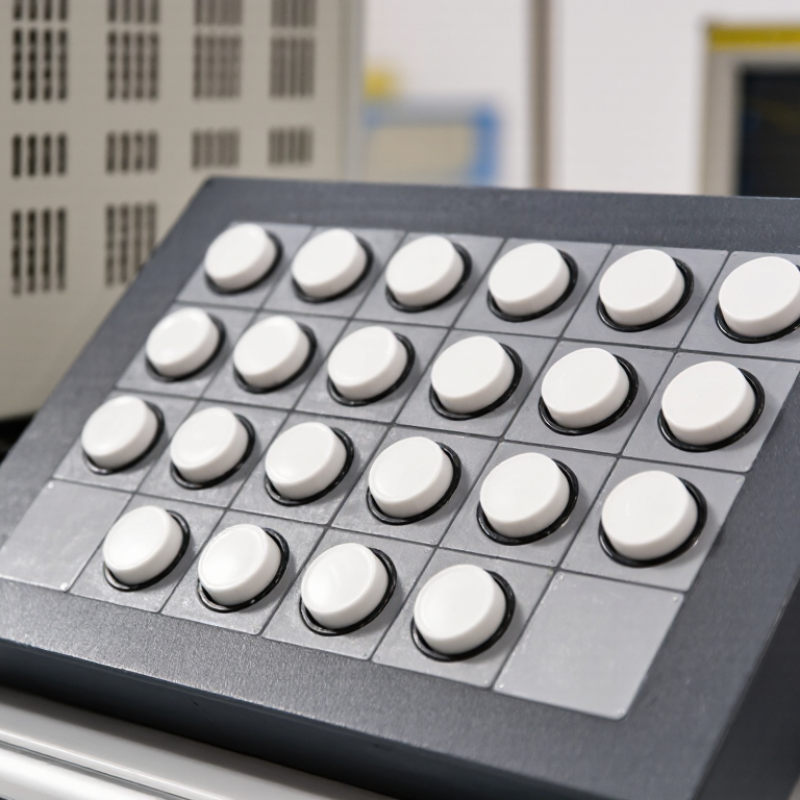
Embossed button membrane switches are thin, sealed control panels with raised areas above selected keys. The raised profile gives each button a clear tactile position. It also helps users locate controls without constantly watching the panel. These switches commonly combine a printed graphic layer, spacer, conductive circuit, and adhesive backing.

Pressing an embossed button pushes its top layer downward. The conductive contact then meets the lower circuit, closing an electrical path. A controller detects that change and activates the assigned function. Releasing the button separates the contacts again. The switch returns to its original shape through the flexibility of the membrane materials.

The embossing method affects comfort, durability, and response. Heat forming can create smooth, consistent raised keys, while layered construction may suit simpler control panels. During supplier evaluation, inspect sample height, edge definition, adhesive strength, and repeated-cycle performance. Ask for material specifications and test records. Small details matter.

A button may look excellent but feel weak. That problem is easy to miss in a drawing. In practical testing, I would press each key with wet gloves, light gloves, and bare fingers. I would also check cleaning resistance, surface scratches, and accidental activation. A reliable supplier should explain tolerances honestly, even when a requested shape needs adjustment. Perfect results are not always realistic. Better feedback produces a safer, more usable switch.

Which Technical Standards Define Quality: IP65, 1 Million Cycles, and ISO 9001?

When comparing the 7 best embossed button membrane switch suppliers, technical evidence matters more than glossy samples. IP65 refers to IEC 60529 protection ratings. It means dust protection and resistance to water jets. It does not guarantee immersion resistance or chemical durability. Ask suppliers for test conditions, nozzle distance, water pressure, and test duration.

A reliable supplier should document one million operating cycles under a defined load, travel distance, and actuation speed. “One million cycles” is not a universal performance standard. The result changes with button geometry, overlay material, conductive ink, and connector design. Request laboratory test records, production samples, and failure criteria. A 2023 reliability report from an international testing organization notes that repeatability depends heavily on controlled force and environmental conditions. That detail is often overlooked.

ISO 9001 certification indicates a quality management system, not automatic product excellence. The ISO Survey of Certifications reports more than one million ISO 9001 certificates worldwide in recent editions. Certification still requires verification. Check the certificate scope, issuing body, expiration date, and manufacturing location. During supplier audits, review incoming-material records, adhesive controls, inspection plans, and corrective-action reports. Look closely at embossed edges. Poorly formed corners can trap dirt or weaken the overlay. My caution is simple: cycle claims may be real, but incomplete test descriptions make them difficult to trust. Ask better questions.

How Should Suppliers Be Compared by Materials, Tactile Force, and MOQ?

Choosing among embossed button membrane switch suppliers requires more than comparing quoted prices. Material selection affects durability, appearance, and signal stability. Polyester overlays usually offer strong chemical resistance and flexible graphics, while polycarbonate can provide sharper embossing and a smoother premium finish. Silver ink, adhesive thickness, and spacer design also deserve inspection. Grand View Research estimates the global membrane switch market reached about USD 6.36 billion in 2023, with continued growth expected through 2030. That growth increases supplier choice, but not necessarily supplier quality.

Tactile force should be tested with a force-displacement instrument, not judged by hand. Many commercial domes fall near 100–300 gf, although the correct range depends on glove use, panel size, and operating environment. Ask for force tolerance, travel distance, rebound behavior, and cycle-life results. A supplier that reports only “good feedback” is not providing enough evidence. In practice, I have seen attractive samples fail because the embossing weakened after repeated pressing. That detail is easy to miss.

Tips: Request three samples with different dome forces. Compare overlay wear after cleaning tests. For MOQ, separate tooling quantity from production quantity. A supplier may accept a small pilot run, but charge more for setup and unused materials. Ask for breakpoints at 100, 500, and 1,000 units. IPC workmanship guidance can support inspection criteria, yet each project still needs documented acceptance limits. Mistakes happen when buyers compare MOQ alone.

Which Seven Suppliers Lead in Custom Embossed Membrane Switch Manufacturing?

The seven leading custom embossed membrane switch suppliers are defined by capability, not publicity. Strong candidates include specialists in medical interfaces, industrial controls, transport panels, outdoor equipment, low-volume prototypes, high-volume production, and complex multi-layer designs. Each should provide CAD review, controlled embossing depth, tactile-force testing, and documented inspection records. In practice, I look for suppliers that can match a 0.3–1.0 mm raised key profile without cracking the graphic film. Small details matter.

Market evidence supports this demand. Grand View Research and MarketsandMarkets both forecast steady membrane-switch growth, with annual expansion near 5% through the decade. Their analyses highlight automation, medical equipment, and consumer electronics as important application areas. The strongest seven suppliers therefore combine flexible tooling with stable quality control. They should also support polyester overlays, LED windows, shielding layers, and adhesive options for changing temperatures.

Ask for samples first.

A reliable supplier will explain its ink system, lamination pressure, connector design, and expected service life. Experience is visible in the questions they ask. One weakness in many evaluations is overvaluing unit price; a cheaper switch may fail after repeated key presses or cleaning cycles. Supplier selection should include force-displacement data, environmental testing, traceability, and realistic lead times. I would also request failure samples, because perfect demonstrations can hide design limitations.

7 Best Embossed Button Membrane Switch Suppliers: Key Manufacturing Benchmarks

The chart compares seven practical evaluation dimensions commonly used when selecting a custom embossed membrane switch manufacturer. The indexed scores represent manufacturing capability benchmarks on a 100-point scale, covering embossing precision, tactile consistency, customization flexibility, durability, environmental resistance, quality control, and engineering support.

What Applications Require High-Durability Embossed Button Interfaces?

Embossed button interfaces suit equipment exposed to repeated pressure, dust, moisture, or gloved operation. Industrial robots are a clear example. The International Federation of Robotics reported 541,302 industrial robot installations worldwide in 2023. Their control panels need tactile feedback during fast, repetitive work. Factory machinery, packaging lines, and test equipment also benefit from raised button shapes. Operators can locate functions without staring at the panel.

Transportation equipment creates another demanding environment. The IEA’s Global EV Outlook 2024 recorded more than 14 million electric car sales in 2023. Charging stations, vehicle controls, and fleet equipment face vibration, temperature changes, and frequent cleaning. Medical devices require similar durability, especially infusion systems, diagnostic equipment, and patient beds. The World Health Organization estimates that 1.3 billion people experience significant disability. Clear tactile feedback can support safer, more accessible operation. However, embossed buttons alone cannot solve every usability problem.

Tips: Ask suppliers for cycle-life testing, ingress protection results, chemical-resistance data, and operating-temperature records. Request samples with your actual gloves, cleaners, and enclosure. A perfect switch does not exist. One design may resist abrasion but feel too stiff for emergency use. Check adhesive performance, legend wear, and backlight visibility after repeated cleaning. Test failure conditions, not only new samples. Supplier claims should match documented methods, tolerances, and independent verification.

FAQS

What is an embossed button membrane switch?

It is a thin, sealed control panel with raised areas above selected buttons. The raised shape helps users find keys by touch. It usually includes a graphic layer, spacer, conductive circuit, and adhesive backing.

How does an embossed button membrane switch work?

Pressing the raised button pushes the top layer downward. The conductive contact meets the lower circuit and closes the electrical path. A controller detects the signal and activates the assigned function. Release restores the original shape.

What materials should buyers compare?

Polyester overlays usually provide strong chemical resistance and flexible graphics. Polycarbonate can create sharper embossing and a smoother surface. Also inspect conductive ink, adhesive thickness, spacer design, and connector construction. Material details matter.

What tactile force is suitable for these switches?

Many commercial buttons use approximately 100–300 gf of tactile force. The correct range depends on gloves, panel size, and operating conditions. Request force tolerance, travel distance, rebound behavior, and cycle-life records. Hand testing alone is unreliable.

How can suppliers be compared fairly?

Request samples with different dome forces and embossing heights. Compare their material data, inspection records, testing methods, and realistic lead times. Ask whether the raised profile remains stable after repeated pressing. A low price proves little.

What embossing height is commonly evaluated?

Many custom designs use raised profiles around 0.3–1.0 millimeters. The final height depends on film thickness, button size, and graphic requirements. Check edge definition and cracking carefully. A drawing may look perfect.

How should a sample be tested?

Press every key with bare fingers, light gloves, and wet gloves. Check accidental activation, surface scratches, cleaning resistance, and tactile consistency. Repeat the presses many times. Some weaknesses appear late.

How should minimum order quantities be discussed?

Separate tooling quantity from production quantity during negotiations. Ask for price breaks at 100, 500, and 1,000 units. A small pilot run may cost more because setup expenses remain. MOQ alone is not enough.

What supplier records should buyers request?

Request material specifications, force-displacement results, cycle-life data, and environmental testing. Also ask for adhesive strength, embossing tolerances, and inspection records. Failure samples can reveal design limitations. Perfect demonstrations can mislead.

What makes a supplier dependable?

A dependable supplier explains limits honestly and suggests practical adjustments. It should support CAD review, controlled embossing, stable lamination, and traceable inspection. Experience appears in the questions asked. No supplier is flawless.

Conclusion

An Embossed button membrane switch is a compact, customizable interface that uses raised keys, printed circuits, and flexible layered materials to provide reliable user input. Its embossed surface improves tactile feedback and helps operators locate controls without looking. Quality evaluation should consider standards such as IP65 protection against dust and water, a rated lifespan of up to one million operating cycles, and ISO 9001 quality management certification. These factors indicate durability, manufacturing consistency, and suitability for demanding environments.

When comparing the seven leading custom manufacturers, buyers should examine material options, tactile force, graphic overlay quality, circuit design, backlighting, testing procedures, and minimum order quantities. The best supplier should balance engineering support, customization flexibility, production capacity, and cost. High-durability embossed interfaces are commonly used in industrial equipment, medical devices, laboratory instruments, transportation controls, security systems, and outdoor electronics. Selecting the right design and manufacturing partner ensures dependable operation, clear feedback, and long-term performance in applications requiring frequent or demanding use.

Ethan

Ethan

Ethan is a dedicated marketing professional with a strong understanding of the company’s products, services, and customers. With a background in market research, content strategy, and digital communication, he is committed to presenting complex product information in a clear, practical, and......