[email protected] Engineering reply within 24 hours (Mon–Sat, GMT+8) English
0%

Choosing the 2026 best LED backlit membrane switch manufacturers requires more than comparing catalog prices. A reliable evaluation must examine design engineering, production consistency, material selection, and after-sales support. It should also consider how each supplier handles real operating conditions, including dark control panels, repeated key presses, vibration, moisture, and limited installation space.

Don Norman, a leading authority on human-machine interfaces, once said, “Good design is actually a lot harder to notice than poor design.” His observation fits this industry closely. A well-made LED backlit membrane switch feels natural, illuminates evenly, and remains readable without distracting glare. Small details matter. Key spacing, light diffusion, connector placement, tactile response, and printed legends can affect daily operation.

This guide reviews manufacturers through a practical purchasing lens. It considers prototype support, tooling transparency, quality inspection, customization ability, and documented reliability testing. Strong suppliers should explain their materials clearly, provide consistent samples, and trace production changes. They should not hide behind attractive product images.

Some conclusions may remain imperfect. Supplier performance can vary by project, volume, region, and communication quality. A manufacturer that excels at industrial control panels may not suit medical equipment or compact handheld devices. That distinction deserves attention. The best choice is rarely the cheapest quotation. It is the supplier that understands the application, identifies risks early, and delivers stable performance from the first prototype to ongoing production.
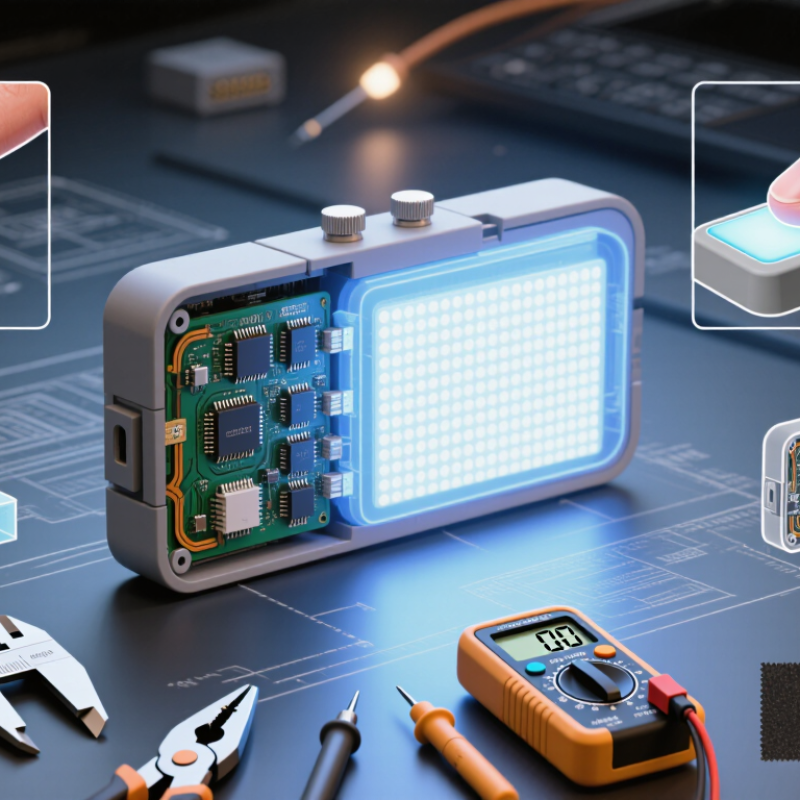
2026 Best LED Backlit Membrane Switch Manufacturers?

What Are LED Backlit Membrane Switches?

LED backlit membrane switches are thin control panels that combine graphic overlays, printed circuits, LEDs, and tactile feedback. They illuminate selected symbols from behind, helping operators identify controls in dim factories, medical equipment rooms, and transport cabins. A typical design uses a light guide or shaped pockets to distribute brightness evenly. Uneven lighting remains a common engineering problem. Dark corners can appear when LED spacing or material thickness is poorly calculated.

When comparing 2026 manufacturers, examine their design experience, material testing, and production controls. Ask for samples, brightness measurements, switch-life data, and environmental test results. A reliable supplier should explain adhesive selection, connector placement, cleaning resistance, and sealing options clearly. Certifications can support trust, but they do not replace application-specific testing.

Tips:

Define the viewing distance first. Test the switch with gloves. Check symbols under direct light. Confirm operating temperature and humidity ranges. Review color consistency after repeated use. I once underestimated glare from a glossy overlay, and the final panel was harder to read than expected. That small oversight changed the surface specification. Also inspect the feedback force, because a beautiful panel may still feel vague during frequent operation.

How to Evaluate LED Backlit Membrane Switch Manufacturers

How to Evaluate LED Backlit Membrane Switch Manufacturers

Evaluating an LED backlit membrane switch manufacturer requires more than comparing unit prices. MarketsandMarkets’ Membrane Switch Market report projects steady growth through 2028, driven by medical, industrial, and automotive controls. Growth can hide weak suppliers. Ask for recent samples, electrical test records, and production photographs. Check whether the supplier controls light leakage, LED brightness, tactile force, and overlay alignment. A bright prototype proves little. Long-term consistency matters more.

During factory reviews, examine incoming-material inspection and traceability. The manufacturer should identify films, adhesives, LEDs, and circuit layers by batch. Request test data for switching cycles, insulation resistance, operating temperature, and humidity exposure. IEC 60529 ratings should support any claim about dust or water protection. ISO 9001 certification helps, but it does not replace process evidence. I have seen attractive samples fail because adhesive edges lifted after thermal cycling. This risk is easy to underestimate.

Tips: Compare three suppliers using the same drawing and test conditions. Confirm the LED color tolerance, viewing angle, connector design, and minimum order quantity. Ask how defects are recorded and corrected. Review a first-article inspection before mass production. Also, challenge vague phrases such as “industrial grade.” They sound professional, yet they explain almost nothing. Gartner’s quality-management research repeatedly links reliable data collection with better manufacturing decisions. Your evaluation should do the same.

Key Manufacturing Technologies and Quality Standards

2026 Best LED Backlit Membrane Switch Manufacturers?
Key Manufacturing Technologies and Quality Standards

Reliable LED backlit membrane switches begin with controlled optical design. Engineers select LED spacing, light guides, diffusion films, and reflective layers through simulation and prototype testing. Uniform brightness matters more than impressive peak intensity. A bright hotspot can make a control panel look poorly finished.

Experienced factories combine precision screen printing, laser cutting, SMT assembly, and clean lamination. Conductive inks must maintain stable resistance after repeated flexing. Adhesive layers need accurate pressure and temperature control. Small alignment errors may create dead zones or trapped air. I have found that early prototypes often reveal problems that drawings hide.

Quality systems should include traceable materials, calibrated instruments, and documented inspections. ISO 9001 supports process consistency, while IEC 60068 testing can evaluate heat, humidity, vibration, and mechanical stress. Relevant safety and environmental requirements should also be verified for the target market. Testing should cover key life, tactile force, LED output, insulation, and ingress protection when required.

Do not trust appearance alone.

A dependable manufacturer shares inspection records, sample approvals, and corrective-action reports. Production teams should inspect every critical layer, not only the finished switch. However, no process is flawless. Even strong suppliers may need to revise tooling, improve sealing, or adjust ink curing after field feedback. Honest reporting is a better quality signal than perfect claims.

Leading LED Backlit Membrane Switch Manufacturers in 2026

Leading LED Backlit Membrane Switch Manufacturers in 2026

Leading LED backlit membrane switch manufacturers in 2026 are judged by engineering depth, not attractive samples alone. Experienced suppliers develop switches for medical devices, industrial panels, laboratory equipment, and vehicle controls. They understand how light guides, overlays, adhesives, and tactile domes work together. A bright prototype means little if illumination becomes uneven after repeated pressing.

Reliable manufacturers begin with clear application data. They review operating temperature, key travel, voltage, cleaning chemicals, and expected press cycles. Their engineers may recommend laser-cut light channels or printed diffusers for better uniformity. Some also build prototypes with transparent windows and raised symbols. This allows operators to inspect glare, viewing angles, and night visibility before production starts. Small details matter.

Quality evidence should remain easy to verify. Look for documented testing, material traceability, inspection records, and controlled production processes. A capable manufacturer can explain its electrical tests without hiding behind technical language. It should also identify suitable compliance documentation for the target market. However, no supplier gets every design decision right on the first attempt. A button can feel excellent yet transmit too much light around its edges. That weakness deserves testing, not excuses. In 2026, the most dependable manufacturers are practical partners. They communicate limitations, protect design files, and adjust tooling when real user feedback exposes a flaw.

How to Select the Right Manufacturer for Your Application

2026 Best LED Backlit Membrane Switch Manufacturers?

How to Select the Right Manufacturer for Your Application

Choosing an LED backlit membrane switch starts with the application, not the catalog. Define operating temperature, glove use, viewing distance, button force, and expected cycles. A medical panel needs low glare and cleanability. Industrial equipment may need oil resistance, sealed edges, and clear status lighting. The wrong backlight can create bright spots, shadows, or unreadable legends.

Ask manufacturers for measured data, not attractive samples. Request luminance uniformity, LED color tolerance, actuation force, contact resistance, and cycle-life results. The Global Market Insights membrane switch report identifies industrial controls, medical equipment, and consumer electronics as major application areas. That mix requires different materials and validation methods. Check whether the supplier follows ISO 9001 procedures and documents incoming materials, tooling changes, and final inspection. Small details matter.

Test production-intent samples.

For outdoor or washdown equipment, request IEC 60529 ingress testing and adhesive aging evidence. For repeated use, review switch-life testing under realistic load and temperature conditions. A supplier should explain its failure-analysis process, including how it investigates dead LEDs, delamination, and uneven illumination. Independent laboratory data is stronger than an internal claim. Still, reports can miss your exact enclosure, cable routing, or cleaning chemicals. I have seen technically strong designs fail after assembly changes. Leave time for pilot builds, operator trials, and one uncomfortable redesign before approving mass production.

2026 Best LED Backlit Membrane Switch Manufacturers?

How to Select the Right Manufacturer for Your Application

This neutral procurement framework assigns practical evaluation weights to the main factors used when selecting an LED backlit membrane switch manufacturer. Environmental sealing, switch durability, optical performance, power efficiency, overlay life, and production support should be adjusted according to the application’s operating conditions and compliance requirements. The percentages represent a baseline decision model, not market-share data.

FAQS

What are LED backlit membrane switches?

They are thin control panels with graphic overlays, printed circuits, LEDs, and tactile feedback. Selected symbols glow from behind. They help operators read controls in dim work areas.

Where are LED backlit membrane switches commonly used?

They suit industrial equipment, medical devices, laboratory panels, and transport controls. They work especially well where space is limited. Gloves and low light can complicate operation.

Why can backlighting look uneven?

Poor LED spacing, unsuitable material thickness, or weak light guides can create bright spots and dark corners. Shaped pockets and printed diffusers may improve distribution. Sometimes, the prototype looks fine but fails after assembly.

What information should I provide before requesting a design?

Explain operating temperature, humidity, viewing distance, button force, glove use, voltage, and expected press cycles. Include cleaning chemicals and enclosure details. Small omissions can become expensive changes.

Which tests should a manufacturer provide?

Request luminance uniformity, LED color tolerance, actuation force, contact resistance, and cycle-life results. Ask for environmental and adhesive-aging data. Independent laboratory evidence is useful. Internal claims need careful checking.

How can I test a backlit membrane switch properly?

Test production-intent samples, not only attractive prototypes. View symbols under direct light and in darkness. Try gloves, repeated pressing, and realistic cleaning. Check the panel after installation.

What features matter for outdoor or washdown equipment?

Look for sealed edges, suitable adhesives, and documented ingress testing. Confirm resistance to moisture, temperature changes, oils, and cleaning agents. IEC 60529 testing may support the evaluation. It does not replace application testing.

How should I judge tactile feedback?

Measure actuation force and key travel, then test repeated operation. A beautiful panel may feel vague or tiring. I once focused too much on appearance. That was a mistake. Feedback deserves equal attention.

Conclusion

LED backlit membrane switches combine a thin, sealed control interface with integrated illumination, making keys and symbols easy to identify in low-light environments. They are widely used in industrial equipment, medical devices, transportation controls, consumer electronics, and other applications requiring compact design, tactile feedback, durability, and clear visual guidance. When evaluating manufacturers, buyers should consider engineering experience, customization capabilities, material selection, illumination uniformity, environmental resistance, testing procedures, production capacity, and communication efficiency.

Leading manufacturers in 2026 are expected to apply advanced printing, laser cutting, circuit integration, optical design, and automated inspection technologies while maintaining consistent quality and reliable performance. Relevant standards may cover electrical safety, ingress protection, chemical resistance, temperature tolerance, and long-term cycling durability. Selecting the right LED backlit membrane switch manufacturer requires matching the supplier’s design expertise, prototype support, quality controls, delivery capability, and after-sales service to the application’s operating conditions, budget, and future production requirements.

Ethan

Ethan

Ethan is a dedicated marketing professional with a strong understanding of the company’s products, services, and customers. With a background in market research, content strategy, and digital communication, he is committed to presenting complex product information in a clear, practical, and......